
Review · USA
2.5 Hour Philadelphia History Tour with Washington War Tent Show
The most unusual part of this Philadelphia walking tour is the chance to see a presentation featuring George Washington’s War Tent, the canvas headquarters he used during much of the Revolutionary War. It gives the familiar founding story a physical anchor, rather than leaving you with a string of statues and dates.
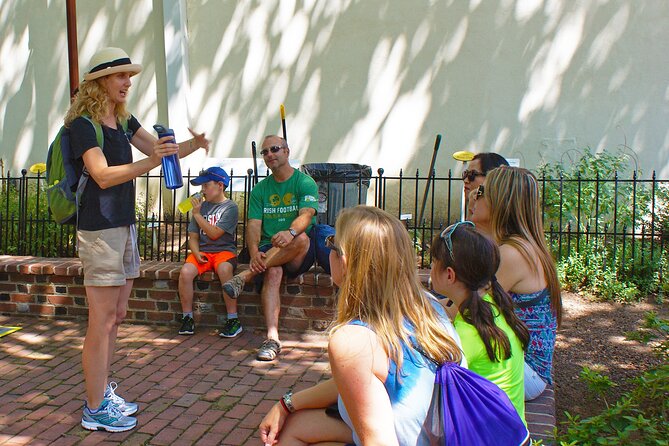
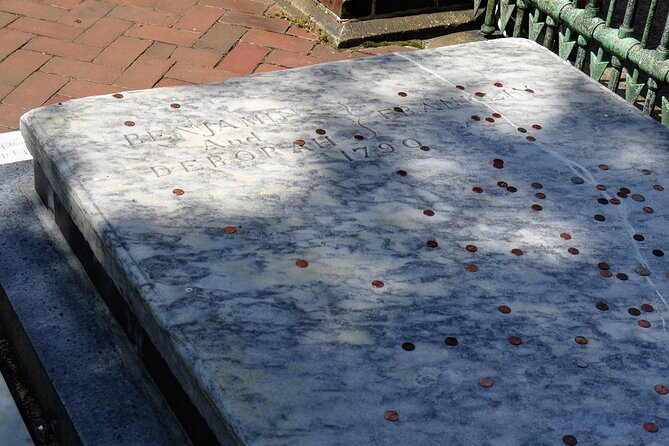
I like the small maximum of 12 people, which makes it easier to hear your guide and ask questions. I also like the route’s range: you get the famous Independence Hall and Liberty Bell area, but also Elfreth’s Alley, Benjamin Franklin’s grave, the President’s House site, and some useful myth-busting about Betsy Ross. The main consideration is that most historic buildings are viewed from outside, so anyone wanting full interiors should plan extra visits afterward.
Key points at a glance
- Washington’s War Tent: See a presentation featuring the tent used by George Washington during much of the Revolutionary War.
- Old City in one walk: Cover Independence Hall, Congress Hall, Old City Hall, Carpenters’ Hall, Elfreth’s Alley, and more.
- A small group: The tour is limited to 12 people, giving you a better chance to hear and speak with your guide.
- Museum savings afterward: Your tour includes discounted admission to the Museum of the American Revolution for a later visit.
- A useful first-day overview: The route helps you decide which historic sites deserve a longer return visit.
- Expect outdoor viewing: Several important buildings are explained from the street, and the Liberty Bell interior is not part of the tour.
Why the War Tent changes the story
Philadelphia’s Revolutionary sites can blur together if you only collect photographs. This tour helps connect them through people, arguments, and events, then adds a rare object that makes the military side of the story feel more immediate.
The Washington tent presentation is the special feature. You see the tent through the Museum of the American Revolution, where your guide explains its place in the war and the critical moments when Washington used it. The scheduled museum portion is about 20 minutes, so this is an introduction rather than a full museum visit.
That matters because the museum itself deserves more time than this tour can provide. The good news is that you receive discounted admission to return at a time of your choice after the walking tour. I would treat the tent presentation as the centerpiece, then come back later if you want to examine the museum’s objects, people, and displays at a slower pace.
The tour costs $45 per person. That is a fair price if you want a guide to organize the central Old City sights, explain their connections, and add the museum presentation. It is less compelling if you only want to photograph Independence Hall and the Liberty Bell area, since many of the major sites are free to see on your own.
More Heritage Tours in the USA:
- Oahu: Mauka Warriors Luau Honoring Polynesia’s Forgotten History
★ 5.0 · 3,013 reviews - Dallas: Historic West End Ghost Walking Tour
★ 4.6 · 59 reviews - NYC: New York City History of Stand-Up Comedy Tour
★ 4.8 · 21 reviews
Starting with the Signer in Chestnut Street
The meeting point is Signer’s Garden, at the statue known as The Signer, near 434 to 498 Chestnut Street. The statue represents the signers of both the Declaration of Independence and the Constitution, making it a fitting place to begin a tour about ideas as much as buildings.
The opening stop takes about five minutes. It is brief, but useful. Your guide can set up the main question of the walk: how did Philadelphia become a working center for the creation of a new government, and what did freedom mean to the people making those decisions?
The tour is offered in English and uses a mobile ticket. Confirmation arrives when you book, so keep an eye on your phone before you set out. The meeting point is in the historic district, close to public transportation.
Independence Hall, Congress Hall, and Old City Hall
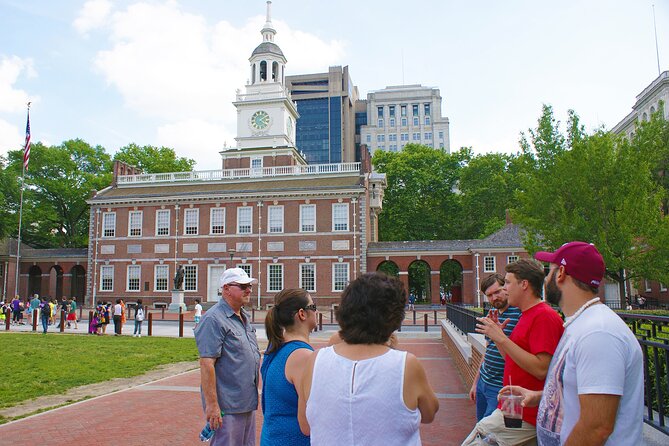
The first major group of stops takes you through Independence National Historical Park. In about 20 minutes, you see the area around Independence Hall, Congress Hall, and Old City Hall while your guide explains how each building served the new country.
Independence Hall is the famous red-brick building pictured on the back of the $100 bill. The tour circles it from outside, discussing the debates, political theories, setbacks, and victories connected with the Founding Fathers. This is not an interior tour of Independence Hall, and admission is not included.
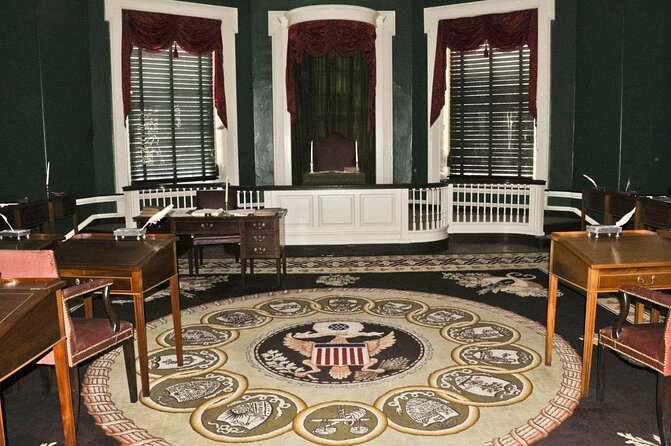
That limitation is worth understanding before you book. The outside explanation gives you context and saves you from wandering past the building without knowing what happened inside. But if you want to see the rooms where the Continental Congress and Constitutional Convention met, you need to arrange a separate visit.
Congress Hall sits beside Independence Hall and served as the first home of the United States Congress. Your guide uses the building to explain the early federal government and the period when Philadelphia functioned as the national capital.
Old City Hall adds another piece to the picture. It is easy to focus only on Independence Hall, but the surrounding buildings show how government worked as a group of institutions rather than as one famous address. Together, these three stops help you see the area as a functioning political center, not just a collection of historic façades.
The Liberty Bell and the limits of the visit
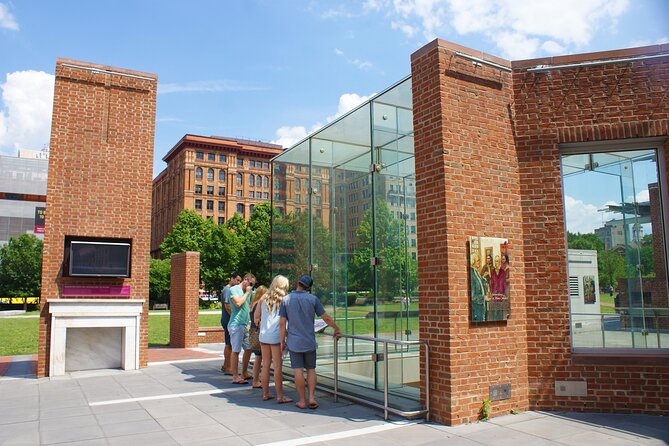
The Liberty Bell Center is included as an outdoor stop, with about 10 minutes devoted to the bell’s story and the myths surrounding it. Your guide also explains how the bell later became a symbol for abolitionists, women seeking the vote, and the civil rights movement.
This wider story is one of the better reasons to visit with a guide. The bell is often reduced to a single crack and a short slogan, but its meaning changed over time. The tour gives you a quick look at how different movements claimed the bell as a symbol of freedom.
You do not enter the Liberty Bell venue on this tour. If an inside photograph matters to you, plan to visit the center before or after the walk. This is a simple but important planning detail, especially if your time in Philadelphia is limited.
A few more shows around the USA worth a look
- The Haygoods: Branson’s Most Popular Show
★ 5.0 · 7,232 reviews - Oahu: The Magical Mystery Show! at Hilton Waikiki Beach Hotel
★ 5.0 · 2,754 reviews - Grand Ole Opry Show Admission Ticket
★ 4.5 · 2,518 reviews - Polynesian Fire Luau and Dinner Show Ticket in Myrtle Beach
★ 4.5 · 2,162 reviews
Carpenters’ Hall and the first Continental Congress
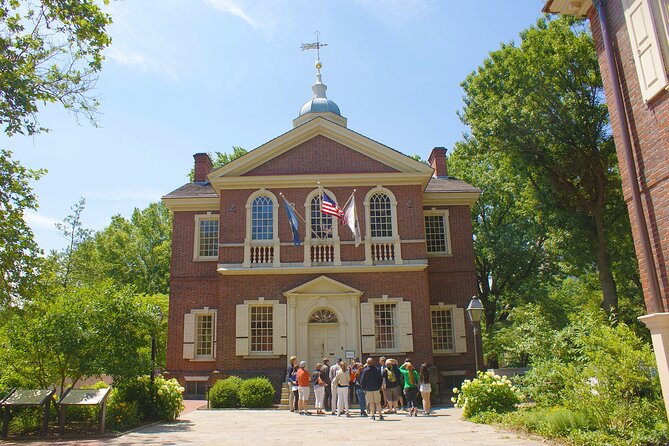
Carpenters’ Hall is another outside stop, usually lasting about 10 minutes. The building is connected to the first Continental Congress and to Pennsylvania’s early political development.
Its value comes from the setting. The building is not as instantly recognizable as Independence Hall, but it helps show how resistance to British rule moved through meetings, trade groups, and local institutions. Your guide can place the first Continental Congress within the larger chain of events that led toward independence.
Because the tour stays outside here, you will not get the full interior experience. Still, this is a useful stop for anyone who wants more than the standard handful of founding-era photographs.
The Museum of the American Revolution and Washington’s tent
The museum visit is the point where the walk moves from streets and façades to objects and displays. The scheduled presentation lasts about 20 minutes and focuses on George Washington’s War Tent.
The tent was present during many critical moments of the Revolutionary War and served as Washington’s headquarters for much of the conflict. Seeing it gives you a more practical image of wartime leadership. The Revolution was not only speeches in grand rooms. It also involved field headquarters, uncertain communication, military planning, and long periods away from home.
Your included museum access is tied to the tent presentation. After the tour, you can use discounted admission to return and see the rest of the museum at a time that suits you. I recommend leaving room in your schedule for that second visit if American history is a main reason for coming to Philadelphia.
This arrangement also makes the tour useful for people with limited time. You get a guided introduction first, then a clearer idea of which museum sections you want to explore. The trade-off is that 20 minutes is not enough for a full museum visit, so do not mistake the included presentation for a complete tour of the building.
Elfreth’s Alley and Philadelphia’s everyday past
Elfreth’s Alley gives the route a welcome change of scale. The narrow residential street dates to the early 1700s and is described as the oldest continuously occupied residential street in the United States.
Here, you are looking at homes rather than government buildings. The brickwork, narrow fronts, and small architectural details offer a glimpse of how tightly packed city life could be in early Philadelphia. The street takes about 10 minutes on the route and is free to view from outside.
This is one of the places where a guide adds useful context. Without explanation, Elfreth’s Alley can look like a photogenic old lane. With a guide, you can better understand why its homes matter and how residential life fits into the larger political story.
Remember that it remains a residential street. Take photographs respectfully and follow any posted directions. If you want to go inside a historic house, that would be a separate experience.
Betsy Ross, Benjamin Franklin, and the President’s House
The walk then connects several familiar names with a more careful look at the stories attached to them. You pass the Betsy Ross House, associated with the seamstress said to have sewn the first American flag.
The guide does not simply repeat the flag story. You hear about the myths surrounding Betsy Ross and the limits of what can be proven. That makes this a useful stop for families and anyone who prefers history with a little source-checking rather than tidy legends.
Next comes Benjamin Franklin’s grave on Arch Street. Franklin is one of Philadelphia’s most famous figures, known for inventions, printing, diplomacy, and public service. The stop is brief, about 10 minutes, but it gives you a chance to connect the city’s revolutionary politics with the life of one of its most influential citizens.
The route ends near the President’s House site. George Washington and John Adams lived here while serving as president, before Washington, DC became the national capital. The site also addresses the enslaved people who lived there, adding an essential complication to the story of liberty.
You also learn that the location remains an active archaeological site. That is a helpful reminder that Philadelphia’s past is not sealed away in museums. Evidence of earlier lives can remain beneath a modern downtown, sometimes just steps from busy streets.
What the walking pace is really like
The tour lasts about two and a half hours and covers many stops. The individual explanations are often short, usually 5 to 20 minutes, so the experience moves at a steady pace rather than settling into one building for a long time.
You should be comfortable walking outdoors for the full period. The route includes the historic district, Old City, and several streets between the main sites. Most people can participate, and service animals are allowed, but the information provided does not promise a fully accessible route or detail the condition of every surface.
The group maximum is 12. That is small enough for a personal feel without requiring the price of a private tour. Guides can answer questions, adjust examples to the group, and keep the walk from feeling like a large crowd following a flag.
Guide assignments vary. The guides praised most strongly in the supplied feedback include John, Maria Gorshin, Caroline, PJ, Carla, David, Pat, Peter, Donato, Laura, Alex, and PK. Their styles differ, but the consistent strengths are clear: strong command of Philadelphia history, good storytelling, patience with questions, and practical suggestions for food and other places to visit.
John received particular praise for keeping children interested and for offering to answer a young student’s future questions about the Revolution. David was noted for fitting a great deal into two and a half hours while keeping the pace manageable. Caroline was described as clear in her communication and attentive during the walk. These details suggest that the guide can make a real difference, although you cannot usually choose a specific person when booking.
When the $45 price makes sense
At $45, you are paying for organization, interpretation, and access to the Washington tent presentation, not for entry into every historic building. Independence Hall, the Liberty Bell Center, Congress Hall, Old City Hall, Carpenters’ Hall, and the Betsy Ross House are not included as interior admissions.
The value is strongest in three situations:
- You have only a few hours and want a useful first pass through Old City.
- You want the stories connected instead of reading isolated plaques.
- You plan to use the discounted museum admission after the walk.
The value is weaker if you prefer to move independently, spend long stretches inside each site, or avoid walking tours. You can see many of the exterior landmarks without paying an admission fee, though you would lose the guide’s explanations and the organized Washington tent presentation.
This is also a solid first activity in Philadelphia. It helps you identify where to return, especially if you are staying only briefly. Several people who had about five hours in the city found the two and a half hour format fit well into a short visit, leaving time for food or another attraction.
Who should book this Philadelphia history tour?
I would recommend it most to first-time visitors, families with school-age children, history fans, and anyone with limited time. The mix of famous landmarks and less obvious stops keeps the route from becoming a simple Independence Hall photo walk.
Families should appreciate the short explanations, the variety of locations, and the chance to ask questions. The tour is also a good match for solo visitors who want company without joining a large group.
You may want a different plan if your priority is entering every building. In that case, use this walk as an orientation and reserve separate time for Independence Hall, the Liberty Bell Center, the Betsy Ross House, and the Museum of the American Revolution.
Book with the weather in mind because much of the experience is outside. Free cancellation is available up to 24 hours before the start time, but cancellations within 24 hours are not refunded. The tour is often booked about a month ahead, so popular dates may require planning.
Should you book it?
Book this tour if you want Philadelphia’s founding story explained by a person who can connect the buildings, people, myths, and political arguments. The Washington tent presentation gives it a feature that ordinary Old City walks do not have, and the small group keeps the experience manageable.
Skip it if you want a self-guided stroll or full interior access at every landmark. For most first visits, though, $45 buys a useful orientation, a memorable museum presentation, and a practical list of places to revisit. I would schedule it early in your Philadelphia stay, then use the museum discount and remaining time to explore the sites that caught your interest.
FAQ
How long does the Philadelphia history tour last?
The tour lasts approximately 2 hours and 30 minutes.
What is the price?
The listed price is $45 per person. Group discounts are available.
How large is the tour group?
The maximum group size is 12 travelers.
Is the Washington War Tent presentation included?
Yes. The tour includes a presentation featuring the tent George Washington used during much of the Revolutionary War.
Can I visit the rest of the Museum of the American Revolution?
Yes. After the tour, you can receive discounted admission to visit the rest of the museum at a time of your choice.
Do I go inside Independence Hall?
No. The tour views Independence Hall from outside and explains its history. Admission is not included.
Do I go inside the Liberty Bell Center?
No. The Liberty Bell Center is an outdoor stop on this tour. Plan a separate visit if you want to enter the venue.
Where does the tour start and finish?
The tour starts at the statue called The Signer in Signer’s Garden, at 434 to 498 Chestnut Street in Philadelphia. It ends in Old City, in the historic district.
Just added around the USA
- West End Tour, Open Cockpit Biplane Ride★ 5.0 · 8 reviews
- Circus Secrets of Venice Trolley Tour★ 5.0 · 3 reviews
- Murder Mystery Dinner and Show★ 5.0 · 8 reviews
- The MAXIMUM MAGIC Show Starring Noah & Heather Wells★ 4.5 · 242 reviews
- Destin Harbor Firework Show by Boat★ 4.0 · 20 reviews
- The Dinner Detective True Crime Murder Mystery Show – Denver, CO★ 4.5 · 36 reviews
- That Game Show Place in Palm Harbor★ 5.0 · 19 reviews
- Vito’s Vault Chicago finest dinner theatre speakeasy★ 5.0 · 14 reviews
USA Shows, compared.



Mauka Warriors Luau Honoring Polynesia’s Forgotten History
Read our review →
The Magical Mystery Show! at Hilton Waikiki Beach Hotel
Read our review →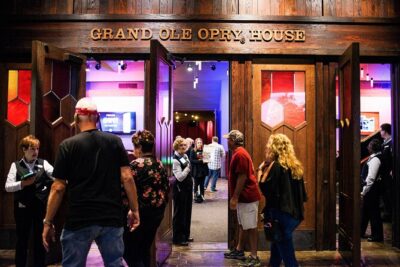
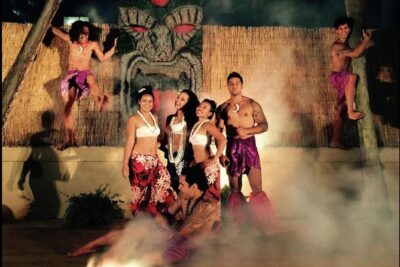
Polynesian Fire Luau and Dinner Show Ticket in Myrtle Beach
Read our review →Browse the lists this show appears in