
Review · AUDIO TOURS
Mdina: The Mdina Experience Audio-Visual Show (Open Ticket)
Mdina’s story is far too large to fit into a quick walk around its quiet streets, so this 30-minute audio-visual show gives you the broad picture fast. You’ll move through 7,000 years of triumph, disaster, faith, and rebuilding, from the cult of the mother goddess to the earthquake that wrecked part of the city.
I like the flexible open ticket, which lets you choose any operating day and available show time. I also like the 12-language audio system, a useful touch for families and mixed-language groups. The main drawback is simple: this is a screen-based presentation, not a guided walk through Mdina, and it is not suitable for people with hearing loss.
Key points to know before you go
- A 30-minute history lesson: See Mdina’s long story in one compact presentation.
- A 7,000-year timeline: The show covers prehistoric beliefs, St. Paul’s arrival, the earthquake, and the city’s rebuilding.
- 12 audio languages: Choose English, German, French, Dutch, Spanish, Italian, Russian, Turkish, Greek, Swedish, Japanese, or Maltese.
- Flexible open entry: Use the ticket on any day during opening hours, subject to available time slots.
- Hourly shows from 11:00 a.m. to 5:00 p.m.: The 5:00 p.m. presentation is the last one scheduled.
- A medieval tavern afterward: Food and drinks are available after the show, but they cost extra.
Why Mdina’s story works well on a big screen
Mdina is often called the Silent City, and its calm stone lanes can make the past feel distant. The show helps put those streets into context. Instead of seeing only old walls and handsome buildings, you get a quick account of the forces that shaped the former capital of Malta.
The presentation reaches back 7,000 years. That is a big span for half an hour, so do not expect every ruler, battle, or building to receive equal attention. The strength here is the wide view. You get the major chapters and the disasters that changed the city’s course.
The subject matter also moves beyond the usual list of dates. The program includes the cult of the mother goddess, an important clue to Malta’s early religious life. It also covers the shipwreck of St. Paul, a story with major importance in Malta’s Christian tradition.
Then comes one of Mdina’s hardest chapters: an earthquake that destroyed half the city. The show explains how Mdina was rebuilt after that damage, giving you a better sense of why the city looks the way it does today.
I find that kind of context useful before or after walking around Mdina. You may not remember every detail, but you’ll have a clearer idea of how religious belief, natural disaster, and reconstruction shaped the place.
A few more shows around the world worth a look
- Valletta: “The Malta Experience” Audio-Visual Show Ticket
★ 4.4 · 468 reviews - Maltese Islands History Audio-Visual Show and La Sacra Infermeria Tour
★ 4.0 · 344 reviews - 20-Minute Audio-Visual Show + Optional Valletta Audio Guide
★ 3.2 · 11 reviews
The 30-minute presentation, chapter by chapter

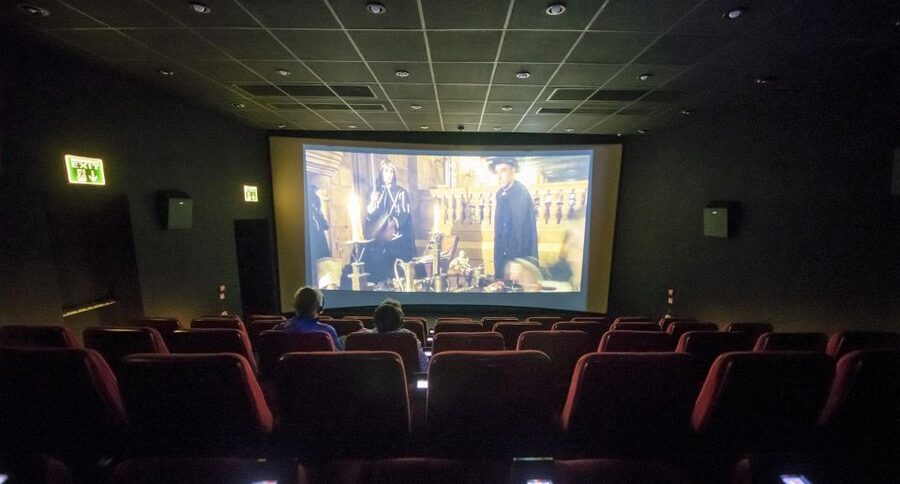
The experience begins at the front door of the Mdina Experience theatre. You check in at the reception area, then take your place for the show. There is no tour guide leading you through the presentation. Instead, you receive an audio commentary through the headset system while the large screen carries the visual side of the story.
The opening section reaches into Malta’s distant past. The reference to the mother goddess gives the early part of the presentation a human angle. You are not simply watching a list of ancient dates. You are being introduced to the beliefs that mattered to people living on these islands thousands of years ago.
Next, the show turns to St. Paul’s shipwreck. This is one of the most familiar religious stories connected with Malta, and the presentation places it within Mdina’s wider story. If you have already seen churches and religious sites elsewhere on the island, this section can help connect those experiences.
The disaster chapter focuses on the earthquake that destroyed half of Mdina. This is one of the most useful parts for understanding the city. When you later walk through the streets, the idea of Mdina as a place rebuilt after major damage gives the stone architecture more meaning.
The final sections follow the city’s recovery and rebuilding. The show’s title subject is not only Mdina’s survival, but also its ability to change after hardship. That makes the presentation more than a static history lesson. It gives you a basic explanation of how an old capital can be damaged, restored, and carried into a new period.
The entire program lasts about 30 minutes. That timing works well if you are fitting Mdina into a broader day in Malta. It is long enough to provide real context, but short enough for children and for anyone who does not want a full museum visit.
How the projection and sound affect the experience
The theatre uses multi-controlled, high-resolution projection systems and a large screen for panoramic images. The aim is to present Mdina’s story as a visual show rather than a plain recorded lecture.
The sound system uses headsets and surround sound. That matters because the audio commentary is available at the same time in 12 languages. You can choose from English, German, French, Dutch, Spanish, Italian, Russian, Turkish, Greek, Swedish, Japanese, and Maltese.
For many visitors, the language choice will be one of the strongest practical reasons to book. You are not limited to an English presentation, and the system can suit families or small groups who do not all speak the same language.
The headset format also keeps the presentation focused. You are listening to a dedicated soundtrack while watching the projections, rather than trying to catch a guide’s words in a crowded room. Still, this format has a clear limit. Since the experience depends on spoken audio, it is not suitable for people with hearing loss.
The visual system is another reason to keep your expectations in check. You are watching a prepared presentation on a large screen, not seeing live views from Mdina or handling historical objects. If you prefer real buildings, artifacts, and human storytelling, you should treat this as a short orientation rather than a complete substitute for walking through the city.
Why the open ticket is useful in Mdina
The ticket is open, which gives you more control over your day. You can use it on any day within the theatre’s opening hours and available time slots. That is handy in Mdina, where you may want to visit other sights, stop for lunch, or wait out the hottest part of the afternoon.
Shows are scheduled every hour from 11:00 a.m. through the 5:00 p.m. show. The last scheduled presentation begins at 5:00 p.m. Since the ticket is valid for one entry only, plan to arrive with enough time to check in at reception.
The open ticket does not mean you can enter at any moment. You still need to use one of the available show times. Opening hours can change, so I would confirm the schedule with the service provider during your stay if your plans are tight.
This is also not a one-day guided tour, despite the booking information giving the activity a one-day duration. The actual presentation takes 30 minutes. The one-day wording refers to the period in which you can use the open ticket, not the length of time you spend inside the theatre.
There is no hotel pickup or drop-off. You make your own way to the front entrance of the Mdina Experience. There is also no live guide included, though the English host or greeter can assist at the theatre and the audio commentary supplies the narration.
Same place, a different night out:
- Istanbul: Bosphorus Dinner Cruise & Show with Private Table
★ 4.8 · 62,058 reviews - Marrakech: Agafay Desert Sunset, Camel Ride, and Dinner Show
★ 4.6 · 35,119 reviews - Marrakech: Agafay Desert Quad & Camel Rides with Dinner Show
★ 4.8 · 27,382 reviews - Marrakech: Agafay Desert Quad Biking Tour with Dinner-Show
★ 4.8 · 16,569 reviews
The best place for it in your Mdina day
You can use the show either near the beginning or near the end of your visit. I prefer it near the beginning if Mdina is new to you. The program gives you a quick historical framework, and then you can look at the city’s walls, lanes, and buildings with more context.
It can also work well after you have walked around. In that order, the show acts as a recap. You may recognize the forces that shaped the city and better understand why rebuilding matters so much to Mdina’s appearance.
The hourly schedule makes either approach possible. If you arrive in the morning, you can catch a show at 11:00 a.m. or choose a later hour. If you are already exploring Mdina, you can fit the presentation into a gap rather than organizing your whole day around it.
At 30 minutes, it is especially easy to pair with other sightseeing. You might use it as a short indoor break, although the supplied details do not promise any particular seating or temperature inside the theatre. The important point is that the activity does not demand a full afternoon.
Is $7 a fair price?
At $7 per person, this is a modest-cost attraction. I see the value mainly in the amount of historical ground it covers and the flexibility of the ticket. You get a full 30-minute program, modern projection equipment, headset audio, and a choice of 12 languages.
The price makes more sense if you want an introduction to Mdina rather than a long museum visit. For families, the combination of visuals and a short running time may be easier than a lengthy history talk. For adults already familiar with Malta’s past, the experience may feel more like a refresher than a major attraction.
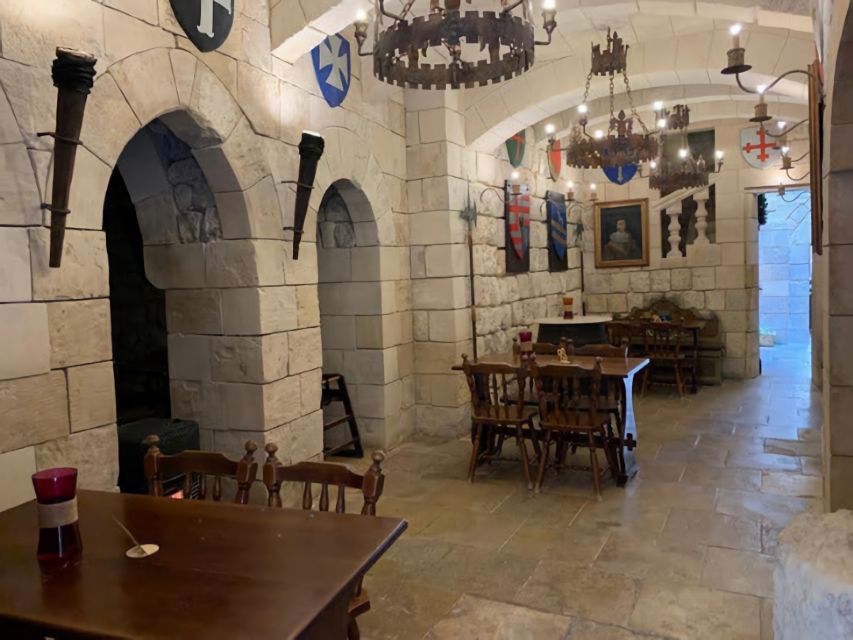
Food and drinks are not included. After the presentation, you can visit the medieval tavern for freshly prepared food and drinks, but you should budget separately for that stop. The tavern can add atmosphere to the outing, but it is not part of the $7 admission.
The ticket also does not include transportation or a personal guide. That keeps the cost down, but it means you need to arrange your own route to Mdina and explore the city independently.
Free cancellation is available up to 24 hours before the activity for a full refund, and you can reserve now and pay later. Those options are useful if your Malta schedule may shift, though they do not change the one-entry rule once you use the ticket.
Who will get the most from this experience?
I would recommend the Mdina Experience to you if you want a quick introduction before exploring the Silent City. It is also a sensible choice for families, mixed-language groups, and visitors who want a short indoor activity with a clear beginning and end.
The 12 audio choices make it more practical than a standard English-only presentation. The show’s mix of religion, disaster, ancient culture, and rebuilding also gives it more variety than a narrow account of one building or one period.
It may not be the right choice if you want a live historian, a small-group conversation, or detailed archaeological interpretation. You will not have a guide answering questions throughout the show. You also should not book it if a hearing impairment would prevent you from following the audio commentary.
The experience is best viewed as one part of a Mdina visit. It does not replace time in the city itself. The show tells you what happened; your walk through Mdina lets you see the setting.
Practical tips for a smoother visit
Check the show times before setting out, especially if you are visiting Malta near the end of the day. The scheduled hours run from 11:00 a.m. to 5:00 p.m., but opening times can change.
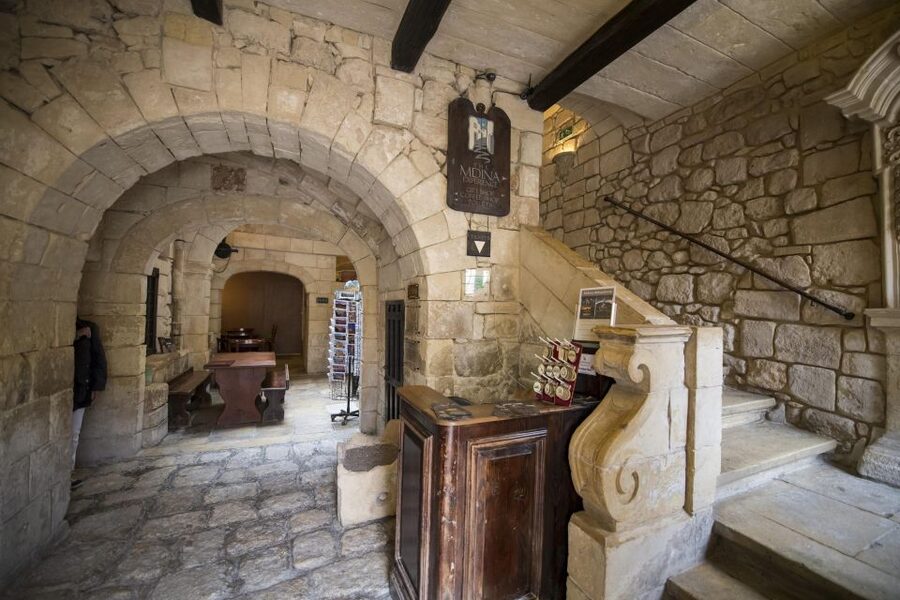
Arrive at the theatre’s front door and check in at reception. Since the open ticket allows one entry only, choose your show time carefully and avoid assuming that you can return later on the same ticket.
Think about the language you want before the presentation begins. English is available, along with 11 other options. The audio guide languages are English, German, French, Dutch, Spanish, Italian, Russian, Turkish, Greek, Swedish, Japanese, and Maltese.
Allow extra time if you want to eat or drink at the medieval tavern afterward. Those items are not included, but the tavern gives you an easy way to continue the historical mood after the screen presentation ends.
Pets are not allowed. There is no hotel transfer, and the activity is not designed as a guided walking tour, so plan your transport and Mdina sightseeing separately.
Should you book the Mdina Experience?
Book it if you want a low-cost, 30-minute introduction to Mdina’s long story, especially if you value flexible timing and multilingual audio. The mother goddess, St. Paul’s shipwreck, the earthquake, and the rebuilding of the city give the show a useful range.
Skip it if you want live interpretation, detailed museum objects, or a walking tour led by a guide. The theatre presentation is polished and efficient, but it remains a screen-and-headset experience.
For $7, I think it earns its place as a short orientation, particularly at the start of a Mdina visit. Pair it with your own walk through the Silent City, and the old stones will have more to say.
FAQ
How long does the Mdina Experience show last?
The audio-visual presentation lasts 30 minutes.
What subjects does the show cover?
It covers Mdina’s 7,000-year history, including the cult of the mother goddess, the shipwreck of St. Paul, the earthquake that destroyed half the city, and its rebuilding.
Which languages are available for the audio commentary?
The audio commentary is available in English, German, French, Dutch, Spanish, Italian, Russian, Turkish, Greek, Swedish, Japanese, and Maltese.
When are shows scheduled?
Shows are scheduled every hour from 11:00 a.m. until 5:00 p.m., with the 5:00 p.m. presentation being the last scheduled show.
Can I use the open ticket on any day?
Yes. You can use the open ticket on any day within the theatre’s opening hours and available time slots.
Can I enter the theatre more than once?
No. The ticket is valid for one-time entry only, and re-entry is not allowed.
Are food and drinks included?
No. Food and drinks at the medieval tavern are available after the show but are not included in the admission price.
Is the experience suitable for people with hearing loss?
No. The activity is not suitable for hearing-impaired people because the presentation relies on audio commentary.
Just added around the world
- Hanoi city tour with water puppet show- small group tour★ 5.0 · 10 reviews
- Hanoi Street Food Walking Tour and Water Puppet Show★ 4.0 · 5 reviews
- Hanoi Cyclo Ride and Water Puppet Show★ 3.5 · 3 reviews
- Private: Hanoi Street Food tour with Water Puppet Show and Cyclo★ 5.0 · 8 reviews
- Thang Long Water Puppet Show Tickets★ 4.5 · 7 reviews
- Deluxe Group Hanoi Sightseeing Including Puppet Show★ 4.5 · 2 reviews
- Hanoi Private Trip: Explore local culture, monument, cooking class & puppet show★ 4.5 · 3 reviews
- Songcheng Park & Lengend of Song Dynasty Show Ticket★ 4.5 · 3 reviews
Audio Tours, compared.
Valletta: “The Malta Experience” Audio-Visual Show Ticket
Read our review →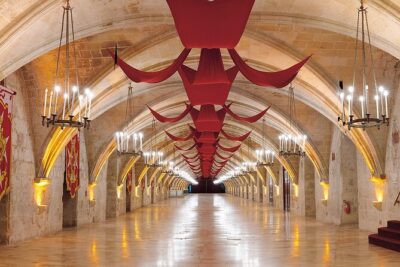
Maltese Islands History Audio-Visual Show and La Sacra Infermeria Tour
Read our review →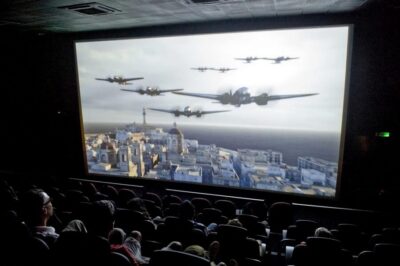
20-Minute Audio-Visual Show + Optional Valletta Audio Guide
Read our review →
Cappadocia Whirling Dervish Show With Audio Guide
Read our review →Browse the lists this show appears in