
Review · USA
Phoenix: World’s Only Global Musical Instrument Museum
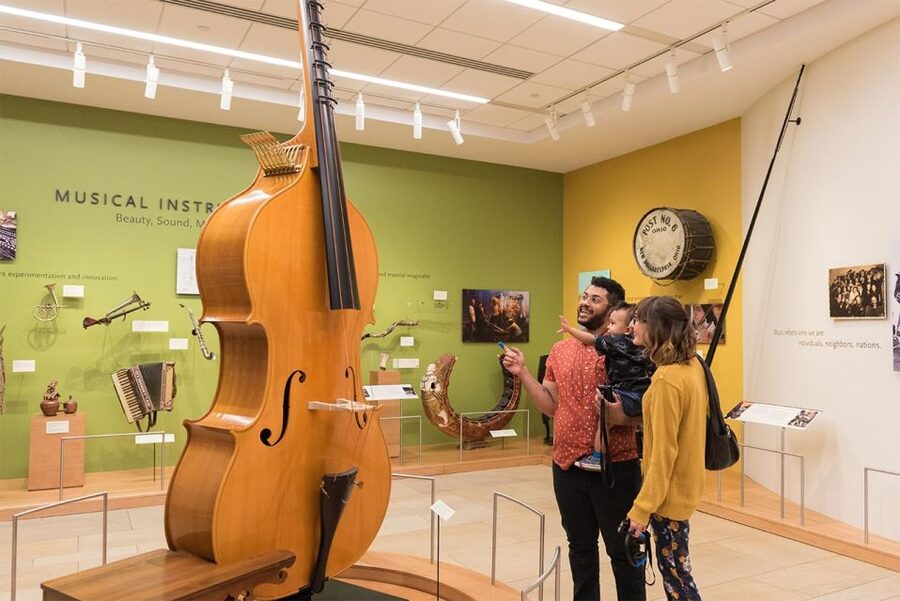
Phoenix’s Musical Instrument Museum brings 6,000 years of music into one thoughtful visit. You can move from African drums to Asian stringed instruments, watch performers in their original settings, and hear what each display sounds like through the guidePORT audio system. It is less a room full of objects than a listening tour of human culture.
I like the sheer range, with 4,300 instruments from more than 200 countries and regions, and I like that the museum lets you do more than look through glass. The Experience Gallery gives you a chance to touch and play selected instruments. The main consideration is time: a quick stop will only skim the collection, so plan for much of a day.
Key points
- 6,000 years of musical history: See instruments tied to ceremonies, local traditions, performers, and everyday musical life.
- More than 200 countries and regions: The galleries cover Africa, the Middle East, Asia and Oceania, Latin America, Europe, and the United States and Canada.
- GuidePORT audio and video: Listen to music performed on the instruments while watching them used in their original context.
- A hands-on Experience Gallery: Touch and play selected instruments rather than keeping your visit entirely behind display cases.
- A full-day option for $20: The admission price is modest if you take time with the collection, especially for musicians and curious families.
- Wheelchair accessible with practical bag rules: Complimentary parking is available from Mayo Boulevard, but large bags and several items must be checked.
Why Phoenix’s Musical Instrument Museum feels different
Many museums display instruments as beautiful objects. MIM asks you to hear them, too. That change matters. A carved instrument behind glass can tell you something about materials and craftsmanship, but its accompanying sound and video can show how it functions in a ceremony, a performance, or a local musical tradition.
The collection covers instruments and musical heritage from more than 200 countries and regions. That gives you a wide view without requiring a long series of separate museum visits. The galleries are arranged by major world regions: Africa, the Middle East, Asia and Oceania, Latin America, Europe, and the United States and Canada.
The museum also places music across a long span of time, reaching back 6,000 years. You are not simply comparing shapes. You are seeing how communities made music, what kinds of instruments they valued, and how sound connects to celebrations, rituals, and daily life.
I would not treat this as a museum you rush through in an hour. The Swiss visitor who said they could easily have spent a full day had the right idea. The price is $20 per person, and that is good value if you give the collection room to unfold.
More West End Shows in the USA
- NYC: Aladdin the Musical on Broadway
★ 4.8 · 1,800 reviews - NYC: The Lion King on Broadway
1,609 reviews - NYC: MJ the Musical on Broadway
1,510 reviews
Start with the guidePORT audio system
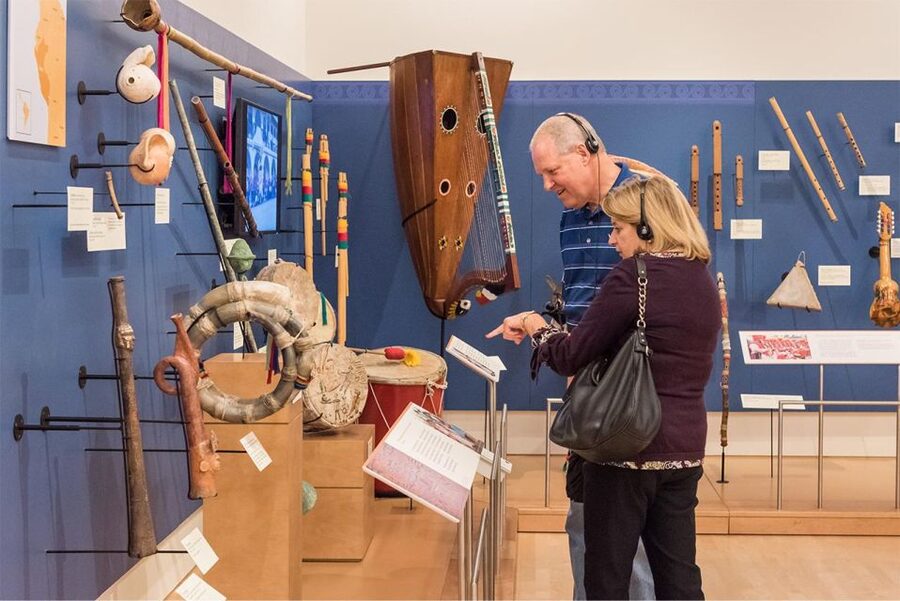
Your included guidePORT system is the key to the museum. Use it to listen to music and watch videos connected to the instruments on display. The system is designed to let you experience a performance in its original context, rather than leaving you to read a short label and guess what the instrument sounds like.
That audio element gives the visit its shape. You can stop at an instrument that catches your eye, use the guidePORT equipment, and hear how it works. Then you can compare it with another instrument from a different region. The experience becomes active without turning into a guided group tour.
The audio guide is in English, and the host or greeter service is also in English. No named guide is provided, so you should expect to guide your own pace through the galleries. That is useful if one person in your group wants to linger over a particular musical tradition while another moves ahead.
Bring your attention, not outside snacks or drinks. Food and beverages, including water, are not allowed inside the museum except in Café Allegro. That rule is easy to manage, but it is worth knowing before you arrive.
Africa and the Middle East: sound tied to community

The Africa and Middle East sections are good places to think about music as a shared activity rather than a private performance. The displays connect instruments with musical heritage, ceremonies, and cultures. The audio and video features help you understand how the instruments fit into those settings.
You might find yourself comparing instruments by sound rather than appearance. That is one of the collection’s strengths. A small object can have a surprising musical role, while a large or ornate piece may be important for reasons that become clearer once you hear it played.
These galleries reward patience. Read the information, listen through guidePORT, and give the video enough time to show how the instrument is used. If you only photograph the cases, you will miss the main point of this museum.
The collection includes rare examples, fine examples of their type, historically important instruments, and pieces from distinctive musical cultures. The value is not just in the number of objects. It is in the chance to connect each object to a real sound and setting.
Asia and Oceania: compare instruments by sound
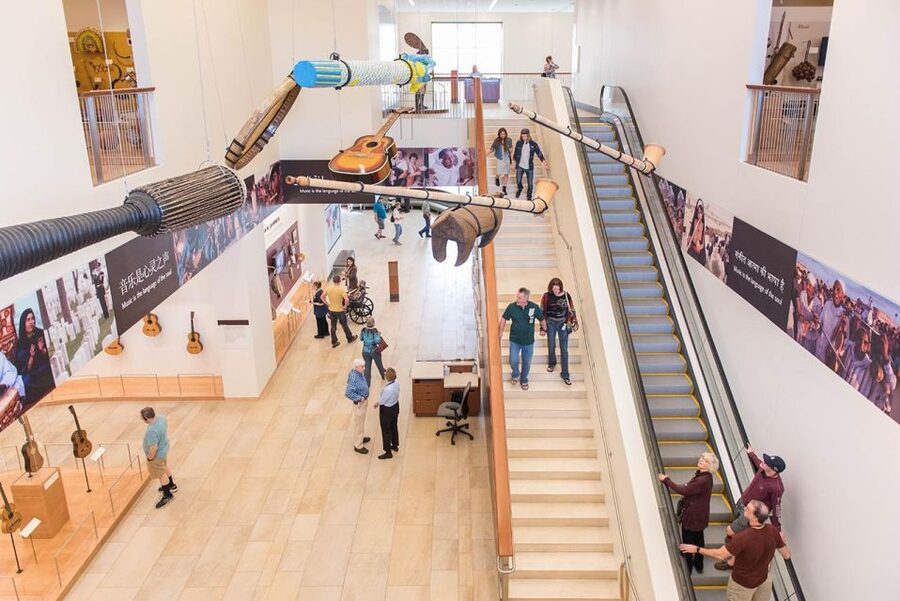
Asia and Oceania offer another strong reason to use the audio equipment. Musical instruments can look familiar at first glance, but their construction, role, and sound may be entirely different from what you expect. The videos give you a clearer sense of performance and setting.
I like this part of the visit for comparison. You can move from one display to the next and ask simple questions: How is the instrument played? Who plays it? Is it used alone, in a group, or as part of a ceremony? The museum provides the material for those questions without forcing everyone into the same route.
This is also where the museum’s broad geographic plan works well. You are not given a single story of music. You are shown many musical traditions side by side, with room to notice both differences and shared ideas.
For a musician, the detail may be the main attraction. For a family, the sound and video make the displays easier to understand. For a general visitor, the system keeps the experience from becoming a silent parade of unfamiliar objects.
More Broadway and West End Shows in the USA:
- NYC: Moulin Rouge! the Musical on Broadway
1,329 reviews - NYC: Harry Potter and the Cursed Child on Broadway
700 reviews - NYC: Chicago the Musical on Broadway
687 reviews - Broadway and Times Square Insider Tour with Theater Professional
★ 5.0 · 651 reviews
Latin America, Europe, and North America
The Latin American galleries continue the museum’s focus on culture, performance, and musical use. The important thing is to listen before deciding what an instrument means. The same basic idea, such as creating rhythm or melody, can take many forms across different communities.
Europe and the United States and Canada provide a chance to consider music from closer to home, too. The collection is not limited to one genre or one idea of what deserves museum space. It brings together musical traditions from many settings and includes performers and styles across the collection.
That broad approach helps prevent a narrow definition of music. You are not asked to choose between classical, folk, popular, ceremonial, or electronic traditions. The museum presents all genres and performers as part of a larger human story.
An especially useful detail for modern musicians is the inclusion of electronic exhibits. A 28-year-old musician visiting with her grandmother was particularly pleased to find displays that held her interest, including electronic material. That makes MIM more than a museum of ancient or traditional instruments. It gives current music a place in the conversation.
The Experience Gallery lets you make some noise
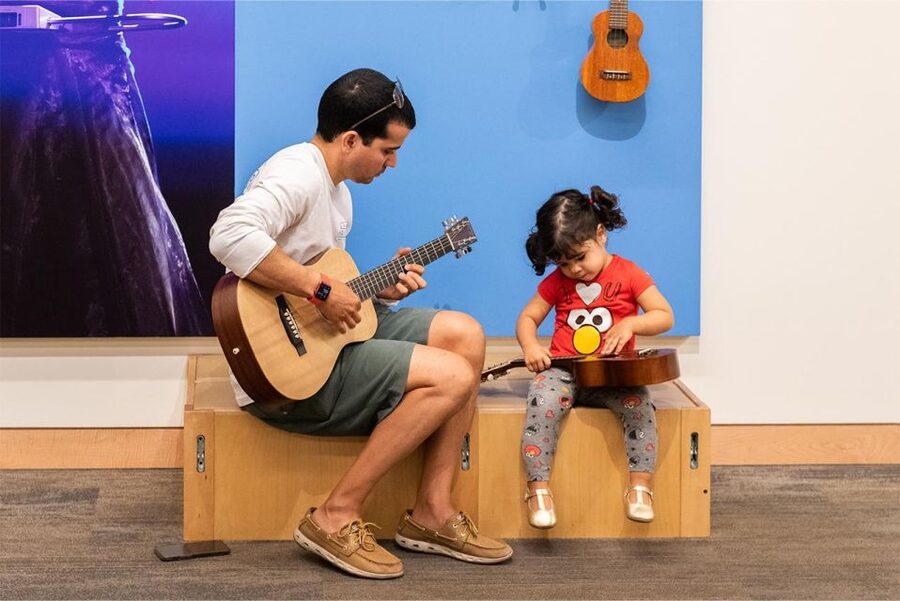
The Experience Gallery is the best stop for anyone who learns by doing. Here you can touch and play some instruments. That small shift from listening to handling makes the collection easier to remember, especially for children and visitors who do not already know much about musical instruments.
It also gives the visit a welcome change of pace. The main galleries ask you to look, listen, and watch. The Experience Gallery lets you test the physical side of music. You can think about how an instrument responds to touch, movement, or breath instead of treating it as an untouchable object.
The hands-on area does not mean every display is available to play. Most of the collection remains protected, as you would expect. Still, having a designated place for direct interaction helps connect the museum’s large collection to your own experience.
If you are visiting with children, this is an important reason to include the museum in your plans. If you are an adult musician, do not skip it. The hands-on section may be simple, but it adds a useful physical dimension to the audio and video displays.
How much time should you allow?
The official validity is one day, and you should use that flexibility. The museum is large enough that you can spend a full day with it, especially if you listen to many audio selections and watch the related videos.
For a shorter visit, choose a few regions and give them proper attention. You will get more from three carefully explored galleries than from racing through every case. A full day allows you to follow your curiosity, return to an instrument, and spend time in the Experience Gallery without watching the clock.
I would plan a morning arrival if you want to see a lot. The included brochure and map help you get your bearings, and the guidePORT equipment gives you control over the order. A break at Café Allegro can divide the visit into manageable parts, since outside food and drinks are not permitted inside the museum.
The museum’s popularity with repeat visitors is easy to understand. A first visit can introduce the regions and major displays. A later visit lets you focus on a particular type of instrument, a musical tradition, or the electronic exhibits.
The $20 price and what you receive
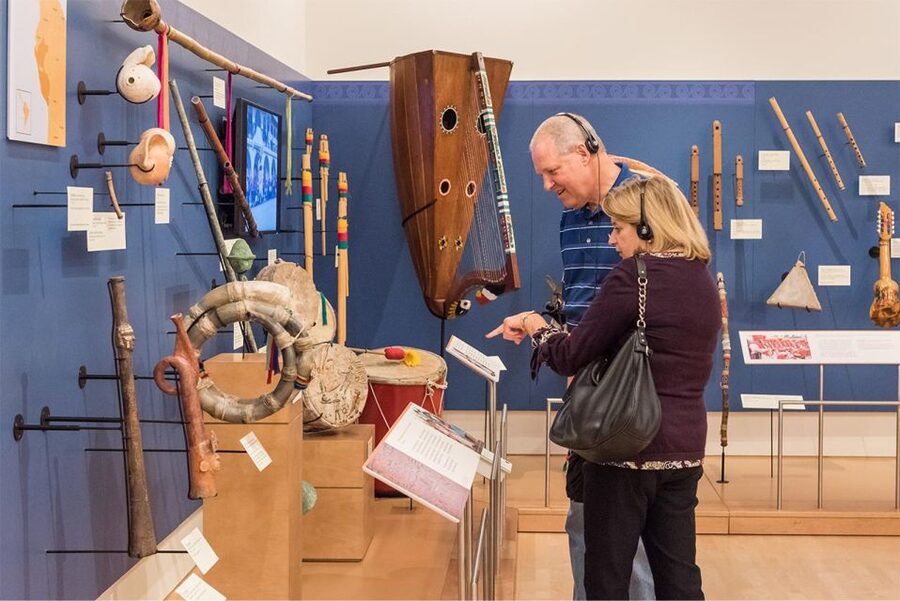
General admission costs $20 per person. That includes entry, the English guidePORT audio guide, and a brochure with a map. It does not include concerts or special exhibitions, so check those separately if they are part of your plan.
For the main collection, I consider the price fair. You are paying for a substantial set of galleries, 4,300 instruments, audio and video material, and a hands-on area. The value improves as you spend more time inside. A brief visit still works, but it gives you less return for the admission fee.
The museum is particularly good value for people with a strong interest in music, families who want an educational indoor activity, and anyone looking for something beyond the usual Phoenix attractions. A visitor who dislikes museums or prefers a quick visual stop may find the collection too large.
Café Allegro adds a practical option during a longer visit, though food and drinks are not included in admission. One family visit specifically praised the café staff, which is useful to keep in mind if you plan to break up a long morning there.
Parking, bags, and access
Parking is complimentary. The parking lot entrance is on Mayo Boulevard, just south of Loop 101. That makes driving straightforward, but you should still note the entrance location before setting out.
The museum is wheelchair accessible. Bags larger than 18 inches by 18 inches, backpacks, purses, umbrellas, tripods, selfie sticks, and similar items must be checked at Guest Service. Non-stroller baby carriers also need to be checked.
Baby wearing is allowed only with a sling or carrier worn on the front of the body. Weapons and sharp objects are not permitted. These rules are simple, but packing light will make your arrival easier.
Since outside food and drinks are not allowed, do not carry a water bottle into the galleries. Plan to use Café Allegro for food and beverages during your visit.
Who will enjoy MIM most?
I would recommend MIM first to people who like to listen as much as look. The guidePORT equipment changes the visit from a display of objects into a series of musical encounters. You can hear the instruments, watch them being played, and connect them with cultural settings.
Musicians should allow plenty of time. The collection includes rare, historically important, finely made, and culturally distinctive instruments, along with electronic displays that keep the subject current.
Families can use the Experience Gallery as an anchor. Younger children may not follow every label, but they can respond to sound, video, and the chance to play selected instruments. The museum also works well for a birthday outing or a special morning with a grandparent, particularly if your group has different levels of musical interest.
I would be more cautious about booking it for someone who wants a quick attraction with little reading or listening. The museum rewards curiosity and patience. It is not designed as a fast photo stop.
Should you book the Musical Instrument Museum?
Book it if you want a full and thoughtful day indoors, especially if music, world cultures, family learning, or musical performance interests you. The combination of 4,300 instruments, guidePORT audio and video, six major world regions, and a hands-on gallery gives you more to do than the $20 admission price suggests.
Plan your time carefully, pack light, and use the audio equipment instead of treating the displays as silent cases. If you have only a short window in Phoenix, choose another activity unless you can accept a quick introduction. But if you can give MIM several hours, it offers one of the clearest ways to hear how widely people create, share, and use music.
FAQ
Where is the Musical Instrument Museum located?
The museum is in Phoenix, Arizona. The parking lot entrance is on Mayo Boulevard, just south of Loop 101.
How much does admission cost?
General admission costs $20 per person.
How long is the visit valid?
The admission is valid for one day. Check availability for the available starting times.
What does general admission include?
Admission includes entry to the Musical Instrument Museum, the English guidePORT audio guide, and a brochure with a map.
Is an audio guide included?
Yes. An English guidePORT audio guide is included with general admission. It lets you listen to music and watch videos connected to instruments on display.
How many countries and regions are represented?
The museum presents musical heritage from more than 200 countries and regions.
Can I play any of the instruments?
Yes. The Experience Gallery gives you an opportunity to touch and play some instruments.
Is the museum wheelchair accessible?
Yes. The activity is wheelchair accessible.
Are food, drinks, and bags allowed inside?
Food and beverages, including water, are not permitted inside the museum except at Café Allegro. Backpacks, purses, and bags larger than 18 inches by 18 inches must be checked, along with items such as umbrellas, tripods, and selfie sticks.
More Museums in the USA
- Museum of Broadway
★ 4.5 · 306 reviews - New York City: Museum of Broadway Entry Ticket
★ 4.6 · 113 reviews - Center for Puppetry Arts: Worlds of Puppetry Museum
★ 4.6 · 59 reviews - Seville: Puro Flamenco Show with Optional Museum Ticket
★ 4.8 · 6,088 reviews
Just added around the USA
- West End Tour, Open Cockpit Biplane Ride★ 5.0 · 8 reviews
- Circus Secrets of Venice Trolley Tour★ 5.0 · 3 reviews
- Murder Mystery Dinner and Show★ 5.0 · 8 reviews
- The MAXIMUM MAGIC Show Starring Noah & Heather Wells★ 4.5 · 242 reviews
- Destin Harbor Firework Show by Boat★ 4.0 · 20 reviews
- The Dinner Detective True Crime Murder Mystery Show – Denver, CO★ 4.5 · 36 reviews
- That Game Show Place in Palm Harbor★ 5.0 · 19 reviews
- Trickery Chicago Magic Show★ 5.0 · 91 reviews
USA Shows, compared.




Mauka Warriors Luau Honoring Polynesia’s Forgotten History
Read our review →
The Magical Mystery Show! at Hilton Waikiki Beach Hotel
Read our review →

Polynesian Fire Luau and Dinner Show Ticket in Myrtle Beach
Read our review →Browse the lists this show appears in