
Review · BARCELONA
Barcelona: Old Town Artistic Tour & Flamenco Show
Barcelona saves its best finale for the end of this tour: after four hours through old streets, Roman walls, art spaces, and grand churches, you settle into a 17th-century palace for live flamenco. That pairing gives the day a clear shape, from street-level creativity to an intense performance.
I like two things here. First, the small group of no more than 10 people should make it easier to hear your guide and ask questions. Second, the route connects districts that can feel separate when visited alone, especially El Raval, the Gothic Quarter, and El Born. The main consideration is pace: four hours covers many stops, so this is a walking tour with short photo visits, not a slow museum day.
Key points to know before booking
- Three historic districts in one walk: Follow the route from El Raval through the Gothic Quarter and into El Born.
- Artist-led storytelling: Guides including Daniele, Marcus, Carlos, and David use history, anecdotes, sketches, and small performances to bring the streets to life.
- A palace flamenco finale: Finish at Palau Dalmases, a Baroque palace with an intimate live show.
- Small-group format: The tour is limited to 10 people, a useful size for a personal walking experience.
- Four hours on foot: Wear comfortable shoes and expect historic streets, alleys, and several photo stops.
- Good value for a culture-focused afternoon: The $71 price includes the walk, live moments, and flamenco show, but not food or drinks.
Starting at Plaça de la Universitat
The tour begins beside the metro station at Plaça de la Universitat, right in central Barcelona. This is a practical meeting point because you can reach it by public transportation and begin in a part of the city that quickly shifts from open city square to narrow urban streets.
The first section focuses on Barcelona’s creative side. You are not simply ticking off famous buildings. The guide sets up the city as a place where artists, musicians, actors, and other creative people have worked among older neighborhoods and grand institutions.
That approach matters because Barcelona can be hard to read at street level. One block may feel modern and commercial, while the next reveals an old courtyard, a church facade, or a wall that hints at a much older city. The guide’s job is to connect those pieces before you move on.
More Flamenco Shows in Barcelona
- Barcelona: Tablao Flamenco Cordobes Show and Drink in Rambla
★ 4.6 · 3,822 reviews - Barcelona: Flamenco Show with Drink Option at La Rambla
★ 4.7 · 3,770 reviews - Barcelona: Flamenco Show with Dinner at Tablao de Carmen
★ 4.7 · 2,009 reviews
El Raval through an artist’s eyes
The walk enters El Raval, a district known here for its colorful streets, urban art, and bohemian character. The route includes Teatre Goya, Carrer de Joaquín Costa, the Barcelona Museum of Contemporary Art, Fundació Privada Casa de Misericòrdia de Barcelona, and the Old Hospital de la Santa Creu.
These are not full interior visits. They are guided photo and sightseeing stops, with roughly 10 to 15 minutes at several locations. That keeps the tour moving, but it also means you should not book this expecting extended time inside the museum or historic buildings.
Teatre Goya gives the opening section a performing-arts angle. The stop on Carrer de Joaquín Costa shifts the focus toward street life and the rawer, more bohemian feel of El Raval. This contrast is one of the tour’s strengths. You see how creative energy can appear in both formal theaters and ordinary streets.
The Barcelona Museum of Contemporary Art adds a direct link to modern art. Even without an extended museum visit, its presence helps explain why this part of the city appeals to artists and people interested in current culture. The Fundació Privada Casa de Misericòrdia and the Old Hospital de la Santa Creu bring in older layers of the neighborhood, giving the walk more range than a simple street-art route.
A guide with a theatrical streak can make a real difference here. David is an actor, and the tour’s format allows guides to use sketches, stories, and small live performances. Carlos has been described as entertaining and funny, while Daniele is noted for careful preparation, kindness, and close knowledge of the city. Those details suggest that the personality of your guide will shape the experience, so expect a lively presentation rather than a dry list of dates.
La Rambla and the edge of the old city
From El Raval, the route reaches the Grand Theater of Liceu and La Rambla. These are short photo stops, about 15 minutes at the theater and 10 minutes on the famous boulevard.
La Rambla can be crowded and commercial, but it is still useful as a reference point. The tour places it between the creative streets of El Raval and the older religious and civic spaces ahead. You get a quick look rather than a long pause, which is probably wise if your goal is to understand the whole old center in four hours.
The Grand Theater of Liceu adds scale and polish after El Raval’s rougher edges. It helps show the range of Barcelona’s cultural life, from street art and independent creative spaces to one of the city’s major theaters.
I would keep your camera ready but avoid spending too much time trying to frame perfect shots. The schedule has many stops, and the value lies in the guide’s explanation and the changing character of the neighborhoods. You are collecting impressions, not completing a photography assignment.
Gothic Quarter alleys, churches, and Roman walls
The Gothic Quarter is the historical core of the walk. Here the streets narrow, the squares become more enclosed, and the guide turns to medieval alleys, Roman walls, and old religious buildings.
The route includes the Basilica de Santa Maria del Pi, Barcelona Cathedral, Plaça de Sant Felip Neri, the Temple of Augustus, and the Bishop’s Bridge. Each stop is listed as a photo visit, with about 10 to 15 minutes at the main sites.
Barcelona Cathedral gives you one of the grandest stops on the route, while the Basilica de Santa Maria del Pi offers another view of the city’s religious architecture. The tour does not promise an extended interior visit, so check the pace you want before booking. You will see and discuss these places, but the walk is designed to keep moving.
Plaça de Sant Felip Neri is a quieter, more enclosed square. It creates a strong change from the open movement of La Rambla. The Temple of Augustus and the Roman walls then push the story further back, showing that the Gothic Quarter is not only medieval. The Bishop’s Bridge adds a striking architectural detail and makes a natural photo stop.
This is where a strong storyteller earns the fee. The guide can point out small details that you might walk past alone, then explain how the Roman, medieval, and later layers sit close together. Marcus is praised for explaining legends, history, and small details in a way that makes the streets feel alive. You should expect that style of interpretation to be central to the walk.
The main drawback is that you will not have much time to linger at every corner. If you want to enter the cathedral, study Roman remains at length, or stop for a quiet drink, you may prefer to return later on your own. For a first orientation to the quarter, the brisk sequence works well.
Same place, a different night out:
- Flamenco Show Ticket at Theatre Barcelona City Hall
★ 4.5 · 1,264 reviews - Authentic Flamenco Show Barcelona : Intimate Casa Sors Experience
★ 5.0 · 809 reviews - Barcelona: Flamenco Show at Palau Dalmases
★ 4.6 · 704 reviews - Teatro Flamenco Barcelona: Authentic Live Flamenco Show
★ 4.7 · 520 reviews
El Born and the road to Palau Dalmases
The final walking section reaches El Born and includes St. Mary of the Sea Cathedral. This district brings a different mood, with old palaces, artisan workshops, and lively bars along the route.
St. Mary of the Sea Cathedral is the major landmark here. The stop helps close the historical walking portion before the evening’s performance. El Born also gives the tour a stylish, social finish on the street, after the tighter alleys and quieter squares of the Gothic Quarter.
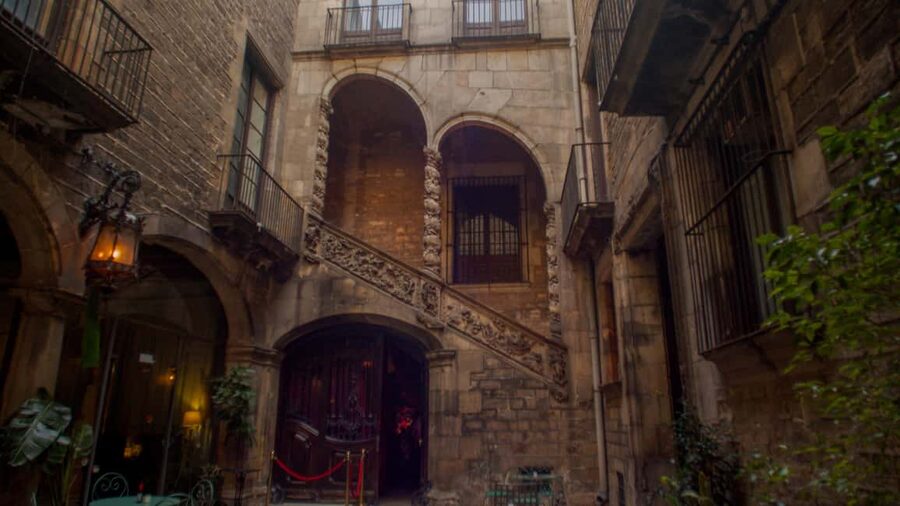
The route ends at Palau Dalmases. The building is described as a Baroque palace from the 17th century, and the setting is a major part of the show’s appeal. Instead of watching flamenco in a plain theater, you enter a historic interior that gives the performance a stronger sense of place.
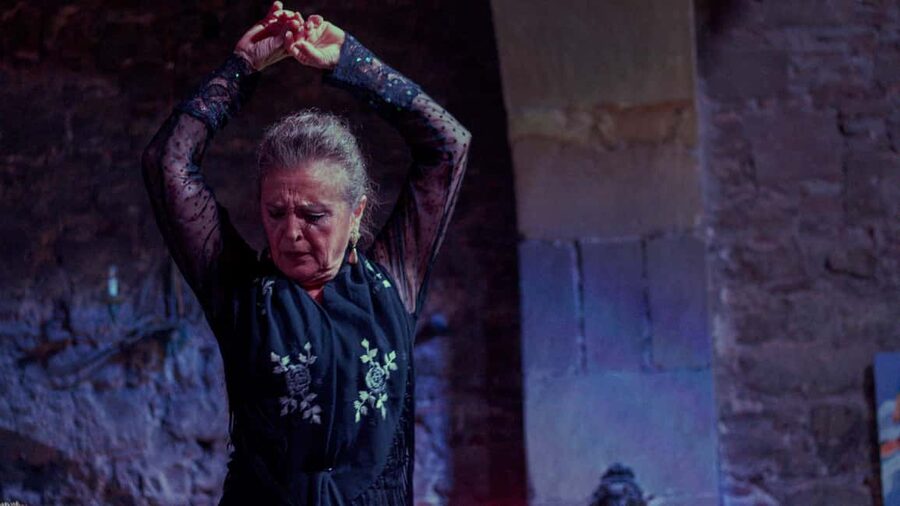
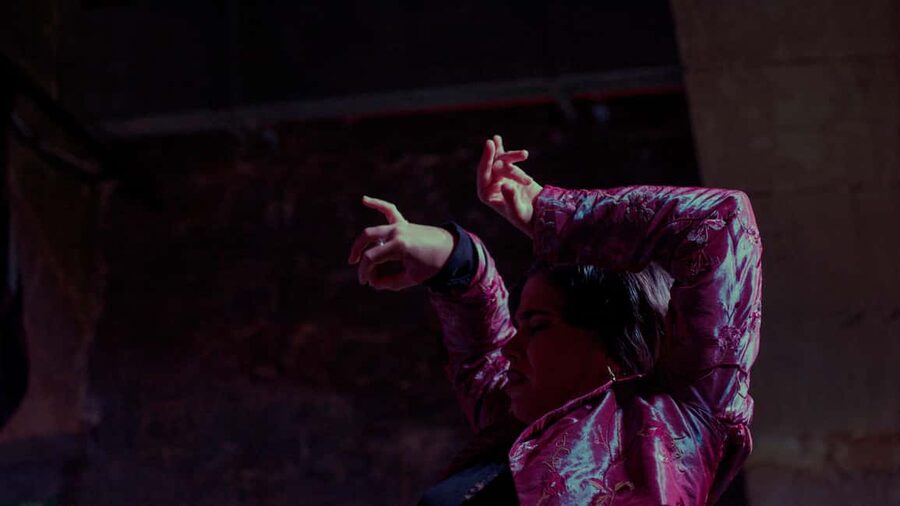
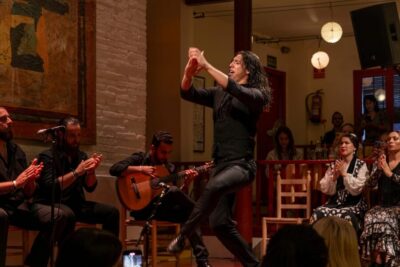
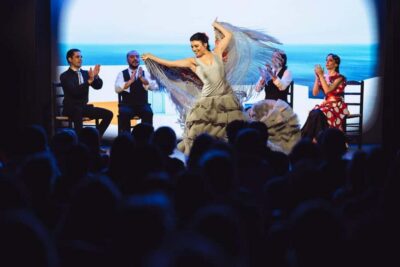
The show includes dancers, guitar, and singing. It is described as intimate and live, which suits the small-group nature of the walk. The flamenco is not an optional extra tacked onto the end. It is the reason the route has such a satisfying shape: you spend the afternoon learning how Barcelona’s old center works, then finish with a performance built around movement, music, and emotion.
The show’s appeal was the most repeated theme in the feedback available for this experience. Julia called it terrific, while Anders described it as powerful and unforgettable. Albert also singled out the combination of walking, storytelling, and flamenco. I would treat that as a sign that the performance is more than a quick tourist add-on, though the exact cast and performance style can vary.
Why the guides matter so much
This tour depends heavily on the person leading it. The route itself is strong, but many of the stops are best understood through explanation rather than through a long visit.
Several guide names appear in the experience feedback. Daniele is praised for preparation and warmth. Marcus is noted for storytelling and for explaining legends and small details. Carlos is described as amusing and engaging, while David brings his background as an actor to the history and anecdotes.
That range tells you what to expect: the guide may speak, sketch, perform, or use a dramatic touch rather than simply recite information. The tour is offered in English, French, Italian, and Spanish, so check the language available for your chosen departure.
The small group limit of 10 people should help. You can stay close to the guide in narrow streets, hear the stories more clearly, and ask a quick question without competing with a large crowd. It also means the tour may feel more personal than a standard city walk.
Is $71 a fair price?
At $71 per person, this is not the cheapest way to see Barcelona’s old center. You are paying for a four-hour guided walk, live performances during the route, and the flamenco show at Palau Dalmases. Food and drinks are not included.
The value improves if you want both a neighborhood walk and a flamenco performance. Booking those separately could take more planning, and the tour gives you a single route between the city’s creative districts and the evening show. It also saves you from trying to decide which small streets and landmarks deserve your time.
The value is weaker if you mainly want long visits inside museums or churches. The stops are short, and the experience is built around movement, interpretation, and atmosphere. You should not expect a museum ticket at every landmark or a meal along the way.
For a first visit to Barcelona, I see the price as reasonable for a culture-focused half-day, especially if flamenco is already on your list. You get more than a standard landmark walk, but you should choose it for the combination rather than for any one monument.
Practical details that affect the day
Plan on four hours, with departure times depending on availability. The route involves steady walking through historic neighborhoods, so comfortable shoes are essential. Bring a camera, but keep the pace in mind.
The activity is wheelchair accessible. Since the walk passes through historic districts and narrow streets, it is sensible to confirm the exact route and access arrangements when booking if you have specific mobility needs.
You can cancel up to 24 hours before the start for a full refund, and the reserve-now, pay-later option gives you some flexibility. The tour also offers skip-the-ticket-line access where relevant, although the supplied details do not promise extended entry time at each landmark.
Because food and drinks are not included, plan around the four-hour schedule. The experience ends at Palau Dalmases, so you can arrange your next meal or evening plan from there.
Who should book this Barcelona walk?
I would choose this tour if you want a clear introduction to Barcelona’s old center, prefer stories to silent sightseeing, and like the idea of ending with live music and dance. It suits first-time visitors who want several districts connected in one afternoon.
It also fits anyone who enjoys creative neighborhoods. El Raval’s street art and cultural spaces give the route a different feel from a standard Gothic Quarter walk. The artist guides add a performance element that should appeal to people who like theater, sketching, music, or unusual city stories.
Families with older children may also like the changing pace, though the four-hour walk requires stamina. Couples and solo visitors who want a ready-made cultural evening will find the palace show especially convenient.
I would look elsewhere if you want a slow architectural study, a dedicated museum visit, or a food tour. The schedule is too full for long stops, and the price includes no refreshments.
Should you book it?
Book this experience if you want Barcelona told through its creative districts, old streets, and live performance rather than through monuments alone. The strongest reasons are the small group, the guide-led storytelling, and the unusual finish at Palau Dalmases.
The best way to approach it is as a brisk cultural walk with many short stops. Wear good shoes, keep your camera ready, and let the guide supply the connections between El Raval, the Gothic Quarter, and El Born. At $71, it offers solid value for anyone who wants a walk and a flamenco show in one well-shaped outing.
FAQ
Where does the Barcelona artistic tour begin?
You meet the guide by the metro station in the center of Plaça de la Universitat.
Where does the experience finish?
The tour finishes at Palau Dalmases, where the flamenco show takes place.
How long does the tour last?
The full experience lasts four hours.
Which areas of Barcelona does the route visit?
The route passes through El Raval, the Gothic Quarter, and El Born, with stops at major cultural, religious, and historic sites.
What is included in the $71 price?
The price includes the guided walking tour, live performances during the route, and the flamenco show at Palau Dalmases.
Are food and drinks included?
No. Food and drinks are not included.
What languages are available?
The live guide is available in English, French, Italian, and Spanish.
Just added around Barcelona
- Barcelona Guitar Trio & Flamenco Show at Royal Artistic Circle★ 5.0 · 13 reviews
- Private Barcelona Walking Tour with Flamenco Show & Tapas Dinner★ 5.0 · 11 reviews
- Barcelona Private Gothic Quarter Tour with Flamenco Show★ 5.0 · 6 reviews
- Private Tapas Walking Tour in Barcelona Old Town and Flamenco Show★ 4.5 · 19 reviews
- Authentic Flamenco Show at the Barcelona Flamenco Theater★ 5.0 · 64 reviews
- Montjuïc Walking Tour With Optional Flamenco Show★ 5.0 · 196 reviews
- Private Barcelona Night Tapas Tour with Flamenco Show★ 5.0 · 7 reviews
- Flamenco Show at Theater Flamenco Laietana in Barcelona★ 3.5 · 2 reviews
Barcelona Shows, compared.

Tablao Flamenco Cordobes Show and Drink in Rambla
Read our review →
Flamenco Show with Dinner at Tablao de Carmen
Read our review →
Flamenco Show Ticket at Theatre Barcelona City Hall
Read our review →
Authentic Flamenco Show Barcelona : Intimate Casa Sors Experience
Read our review →
Teatro Flamenco Barcelona: Authentic Live Flamenco Show
Read our review →
Barcelona Basilica: Immersive Light and Sound Show – LUMINISCENCE
Read our review →Browse the lists this show appears in