
Review · TRADITIONAL & CULTURAL
Te Puia: Tuku Iho Trail with Cultural Show
Te Puia’s best trick is fitting geothermal wonders, kiwi birds, Māori arts, and a cultural show into one well-planned visit. You walk through steaming ground and bushland, taste sweetcorn cooked in a hot pool, then sit inside a carved meeting house for music, poi, and haka.
I like the direct connection between daily Māori life and the geothermal valley. I also like the efficient mix of major Rotorua sights, especially the Kiwi Conservation Centre and the New Zealand Māori Arts and Crafts Institute. The main drawback is the walking: uneven geothermal paths and bushland require a moderate level of fitness.
Key points to know before booking
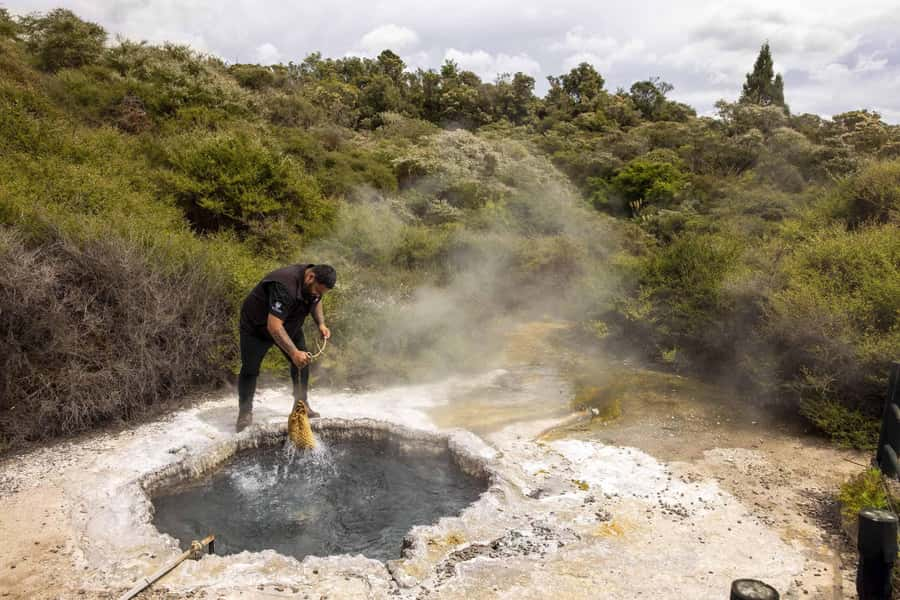
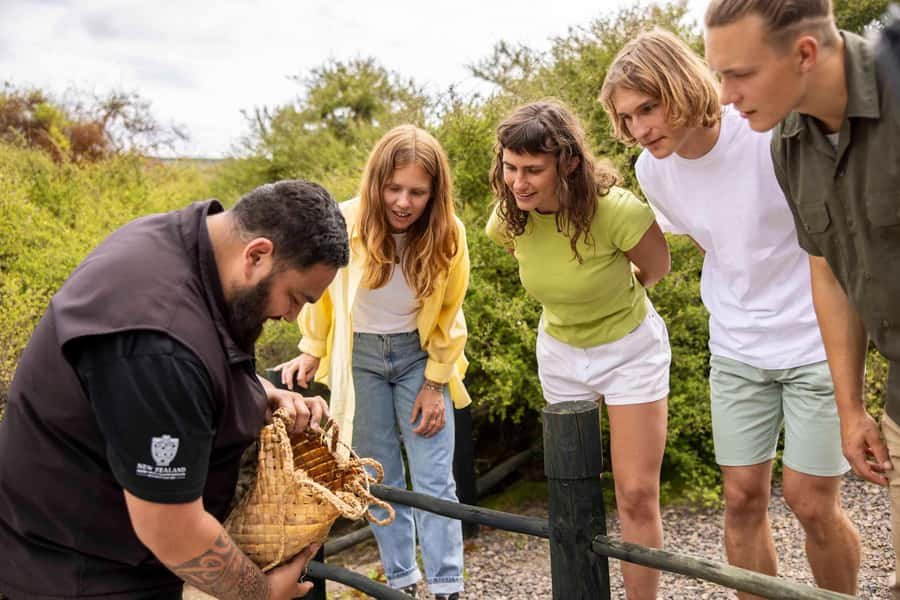
- Taste corn cooked in geothermal water: Your guide serves sweetcorn prepared in an ancient boiling ngāwhā while telling the tale of Hatupatu.
- See more than steaming pools: The walk includes bushland, sinter paths, geysers, Rotowhio marae grounds, and Māori arts.
- Look for kiwi birds: The Kiwi Conservation Centre gives you a chance to see New Zealand’s famous nocturnal bird.
- Finish with live Māori performance: Te Aronui a Rua hosts a pōhiri, waiata, mōteatea, poi, and haka.
- Plan for about 2 hours 45 minutes: The guided walk takes about 2 hours 15 minutes, followed by a 30-minute show.
- Expect a walking tour: Comfortable shoes and water matter. This is not a good fit for wheelchair users or people with limited mobility.
Why this Te Puia visit works so well
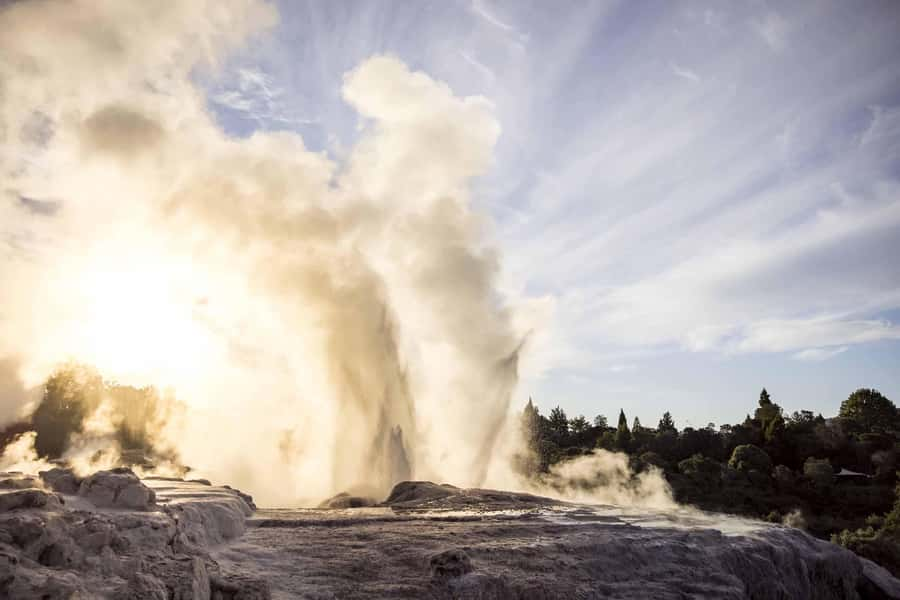
Rotorua offers plenty of ways to see geothermal activity, but Te Puia adds much more than bubbling water and clouds of steam. The Tuku Iho Trail links the valley’s natural features with Māori food traditions, storytelling, craft, conservation, and performance.
That combination gives you a useful sense of place. The hot pools are not presented only as a spectacle. You learn how ancestors used mineral-rich geothermal water for cooking and bathing, then see one small example when sweetcorn is cooked in a boiling ngāwhā.
At $89 per person, this is not the cheapest way to take a quick look at Rotorua. It can be good value if you want several major experiences in one booking, especially if you have only a short time in town. You are paying for a guided walk, access to the kiwi centre and arts institute, and a cultural show, not just a view of a geyser.
The format also keeps the pace moving. You do not need to organize separate tickets for the cultural performance or find your own way between the valley’s main attractions. For a first visit to Rotorua, that practical efficiency counts.
More Traditional and Cultural Shows in the world:
- Xcaret Park Entry Tickets with Cultural Night Show Included
★ 4.5 · 2,382 reviews - Xcaret Park Day Trip, transportation and Cultural Night Show
★ 4.5 · 1,899 reviews - Dubai: Tour with BBQ Dinner, Camel Ride, & Traditional Show
★ 4.8 · 1,687 reviews
The geothermal walk begins with food and legend
Your visit starts at Te Puia, 20 Hemo Road, where you check in at Admissions and exchange your ticket. From there, the guided portion leads into the geothermal valley and areas described as less familiar than the main viewing spots.
One of the first memorable details is the sweetcorn. It is cooked in an ancient boiling ngāwhā, using the heat that has shaped Māori life in this area for centuries. The sample gives you something concrete to taste while your guide explains how geothermal pools could serve practical household needs.
The story attached to this moment is the tale of Hatupatu. He was a brave warrior who escaped Kurungaituku, the mythical birdwoman. The story also carries a more surprising thread: Hatupatu alone knows that a brief love grew out of the danger.
That kind of storytelling gives the walk a human scale. You are not simply looking at hot water. You are hearing how food, place, memory, and legend connect. The exact amount of food is not specified, so think of the corn as a tasting rather than a meal. Food and drinks beyond this sample are not included.
Bushland paths lead into the steaming valley
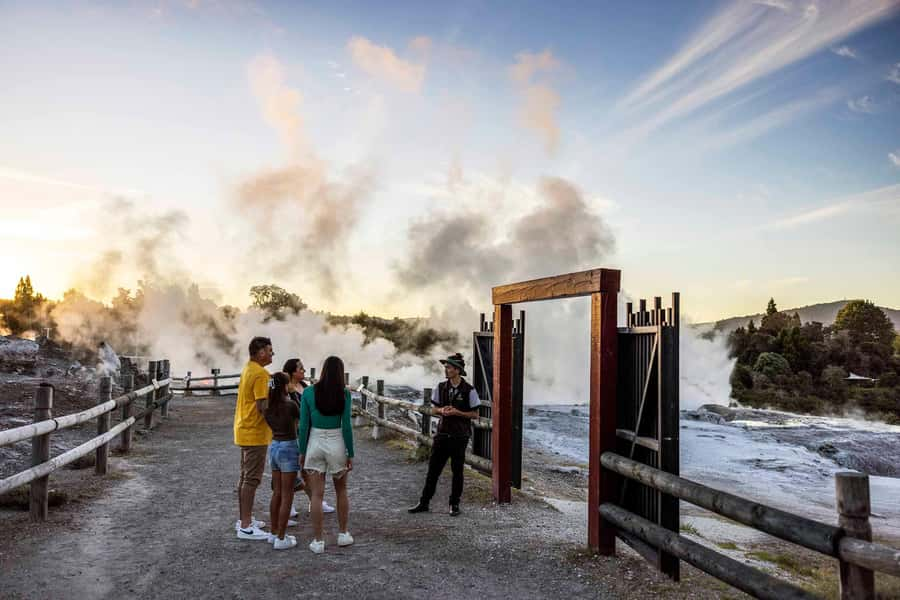
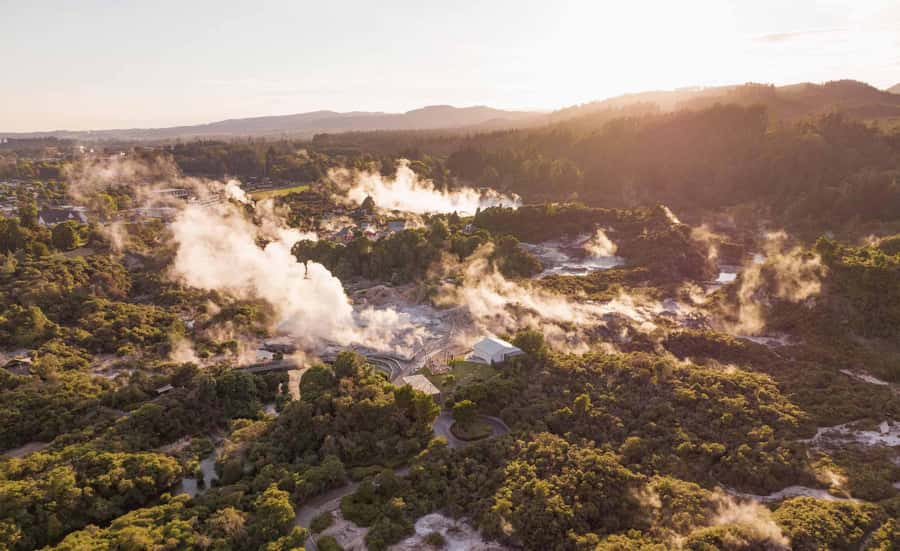
The walking route passes through bushland and along geothermal sinter paths. Sinter is mineral material deposited by hot spring water, so the ground itself records the movement of geothermal water over time.
You will see geysers and other geothermal features as you move toward the centre of the valley. The mix of vegetation, steam, mineral deposits, and open geothermal ground makes this more varied than a simple lookout stop.
The route does require attention underfoot. Comfortable shoes are essential, and the activity calls for a moderate level of fitness. High heels are not allowed, and bare feet would be both impractical and unsafe on a walking route of this type.
I would not choose this experience if you want a fully gentle, step-free outing. The activity is listed as unsuitable for people with mobility impairments, wheelchair users, visually impaired people, and people with a low level of fitness. Electric wheelchairs and mobility scooters are also not permitted.
Bring water and a camera. Keep the camera ready, but do not let it distract you from the guide’s explanations. The geothermal valley is the setting, but the interpretation is a major part of what you are buying.
The Kiwi Conservation Centre adds a rare New Zealand sight
The Kiwi Conservation Centre is one of the strongest parts of the visit. Kiwi birds are a national symbol, yet they are not always easy to see in the wild. The centre gives you a more reliable chance to see them and to understand why conservation work matters.
The provided details do not promise a particular number of birds or a guaranteed close encounter. Still, the centre adds something that a standard geothermal walk cannot. You get to connect Rotorua’s natural environment with New Zealand’s native wildlife.
The kiwi visit also breaks up the walking route nicely. After geothermal features and bushland, you move into a focused conservation setting before continuing to cultural places and craft traditions.
If seeing a kiwi is high on your New Zealand wish list, this part adds real value. Just keep expectations sensible. You are visiting a conservation centre, not entering a wild kiwi habitat, and the exact viewing experience can vary.
A few more shows around the world worth a look
- Istanbul: Bosphorus Dinner Cruise & Show with Private Table
★ 4.8 · 62,058 reviews - Marrakech: Agafay Desert Sunset, Camel Ride, and Dinner Show
★ 4.6 · 35,119 reviews - Marrakech: Agafay Desert Quad & Camel Rides with Dinner Show
★ 4.8 · 27,382 reviews - Marrakech: Agafay Desert Quad Biking Tour with Dinner-Show
★ 4.8 · 16,569 reviews
Rotowhio marae grounds and Māori arts
The route includes the sacred Rotowhio marae grounds and the New Zealand Māori Arts and Crafts Institute. These stops give the tour cultural depth beyond the performance at the end.
The marae grounds are an important part of the visit because they establish the cultural setting for the welcome and show. You are not simply watching a stage act detached from place. The performance takes place within a Māori meeting-house environment, after you have walked through grounds with cultural meaning.
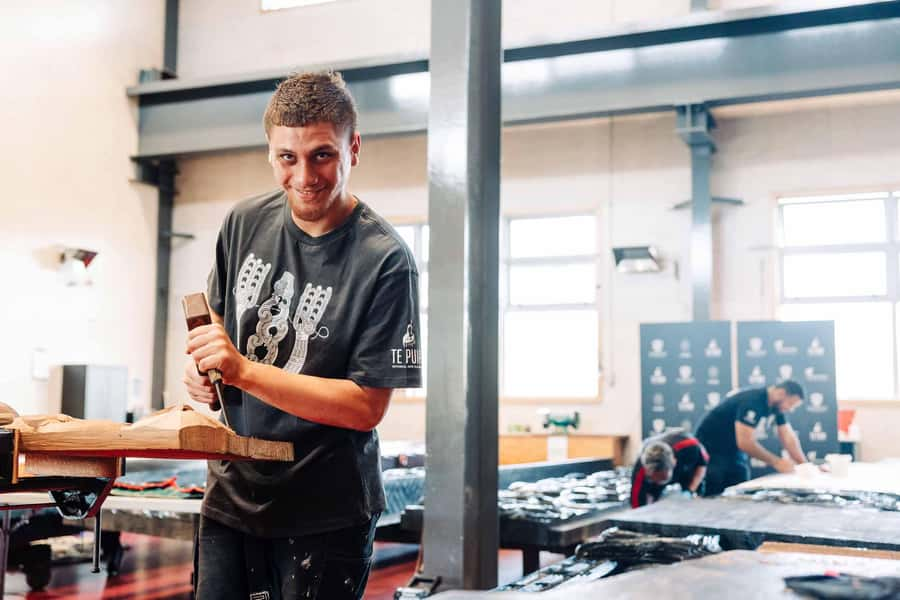
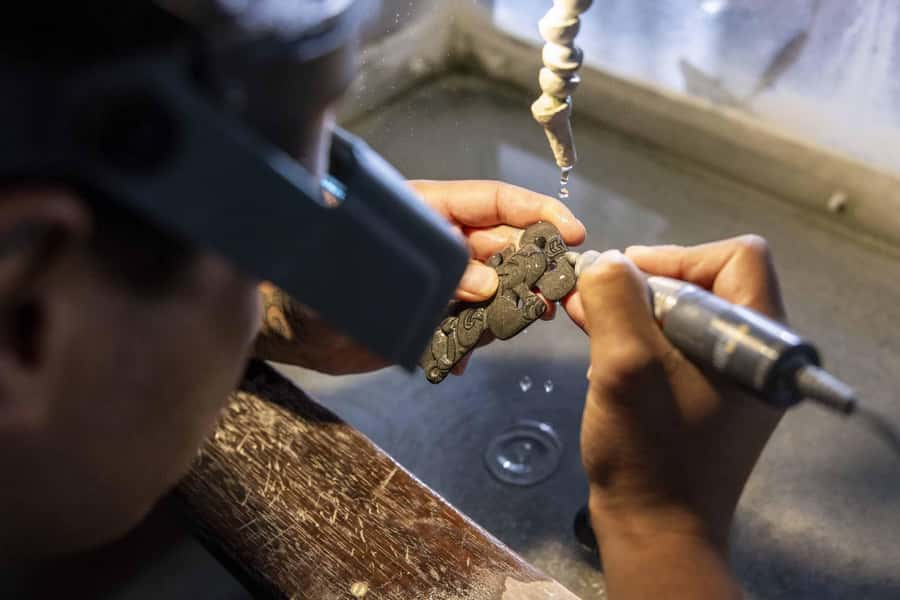
The arts and crafts institute adds another practical layer. It shows that Māori culture is not limited to song and dance. Art, carving, making, and teaching remain central parts of the experience at Te Puia.
The available information does not specify which individual artists or craft demonstrations you will see during this particular visit. You should expect access to the institute rather than a guaranteed private lesson or hands-on workshop. Even so, this stop helps you read the symbols and settings in the performance with greater understanding.
I especially like the order of the experience. First you see the geothermal resources, then how people used them, then the cultural institutions and performance connected to the place. It feels more coherent than adding a cultural show to an unrelated sightseeing trip.
Te Aronui a Rua brings the visit to life
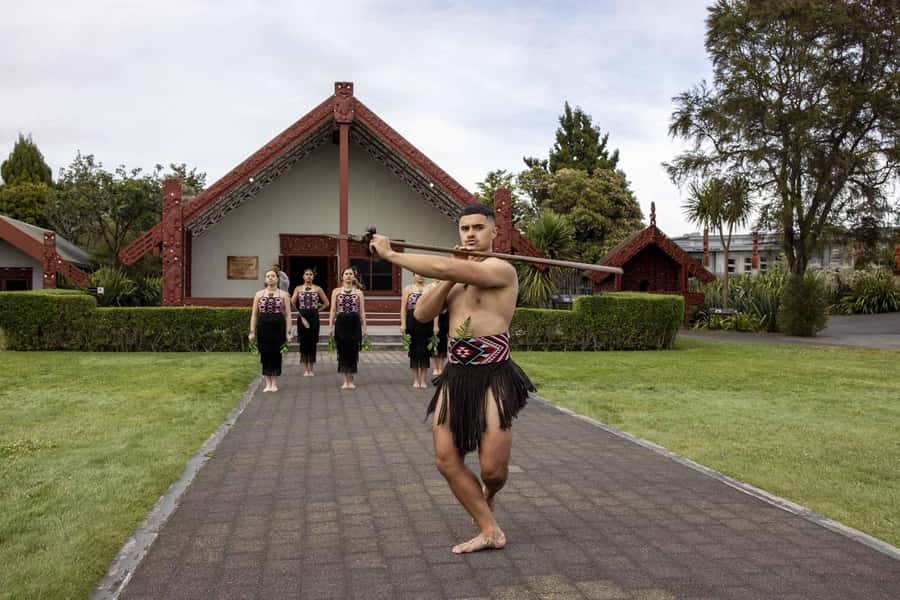
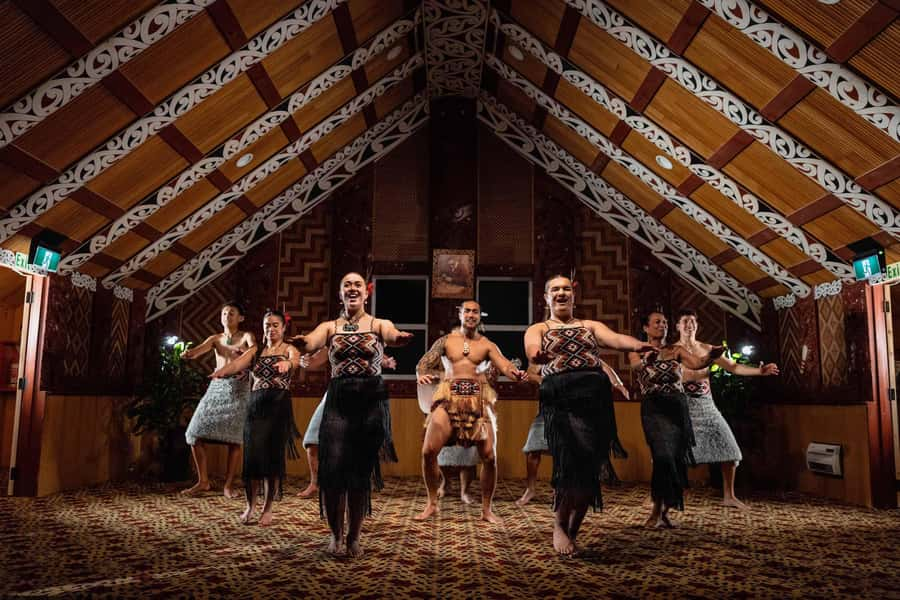
The final portion is a 30-minute traditional dance show in Te Aronui a Rua, a beautifully carved meeting house. The program includes a pōhiri, or traditional Māori welcome, along with waiata, mōteatea, poi, and haka.
A pōhiri sets a respectful tone for the performance. Waiata are songs, while mōteatea are traditional chants. Poi performances use swinging poi balls in rhythmic movement, and the haka brings force, posture, voice, and group energy.
This is a compact show, not a full evening production. That makes it easy to fit into a busy Rotorua day, but it also means the performance cannot cover every aspect of Māori culture. You get a concentrated introduction rather than an extended cultural program.
The setting matters. Seeing the performance in a carved meeting house gives the show a stronger sense of connection to Māori architecture and community space. Sit back and watch the whole sequence rather than waiting only for the haka. The welcome, chants, songs, and poi are all part of the structure.
The show has also been singled out as moving, which makes sense given the combination of live voices, movement, carved surroundings, and the cultural meaning of the welcome. Guide Paul has received especially warm praise for his approach, and another visitor highlighted how well the guide explained the area and its past while preparing the sweetcorn.
A small group can make the guide matter more
The activity is described as a small-group experience, with one part of the information stating a limit of six participants and another stating a limit of 20. Because those figures conflict, confirm the group size when booking if a very small group is important to you.
Either way, a guided visit is useful here. Geothermal areas can look impressive without being easy to interpret, and the Māori stories and customs deserve more than a quick signboard. An English-speaking guide leads the tour, and the quality of the experience depends partly on how clearly that person connects the valley, the stories, and the cultural sites.
Paul is the named guide praised in the available feedback, though the guide assigned to your visit may be different. You should expect live guiding in English, not a self-guided audio tour.
A guide also helps keep a 2-hour 45-minute schedule on track. The guided section lasts about 2 hours 15 minutes, followed by the 30-minute performance. Some activity details call the experience two hours, so allow the longer total and check the exact start time before arranging transport or another booking.
Is $89 a fair price?
At $89, the price makes the most sense when you want variety and structure. In one visit, you get:
- A guided geothermal valley walk
- A sweetcorn tasting cooked in geothermal water
- The Kiwi Conservation Centre
- Rotowhio marae grounds
- The New Zealand Māori Arts and Crafts Institute
- A 30-minute cultural performance
You do not get food and drinks beyond the included tasting, and transport to Te Puia is not listed as part of the activity. You need to reach 20 Hemo Road yourself and check in at Admissions.
I would call the price reasonable for a visitor who wants a broad introduction to Rotorua in one block of time. It is less compelling if you only want geothermal scenery, since a dedicated geothermal visit may better suit that narrow goal. It is also not the right pick if you dislike guided schedules or prefer to wander at your own pace.
The value improves for a first-time visitor who wants cultural context. You avoid the common problem of seeing a geyser, a kiwi, a craft institute, and a dance show as four disconnected attractions.
Who should book this experience?
I would recommend it to first-time Rotorua visitors, couples, families with older children who can manage the walk, and anyone with a short stay. It is also a good choice if you want an English-speaking guide to explain what you are seeing rather than piecing together the meaning yourself.
It suits people who enjoy a mixed itinerary. You get nature, wildlife, food, legend, arts, and performance without giving up an entire day.
I would hesitate if you have limited mobility, poor fitness, or difficulty walking on uneven paths. The activity is specifically not suitable for wheelchair users, people with mobility impairments, visually impaired people, or people over 95. Unaccompanied minors are not allowed.
Smoking, vaping, alcohol, and drugs are prohibited. Pets are not allowed either. These rules are straightforward, but they matter because the visit includes sacred grounds, a conservation centre, and a structured cultural performance.
You can cancel up to 24 hours in advance for a full refund, and reserve now while paying later. Those options help if your New Zealand plans are still shifting.
Should you book the Tuku Iho Trail?
Book it if you want a compact, guided introduction to several sides of Rotorua. The sweetcorn, Hatupatu story, kiwi centre, Māori arts, and Te Aronui a Rua performance give the visit more range than a standard geothermal walk.
Skip it if you want a slow, independent day or cannot comfortably manage bushland and geothermal paths. For everyone else, $89 is a fair price for a 2-hour 45-minute program that connects the valley’s natural heat with Māori foodways, stories, arts, and performance.
FAQ
Where does the Te Puia Tuku Iho Trail start?
The experience starts at Te Puia, 20 Hemo Road. You need to show your confirmation at Admissions and exchange your ticket there.
How long does the experience last?
The detailed schedule totals about 2 hours 45 minutes: approximately 2 hours 15 minutes for the guided tour and 30 minutes for the traditional dance show. Some activity details describe it as two hours, so check the starting time and allow the longer duration.
What language is the tour in?
The live tour guide speaks English.
What does the guided walk include?
The walk includes the geothermal valley, bushland, geothermal sinter paths, geysers, the Kiwi Conservation Centre, Rotowhio marae grounds, and the New Zealand Māori Arts and Crafts Institute.
Is food included?
A sample of sweetcorn cooked in a geothermal hot pool is included. Other food and drinks are not included.
What happens during the cultural performance?
The 30-minute performance at Te Aronui a Rua includes a pōhiri, waiata, mōteatea, poi, and haka.
What should I bring?
Bring comfortable shoes, water, and a camera. High-heeled shoes are not allowed.
Is the experience suitable for wheelchair users?
No. The activity is not suitable for wheelchair users, people with mobility impairments, electric wheelchair users, or people using mobility scooters.
Can I cancel the booking?
You can cancel up to 24 hours in advance for a full refund. The activity also offers a reserve-now, pay-later option.
Just added around the world
- Hanoi city tour with water puppet show- small group tour★ 5.0 · 10 reviews
- Hanoi Street Food Walking Tour and Water Puppet Show★ 4.0 · 5 reviews
- Hanoi Cyclo Ride and Water Puppet Show★ 3.5 · 3 reviews
- Private: Hanoi Street Food tour with Water Puppet Show and Cyclo★ 5.0 · 8 reviews
- Thang Long Water Puppet Show Tickets★ 4.5 · 7 reviews
- Deluxe Group Hanoi Sightseeing Including Puppet Show★ 4.5 · 2 reviews
- Hanoi Private Trip: Explore local culture, monument, cooking class & puppet show★ 4.5 · 3 reviews
- Songcheng Park & Lengend of Song Dynasty Show Ticket★ 4.5 · 3 reviews
Traditional & Cultural Shows, compared.
Xcaret Park Entry Tickets with Cultural Night Show Included
Read our review →
Xcaret Park Day Trip, transportation and Cultural Night Show
Read our review →
Tour with BBQ Dinner, Camel Ride, & Traditional Show
Read our review →
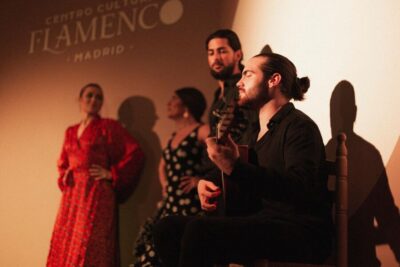
1-Hour Traditional Flamenco Show at Centro Cultural
Read our review →
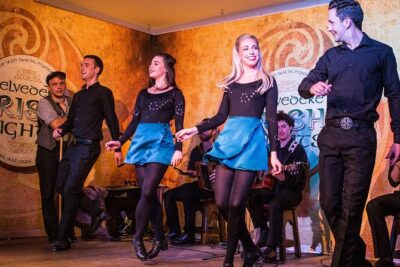
Belvedere Irish Night Show, Dance and Traditional 3-Course Dinner
Read our review →Browse the lists this show appears in