
Review · NEW YORK CITY
Hamilton Musical Themed Guided Walking Tour
Hamilton’s story makes far more sense when you place it on the streets where much of it happened. This three-hour walk links songs from all 46 numbers in Lin-Manuel Miranda’s musical to Lower Manhattan sites connected with Alexander Hamilton, Aaron Burr, George Washington, and the early United States. Federal Hall, Trinity Church, Bowling Green, and the old New York Commons give the show a physical setting instead of leaving it on a stage.
I especially like the personal listening device, which lets you hear the guide and selected songs above the city noise. I also like the mix of musical theater and real history. Guides such as Leo and Chazz add details about the show’s creative choices, historical errors, and Miranda’s writing process. The main caution is pace: some groups move quickly, and a three-hour tour can involve more standing than walking, especially in cold weather.
Key points before you book
- Hamilton’s songs guide the route: Hear musical numbers at sites tied to the people and events behind them.
- A small, focused group: The tour is limited to 15 people, making questions easier and the guide easier to follow.
- Clear sound in noisy streets: A UHF listening device helps you hear the guide and music without crowding around him.
- A history lesson with useful context: You get the real story behind Hamilton, Burr, Washington, Jefferson, and the early republic.
- About 1.75 miles in three hours: The distance is manageable, but standing time and the guide’s walking pace matter.
- Best for older children and adults: The tour suits history fans and Hamilton devotees, though some material and language may be too much for younger children.
Why this tour works better than simply replaying the cast album
You could listen to Hamilton anywhere. What you cannot do at home is hear My Shot while looking toward the part of Lower Manhattan connected with King’s College, or consider The Ten Duel Commandments near the Federal Reserve building. The tour uses place to give the songs weight.
The musical takes creative liberties, and a good part of the experience is sorting fact from stagecraft. Lin-Manuel Miranda shaped a fast, modern story from complicated political and personal events. Guides Leo and Chazz explain where the show follows the record and where it bends it for drama, rhythm, or clarity.
The tour also reaches beyond Hamilton’s greatest hits. You hear about his meeting with Washington, his rivalry with Burr, his relationship with Maria Reynolds, and the consequences that followed. The result is not just a fan event. It is also a compact introduction to early American politics and Lower Manhattan.
You do not need to know all 46 songs to enjoy the walk. Still, the experience is strongest if you have seen the musical or listened to it enough to recognize the main numbers. The music gives the route its shape, while the guide fills in the parts a two-and-a-half-hour stage production has to leave out.
More West End Shows in New York City
- NYC: Aladdin the Musical on Broadway
★ 4.8 · 1,800 reviews - NYC: The Lion King on Broadway
1,609 reviews - NYC: MJ the Musical on Broadway
1,510 reviews
Starting at South Ferry and setting the scene

The meeting point is the South Ferry Terminal in Lower Manhattan, with a 10:00 a.m. start. That location puts you at the southern end of the route and near the oldest part of New York City.
The walk covers about 1.75 miles, or 2.8 kilometers, and ends in the Trinity Church yard at Wall Street and Broadway. This is a useful finish because the 1, 4, and 5 trains, along with the R and W, are all within about a block. You do not need to retrace your steps to find a subway.
From the beginning, expect the guide to keep talking while the group moves. The presentation may include photographs, maps, and other images on an iPad, while songs play through the listening system. That combination helps the history stay visual and keeps the tour from becoming a string of street-corner lectures.
The group size is capped at 15. That is small enough for questions and manageable street crossings, though you should still stay alert in Lower Manhattan traffic. The listening device matters here. Without it, a guide explaining a duel beside a noisy avenue can easily lose half the group.
Federal Hall and the first capital of the United States
Federal Hall is one of the major stops, with about 20 minutes devoted to the site. It was the first capital of the United States, making it an important place to discuss the young country’s political machinery and Hamilton’s role in building it.
This is where the tour can connect political songs such as Cabinet Battle and Washington on Your Side to the new government’s arguments. Hamilton was not simply a soldier or an ambitious young man. He was also a forceful political thinker who helped shape the financial and governmental structure of the new nation.
Admission to this stop is listed as free. The tour itself does not become a museum visit at every location, so you should expect the guide to explain the setting as part of the outdoor route rather than assume a long indoor stop. That keeps the group moving, but it also means the storytelling is the main attraction.
I like this part of the walk because it gives political songs a physical anchor. You begin to see that the musical’s debates were not abstract background scenes. They took place in a small, young nation where every argument about banks, debt, federal power, and alliances had immediate consequences.
King’s College, the New York Commons, and Hamilton’s early years
The route includes the former King’s College, connected with Aaron Burr and Hamilton’s early ambition through songs such as Aaron Burr, Sir and My Shot. The site helps frame the two men before they became lifelong rivals.
The New York Commons, now associated with the city’s oldest park, provides another early stop. It connects to Right Hand Man and offers a chance to discuss the Revolutionary period, military service, and Hamilton’s rise into Washington’s circle.
This section works best when you pay attention to the contrast between the young men. Hamilton arrives as an outsider with drive and urgency. Burr is cautious, polished, and more restrained. The musical turns that contrast into a memorable refrain, but the guide adds the political and personal reasons their paths kept crossing.
The oldest park in New York also gives the route a welcome change of pace. You are not only staring at office buildings. You are moving through a place that helps explain how the city grew from a colonial settlement into the financial center you see today.
More West End Shows in the USA
- NYC: Moulin Rouge! the Musical on Broadway
1,329 reviews - NYC: Harry Potter and the Cursed Child on Broadway
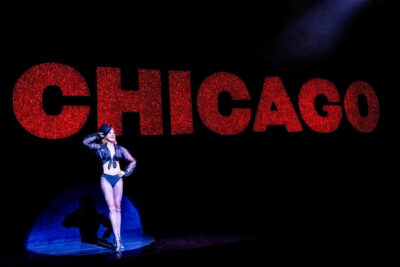
700 reviews - NYC: Chicago the Musical on Broadway
687 reviews - Broadway and Times Square Insider Tour with Theater Professional
★ 5.0 · 651 reviews
The turret-shaped room and the real world behind The Room Where It Happens
One unusual feature is a view of a turret-shaped conference room, described as a modern-day room where it happened. It is a clever visual link to The Room Where It Happens, a song about political bargaining, access, and the deals that shape public life behind closed doors.
The point is not that the musical’s exact room survives unchanged. The value is in seeing a modern space that recalls the idea of private political negotiation. The guide uses the image to explain how Miranda turned an obscure historical compromise into one of the show’s most memorable songs.
This is also a good place to listen carefully to the difference between public arguments and private deals. Hamilton’s political career involved both. The song’s energy comes from Burr’s frustration at being outside the room, while the historical discussion shows why those rooms mattered so much in the early republic.
The Federal Reserve building and the financial Hamilton
The Federal Reserve building is tied to The Ten Duel Commandments in the route. The connection lets the guide shift from Hamilton’s personal conflicts to his work with money, government debt, and national finance.
You may find this section more technical than the musical’s romantic and military scenes. It is still important. Hamilton’s financial ideas affected how the new government operated, and they remain part of the argument over what kind of country the United States would become.
The tour is at its best when it explains these ideas in plain language and then returns to the song. The listening device helps because the guide can keep the soundtrack going while the group moves toward the next point, rather than stopping everyone in one noisy spot.
Jefferson’s house, the Bank of New York, and competing visions
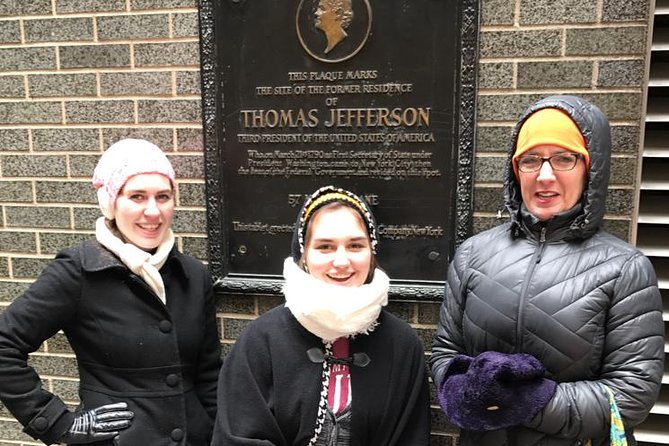
The stop associated with Thomas Jefferson’s house connects to The Room Where It Happens. It provides another opening to discuss the fierce political conflict between Hamilton and Jefferson.
The Bank of New York links to Take a Break. Here the subject turns toward Hamilton’s family life and the tension between public ambition and private obligations. The musical gives you a man who is constantly writing, arguing, and planning, while his family waits for his attention.
These locations are useful because the tour does not treat Hamilton as a flawless hero. You get the political thinker, the husband, the father, and the man whose choices created damage as well as achievement. The discussion of Maria Reynolds and the later fallout adds a more uncomfortable edge to the story.
That balance matters. If you only want a celebration of the musical, some of the personal history may feel heavy. If you want a fuller picture of the man behind the songs, this is one of the tour’s strongest features.
Golden Hill and the language of conflict

Golden Hill connects to Guns and Ships, one of the musical’s fastest and most demanding numbers. The stop gives the guide a chance to talk about military action, the Revolutionary War, and the way the show compresses complicated events into a few explosive verses.
This is also where the personal listening device proves its worth. Songs lose their punch when the group is scattered along a sidewalk and traffic is roaring nearby. Clear audio lets you hear the music and the guide without stopping every few minutes to regroup.
You may hear the guide sing or recite portions of the musical. That can be fun for a committed fan, and the guides are clearly comfortable with the material. One point to keep in mind is that not everyone enjoys a guide singing over the soundtrack, so this part depends on your taste.
Bowling Green, the Reynolds pamphlet, and the cost of public scandal
Bowling Green connects to The Reynolds Pamphlet and It’s Quiet Uptown. These songs mark the most painful part of Hamilton’s personal story, from the public revelation of his affair with Maria Reynolds to the effect of his choices on his family.
The site gives the guide room to explain how reputation worked in the early United States. Hamilton’s decision to publish his account was unusual, costly, and politically damaging. The musical presents the event with speed and theatrical force. The walking tour can pause over the legal, personal, and political details.
This stop may be less comfortable for children. The tour aims to limit harsh language, but some profanity cannot be removed, and the subject matter includes adultery, political attacks, and death. Parents should use their own judgment, especially for children under 9.
Trinity Church and the final chapter
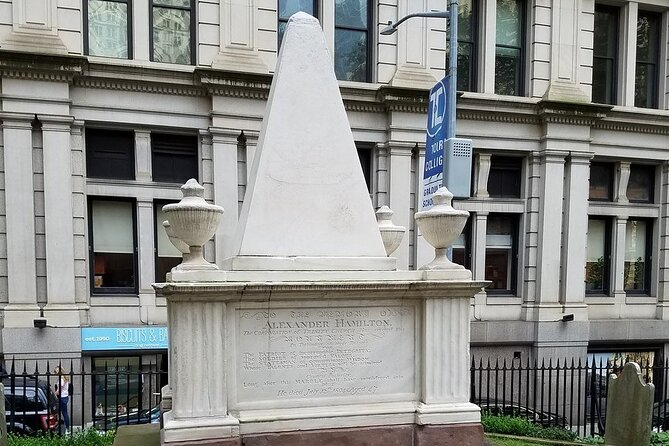
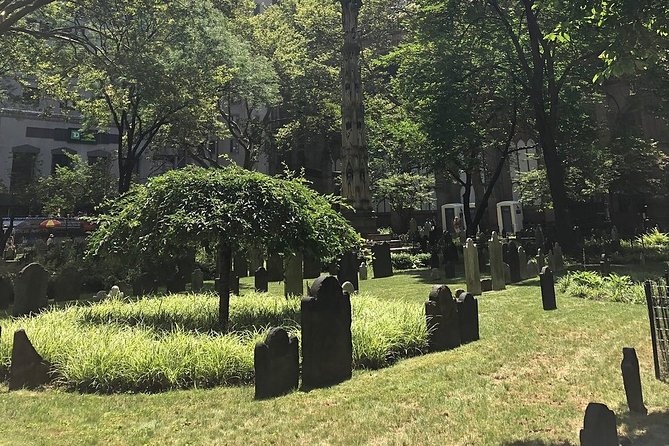
The tour ends in the Trinity Church yard at Wall and Broadway. Hamilton is buried there, along with other important figures connected with the early republic. The graveyard gives the story a quiet physical ending after a route filled with political arguments, music, and quick-moving city streets.
The route connects Trinity with Best of Wives and Best of Women, adding an intimate note to the final stage of Hamilton’s life. You also visit gravesites, so this stop may not suit everyone, but it gives the tour a strong sense of place.
Church access can vary. One tour ended while Trinity Church was closed, so do not book this experience assuming you will receive a full interior visit. The churchyard itself is the stated endpoint, and it remains useful even when the building is unavailable.
From here, you can catch the subway easily or continue exploring Lower Manhattan. The location also makes it simple to add a visit to nearby historic sites on your own, though the tour itself is already a full morning.
How much value do you get for $75?
At $75 per person, this is not a casual stroll. You are paying for about three hours of guiding, a small group, the listening equipment, music, visual material, and a carefully planned connection between the musical and the city.
I think the price makes sense if Hamilton is a major reason for your New York visit or if you want a focused introduction to early American history. A general sightseeing walk may cover more landmarks, but it will not give you this song-by-song structure or the same attention to Hamilton, Burr, and Miranda’s adaptation.
The value is weaker if you are only mildly curious about the musical. Much of the pleasure comes from recognizing lyrics, characters, and scenes. Someone who has never heard Hamilton may still enjoy the history, but a general Lower Manhattan tour could offer a wider range of subjects for the same morning.
The 4.9 rating from 338 reviews and 97 percent recommendation rate fit the tour’s strongest qualities: clear presentation, high energy, and strong command of both the musical and the history. The rare poor experience points to real concerns, not a pattern to ignore. One cancellation occurred at the last minute when there was only one guide available, and another person found the pace too slow in cold weather while also feeling that the guide walked too quickly for a companion with mobility problems.
Pace, weather, and what to wear
The tour operates in all weather except when wind chill falls below 30 degrees Fahrenheit, so dress for the forecast. Comfortable shoes are essential, even though the distance is under two miles. You may spend long stretches standing while the guide explains a location.
The walking pace has not suited everyone. One person using crutches had trouble keeping up before the guide adjusted the speed. If you have mobility concerns, contact the operator before booking and be ready to explain what pace and rest stops you need.
There are several chances to sit, and the guide may seek warmer or more sheltered places in cold conditions. Still, this is an outdoor New York walk, not an indoor museum program. Bring layers, and do not assume the soundtrack will keep you warm.
Children must be accompanied by an adult. The suggested minimum age is around 9, though that is a guideline rather than a strict rule. A Hamilton-obsessed child may stay engaged, while a younger child who does not know the show may find three hours of political history tiring.
Who should book this Hamilton walk?
I would book it before seeing the Broadway musical if you want the locations and historical background fresh in your mind. The tour can make the performance easier to follow, especially when political names and disputes begin flying across the stage.
It also works well after the show. You can revisit the lyrics with a better sense of the streets, buildings, and personal stakes behind them. One family used it as a follow-up to seeing Leslie Odom Jr. play Burr, and the connection between performance and place made the second experience especially useful.
History fans who are not musical fans can still enjoy the tour. The route includes Lower Manhattan history, the founding generation, the first national government, financial policy, dueling, and family scandal. Just know that the musical remains the organizing thread from start to finish.
The tour is less suitable for anyone who dislikes standing, fast-paced city walking, gravesites, or frequent references to a single show. It may also disappoint you if you expect entry into every building or a full visit inside Trinity Church.
Should you book it?
Book this tour if you love Hamilton, want more than a Broadway souvenir, or enjoy seeing history where it happened. The strongest reasons are the song-linked route, the excellent audio setup, the visual material, and guides such as Leo and Chazz, who bring both the musical and its historical problems into the discussion.
Skip it if you want a broad tour of New York, need a slow and fully seated experience, or have no interest in Hamilton’s characters and songs. For most fans, though, $75 buys a lively and unusually focused morning in Lower Manhattan. If you can handle the weather and the standing, this is a smart way to turn the musical into a map of the city.
FAQ
Where does the Hamilton walking tour start?
The tour starts at the South Ferry Terminal in Lower Manhattan at 10:00 a.m.
Where does the tour end?
It ends in the Trinity Church yard at Wall Street and Broadway. The 1, 4, and 5 trains, along with the R and W trains, are within one block.
How far do you walk?
The route covers about 1.75 miles, or 2.8 kilometers, over approximately three hours.
Is the tour suitable for children?
Children must be accompanied by an adult. The suggested age guideline is around 9 and older because the tour includes substantial historical information and some profanity. Parents should also be aware that the route includes gravesites.
What happens in bad weather?
The tour operates in all weather, so you should dress appropriately. It may be canceled when wind chill falls below 30 degrees Fahrenheit.
How large is the group?
The tour has a maximum of 15 people. It includes a local guide and a UHF personal listening device so you can hear the presentation and music in the city noise.
More Walking Tours in New York City
- NYC: Movie and TV Show Walking Tour
★ 4.9 · 24 reviews - New York: Hamilton Musical Walking Tour of Lower Manhattan
★ 5.0 · 3 reviews - Broadway the Tour: NYC’s Immersive Historic Walking Tour
★ 5.0 · 3 reviews - New York City: Broadway 101 Walking Tour
★ 5.0 · 2 reviews
More Broadway and West End Shows in New York City
- The Lion King On Broadway Ticket
★ 4.5 · 649 reviews - New York: Broadway Comedy Club All Star Stand-Up Comedy Live
★ 4.2 · 479 reviews - NYC: Hell’s Kitchen the Musical on Broadway
407 reviews - NYC: The Great Gatsby the Musical on Broadway
406 reviews
Just added around New York City
- NYC: The Outsiders on Broadway21 reviews
- NYC: Wicked The Musical on Broadway239 reviews
- NYC: Movie and TV Show Walking Tour★ 4.9 · 24 reviews
- NYC: Stranger Things: The First Shadow on Broadway68 reviews
- NYC: The Book of Mormon the Musical on Broadway78 reviews
- NYC: SIX the Musical on Broadway50 reviews
- NYC: Stand Up Comedy with Free Round of Mini-Golf★ 4.9 · 26 reviews
- NYC: Lea Michele in Chess the Musical★ 4.8 · 4 reviews
New York City Shows, compared.


Broadway and Times Square Insider Tour with Theater Professional
Read our review →

Broadway Comedy Club All Star Stand-Up Comedy Live
Read our review →Browse the lists this show appears in