
Review · AUSTRIA
Innsbruck: EXPERIENCE TIROL – Immersive Show Ticket
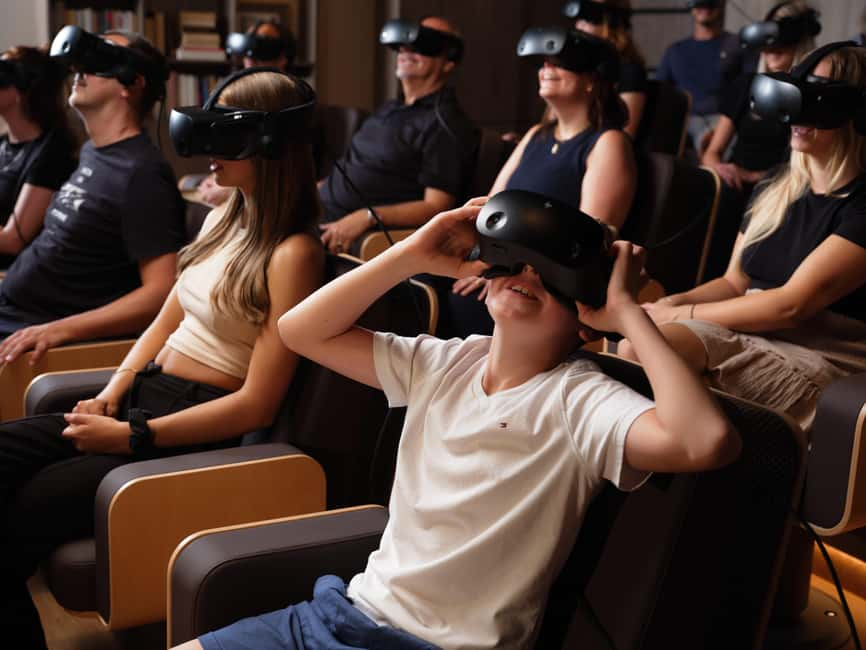
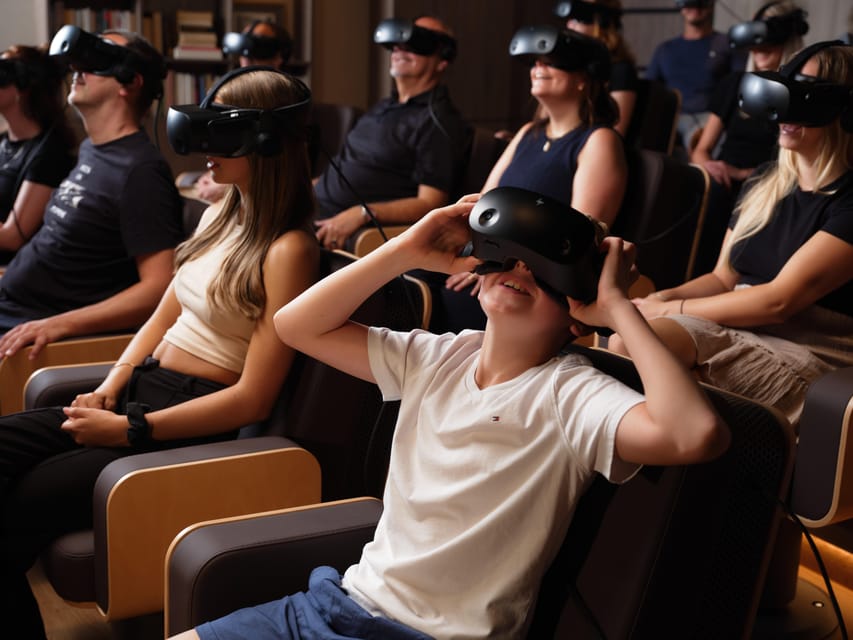
Tyrol comes alive here as a fast-moving visual story rather than a standard museum display. You follow father Thomas and daughter Anna through five rooms, moving from imperial Innsbruck and Tyrolean art to mountain scenery, skiing, and the region’s past. I like the 360-degree projections and the bold mix of holograms, film, and virtual reality. I also like that the show gives you a broad introduction to Tyrol in just one hour.
The main drawback is the VR section. One booking note reports that the headset image looked slightly blurred, so this may not be ideal if you expect flawless high-end virtual reality. The show is also less useful for children under six, who are not admitted.
Key points before you book
- Five themed rooms: Each room presents a different side of Tyrol, including history, nature, culture, art, and sport.
- Thomas and Anna’s story: A father and daughter provide the human thread that links the different scenes.
- Mountain flight: 360-degree projections let you glide above Tyrol’s peaks and valleys from an indoor setting.
- Big historical moments: See Emperor Maximilian’s Innsbruck around 1500 and mountain fires burning on the horizon.
- One-hour format: The compact running time fits easily into a day of sightseeing in central Innsbruck.
- Practical limits: Backpacks, large bags, food, drinks, baby carriages, pets, and audio recording are not allowed.
What the one-hour EXPERIENCE TIROL show is really like
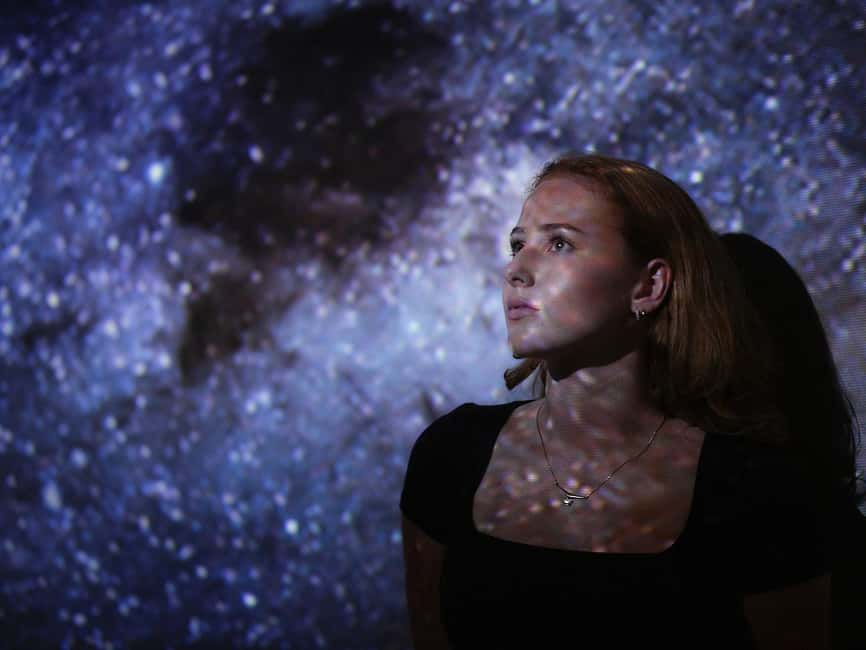
This is not a traditional museum with glass cases and long text panels. It is a staged multimedia presentation built around sound, moving images, projected scenery, holograms, and virtual reality.
The show uses Thomas and Anna to guide you through Tyrol’s story. That family connection matters because it gives the presentation a simple thread to follow. Instead of receiving a disconnected series of facts, you move with two characters from one subject to the next.
The format is best understood as a visual introduction to the region. You will not leave with a detailed academic account of Tyrolean politics or Alpine geology. You will leave with a strong sense of the subjects that shape Tyrol’s public identity: mountains, imperial history, creativity, winter sport, and close ties to nature.
The total length is 60 minutes. That is long enough to create a sense of occasion, but short enough to fit before lunch, after a visit to another attraction, or during a rainy afternoon in Innsbruck.
More Tickets in Austria:
- Tyrolean Folk Show Ticket in Innsbruck
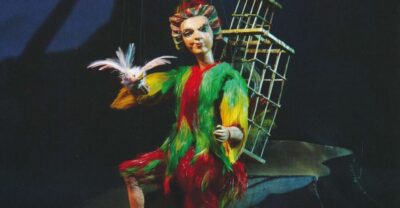
★ 4.5 · 429 reviews - Salzburg: The Magic Flute at Marionette Theater Ticket
★ 4.7 · 255 reviews - Salzburg: The Sound of Music at Marionette Theater Ticket
★ 4.9 · 104 reviews
Room one: Thomas, Anna, and Tyrol’s story
The opening section establishes the father-and-daughter narrative. Thomas and Anna lead you into the presentation, giving the show a more personal tone than a simple tourism film.
The storytelling is designed to appeal to a wide audience. You do not need to know Tyrol’s history before arriving, and the German, English, and Italian language support makes the experience easier for international visitors. An audio guide is included in English or Italian.
This opening is important because the technology can otherwise become the main attraction. The characters keep the presentation moving toward a purpose. You are not just watching unrelated pictures of mountains. You are following a journey through the region’s identity.
If you prefer quiet museums and detailed written explanations, this section may feel theatrical. If you like visual storytelling, it gives you a clear way into the show.
Room two: Innsbruck in the age of Emperor Maximilian
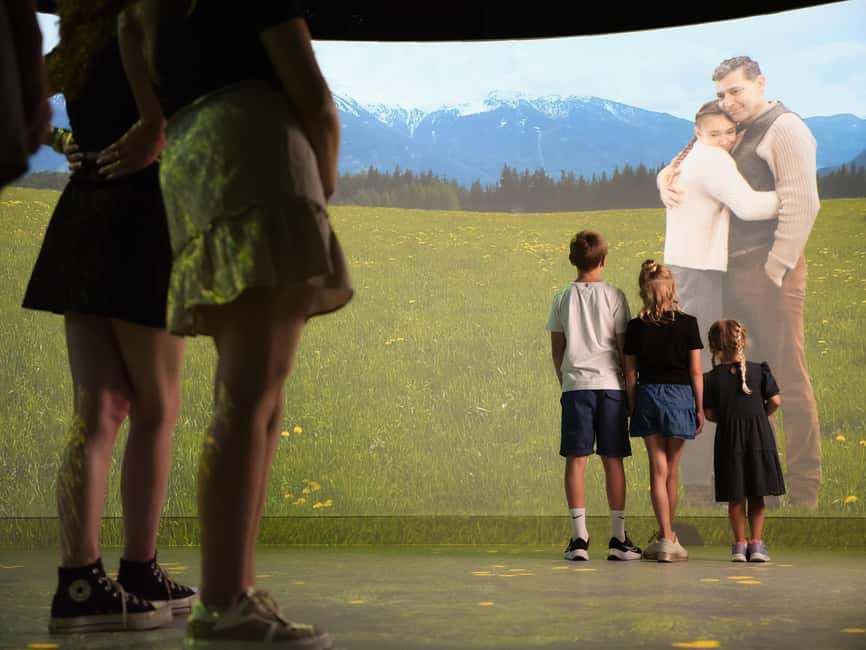
One of the more unusual historical scenes takes you back to Innsbruck around 1500, during the time of Emperor Maximilian. The presentation uses modern projection and holographic techniques to bring that period into the room.
This is a useful way to see Innsbruck beyond its present-day role as a mountain city. The city’s imperial connections helped shape its architecture, image, and place in European history. You get a quick sense of that older Innsbruck without needing to spend hours reading historical panels.
The limitation is the pace. A short multimedia scene can suggest a period, but it cannot explain every political detail or historic building. I would treat this as a visual introduction, then use a walking tour or museum visit if you want a fuller account of Maximilian and the city.
The presentation’s strength is atmosphere. Holograms and projections can make the past feel close and immediate, especially for visitors who find traditional history displays hard to enter.
Room three: Tyrolean art and local identity
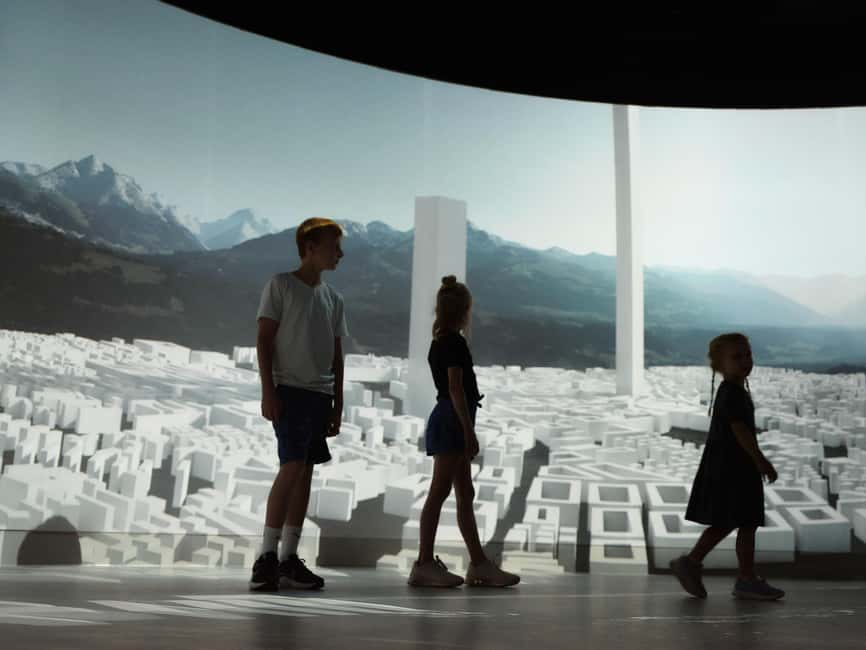
Another part of the experience turns toward Tyrolean art. The show uses visual effects to present creative work as part of the region’s character, rather than treating art as a separate subject.
This section helps balance the familiar postcard image of Tyrol. The region is not only peaks, cable cars, and ski slopes. Art gives the show a chance to point toward local expression and the way people have interpreted their surroundings.
You should expect a presentation built for sight and feeling more than close study. The available information does not identify specific artists or works, so this is not a substitute for a dedicated art museum. Instead, it offers a short, accessible look at how Tyrol’s culture can be presented through images and motion.
I like this change of pace. After the historical material, the art section gives the show a more reflective side. It also keeps the hour from becoming a simple mountain film.
A few more shows around Austria worth a look
- Vienna: Gerstner KuK Hofzuckerbäcker Baking Show & Tasting
★ 4.8 · 823 reviews - Vienna: Spanish Riding School 45-Minute Performance Show
★ 3.9 · 731 reviews - Vienna: Johann Strauss Dinner Show at the Prater
★ 4.5 · 730 reviews - Vienna: Traditional Dinner Show at the Wiener Rathauskeller
★ 4.4 · 590 reviews
Room four: Peaks, valleys, and a virtual flight
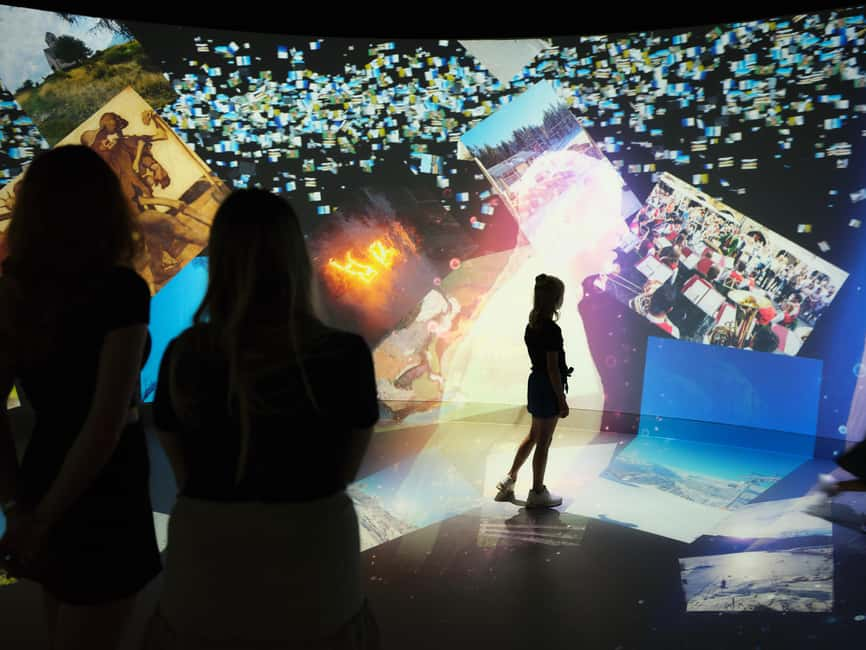
The natural scenery is one of the main reasons to choose this experience. You can travel toward Tyrol’s highest peaks and appear to fly above the mountains through 360-degree projections.
That viewpoint gives you something a normal city walk cannot. In Innsbruck, you can look up at the mountains from the streets, but inside the show you are placed among wide views of the region. The effect is intended to make you feel as if you are moving over the scenery rather than simply looking at a photograph.
This is likely to be the most broadly appealing part of the hour. You do not need hiking gear, a clear day, or a mountain lift ticket to see Tyrol presented from above. It can also help you understand the scale of the surrounding terrain before you visit other parts of the region.
The word flight should not be taken too literally. This is an indoor visual experience using projections and related technology, not an outdoor activity or an actual aircraft ride. If you are sensitive to moving images, the changing views may be worth approaching with a little caution.
Room five: Ski jumping, mountain fires, and Tyrolean sport
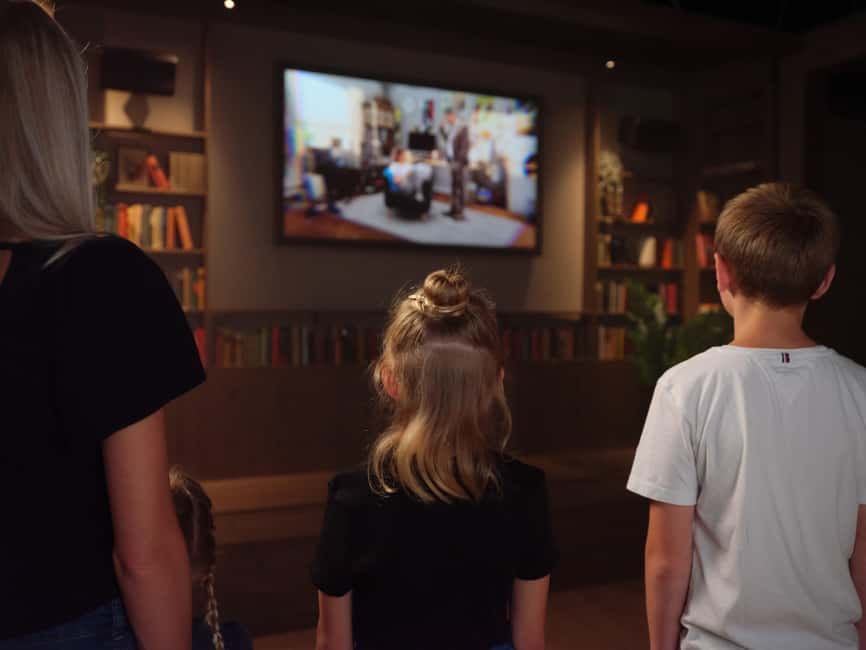
Sport gives the final part of the show a burst of energy. A featured scene shows a ski jumper launching from the Bergisel ski jump, one of Innsbruck’s best-known sporting landmarks.
The moment works because ski jumping combines speed, height, risk, and mountain scenery. Even if you know little about the sport, the visual idea is easy to understand: a person leaves the ramp and sails into open space.
The show also presents mountain fires burning on the horizon. This image points to the older traditions and dramatic natural setting of the Alps. It adds a more serious tone to the sporting scenes and reminds you that the mountains have long carried symbolic meaning for the people who live around them.
The sport section makes a good finish because it is easy to remember. It also links Tyrol’s past and present. The mountains are shown as places of tradition, beauty, challenge, and international competition.
Holograms, 360-degree film, and virtual reality
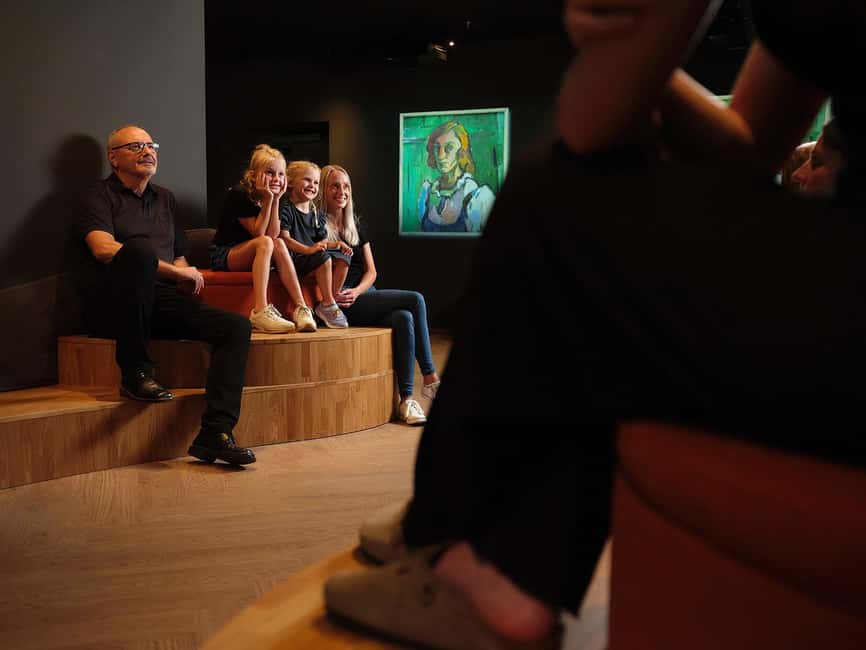
The technology is the main selling point, but the different tools serve different purposes.
Holograms help create figures and historical scenes inside the room. They are especially useful in the section about Emperor Maximilian, where the show needs to make the past feel present.
360-degree projections widen the experience. Instead of watching a small screen, you look around and see scenery spread across your field of vision. This is the part most likely to give you a strong sense of movement and scale.
Virtual reality provides the most personal viewpoint. You look through a headset rather than at a shared projection, which can make the scene feel more direct. At the same time, the quality of the headset matters. A slight blur was reported in one booking note, so keep your expectations sensible. The technology adds variety, but it may not look as sharp as the newest home or arcade VR equipment.
The show also uses other multimedia effects, though the details are not specified. The overall aim is clear: use several forms of presentation so the hour does not feel like one long film.
Is $22 a fair price?
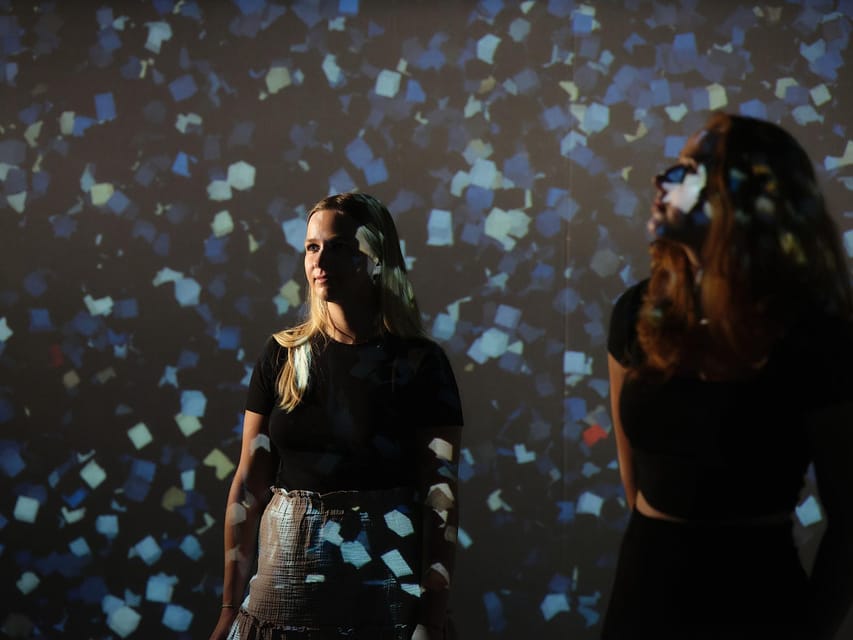
At $22 per person, the experience is reasonably priced for a one-hour indoor attraction, especially if you value presentation and convenience. You are paying for a produced show with several types of technology, not simply admission to a room of photographs.
The value depends on how you like to spend your sightseeing budget. If you want detailed historical interpretation, a traditional museum may give you more information for the same amount of time. If you want a quick, memorable introduction to Tyrol’s major themes, this show offers a concentrated format.
It can also be useful on a day when mountain weather is poor. You still get large-scale views of Tyrolean scenery without relying on outdoor conditions. That does not replace seeing the Alps in person, but it gives your schedule a reliable indoor option.
I would consider the ticket a better buy for a first visit than for someone who already knows Tyrol well and wants specialist detail. The show covers a wide range of subjects, so its strength is variety rather than depth.
Timing, language, and what to bring
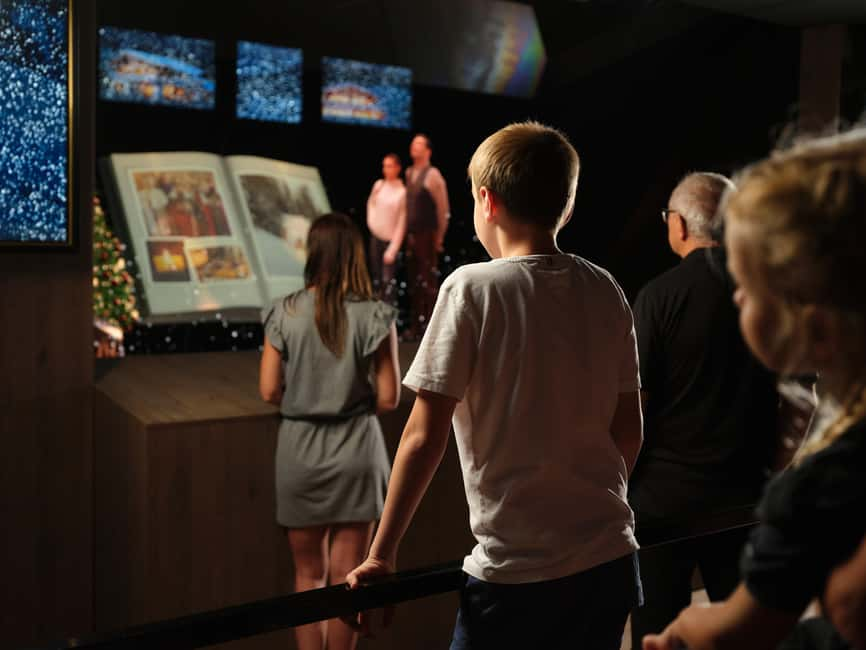
The show lasts one hour, but you should allow enough time to arrive, scan your ticket, and speak with the Experience Hosts. You need to scan the ticket at the entrance, so keep it ready on your phone or in the required format.
The listed languages are German, English, and Italian. The included audio guide is available in English or Italian. If you need German, the instructor or presentation language is listed as available, but the audio-guide information specifically names English and Italian.
A locker for personal items is available subject to availability. Do not count on bringing a backpack or large bag into the show. Food and drinks are not allowed, and neither are baby carriages, pets except assistance dogs, alcohol, drugs, or audio recording.
Parking is not included. You can use the Kaufhaus Tyrol garage for a fee, so add that cost if you are driving. The attraction is wheelchair accessible, which makes it a practical indoor choice for visitors who need step-free access.
Children under six are not admitted, and the activity is not suitable for babies under one. For older children, the visual effects and ski-jump sequence may hold attention better than a standard history display, though the amount of historical explanation is limited.
Who will get the most from EXPERIENCE TIROL?
I would recommend this for first-time visitors who want a quick introduction to the region before heading farther into Tyrol. It also suits people with limited time in Innsbruck, since the one-hour length leaves most of the day free.
Families with children over six may appreciate the mix of movement, mountains, and sport. The show has enough visual change to keep it from feeling like a lecture, though younger children who dislike headsets or dark rooms may not enjoy every section.
It is also a good rainy-day choice. You can see Tyrol’s peaks and cultural themes without waiting for clear weather. The attraction works well as a break between outdoor activities, especially if you need a calm hour indoors.
Art lovers and history enthusiasts should see it as an introduction, not a complete cultural visit. The show touches on art and the era of Emperor Maximilian, but it does not provide the level of detail you would get from a specialist exhibition.
My practical take on the experience
The best feature is the range. In a single hour, you move through family storytelling, imperial Innsbruck, art, mountain scenery, virtual reality, and sport. That variety gives you a broad picture of what Tyrol wants visitors to notice about the region.
The most memorable images are likely to be the mountain flight, the ski jumper at Bergisel, and the historical scenes connected with Maximilian. Those moments make the ticket feel more substantial than a basic regional film.
The main caution is to keep your expectations focused. This is polished visual entertainment with cultural content, not a full museum, a guided walking tour, or a substitute for visiting the mountains. The VR component may also be slightly blurred for some people.
Should you book it?
Book EXPERIENCE TIROL if you want a one-hour indoor introduction to Tyrol with strong visual effects, broad subject coverage, and English or Italian audio support. It is especially useful for a first visit, a rainy afternoon, or a family outing with children over six.
Skip it if you want detailed historical facts, named artworks, or a full outdoor mountain experience. At $22, the show earns its price through technology and variety. Go for the big pictures and the sense of place, not for a long academic explanation.
FAQ
How long does EXPERIENCE TIROL last?
The show lasts 60 minutes.
What languages are available?
German, English, and Italian are available for the experience. The included audio guide is available in English or Italian.
What technology is used?
The experience uses holograms, virtual reality, 360-degree projections, and other multimedia installations.
What subjects does the show cover?
The five themed rooms cover Tyrolean history, culture, nature, art, and sport.
Is the experience wheelchair accessible?
Yes, the activity is wheelchair accessible.
Can I bring a backpack, food, or drinks?
No. Backpacks, luggage, large bags, food, and drinks are not allowed. Personal items can be placed in a locker subject to availability.
Are children and babies allowed?
Children under six are not suitable for the experience, and babies under one are not allowed.
Just added around Austria
- Salzburg: Musical Film Location & City Tour with a Local★ 5.0 · 2 reviews
- Salzburg: The Magic Flute at Marionette Theater Ticket★ 4.7 · 255 reviews
- Salzburg: The Sound of Music at Marionette Theater Ticket★ 4.9 · 104 reviews
- From Vienna: Sound of Movies Musical Tour to Salzburg★ 4.1 · 153 reviews
- Salzburg: Puppetry Highlights Show at the Marionettentheater★ 4.9 · 15 reviews
- Mirage Vienna: Burlesque Spectacular – Dinner Show★ 4.7 · 127 reviews
- Mirage Vienna: Good Morning, Vienna – The Drag Brunch at the Prater★ 4.1 · 7 reviews
- Magic World ● Magic Variety Show★ 4.0 · 3 reviews
Austria Shows, compared.
Gerstner KuK Hofzuckerbäcker Baking Show & Tasting
Read our review →
Spanish Riding School 45-Minute Performance Show
Read our review →
Traditional Dinner Show at the Wiener Rathauskeller
Read our review →
Salzburg: The Magic Flute at Marionette Theater Ticket
Read our review →
Browse the lists this show appears in