
Review · SOUTH KOREA
Seoul: NANTA Show Ticket in Myeongdong or Hongdae Theater
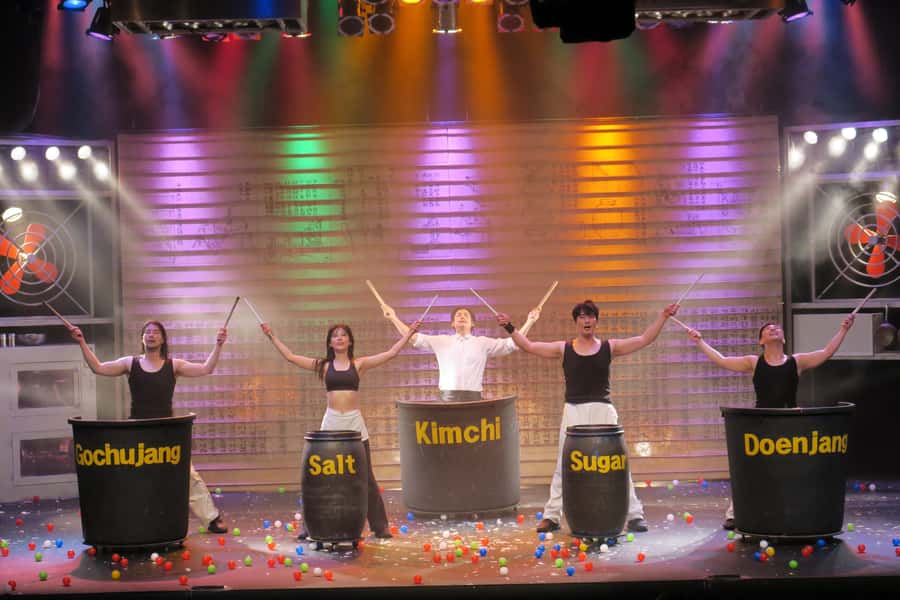
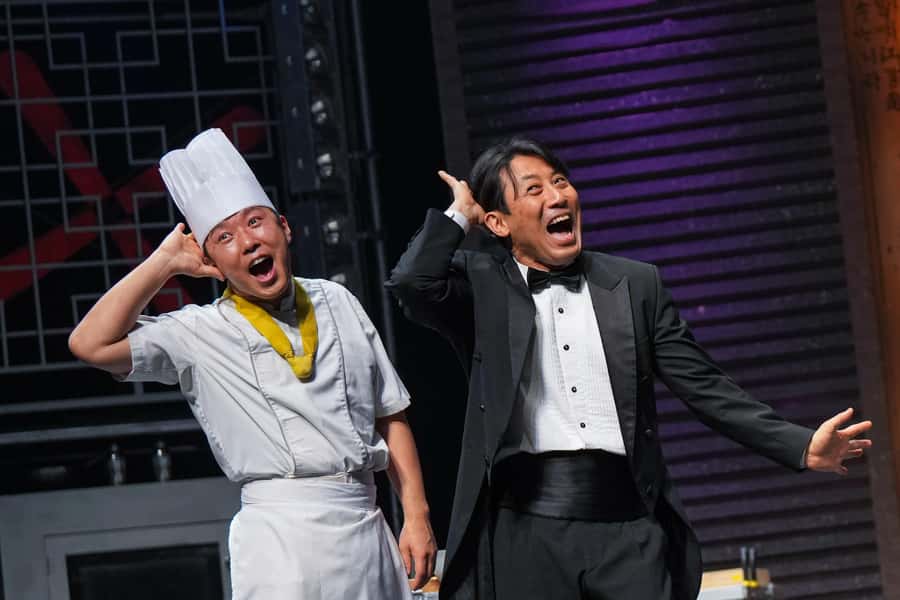
NANTA turns a frantic wedding kitchen into a 90-minute burst of drumming, comedy, acrobatics, and culinary skill. Four performers, playing chefs and kitchen staff, must prepare ten wedding dishes in one hour. Pots become drums, chopping boards become instruments, and the pressure creates a steady stream of physical comedy.
I like two things right away: you do not need Korean to follow the action, and the performers do far more than act. They drum, dance, sing, chop, juggle, and pull audience members into the story. The main caution is noise. The show is deliberately loud, and some scenes use broad, slightly cheesy humor that may not suit every adult.
Key points to know before you book
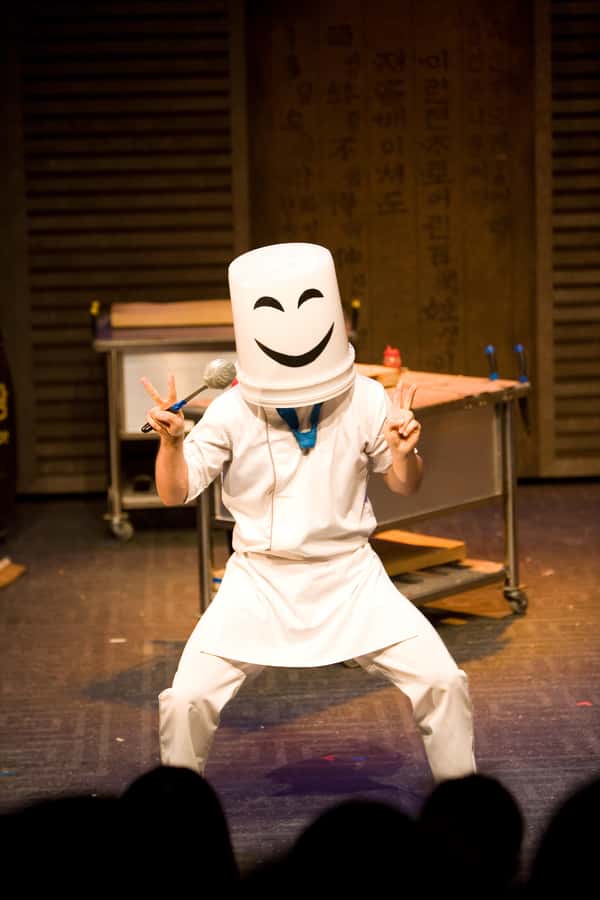
- The plot is easy to follow: Three chefs face an impossible wedding-food deadline, with a manager and other comic complications adding to the chaos.
- The music comes from the kitchen: Pots, pans, chopping boards, and traditional Samulnori rhythms drive much of the performance.
- It is almost language-free: Physical comedy, gestures, music, and facial expressions carry the story.
- Audience participation is part of the fun: A few people may be invited onstage, so you can watch quietly or possibly become part of the action.
- The show lasts about 90 minutes: That makes it an easy evening plan before or after food in Myeongdong.
- Choose the theater carefully: Myeongdong NANTA Theater is on the third floor of the UNESCO Building, not at Myeongdong Arts Theater.
A Korean kitchen becomes the stage
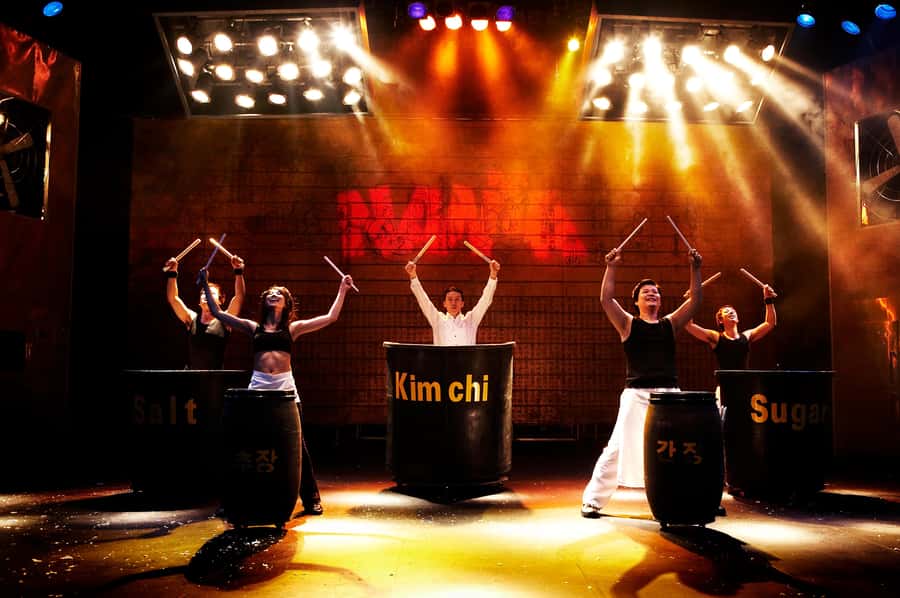
NANTA begins with a simple problem. Three chefs are told to prepare ten wedding dishes in only one hour. A manager oversees the work, personalities clash, and the kitchen quickly turns into a comic pressure cooker.
You never need a detailed explanation of Korean wedding customs to understand the stakes. The countdown, the frantic preparation, and the performers’ reactions do most of the work. It is broad theater, closer to pantomime and slapstick than to a quiet drama, but the basic story gives the noise and movement a clear purpose.
The production uses a small number of performers with remarkable range. They are actors, percussionists, dancers, singers, acrobats, and mock chefs at the same time. The kitchen tools are not just props. Pots and pans supply the beat, while chopping and pounding become part of the musical score.
The result is a show that feels distinctly Korean without asking you to know Korean. Samulnori, a traditional Korean percussion style, gives the performance its musical backbone. The familiar kitchen setting makes that tradition approachable, especially if this is your first cultural performance in South Korea.
More Theatre Shows in the world:
- Seville: Live Flamenco Dancing Show Ticket at the Theater
★ 4.7 · 16,396 reviews - Barcelona: Flamenco Show at the Theater
★ 4.5 · 10,739 reviews - Malaga: Teatro Flamenco Malaga Live Flamenco Show
★ 4.7 · 4,254 reviews
Why the lack of dialogue matters
A spoken play can be difficult to enjoy when you do not understand the language. NANTA solves that problem by letting movement carry the story. The performers use facial expressions, timing, gestures, and repeated comic situations to make each scene clear.
There is some English-friendly material, but you should not expect a translated drama with long spoken scenes. The appeal is visual. You can understand the rivalry between characters, the rising pressure of the deadline, and the comic disasters even if you know no Korean.
That makes the show a useful choice for a mixed group. You might be traveling with children, teenagers, parents, or friends who have different interests. Nobody needs to read subtitles or keep up with fast dialogue. Even the audience participation depends more on simple actions and reactions than on language skills.
The lack of speech does not make the show quiet or gentle. The percussion is forceful, and the final drumming sequences can be especially loud. If a child in your group has sensitive ears, bring ear protection or choose another type of performance.
The 90-minute performance, scene by scene
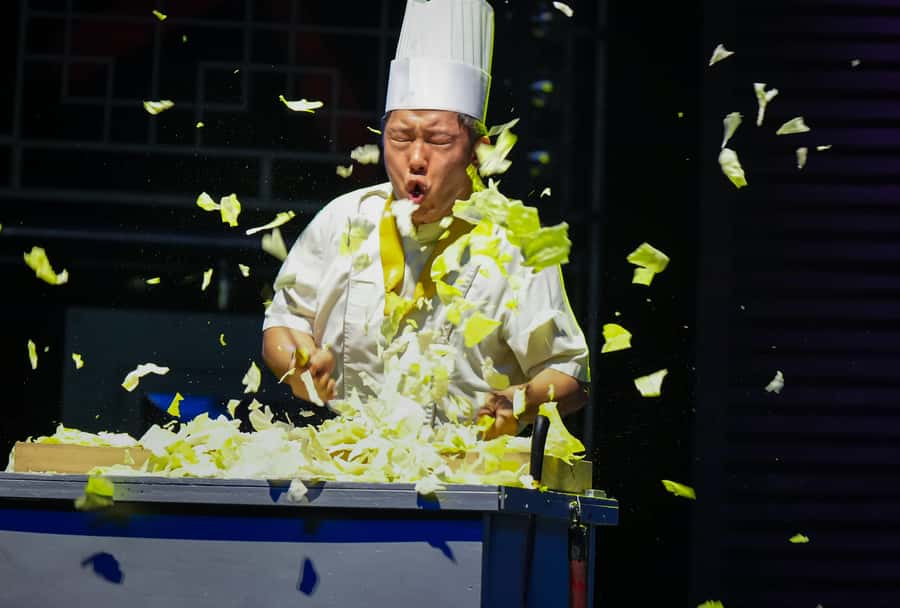
The opening sets up the kitchen and the urgent wedding assignment. You meet the chefs, see the work ahead, and get a quick sense of the power struggle inside the team. The humor begins with character behavior, not complicated plot twists.
As the deadline approaches, the work becomes more physical. Chopping, mixing, carrying, and preparing food turn into choreographed routines. The performers use speed and precision to make ordinary kitchen movements look daring. Some of the comedy comes from mistakes, while other moments depend on one character trying to control the others.
The middle portion adds more disruption. The kitchen becomes a playground for comic conflict, mock martial arts, dance, and exaggerated reactions. The plot stays easy to follow because each new problem connects back to the wedding deadline.
Audience participation also fits into the story rather than feeling like a separate stunt. Selected people may be brought onstage to help with a scene. This can be a highlight for families, especially if a child gets involved, but it is worth knowing that participation is not guaranteed and may feel intimidating for shy audience members.
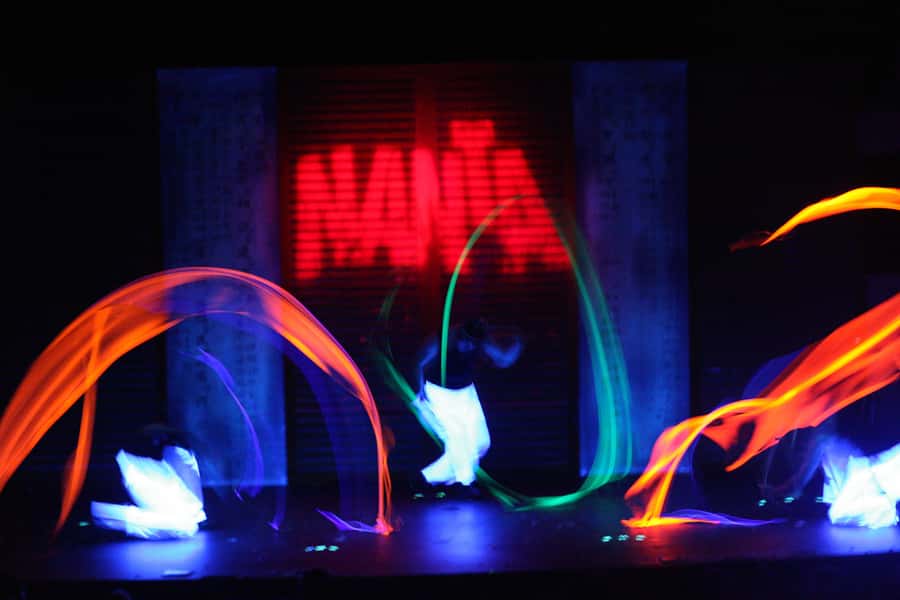
The closing section leans heavily into percussion. The performers’ energy builds as pots, pans, and other kitchen objects become instruments. The drumming is one of the strongest reasons to attend, but also the part most likely to bother anyone sensitive to loud sound.
The advertised running time is about 90 minutes. That is long enough to feel like a full theater outing, yet short enough to fit neatly into a busy Seoul day. The show moves quickly, and the pace helps the broad humor land without long pauses.
What makes the traditional music work
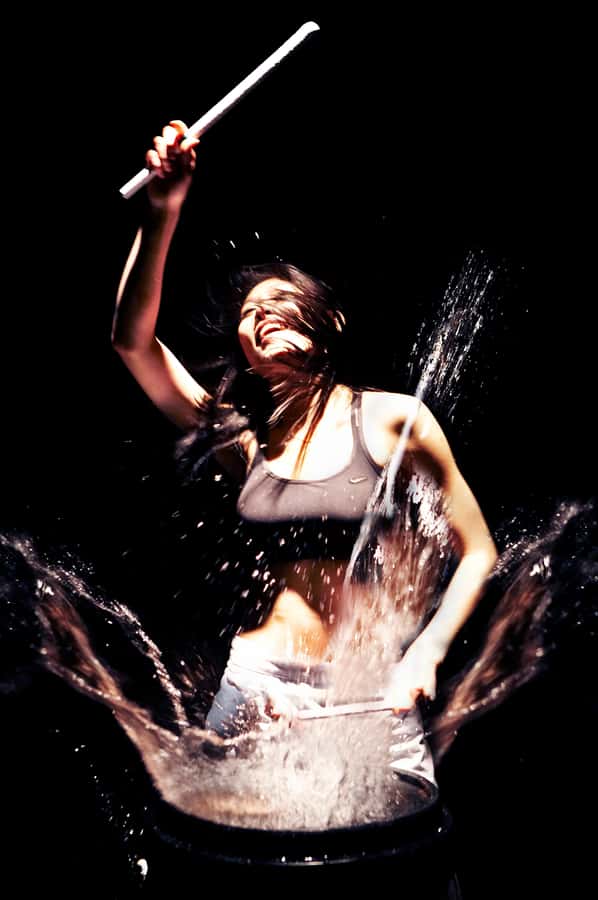
Samulnori is based on Korean percussion, usually associated with instruments such as gongs and drums. NANTA adapts that musical idea to a commercial theater setting, using kitchen equipment to connect the rhythm to the story.
You do not need a background in Korean music to enjoy it. The rhythm is immediate. It builds tension, marks changes in the action, and gives the performers a physical challenge. The comedy may be simple, but the drumming requires control and timing.
This is also where the show offers more than a standard slapstick routine. The cooking theme is familiar to anyone, while the percussion introduces a Korean sound and performance tradition. You get a light cultural introduction without sitting through a lecture or formal demonstration.
The final drumming passages are often the most memorable part. The performers look physically spent by the end, which helps you appreciate the stamina involved. This is not a relaxed stage reading. It is a demanding performance built around repeated movement, noise, and precise coordination.
More Tickets in the world:
- Paris: Moulin Rouge Cabaret Show Ticket with Champagne
★ 4.7 · 16,088 reviews - Hanoi: Water Puppet Show Tickets
★ 4.6 · 7,029 reviews - Porto: Spiritus Multimedia Show Entry Ticket
★ 4.5 · 6,403 reviews - Seville: Puro Flamenco Show with Optional Museum Ticket
★ 4.8 · 6,088 reviews
Myeongdong or Hongdae: picking the right theater
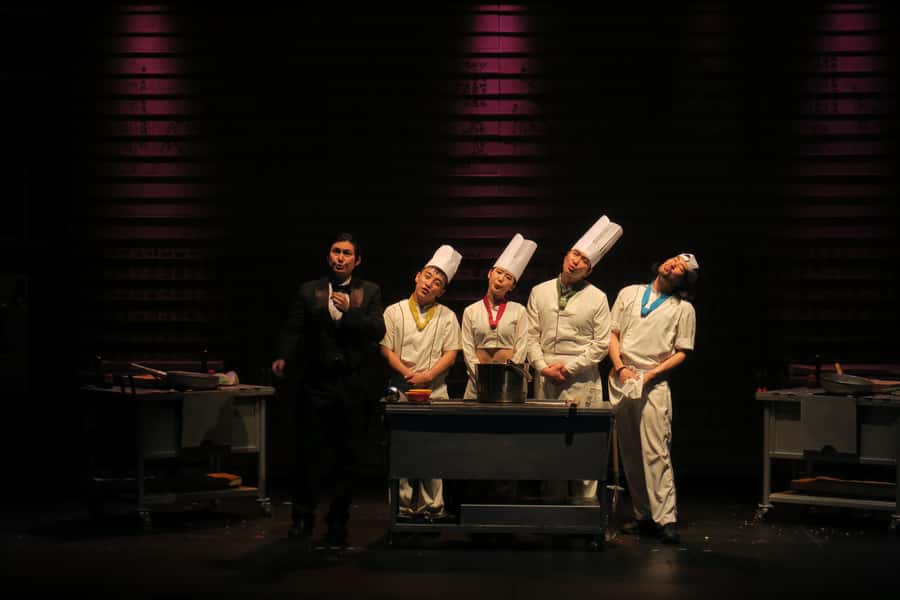
The ticket options may place you at the Myeongdong or Hongdae NANTA Theater, so check the venue before leaving your hotel. The location is important because the two theater choices are not interchangeable for your daily plan.
Myeongdong is especially convenient if you want to pair the show with food and shopping. The theater is near the Myeongdong market area, making it easy to continue your evening with street food after the curtain. That combination works well because NANTA itself uses food as its central theme.
The Myeongdong venue can be easy to miss. It is on the third floor of the UNESCO Building, which does not look like a traditional theater from the outside. Do not confuse it with Myeongdong Arts Theater. Check the address and building name ahead of time, then allow time to find the correct entrance.
Hongdae gives you a different neighborhood setting, but the supplied information does not provide further venue details. Your practical task is the same: confirm the theater named on your ticket rather than assuming every NANTA performance is in Myeongdong.
The activity begins and ends at the selected theater. There is no sightseeing transfer or guided city tour attached to the ticket, so plan your own route and your own meal before or after the performance.
Is the humor right for you?
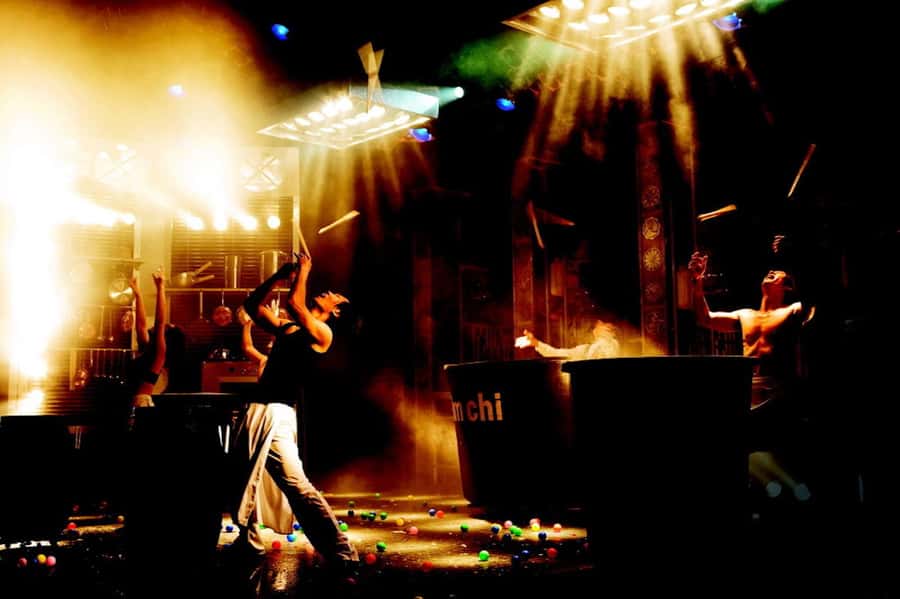
NANTA uses physical comedy, exaggerated reactions, mock conflict, and a few intentionally silly moments. I would compare its tone to a mixture of Stomp, pantomime, kitchen comedy, and a high-energy percussion show.
That comparison should help set expectations. If you prefer subtle acting, quiet music, or a complex plot, this may feel too broad. Some adults may find parts of it cheesy. The show is not trying to be a restrained cultural recital.
If you enjoy visual humor, you are more likely to have a good time. The performers commit fully to the action, and their physical skill gives the comedy weight. The jokes do not depend only on dialogue or cultural references, so they work across age groups and nationalities.
The show also suits children and teenagers unusually well for a cultural performance. Young audience members can follow the food, mess, noise, and movement without needing background knowledge. Older children may especially enjoy the moments when audience members are called onstage.
Adults should not assume it is only for kids. The drumming, acrobatics, timing, and kitchen choreography give you plenty to watch. Seeing the performers switch between comedy and serious percussion keeps the performance moving.
Audience participation and theater manners
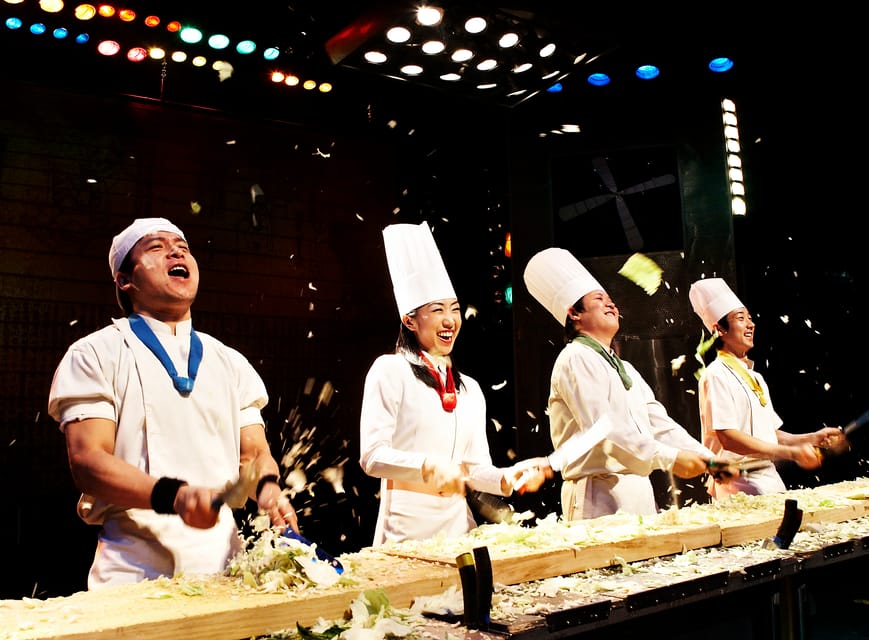
Audience involvement is one of NANTA’s most popular features. A few people may be invited to join a scene, and the participation can become part of the wedding-kitchen story. If someone in your group is chosen, expect photographs from the production rather than a chance to record the scene yourself.
Photography and video are not allowed during the performance. That rule matters because the show relies on quick changes and live interaction. Put the phone away and watch the performers rather than trying to capture the drumming.
You may also want to arrive with a simple plan for children. The show is family-friendly, but loud. A seat near an exit might feel reassuring for a child who is unsure about the noise, though the available information does not specify seating arrangements.
Do not count on meeting the performers afterward. A chance to request autographs is not guaranteed, so treat the performance itself as the complete experience.
Value for your Seoul itinerary
No ticket price is provided here, so I cannot judge the exact cost against other Seoul shows. I can still explain what you receive for the admission fee: a full 90-minute performance, a complete comic plot, live percussion, skilled physical work, and possible audience participation.
That is good value if you want an evening activity that works for a whole group. One person can enjoy the Korean musical elements, another can focus on the comedy, and children can follow the action without translation. You also avoid the need to arrange a separate guide or interpreter.
The value is weaker if you are buying the ticket mainly for a serious presentation of Korean tradition. NANTA uses Samulnori as part of a commercial stage show. It introduces the sound in an accessible way, but its main purpose is entertainment.
Its long international run helps explain the broad design. The production has toured 326 cities in 61 countries, reached more than 15 million audience members, and was selected as one of Seoul’s Top 10 Cultural Tourism Programs. Those numbers do not guarantee that you will like the humor, but they show that the format has been built for audiences from many backgrounds.
It also holds the record for the most-attended show in Korean theater history. For you, the practical meaning is simple: this is not an obscure experiment that depends on understanding local language or theater customs. It is a polished, repeatable show designed to connect quickly.
Who should book NANTA?
I would put this high on the list for families, first-time visitors, mixed-age groups, and anyone who wants a break from museums and historic sites. It is also a strong choice for a solo visitor. You do not need a companion to understand the story, and the energy carries the evening.
It works particularly well when your group speaks different languages. Since the action is mainly physical, you can enjoy it with friends or relatives who do not speak Korean or English.
I would be more cautious if you dislike loud percussion, audience participation, or slapstick. The show does not gradually reveal a quiet artistic idea. It announces its style early and keeps the volume and movement high.
Final call: book it or skip it?
Book NANTA if you want an easy-to-follow Seoul night out with Korean percussion, physical comedy, and a real chance of audience involvement. It is a smart choice after a day of sightseeing because the 90-minute format gives you a clear start and finish, and the Myeongdong venue pairs well with the nearby market.
Skip it if you want a serious historical performance, soft music, or a complex spoken play. For most families and international visitors, though, the combination of skill, noise, humor, and no language barrier makes this one of Seoul’s safer entertainment choices. Confirm the theater address, remember that Myeongdong means the UNESCO Building rather than Myeongdong Arts Theater, and bring ear protection for sensitive children.
FAQ
How long does the NANTA show last?
The performance lasts about 90 minutes.
Do I need to understand Korean?
No. The show is largely non-verbal and uses physical comedy, music, gestures, and facial expressions to tell the story.
What is the story about?
Three chefs are given one hour to prepare ten wedding dishes. Their kitchen work turns into a comic series of mistakes, conflicts, drumming, and acrobatics.
Is NANTA suitable for children?
Yes. The show is described as appropriate for children and families, and children can follow the physical comedy without knowing Korean.
Is the performance loud?
Yes. Drumming and kitchen percussion are central to the show. Bring ear protection if someone in your group has sensitive ears.
Can audience members participate?
Yes. Some audience members may be invited onstage to take part in a scene, though participation is not guaranteed.
Where is the Myeongdong NANTA Theater?
It is on the third floor of the UNESCO Building. It may be hard to identify from outside, so check the location before you go.
Is the Myeongdong venue the same as Myeongdong Arts Theater?
No. Be careful not to confuse Myeongdong NANTA Theater with Myeongdong Arts Theater.
Can I choose between Myeongdong and Hongdae?
The available ticket option determines the theater. Check your booking details to confirm whether your performance is in Myeongdong or Hongdae.
What is included with the ticket?
The ticket includes admission to the NANTA show. The activity begins and ends at the selected meeting point.
Just added around the world
- Hanoi city tour with water puppet show- small group tour★ 5.0 · 10 reviews
- Hanoi Street Food Walking Tour and Water Puppet Show★ 4.0 · 5 reviews
- Hanoi Cyclo Ride and Water Puppet Show★ 3.5 · 3 reviews
- Private: Hanoi Street Food tour with Water Puppet Show and Cyclo★ 5.0 · 8 reviews
- Thang Long Water Puppet Show Tickets★ 4.5 · 7 reviews
- Deluxe Group Hanoi Sightseeing Including Puppet Show★ 4.5 · 2 reviews
- Hanoi Private Trip: Explore local culture, monument, cooking class & puppet show★ 4.5 · 3 reviews
- Songcheng Park & Lengend of Song Dynasty Show Ticket★ 4.5 · 3 reviews
South Korea Shows, compared.
Jeju: Eastern UNESCO Sites Tour with Haenyeo Show
Read our review →
Jeju Eastern Highlight Tour with Women divers show
Read our review →
Jeju East: Small Group Healing Tour w/Woman Divers Show
Read our review →
LGBTQ+ Pub Crawl and Drag Show with Local Drag Queen
Read our review →
Browse the lists this show appears in