
Review · LONDON
Hidden Tube Tour – Piccadilly Circus: The Heart of London
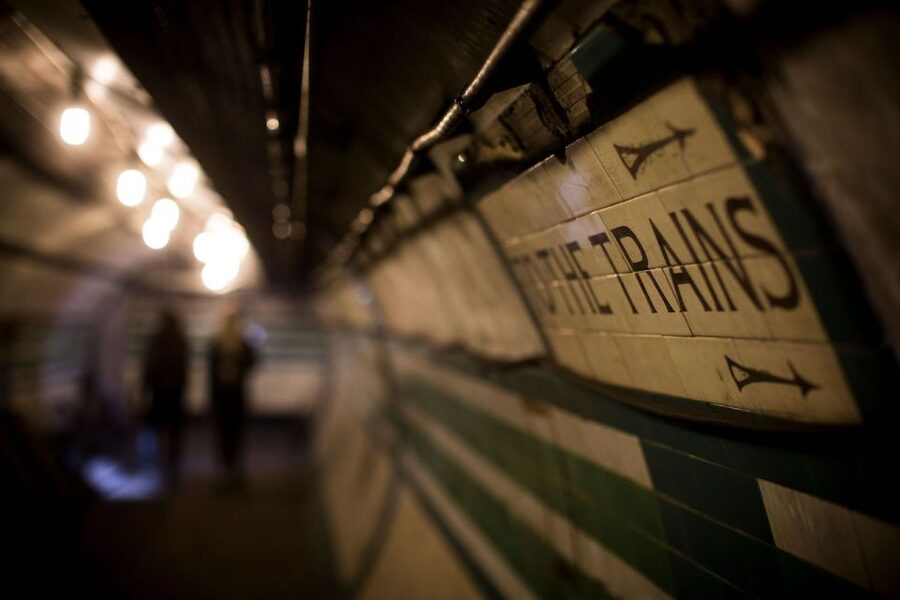
Piccadilly Circus Underground station has a second life below the famous lights and traffic. Behind secret doors, this 75-minute tour takes you into disused passenger tunnels and lift shafts closed to the public since 1929, with original Edwardian details still visible.
I like the focus on real working history, from wartime sheltering to the storage of priceless artefacts. I also like that the tour comes from London Transport Museum’s historical team, so the stories connect the station to more than a century of change.
The catch is practical: you will walk on uneven ground, climb stairs, and spend time in low light. This is not suitable for people with claustrophobia, mobility impairments, or anyone expecting a step-free museum visit.
Key points
- Secret access beneath Piccadilly Circus: Enter passageways and lift shafts closed to ordinary Tube passengers since 1929.
- Edwardian station design: See original features from the station’s opening in 1906.
- Wartime shelter stories: Learn how people used the Underground during periods of danger.
- A station rebuilt for crowds: Understand why Piccadilly Circus was modernised between 1925 and 1928.
- Physical walking tour: Expect stairs, uneven surfaces, low lighting, and no elevator.
- Strong guide-led experience: The English-speaking guides are informative, enthusiastic, kind, and often humorous.
Beneath Piccadilly Circus, London’s busiest showpiece
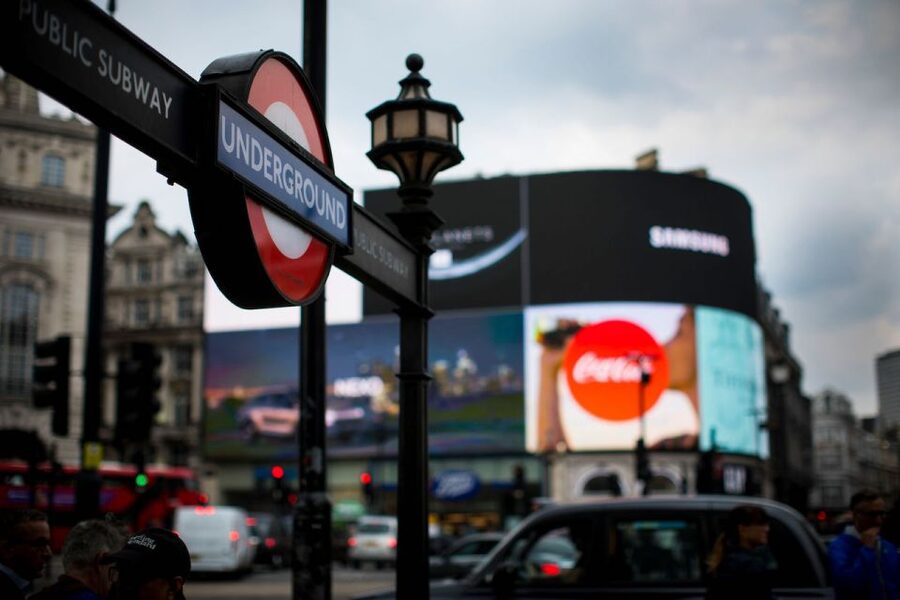
Piccadilly Circus is one of London’s most recognisable places. Above ground, you have the famous advertising screens, the Shaftesbury Memorial fountain, theatres, shops, and constant traffic. Below ground, the station tells a quieter story about how London built, repaired, and adapted its transport system.
Piccadilly Circus station opened in 1906, serving the Bakerloo and Piccadilly lines. It was designed for an Edwardian city that was already growing fast, yet the station soon needed more space. Between 1925 and 1928, it underwent major modernisation to cope with rising passenger numbers.
That history gives the tour its main appeal. You are not simply looking at an abandoned corridor. You are seeing parts of a station that once helped move Londoners through the West End, then changed as the city’s demands changed.
The tour begins at the bottom of the stairs at Exit 4 of Piccadilly Circus station. Look for the exit at the corner of Shaftesbury Avenue and Coventry Street, beside the Criterion Restaurant. This detail matters because Piccadilly Circus has several exits and plenty of people moving in every direction. Arrive with enough time to find the correct one.
The tour ends back at the same meeting point. You do not need to arrange a second pickup or find your way across central London after the visit.
More Circus and Acrobatic Shows in London:
- Picadilly Circus: Hard Rock Cafe Set Menu Lunch or Dinner
★ 4.5 · 987 reviews - Phare: The Cambodian Circus Show in Siem Reap
★ 5.0 · 1,925 reviews - Siem Reap: Phare, the Cambodian Circus Show Tickets
★ 4.9 · 1,850 reviews
The 1906 station and its Edwardian details
The first part of the experience sets the station in context. Piccadilly Circus opened at a time when the London Underground was still taking shape, and its early design reflects the needs and tastes of that period.
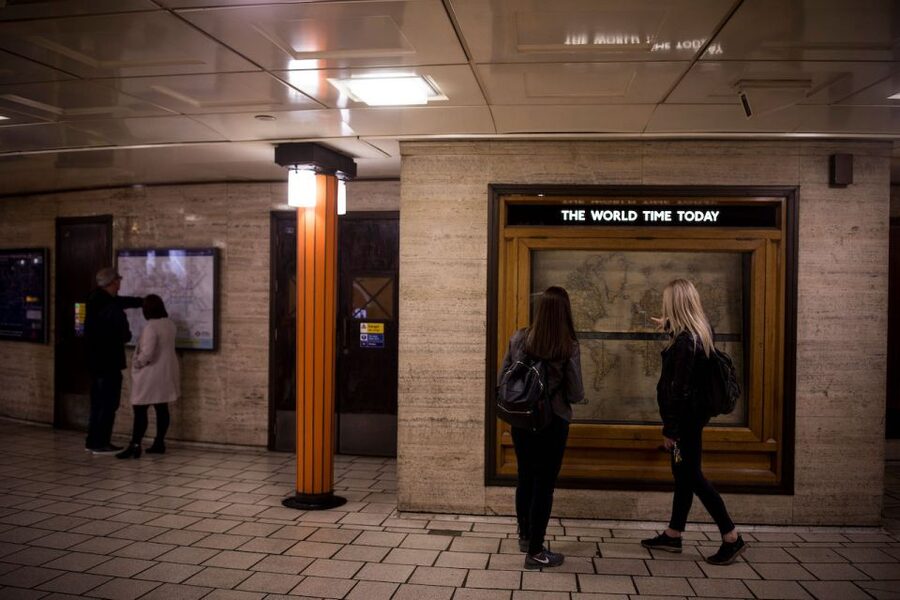
You will see original Edwardian features that are easy to miss during a normal Tube journey. On a regular trip, you are concerned with finding the right platform, catching a train, and getting out of the crowd. Here, you have time to look at the structure itself and consider how the station was built.
The station’s design also shows the limits of early Underground travel. As passenger numbers rose, the original arrangements could no longer handle the flow. The later modernisation was not just a cosmetic update. It changed how people moved through the station and made room for a much larger daily crowd.
This is one of the tour’s useful lessons. London’s Underground is often treated as a fixed part of the city, but stations are constantly adjusted. Piccadilly Circus offers a clear example of a transport system responding to population growth, new engineering demands, and changing habits.
The Edwardian material is best appreciated by anyone who enjoys architecture, transport design, or the small details of historic buildings. If you only want a quick look at an old tunnel, the amount of historical explanation may feel more than you need. The guides are there to explain how the station worked, not simply to lead you from one dark room to another.
Through doors closed since 1929
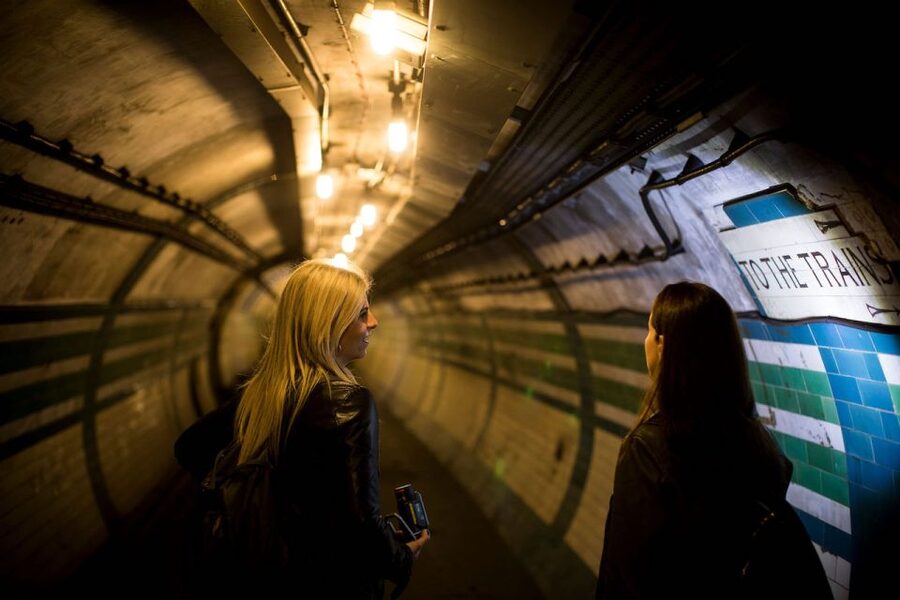
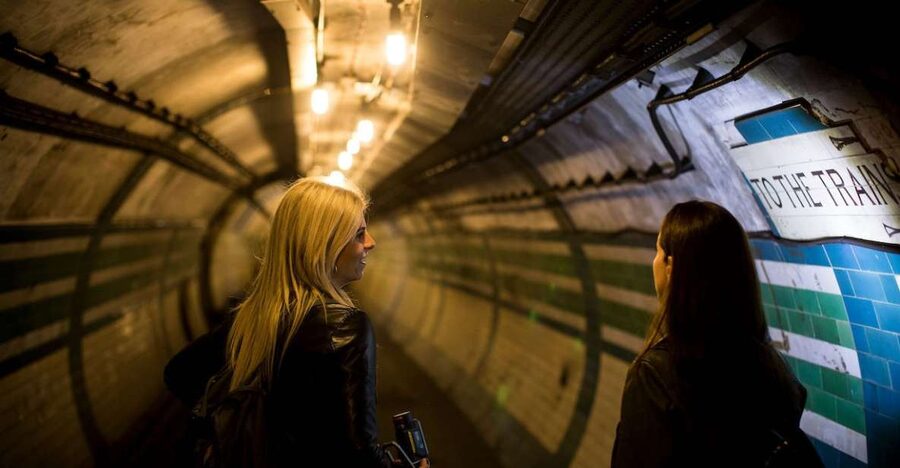
The special access is the heart of the visit. You will pass through doors and into sections that ordinary passengers have not used since 1929. These include disused passenger tunnels and old lift shafts.
That date gives the spaces a useful sense of time. You are not walking through a modern reconstruction made to look old. You are entering parts of a genuine station layout that lost its public role almost a century ago.
The experience is likely to feel more physical than a standard London attraction. The route includes plenty of walking, flights of stairs, low lighting, and uneven ground. You should wear sturdy footwear and clothing that allows you to move comfortably.
There is no elevator, and the tour is not step free. That makes the route unsuitable for anyone with mobility impairments. It also means you should not book it if stairs are difficult for you, even if you are otherwise interested in London transport.
Low light and enclosed spaces are another serious consideration. People with claustrophobia should skip this one. The narrow, closed-off setting is part of the appeal, but it is not a minor detail that you can easily ignore once the tour has begun.
Food and drinks are not allowed, and there is no cloakroom. Leave luggage and large bags at your accommodation or another secure location before arriving. Open-toed shoes are not permitted, so sandals are a poor choice for this activity.
Wartime sheltering below the West End
The station’s wartime role adds a human side to the engineering story. During the Second World War, Underground stations could become places of refuge, and Piccadilly Circus sheltered people during periods of danger.
The guide explains how the station was used by those seeking safety. This helps you picture the tunnels as more than old transport infrastructure. They were also places where Londoners waited, slept, and tried to carry on during frightening conditions.
The subject is especially effective in this setting because the spaces remain below the city you see today. Above you, Piccadilly Circus is noisy and brightly lit. Below, the old rooms and passageways create a direct connection with a very different London.
You should expect the guide to balance storytelling with practical details about the station. The experience is not presented as a solemn memorial visit, but the wartime material gives the tour emotional weight.
The guides are a major part of the experience. The available feedback describes them as informative, enthusiastic, kind, pleasant, and humorous. That combination matters in a dark and technical setting. Good delivery keeps the history clear without making the tour feel like a dry lecture.
No individual guide names are provided, so you should not book this expecting a specific person. The reliable feature is the live English-speaking format and the historical material prepared through London Transport Museum.
Same place, a different night out:
- London West End Musical Silent Disco Walking Tour Top 1% Rated
★ 5.0 · 1,057 reviews - Drag Queen Disco Diva Tour – Silent Disco Walking Tour
★ 5.0 · 395 reviews - London Theatre: Wicked the Musical
★ 4.5 · 316 reviews - London Theatre: Moulin Rouge! The Musical
★ 4.5 · 272 reviews
Secret storage and a station in transition
Another unusual chapter concerns the top-secret storage of priceless artefacts. This detail shows how disused Underground spaces can gain new uses after they stop serving passengers.
It also broadens the tour beyond transport. Piccadilly Circus is part of London’s cultural infrastructure as well as its travel network. Objects of great value were kept in a place most people passed without knowing what lay behind the walls.
The storage story works best when you consider the station as a series of layers. First came the original Edwardian station. Then passenger demand led to the 1925 to 1928 modernisation. Later, sections no longer needed for daily travel became useful for other purposes.
That pattern is common in old cities. Buildings rarely have only one life. A corridor can begin as a passenger route, later become a shelter, and eventually serve as secure storage. Piccadilly Circus lets you see those changes in one compact visit.
The tour lasts 75 minutes, which is a good length for this subject. You get enough time for a guided explanation and access to several unusual areas, but the visit does not take over your entire day. You can easily combine it with the West End, Trafalgar Square, Leicester Square, or a theatre booking.
What the $60.61 price means
At $60.61 per person, this is not a cheap way to spend an hour in London. The price makes more sense if you value restricted access, a specialist guide, and a well-researched story that you cannot get during an ordinary Tube journey.
You are paying for more than entry to a station. The visit includes access to disused passenger areas, old lift shafts, and original design features that are normally closed. It also comes with historical interpretation from London Transport Museum, a major institution devoted to urban transport.
For a visitor who already plans to visit London Transport Museum, this tour offers a different experience. The museum gives you displays and objects in a conventional setting. Piccadilly Circus puts you inside the infrastructure itself.
For a family on a tight budget, the cost may be harder to justify, especially because children under 10 cannot take part. Children aged 10 to 15 are allowed, but there can be no more than four children in that age range per adult.
The reserve-now-and-pay-later option helps if your schedule is still shifting. You can hold a place without paying immediately, and free cancellation is available up to 24 hours before the tour for a full refund. Still, check the terms before booking rather than assuming every change will qualify.
Travel to and from Piccadilly Circus is not included. You will need to make your own way to the station, using the Tube or another form of transport. The central location makes this straightforward, but it remains an extra part of your London budget.
Who will enjoy this 75-minute underground tour
I would recommend the experience most strongly to people with a real interest in:
- London Underground history
- Edwardian architecture
- Wartime London
- Engineering and urban transport
- Unusual access behind familiar city landmarks
- Guided historical storytelling
It suits adults and children aged 10 or older who can manage stairs and uneven surfaces. The strongest match is someone who enjoys asking how a city works, not just seeing its famous sights.
It is less suitable if you want a relaxed, accessible attraction with plenty of space. You will not find a lift, cloakroom, step-free route, or bright open galleries. You should also avoid it if enclosed areas make you uncomfortable.
The tone should appeal to people who like information delivered in a lively way. Guides are described as enthusiastic and humorous as well as informative, so the tour does not rely on technical facts alone.
You may also like the visit if you have already seen London’s major landmarks. Piccadilly Circus is familiar above ground, but the tour changes your view of the place by showing what was built below it and how those spaces were later used.
Practical preparation before you arrive
Bring a passport or identity card. The activity information specifically requires identification, so do not leave it behind even if you are already carrying other booking details.
Wear sturdy, closed footwear. Open-toed shoes are not allowed, and the route includes uneven ground and stairs. Comfortable clothing is sensible because you will be walking rather than standing in one spot.
Pack lightly. Large bags and luggage are not permitted, and there is no cloakroom. If you are coming directly from a train station or hotel changeover, arrange luggage storage before you reach Piccadilly Circus.
Allow time to locate Exit 4. The meeting point is not a general station entrance. It is at the bottom of the stairs at the corner of Shaftesbury Avenue and Coventry Street, next to the Criterion Restaurant.
The tour is in English only. If you need another language, this is not the right choice.
Should you book the Piccadilly Circus Hidden Tube Tour?
Book it if you want access to the forgotten working parts of a famous London station and you are comfortable with stairs, low light, and enclosed spaces. The mix of Edwardian design, wartime sheltering, disused tunnels, and secret storage gives the 75 minutes a clear purpose.
Skip it if accessibility is essential, you dislike confined areas, or you are looking for a low-cost sightseeing stop with no physical demands. At $60.61, the value rests on the restricted access and the quality of the historical guiding.
For the right person, this is a memorable way to see London’s transport system from the inside. You leave Piccadilly Circus with a better sense of how the Underground grew, adapted, and kept parts of its past below the city.
FAQ
Where does the Piccadilly Circus Underground tour start?
The meeting point is at the bottom of the stairs at Exit 4 of Piccadilly Circus Underground station. Exit 4 is at the corner of Shaftesbury Avenue and Coventry Street, next to the Criterion Restaurant.
Where does the tour finish?
The activity ends back at the same meeting point at Exit 4.
How long does the tour last?
The guided tour lasts 75 minutes.
What language is the tour in?
The tour is conducted in English with a live tour guide.
What areas will I see?
You will visit disused passenger tunnels, old lift shafts, and parts of Piccadilly Circus station that have been closed to ordinary passengers since 1929. You will also see original Edwardian design features.
Is the tour suitable for children?
Children under 10 are not allowed. Children aged 10 to 15 may attend, with a maximum of four children in that age group per adult.
Is the tour step free?
No. The route includes flights of stairs, uneven ground, and low lighting. There is no elevator.
Is the tour suitable for someone with claustrophobia?
No. The tour is not suitable for people with claustrophobia because it includes enclosed, disused Underground areas.
What should I wear and bring?
Wear sturdy footwear and suitable clothing. Bring a passport or identity card. Open-toed shoes, food, drinks, luggage, and large bags are not allowed.
Can I cancel the booking?
You can cancel up to 24 hours in advance for a full refund. A reserve-now-and-pay-later option is also available, subject to the stated booking terms.
Just added around London
- London West End Musical Silent Disco Walking Tour Top 1%★ 5.0 · 62 reviews
- London: West End Photography Walking Tour with Guide★ 5.0 · 2 reviews
- London West End: 99 Club Comedy Show Ticket★ 4.0 · 17 reviews
- London: The Tina Turner Musical and Meal with Sparkling Wine★ 4.5 · 17 reviews
- London: Secrets of The Magic Circle Flagship Magic Show★ 5.0 · 5 reviews
- London: The Magician’s Table – Up-Close Magic Show★ 4.4 · 7 reviews
- London: The Tina Turner Musical & 2-Course Pre-Show Meal★ 4.6 · 17 reviews
- London’s West End: Ticket to The Mousetrap6 reviews
London Shows, compared.



The Best in Stand Up Comedy – Comedy Shows every night of the week
Read our review →
London Theatre: TINA – The Tina Turner Musical-Closes Sept 2025!
Read our review →
London Vintage Bus Tour: Live Comedy Sightseeing Show
Read our review →
Browse the lists this show appears in