
Review · DANCE
Diani: Giriama Cultural Dance Show and Local Village Tour
The best part of this Diani outing is the way it moves beyond the beach resort. You visit a school, share coconut water at a family homestead, meet a traditional healer, and finish with Giriama dancing where you are invited to join in. Guide Samson has earned special praise for making the visit friendly, clear, and personal.
I especially like the chance to see how madafu, or fresh coconut water, is collected, and the visit to the traditional healer, where plant-based remedies are explained. The main drawback is transport: the $35 tour price does not include your vehicle, and the extra cost depends on your hotel.
Key points to know
- Five distinct stops: Ibiza Market, a local school, a family homestead, a traditional healer, and the dance arena.
- Samson is a major asset: He guides in English or German and helps explain village life throughout the visit.
- Bring small useful gifts: Pencils, notebooks, toys, balls, sweets, and clothes are suitable for the school and children.
- Budget for transport: A sedan can be arranged for $40, or a tuk-tuk for $25, though the final amount may vary by location.
- Dance is participatory: You watch 12 Giriama dancers and may be invited to learn the steps yourself.
- Expect a real village setting: Food and drinks are not included, and some homes or activities may be simple rather than polished for tourism.
If you have spent most of your Kenya holiday beside Diani Beach, this three-hour visit offers a useful change of pace. It takes you into the daily world of the Giriama, one of the nine sub-tribes of the Mijikenda people who live along Kenya’s coast.
The tour is not just a dance performance. You begin in a market, stop at a school, visit a family homestead, learn about traditional medicine, and then walk to a dance arena. That sequence matters. It gives you some context before the music begins, so the final performance feels connected to village life rather than added as a separate show.
At $35 per person, the price is reasonable for a small cultural outing with a guide and several stops. But you must add transportation. A sedan arranged through the provider costs $40, while a tuk-tuk costs $25, with the actual amount depending on your hotel. Ask for the total price before you confirm, especially if you are comparing this with a larger organized excursion.
Starting at Ibiza Market
The first stop is Ibiza Market, an open-air place where people trade fish, food, clothing, and other everyday goods. This is a good opening because it shows the working side of the community before you enter the quieter village lanes.
You will not simply be shown a row of souvenir stalls. The point is to see where local people shop and sell. Your guide can help explain what is happening around you, which is useful if you do not know the names of local foods or the purpose of the goods on display.
Give yourself time to look, but keep your belongings secure and follow your guide’s lead when taking photographs. The market is a public working space, not a set built for visitors. A respectful approach will make the visit better for everyone.
More Dance Shows in the world:
- Seville: Live Flamenco Dancing Show Ticket at the Theater
★ 4.7 · 16,396 reviews - Bali: Uluwatu Kecak and Fire Dance Show Entry Ticket
★ 4.2 · 5,189 reviews - Bali: Ubud Palace Legong Dance Show Ticket
★ 4.4 · 3,979 reviews
Meeting students under the baobab tree
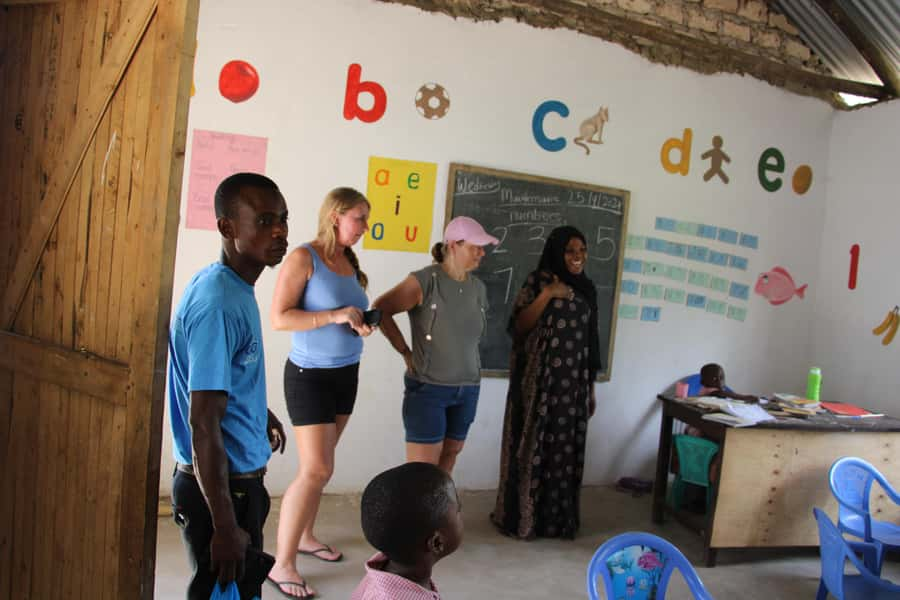
From the market, the tour continues to a local school shaded by a large baobab tree. Depending on the time of day, you may meet students and talk with them through the guide.
You are encouraged to bring small school supplies or simple gifts. Pencils, crayons, notebooks, stickers, toys, balls, sweets, and children’s clothes are all mentioned as useful choices. I would keep these items modest and practical rather than bringing expensive presents. A small packet of pencils can be more appropriate than a large pile of sweets.
Some visitors also choose to give money to support the school, but this is not listed as part of the tour price. If you plan to help financially, ask your guide how to do so in a clear and responsible way. You should never feel pressured to give more than you intended.
This stop can be touching, but it also calls for good judgment. Ask before taking photographs, let the guide manage introductions, and remember that children are at school first, not performing for a camera.
Coconut water, palm wine, and local cooking

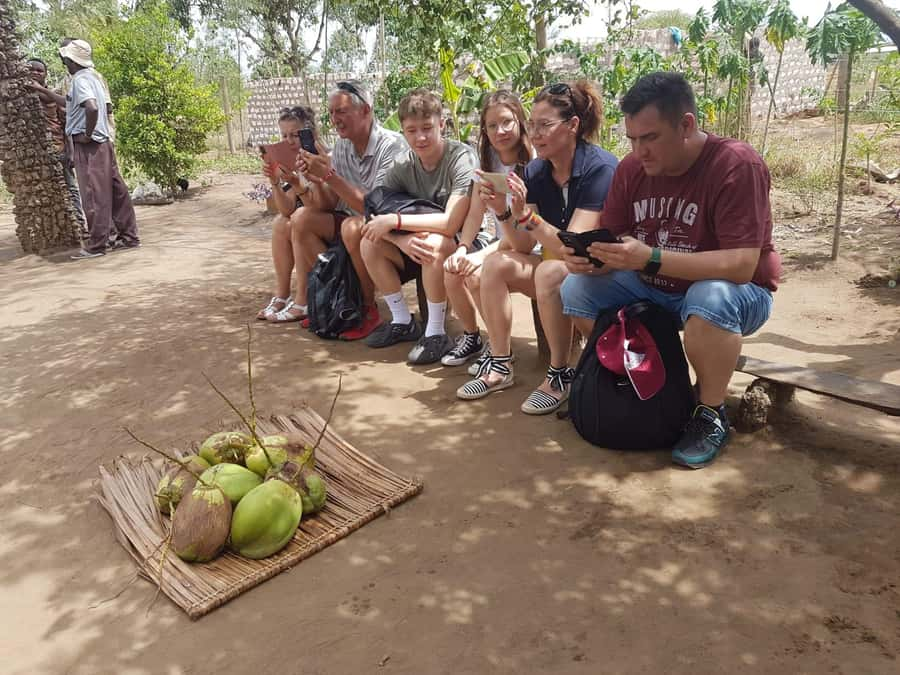
At a family homestead, you can try madafu, the fresh water inside a young coconut. The host may climb a coconut tree to show how coconuts are harvested, and you can learn about palm wine tapping as well.
This is one of the most memorable parts of the visit because it turns an ordinary drink into a lesson about food, work, and local resources. You see where the coconut comes from and how the tree is used. Palm wine tasting is included, but alcohol and drugs are not allowed as general items on the tour, so keep the tasting limited to the hosted activity.
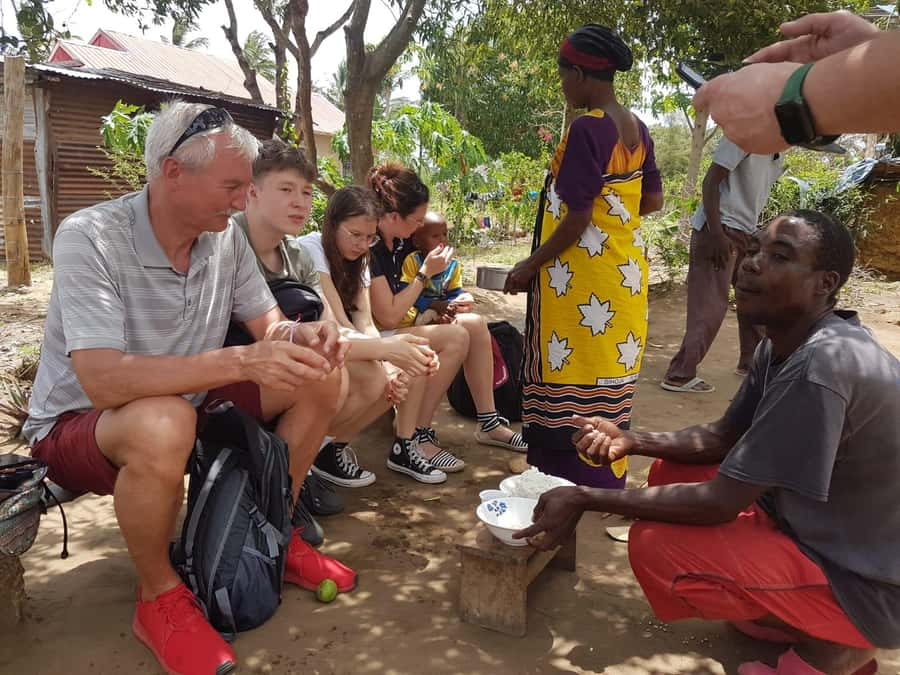
If time permits, you may help prepare cashew nuts or ugali. Ugali is a staple dish made from maize flour and is common in many parts of East Africa. The cooking segment gives you a chance to handle ingredients and ask questions rather than simply watching a demonstration.
Food and drinks are officially excluded from the tour price. You may receive samples or take part in preparation, but do not book this as a full meal unless the provider confirms that separately. One useful question to ask before going is whether the cooking activity will be available during your departure time.
Understanding the work of a traditional healer
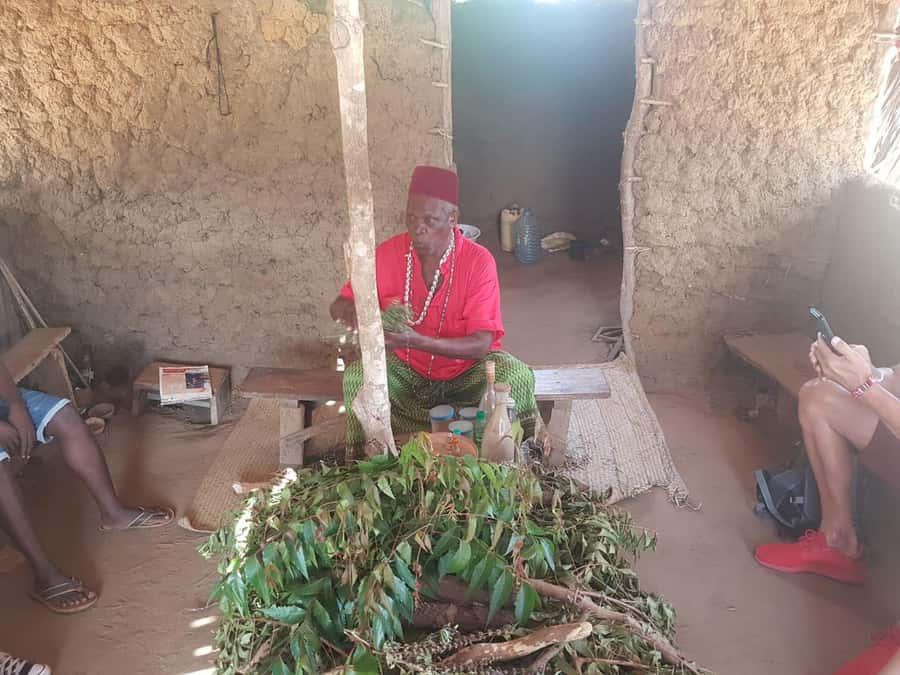
The visit to the mganga, or traditional healer, adds a different layer to the tour. You learn how indigenous herbs are used and how remedies are prepared. This knowledge has been passed from one generation to the next.
The value here is cultural understanding, not medical treatment. You are seeing a respected local practice and learning how people have used plants to address illness. Do not treat the visit as a substitute for a doctor, and do not assume that every remedy is safe for you to use.
Your guide’s explanations are particularly important at this stop. Practices involving herbs can be misunderstood when seen without context. Ask questions, listen carefully, and avoid handling plants or remedies unless invited.
Several people have singled out the cooking and healer visits as highlights. That makes sense. The dance is the most visible part of the outing, but the homestead and mganga stops often provide the clearest look at how knowledge is used in daily life.
More Traditional and Cultural Shows in the world:
- Xcaret Park Entry Tickets with Cultural Night Show Included
★ 4.5 · 2,382 reviews - Xcaret Park Day Trip, transportation and Cultural Night Show
★ 4.5 · 1,899 reviews - Dubai: Tour with BBQ Dinner, Camel Ride, & Traditional Show
★ 4.8 · 1,687 reviews - From Krakow: Polish Folk Show with All-You-Can-Eat Dinner
★ 4.5 · 1,593 reviews
The Giriama dance arena
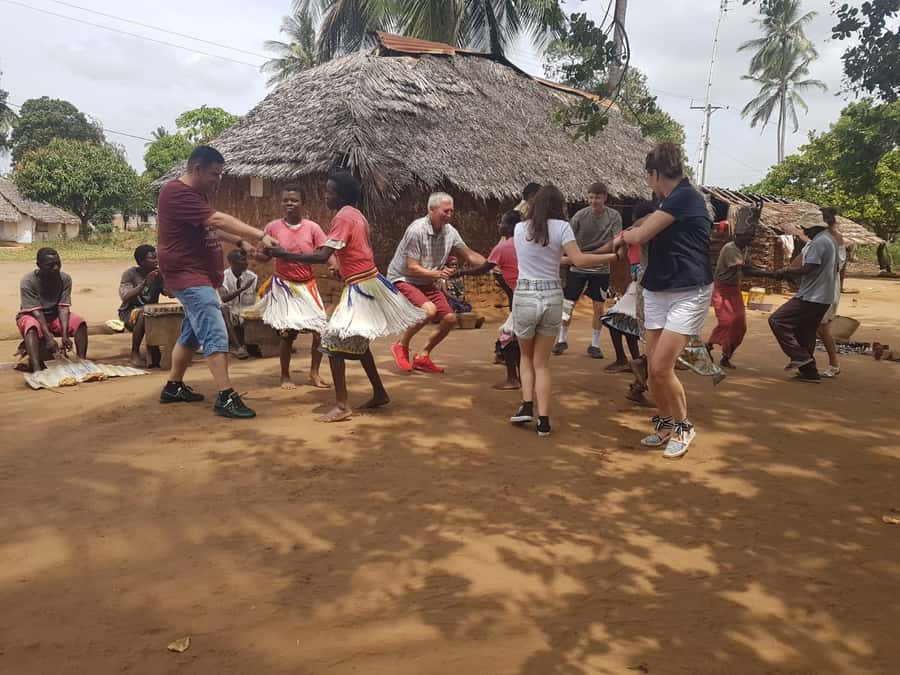
The final stop is the dance arena, reached through narrow village paths. Here, 12 dancers perform traditional Giriama dances, with each dance linked to an occasion such as a wedding, celebration, or farewell.
The performance is lively and participatory. You are not expected to remain in your seat throughout. The dancers may invite you to join, and the mood is built around shared rhythm, laughter, and movement.
Bring realistic expectations. This is a village performance, not a large professional stage production with elaborate lighting or a long theatrical program. One person enjoyed the wider visit but felt the dance portion could be improved. That is useful to keep in mind if dancing is your main reason for booking.
For most people, the dance works best as the closing piece of a broader visit. By this point, you have seen the market, met students, visited a home, tasted coconut, and talked about traditional medicine. The performance then feels like a welcome into community life rather than a standalone show.
Traditional attire may be provided, and you may be invited to wear it for part of the activity. The provider also offers professional photographs using your equipment, so bring a charged phone or camera and ask before each photograph is taken.
What Samson and Salim add to the day
Guide Samson is repeatedly praised for being friendly, helpful, and clear. His role is important because the tour moves through several settings where a little explanation makes a big difference.
A good guide can explain what you are seeing without turning every moment into a lecture. Samson also helps with the social side of the visit, such as introductions, school etiquette, and joining the dance. If you want more detail about Giriama customs, food, or the healer’s work, ask questions as you go.
Driver Salim has also been praised for helping make the outing run well. Since transport is arranged separately from the $35 activity fee, confirm who will collect you, how long the vehicle will wait, and what the return plan is. You are asked to wait in your hotel lobby 10 minutes before pickup.
The tour is advertised as three hours, but pickup and return time are extra. If you have a flight, spa appointment, or another fixed booking, allow a cushion.
The transport cost changes the value
The headline price is $35 per person, which is fair for the guide-led village visit and its range of activities. The transport charge is the detail most likely to affect your final decision.
A sedan can be organized for $40, or a tuk-tuk for $25. The stated cost may vary by hotel location. If you are traveling alone, the transfer can make the total feel high compared with the activity itself. For two or more people sharing a vehicle, the value improves.
The vehicle is not just a hotel shuttle. You need transport to reach the village, travel between areas, and return afterward. This is why you cannot simply arrive at the dance arena independently unless the provider confirms another arrangement.
There is also a free walking tour offered by the provider on Tuesdays and Thursdays. You need to communicate with the provider about it, and it should not be treated as a replacement for the village tour’s transport unless they confirm the details.
What to bring and how to behave
Wear comfortable shoes. The route includes market streets, village lanes, and walking between stops, so sandals or shoes that you can comfortably use on uneven ground are sensible.
I would also bring:
- A charged phone or camera
- Small school supplies or simple gifts, if you wish to bring them
- Some cash for souvenirs or optional support
- Water for yourself
- Light clothing suitable for warm coastal weather
The provider says food and drinks are not included, so do not assume that coconut water or cooking samples will cover your needs for the whole outing.
Most important, ask before photographing people, homes, children, or the healer’s materials. Let the guide introduce you and explain what is appropriate. The tour works best when you take part with curiosity rather than treating the village as a display.
Who will enjoy this tour most?
I would recommend it to you if you want more than resort activities and prefer meeting people through ordinary work, food, school, and family life. It suits anyone interested in Kenyan culture who is happy with a simple setting and a flexible, social style of touring.
Families may appreciate the school visit and dance, though adults should guide children on how to give gifts politely. Couples and solo visitors can also enjoy it, especially if they are comfortable joining group activities.
It is less suitable if you want a polished stage show, a guaranteed full meal, or a tightly timed excursion with every detail included. The dance section may feel brief or informal if you expect a major cultural production.
There is conflicting information about mobility access. The activity details mention wheelchair accessibility, but the same information says it is not suitable for wheelchair users. Since the route includes village paths and walking, contact Kaaribu Experiences before booking if you use a wheelchair or have limited mobility.
The tour offers live guiding in English and German. Free cancellation is available up to 24 hours before the start, and reserve-now-pay-later booking is offered.
Should you book the Giriama village tour?
Book it if your idea of a good Diani excursion includes conversation, local food preparation, a school visit, traditional medicine, and a chance to dance with villagers. The strongest parts are the range of stops and the personal guiding, especially if Samson is leading your visit.
Before booking, ask for the full transport price from your hotel and confirm exactly what food will be available. Bring modest gifts if you want to support the school, carry some cash for souvenirs, and keep your expectations grounded. This is a simple village experience with real human contact, not a polished show built around comfort.
For a short cultural outing that takes you well beyond the hotel compound, it offers good value. Just make sure you are paying for the whole day’s plan, including transport, rather than judging the cost from the $35 activity fee alone.
FAQ
How long does the Giriama village tour last?
The activity lasts three hours. Hotel pickup and return travel add extra time.
How much does the tour cost?
The activity costs $35 per person. Pickup, waiting, and drop-off are not included.
How much is transportation from my hotel?
The provider can arrange a sedan for $40 or a tuk-tuk for $25. The amount may vary depending on your hotel location, so confirm the total after booking.
Is food included?
Food and drinks are not included. You may receive madafu or take part in food preparation, but the tour price does not include a meal.
What languages are available?
Live guiding is available in English and German.
What should I bring?
Bring comfortable shoes. You may also wish to bring small school supplies, toys, sweets, or clothes for the children, along with cash for souvenirs or optional support.
Can wheelchair users join the tour?
The activity information gives conflicting details. It mentions wheelchair access but also says the tour is not suitable for wheelchair users. Contact Kaaribu Experiences before booking to confirm whether the route fits your needs.
Just added around the world
- Hanoi city tour with water puppet show- small group tour★ 5.0 · 10 reviews
- Hanoi Street Food Walking Tour and Water Puppet Show★ 4.0 · 5 reviews
- Private: Hanoi Street Food tour with Water Puppet Show and Cyclo★ 5.0 · 8 reviews
- Hanoi Cyclo Ride and Water Puppet Show★ 3.5 · 3 reviews
- Thang Long Water Puppet Show Tickets★ 4.5 · 7 reviews
- Deluxe Group Hanoi Sightseeing Including Puppet Show★ 4.5 · 2 reviews
- Hanoi Private Trip: Explore local culture, monument, cooking class & puppet show★ 4.5 · 3 reviews
- Songcheng Park & Lengend of Song Dynasty Show Ticket★ 4.5 · 3 reviews
Dance Shows, compared.
Live Flamenco Dancing Show Ticket at the Theater
Read our review →
Uluwatu Kecak and Fire Dance Show Entry Ticket
Read our review →
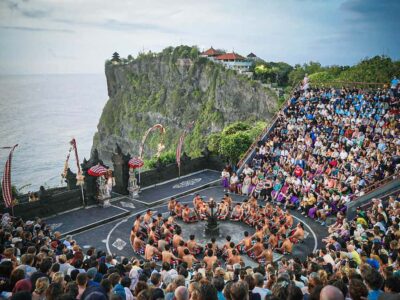
Kecak Fire Dance Show & Uluwatu Temple Entry Ticket
Read our review →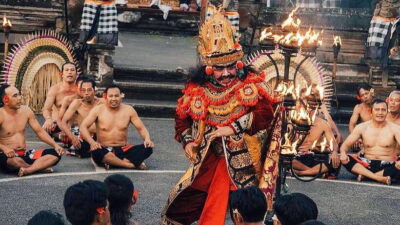
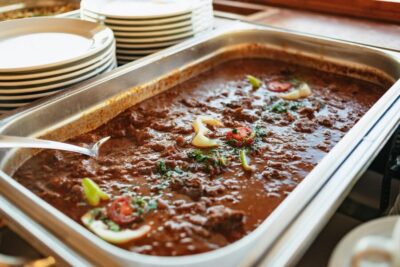
Dinner Cruise with Live Music and Folk Dance Show
Read our review →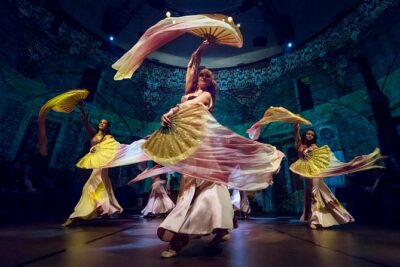
Standard Desert Safari, camel ride, BBQ Dinner, Belly Dance Show, Pick & Drop
Read our review →Browse the lists this show appears in