
Review · ROME
Rome: Circus Maximus Virtual Reality Game near the Colosseum
The best part of this Circus Maximus VR experience is the sharp change in perspective. You begin at the open archaeological site, looking at a broad grassy oval and scattered ruins. Then the headset puts the ancient stadium, crowds, buildings, and racing teams back around you. The final chariot race turns a history lesson into a game, with you competing for the Emperor’s favor.
I like two things here. First, the reconstruction reaches beyond the Circus Maximus itself, showing Imperial Rome with sights such as the Arch of Titus and the Septizodium fountain. Second, the activity gives children a reason to care about Roman history. Guides including Sara, Rose, Cristina, and Manuela have been praised for keeping the race lively and explaining the setting clearly. The main drawback is simple: this is a group VR activity, not a quiet archaeological tour, and the headset experience may feel less appealing if you prefer ancient stones to digital reconstruction.
Key points to know before booking
- A 90-minute history lesson with a game at its center: You learn about Rome before taking part in a virtual quadriga race.
- The Circus Maximus is shown as a working stadium: The reconstruction helps you picture its size, buildings, spectators, and racing action.
- The VR journey includes more than the race track: You move through Imperial Rome and see major monuments such as the Arch of Titus and Septizodium.
- A good break from museums: Children aged 11 to 13 have especially enjoyed the mix of learning, technology, and competition.
- Meet at a clear street corner: Staff wait at the intersection of Via San Gregorio and Via dei Cerchi with a small black flag marked Ancient and Recent.
- Travel light: Large bags and suitcases are not allowed, and children under 18 need an adult and valid identification.
What the $38 price buys you at Circus Maximus
At $38 per person, this is not the cheapest way to spend an hour and a half in Rome. You are paying for the headset, the digital production, staff support, the guided setup, and the chariot game rather than for entry to a major monument.
That price makes more sense if you treat the activity as a family experience or as a break from conventional sightseeing. A standard visit to an archaeological site asks you to supply much of the picture in your head. Here, the computer supplies the missing walls, stands, crowds, animals, and streets. That can be especially useful at Circus Maximus, where the present-day remains are wide and open but do not immediately show the ancient structure’s full scale.
The value is also tied to your group. One person interested in Roman architecture may prefer a traditional guided walk. A family with children may get more from this activity because everyone has a role in the race. The experience is limited to about 25 participants, which keeps it from being a huge crowd, though it still has the feel of a shared game rather than a private tour.
You should also note what the fee does not cover. Entrance to the Circus Maximus archaeological site is not included, and neither are drinks, souvenirs, or transport. The activity takes place near the Colosseum area, so you will need to make your own way there.
More Circus Shows in Italy
- Rome: Caracalla Baths & Circus Maximus — Private or Shared
★ 4.7 · 835 reviews - Rome: Small-Group Tour of Caracalla Baths and Circus Maximus
★ 5.0 · 140 reviews - Rome: Roman Forum, Palatine, and Circus Maximus Tour
★ 4.7 · 117 reviews
Finding the meeting point near the Colosseum
The meeting point is at the intersection of Via San Gregorio and Via dei Cerchi. Look for the staff member holding a small black flag marked Ancient and Recent. This detail matters because Circus Maximus is a large open area, and a vague meeting point would make the start more awkward.
Plan to arrive with comfortable shoes. You will be moving around the site and the surrounding area, and this is not the time for delicate footwear. Bring a passport or ID card as required, but do not bring a suitcase or large bag. Large luggage is not allowed inside the attractions.
There is no transportation included, so build in time to reach the corner on your own. The experience is wheelchair accessible, but the supplied information does not describe every surface or movement involved, so you may want to ask the operator about your specific needs before booking.
Seeing Imperial Rome before the race begins
The first portion sets up the city around you. Instead of looking only at the present-day remains, you use a reconstructed 3D view to understand how Rome looked during the Imperial period. Soldiers and ancient citizens appear around the streets, helping you picture the Circus Maximus as part of a living city rather than an isolated ruin.
The reconstruction includes the Arch of Titus, one of the most recognizable monuments in the Roman Forum area, and the Septizodium, a large monumental fountain structure once placed at the southeastern edge of the Palatine Hill. These details give the activity a wider frame. You are not simply told that Rome was large and grand. You get visual clues about how its public spaces and monuments related to one another.
This is where the activity has its strongest educational value. At the real Circus Maximus, it can be difficult to understand how the ancient buildings shaped the space. The digital view helps restore the missing architecture. It also gives children something to follow as the guide explains Rome’s growth and the importance of the stadium.
The pace is not designed like a formal lecture. You move through the setting in real time, with the guide and audio material directing your attention. If you are hoping for a long scholarly talk about Roman politics, architecture, or racing rules, this will feel light. If you want a clear visual introduction before seeing more of ancient Rome, it does the job well.
Reconstructing the largest performance building of antiquity
The Circus Maximus was built for mass entertainment, especially chariot racing. The experience presents it as an enormous performance building capable of holding up to 385,000 spectators, a figure that gives you a sense of the scale being recreated.
That number is easy to read and forget. Seeing the packed structure rebuilt around you makes it more useful. You can picture the track, the stands, the noise, and the pressure on the drivers. The headset turns an open modern site into a place built for spectacle.
I particularly like this approach because Circus Maximus often receives less attention than the Colosseum. The Colosseum still has impressive standing walls, while Circus Maximus asks you to imagine much of what once stood there. A digital reconstruction is a practical answer to that problem.
There is a tradeoff. A reconstruction is an interpretation, even when it is carefully made. You are seeing a modeled version of the ancient site, not original Roman architecture. The activity works best when you use the VR to understand the ruins, then keep in mind that the screen cannot replace the real archaeological evidence.
More Circus and Acrobatic Shows in Rome:
- Rome: Colosseum, Circus Maximus, Forum & Ancient Rome Tour
★ 4.3 · 32 reviews - Rome: E-bike Tour From The Circus Maximus To The Catacombs
★ 5.0 · 3 reviews - Rome: Caracalla, Colosseum, Circus Maximus Private Tour
★ 5.0 · 3 reviews - Rome: Private Caracalla Baths & Circus Maximus Tour for Kids
★ 5.0 · 2 reviews
Choosing a faction and taking the chariot reins
The chariot race is the payoff. After the historical introduction, staff help you put on the VR headset and prepare for a competition inside the reconstructed stadium. You choose your favorite faction, then race alongside the other participants.
This is not just a film that plays in front of you. You are the player, and the race gives the experience a clear goal: win the big prize and earn the Emperor’s favor. That competitive element explains why the activity has worked so well for families. Children can learn about Roman entertainment without being asked to sit still through a long museum talk.
The race also gives adults a reason to join instead of watching from the side. It is a shared activity, and the guide’s role matters. Manuela was praised for keeping the chariot race entertaining, while Sara was singled out for combining humor, clear explanations, and good control of the experience. Rose helped resolve a headset problem during one visit, and Cristina was noted for her friendly approach.
Those details point to an important practical truth: staff support can shape the afternoon. VR equipment needs fitting, instructions, and occasional troubleshooting. A water bottle once leaked inside a bag and caused a headset delay, but the guide sorted out the problem. It is a reminder to keep drinks and bags secure and to allow the staff time to handle technical issues if they arise.
Why children often get the most from this activity
The strongest audience is a family with school-age children and teenagers. Young visitors can race, explore, and hear about Roman life without treating history as a list of dates. Children aged 11, 12, and 13 have been especially enthusiastic, and the format gives them both a learning task and a game to remember.
I would not limit the activity to families. Adults who enjoy ancient Rome, digital technology, or unusual city tours can have a good time too. It is also a useful change of rhythm during a long day of museums and churches. Rome can overload you with marble, paintings, and Latin inscriptions. Ninety minutes of active participation can reset your attention.
Still, the word game matters. If your ideal Roman experience is a quiet walk through ruins with a specialist guide, this may feel too playful. The guide and audio material provide historical context, but the main attraction is the combination of history and competition. Go for that mix, not for an exhaustive study of the Circus Maximus.
Audio, languages, and the role of the guide
The activity is offered in English, Italian, and Spanish. The included information specifically lists the VR assistant and integrated audio guide in English and Italian, while the activity details also list Spanish among the available live tour and audio languages. If language choice is important for your group, confirm the exact format when you reserve.
You should expect staff guidance rather than a traditional private tour guide walking beside you for the whole 90 minutes. The team introduces the setting, helps with the technology, and leads the transition into the race. A personal AI guide can also be watched or heard directly from your phone, adding another way to receive information while moving through the experience.
The human guide remains important. The best moments depend on someone making the history easy to follow, keeping the group on track, and making the race feel like an event. The staff names associated with strong experiences include Sara, Rose, Cristina, and Manuela, though you should not assume a particular person will lead your time slot.
Timing, group size, and practical limits
The total duration is 90 minutes, with start times varying by availability. That is long enough for the historical reconstruction, headset setup, and race without taking over your entire day. I would place it before or after other Colosseum-area sightseeing rather than trying to squeeze it between tightly timed tickets.
The group can include up to 25 people. That is small enough for a shared activity but large enough that you may not receive constant one-to-one help. The race is designed for the participants to compete together, so the group setting is part of the point.
Children under 18 must be accompanied by an adult and carry valid identification. Pets are not allowed, and unaccompanied minors cannot take part. You can cancel for a full refund up to 24 hours before the activity, and the reserve-now, pay-later option lets you hold a place without paying at once.
What to bring and what to leave behind
Bring:
- A passport or ID card
- Comfortable shoes
- A phone if you want to use the personal AI guide
Leave pets, suitcases, and large bags behind. Drinks and souvenirs are not included, and the safest approach is to arrive with only what you need for the activity. Since one headset problem involved a leaking water bottle in a bag, keep liquids closed and stored carefully.
The experience is wheelchair accessible, but the published details do not explain the exact route, headset handling, or seating arrangements. If you need specific assistance, contact the provider before booking so the staff can prepare.
Should you book the Circus Maximus VR experience?
Book it if you want Roman history with motion, competition, and strong visual help. It is particularly good for families, children, and anyone who finds an open archaeological site hard to picture. The reconstruction of Imperial Rome, the views of monuments such as the Arch of Titus and Septizodium, and the final race give the 90 minutes a clear shape.
Skip it if you want original ruins only, a private academic lecture, or a completely quiet visit. The $38 price is reasonable for a technology-based group activity, but it is not a substitute for admission to the archaeological site or a full guided tour of ancient Rome.
For most families visiting the Colosseum area, I see this as a smart change of pace. You will not merely hear that the Circus Maximus was huge and important. You will see the stadium filled out around you, then take part in the kind of contest that once made this place Rome’s great entertainment center.
FAQ
How long does the Circus Maximus VR experience last?
The activity lasts 90 minutes, including the historical VR journey, headset use, and virtual chariot race.
How much does the experience cost?
The listed price is $38 per person.
Where is the meeting point?
Meet at the intersection of Via San Gregorio and Via dei Cerchi. Staff will carry a small black flag marked Ancient and Recent.
Is entrance to the Circus Maximus archaeological site included?
No. Entrance to the Circus Maximus archaeological site is not included in the activity price.
Which languages are available?
English, Italian, and Spanish are listed as available languages. The included VR assistant and audio guide are specifically listed in English and Italian, so confirm the exact language arrangement when booking.
Is the experience suitable for children?
Yes. Children under 18 must be accompanied by an adult and carry valid identification. Unaccompanied minors are not allowed.
Can wheelchair users take part?
The activity is listed as wheelchair accessible.
Can I cancel the booking?
You can cancel up to 24 hours in advance for a full refund. A reserve-now, pay-later option is also available.
Just added around Rome
- Rome: Private Caracalla Baths & Circus Maximus Tour for Kids★ 5.0 · 2 reviews
- Rome: Rooftop Bar Opera Show★ 4.6 · 94 reviews
- Rome: E-bike Tour From The Circus Maximus To The Catacombs★ 5.0 · 3 reviews
- Rome: Musical Biography of Frank Sinatra Concert★ 3.9 · 100 reviews
- Rome: Gladiator Show and Museum Tickets★ 4.5 · 237 reviews
- Rome: Caracalla, Colosseum, Circus Maximus Private Tour★ 5.0 · 3 reviews
- Rome: Colosseum, Circus Maximus, Forum & Ancient Rome Tour★ 4.3 · 32 reviews
- Rome: Wine, Legends, and Burlesque Extravaganza by Night★ 4.4 · 18 reviews
Rome Shows, compared.
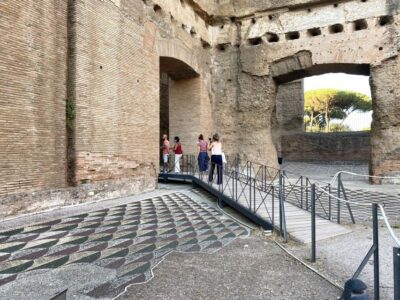
Caracalla Baths & Circus Maximus — Private or Shared
Read our review →
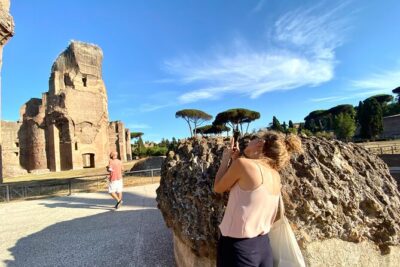
Small-Group Tour of Caracalla Baths and Circus Maximus
Read our review →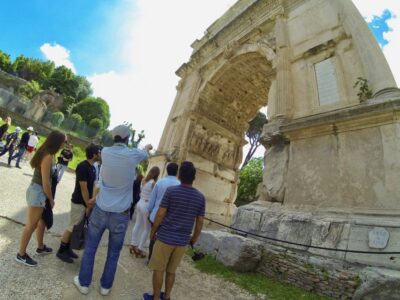

Browse the lists this show appears in