
Review · ROME
Rome: Gladiator Show and Museum Tickets
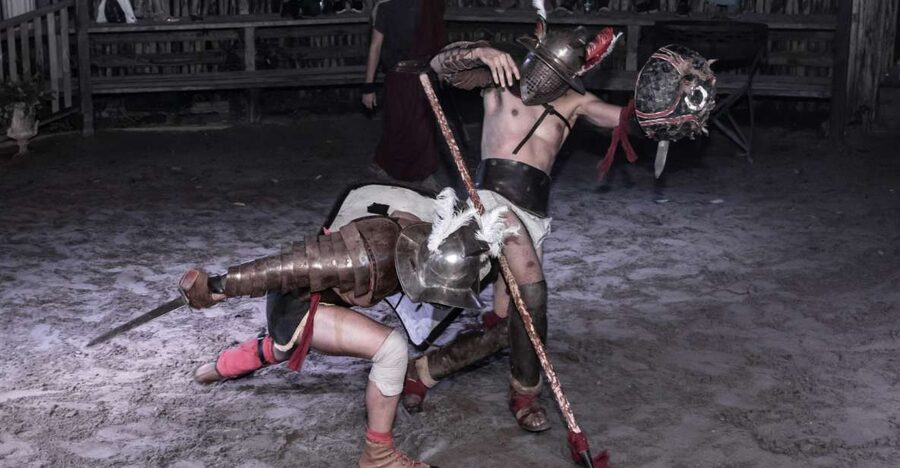
The most unusual part of this Rome evening is the setting: you enter the headquarters of the Gruppo Storico Romano, put aside the usual ruins, and watch historical reenactors stage gladiator combat with weapons, armor, music, lights, and visual effects. It is theatrical rather than a scholarly lecture, but the Roman atmosphere is the point.
I like the variety of the program, which moves from the small legionary museum to Roman dances, rituals, comedy, training, and swordplay. I also like the friendly audience contact. You can take photographs, try on some armor and weapons, and take part in parts of the show.
The main catch is location. The arena is only about 3.5 kilometers from the Colosseum, but it is not in the center of Rome, and public transport may have stopped by the 22:00 finish. Plan your return before the fighting begins.
Key points to know before booking
- The evening runs for about 90 minutes, with entrance around 20:45 and the main show generally from 21:00 to 22:00.
- The program has several acts, including gladiator battles, ancient dances, Vestal rites, pantomime, and comic moments.
- The small museum comes first, with armor, weapons, and background about gladiator life and training.
- Audience participation is part of the design, so this is not a silent seat-and-watch performance.
- Light refreshments are included, but this is not a full dinner.
- The arena sits outside the central sightseeing zone, so arrange a taxi or confirm a late bus before you arrive.
A Roman evening built for fun
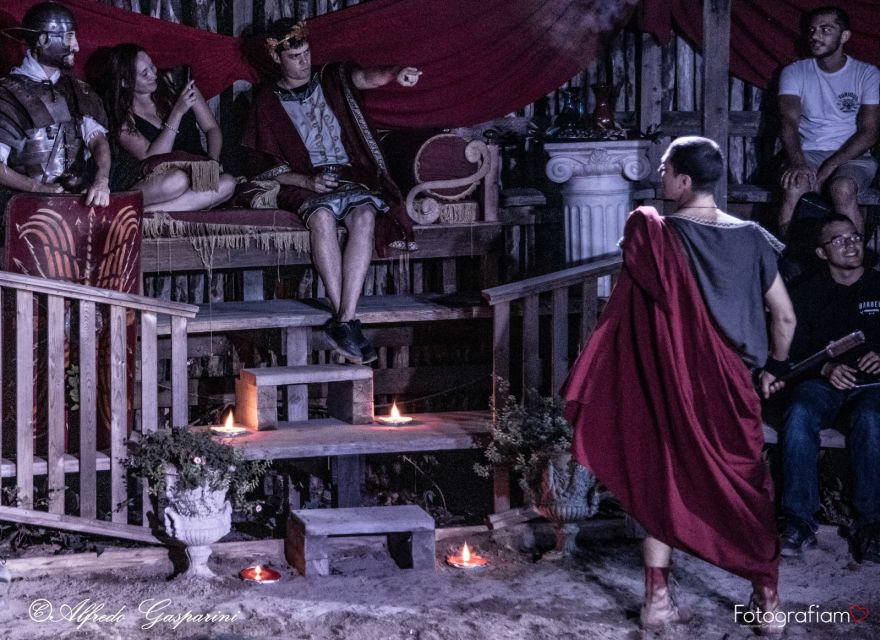
Rome has no shortage of serious ancient sites. You can spend hours studying the Colosseum, the Forum, and museum displays. This experience takes a different path. At the Gruppo Storico Romano headquarters, Roman history is presented as an evening show, with performers in costume and a good deal of audience involvement.
I would describe it as a historical reenactment with theatrical polish, not as a literal reconstruction of an ancient arena. The weapons and armor are real pieces of reenactment equipment, while the fighting, music, lighting, and comic scenes are arranged for entertainment.
That distinction matters. If you want a quiet academic talk about Roman politics, this is not the right choice. If you want your children to remember that gladiators were trained fighters, that Roman rituals were public events, and that ancient life included spectacle, this format works well.
The activity is rated 4.5 out of 5 from 237 bookings, with especially strong praise for the performers, the friendly staff, the interactive format, and the mix of activities. A few people found the show cheesy, but even that criticism came with the admission that it was fun. That is a fair way to approach the evening: enjoy the show on its own terms.
A few more shows around Rome worth a look
- Seville: Puro Flamenco Show with Optional Museum Ticket
★ 4.8 · 6,088 reviews - Istanbul: Hodjapasha Whirling Dervishes Show & Exhibition
★ 4.4 · 4,790 reviews - Istanbul Hodjapasha Whirling Dervishes Show & Exhibition
★ 4.0 · 503 reviews
20:45 arrival and the small legionary museum
The evening begins around 20:45. You look for Rome Gladiator School, identified with the Gruppo Storico Romano, and enter the headquarters rather than a major archaeological monument.
The museum is described as a historical and educational museum of the Roman legionary. It is small, so keep your expectations in check. You are not getting a full-scale national museum or a replacement for the Colosseum. Instead, you get a compact introduction to the equipment, training, and working world behind the performance.
This opening section is useful because it gives the costumes and weapons some context. Armor is not just decoration here. You can see the type of equipment used in the reenactment and, according to the program, try some pieces yourself. That hands-on quality makes the museum more accessible for children and for anyone who finds ordinary display cases a little dry.
The space can feel crowded when attendance is high. If you want a close look at every object, arrive ready to move patiently and listen when the guide gathers the group. The museum is best viewed as an introduction to the show, not as the main event.
A host explains what is about to happen, and the presentation uses Roman characters and storytelling rather than a plain modern briefing. One evening included a character presented as a slave owner introducing the program. The style is deliberately theatrical, so expect big gestures and a strong voice.
Roman snacks, wine, and the armory
Before the performance, you have the chance to enjoy simple Roman-style refreshments in the armory. The food is described as complimentary nibbles, and the drinks include wine, with one account specifically noting wine with honey in the Roman manner.
This is a pleasant extra, but do not arrive expecting a meal. The refreshments are enough to add flavor to the evening, not enough to replace dinner. One useful plan is to eat beforehand or arrange food after the show, especially since there are no services close to the arena.
The armory setting gives the snack break more character than a standard theater foyer. You are surrounded by the equipment and costumes connected to the performance, and you can speak with the cast. Photos are welcome, and the performers are available for questions and pictures before and after the show.
That personal contact is one of the strongest parts of the evening. The staff are described as warm and helpful, with some going out of their way to arrange taxis after the performance. If you are unsure how to get back, ask before the final act rather than waiting until the gates open.
The arena show: combat, ritual, and comedy
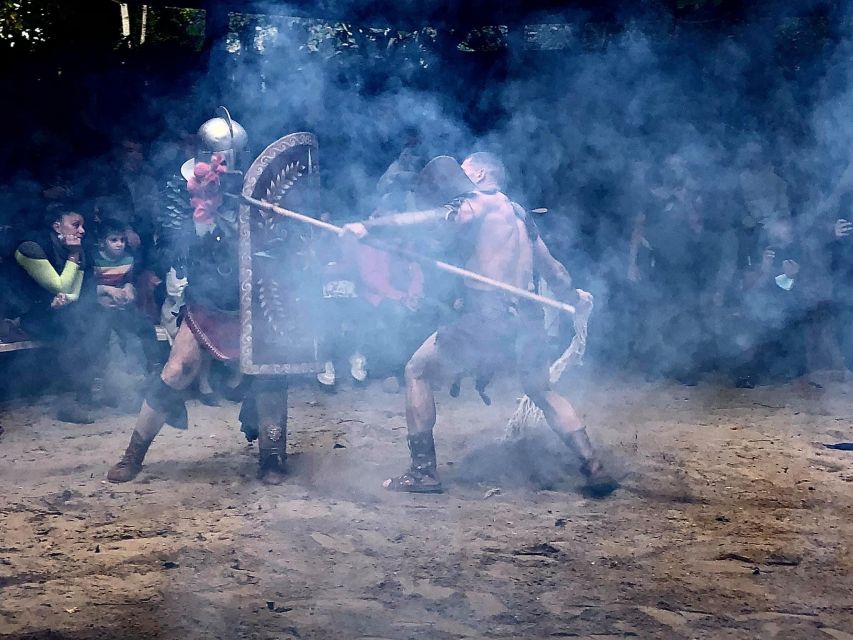
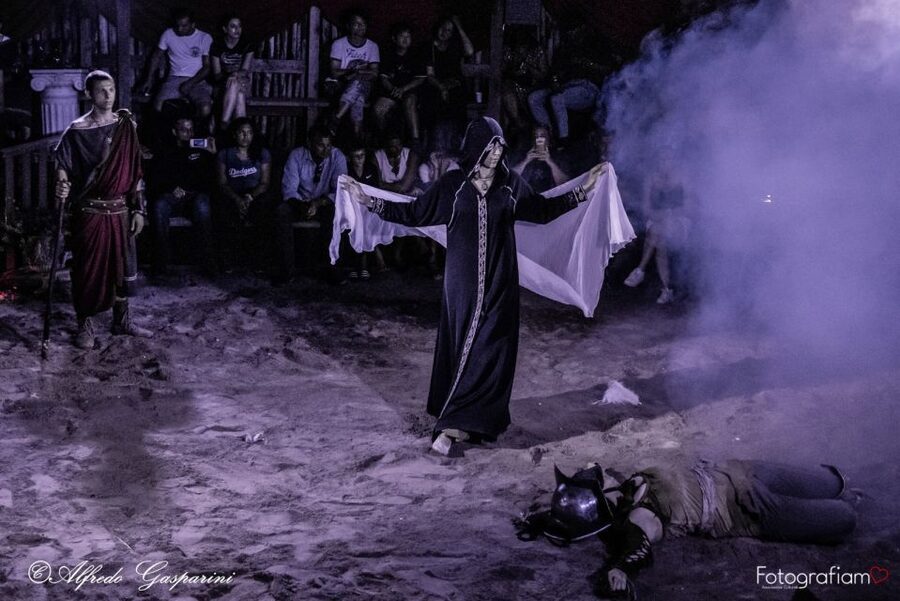
The main performance lasts about an hour, within the full 90-minute event. The program may include a comic warm-up, gladiator training, combat with swords and shields, ancient dances, Vestal rites, and pantomime.
The fighting is staged with real weapons and armor used by historical reenactors. That gives the action weight and sound, but remember that it is a performance. Quick sword movements, falls, and dramatic pauses are designed to create tension without presenting an actual fight to the death.
The show can look surprisingly intense from the audience. One person found the swordplay so convincing that it was hard to tell what was scripted. That is part of the appeal, especially if you enjoy live action. At the same time, younger children may react strongly to the noise and apparent violence, so use your judgment.
The dances and rituals break up the combat. This is important because Roman public entertainment was not simply a string of sword fights. The ceremony, music, costume, and crowd response help create a sense of how spectacle worked in Roman society.
The comic sections keep the show from becoming too grim. The tone shifts between mock seriousness, physical humor, and action. I would expect a broad style rather than subtle theater. Adults can enjoy the silliness, while children usually have a clear entry point into the story.
More Tickets in Rome:
- Rome: Cabaret and Burlesque Show Entry Ticket
★ 4.6 · 103 reviews - Seville: Live Flamenco Dancing Show Ticket at the Theater
★ 4.7 · 16,396 reviews - Paris: Moulin Rouge Cabaret Show Ticket with Champagne
★ 4.7 · 16,088 reviews - Hanoi: Water Puppet Show Tickets
★ 4.6 · 7,029 reviews
Audience participation and the cast
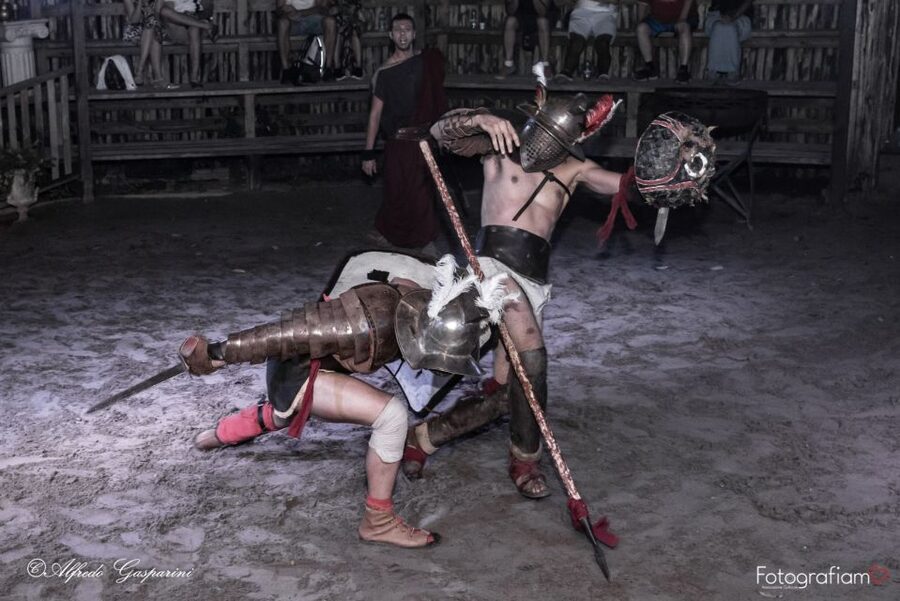
You are not kept at a distance. The presenter works the crowd, performers interact with spectators, and some sections invite you to take part. You may be asked to respond, pose, or participate in a simple activity, while other parts are watched from the audience.
This makes a difference if you are choosing between the show and a conventional performance. The program is built around energy in the room. The more willing you are to play along, the more you are likely to get from it.
The cast also welcomes photographs and conversation. That gives the experience a less formal feel and helps children connect the armor and weapons in the museum with the people wearing them on stage.
A guide named Dafydd received particular praise for making the evening special, and the presenter is repeatedly described as engaging and good at building excitement. The exact cast can vary, but the format depends heavily on a confident host and willing performers.
If you prefer to watch quietly without any chance of being addressed, choose a different type of evening activity. If your family likes a little harmless participation, this is one of the better reasons to book.
Getting there and getting home
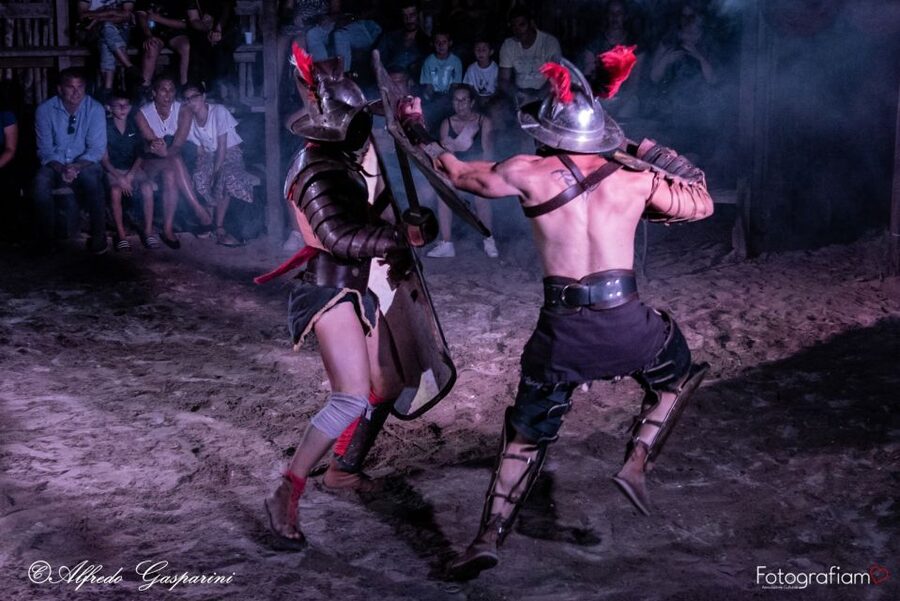
The venue is about 3.5 kilometers from the Colosseum, but distance on a map does not tell the whole story. The arena is outside the main center, and the surrounding area has limited services within walking distance.
Buses 118 and 218 have been used to reach the site, with a walk of roughly five minutes from the stop. That works for arrival when schedules line up. The return is harder because the event finishes around 22:00, when bus service may be limited or finished.
A taxi is the simplest return plan. The staff have helped arrange taxis for people after the show, and that assistance can be valuable if you are traveling with children or are unfamiliar with the area. Still, I would not rely on a last-minute transport solution without asking about it when you arrive.
Do not plan on walking from Termini. One account describes the journey as taking about an hour and warns that some roads lack sidewalks. This is not the kind of route you want after a late show.
I would also avoid arriving hungry and hoping to find a restaurant nearby. The area is described as having no nearby services, so eat before the activity or arrange your return to a restaurant in the city.
The experience is listed as wheelchair accessible, but transport and the evening setting are still worth checking carefully when booking. Accessibility is not only about entering the venue. You may also want to confirm the route and vehicle arrangements in advance.
Is $29 a fair price?
At $29 per person, the value is good if you count it as a full evening activity rather than a museum ticket. You receive the museum visit, the performance, historical presentation, audience interaction, and light refreshments.
The price is particularly reasonable for families. A Roman show that keeps children involved can save you from another tired evening of sightseeing, and the armor, costumes, and physical action give younger visitors something concrete to remember.
The value is less clear if you want a polished professional theater production or a major archaeological collection. The museum is small, the food is a snack rather than dinner, and the show has an intentionally campy side. You are paying for atmosphere and participation, not for a high-end stage production.
I think the cost makes sense as an evening add-on after visiting the Colosseum or Forum. It offers a different way to think about Roman life, especially when you have already spent a day looking at ruins and inscriptions.
Who will enjoy this most?
Families with children are the clearest match. The show has fighting, costumes, dancing, humor, and chances to join in. Several accounts describe children enjoying it, including a 10-year-old who was delighted by the performance.
It also suits solo visitors and couples who want something lively after a day of museums. You do not need to be an expert in Roman history, and the program can be enjoyed even if English is not your first language because much of the communication is visual.
History enthusiasts should come with the right expectations. The museum and explanations add useful background, but this is not a detailed seminar on gladiatorial culture. Think of it as an accessible introduction followed by theatrical reenactment.
I would be more cautious if you dislike staged violence, audience participation, or broad comedy. The evening is designed to be loud, social, and playful. That is its strength, but it will not suit everyone.
Seasonal timing and practical planning
The performances take place from May through September, with 2026 dates listed for the season. Check the exact starting time before booking, since availability can vary.
The stated entrance time is 20:45, and the program usually ends around 22:00. Give yourself enough time to find the headquarters and settle in. A late arrival could mean missing the museum, the introduction, or the opening act.
Wear something comfortable for an evening activity and plan around the weather if any part of the venue is open-air. The supplied information does not specify seating details, so ask the operator if that matters for your group.
Free cancellation is available up to 24 hours before the activity, and you can reserve now and pay later. Those terms are useful if your Rome schedule is still changing, but the bigger planning issue remains transportation home.
Should you book this gladiator show?
I would book it if you want a fun, family-friendly Roman evening with real reenactment equipment, a small museum, snacks, and plenty of contact with the performers. The best parts are the variety, the cast’s energy, and the chance to see Roman subjects treated as live spectacle rather than static ruins.
I would skip it if you expect the Colosseum itself, a full dinner, a large museum, or strict historical scholarship. The show is deliberately theatrical and sometimes cheesy.
For most visitors, the decision comes down to transport and expectations. Arrange the ride back, eat before the event, and come ready to participate. At $29, this is a sensible choice for a lively evening beyond central Rome.
FAQ
Where does the gladiator show take place?
It takes place at the Gruppo Storico Romano headquarters, also identified as Rome Gladiator School, in an equipped arena about 3.5 kilometers from the Colosseum.
How long does the activity last?
The full event lasts about one and a half hours. Entrance is around 20:45, and the evening generally finishes around 22:00.
What is included in the ticket?
The ticket includes the historical Roman legionary museum visit and the gladiator show. Light Roman-style refreshments and drinks are also provided during the evening.
Is this a real gladiator fight?
No. It is a staged demonstration performed by historical reenactors. The performers use real weapons and armor used for reenactment, with the combat arranged as a show.
What happens during the performance?
The program can include gladiator fights, ancient dances, Vestal rites, pantomime, comedy, and audience participation.
Can I take photographs?
Yes. The event information allows you to take photographs, and the performers are available for pictures and conversation.
Is the show suitable for children?
Yes. The activity is designed for families and includes fighting, dancing, comedy, costumes, and interactive moments. The combat can look intense, so consider your child’s comfort with staged violence.
How can I reach the venue?
Buses 118 and 218 have been used to reach the venue, followed by about a five-minute walk. A taxi is another option, particularly for the return journey.
Is the activity wheelchair accessible?
Yes, the activity is listed as wheelchair accessible. You may still want to confirm transport and venue details for your specific needs.
Can I cancel the booking?
You can cancel up to 24 hours in advance for a full refund. Reserve-now, pay-later booking is also available.
Just added around Rome
- Rome: Private Caracalla Baths & Circus Maximus Tour for Kids★ 5.0 · 2 reviews
- Rome: Rooftop Bar Opera Show★ 4.6 · 94 reviews
- Rome: E-bike Tour From The Circus Maximus To The Catacombs★ 5.0 · 3 reviews
- Rome: Musical Biography of Frank Sinatra Concert★ 3.9 · 100 reviews
- Rome: Caracalla, Colosseum, Circus Maximus Private Tour★ 5.0 · 3 reviews
- Rome: Colosseum, Circus Maximus, Forum & Ancient Rome Tour★ 4.3 · 32 reviews
- Rome: Night Life Walking Tour and Burlesque Show Entry★ 5.0 · 3 reviews
- Rome: Wine, Legends, and Burlesque Extravaganza by Night★ 4.4 · 18 reviews
Rome Shows, compared.
Caracalla Baths & Circus Maximus — Private or Shared
Read our review →
Small-Group Tour of Caracalla Baths and Circus Maximus
Read our review →

Circus Maximus Virtual Reality Game near the Colosseum
Read our review →Browse the lists this show appears in