
Review · ROME
Rome: Caracalla Baths & Circus Maximus — Private or Shared
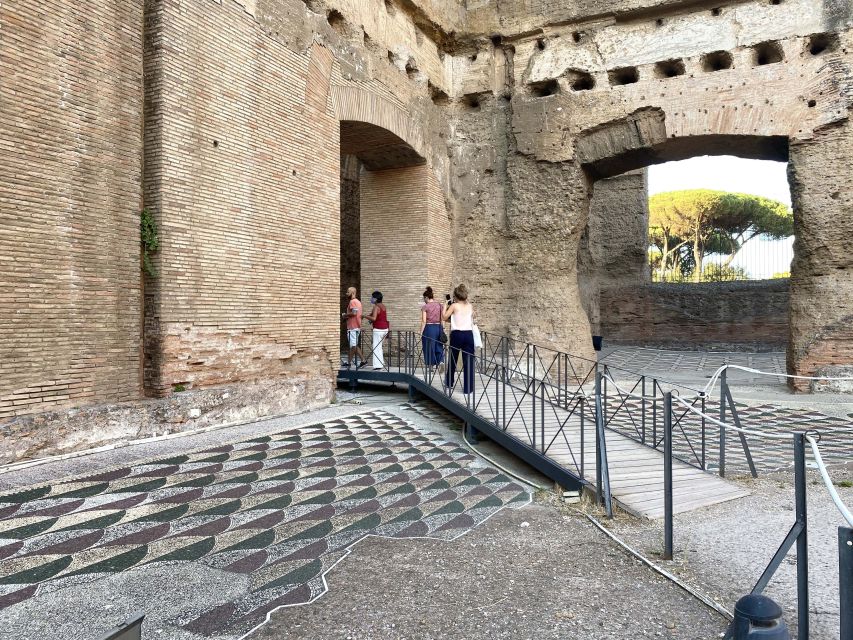
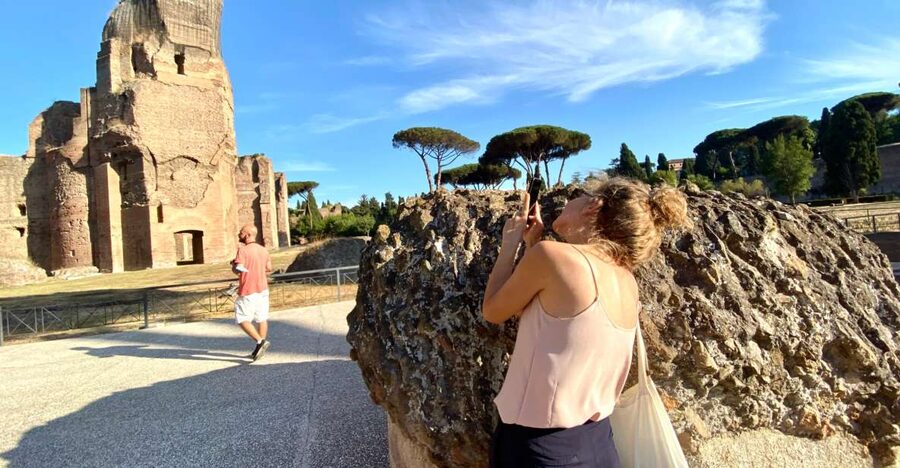
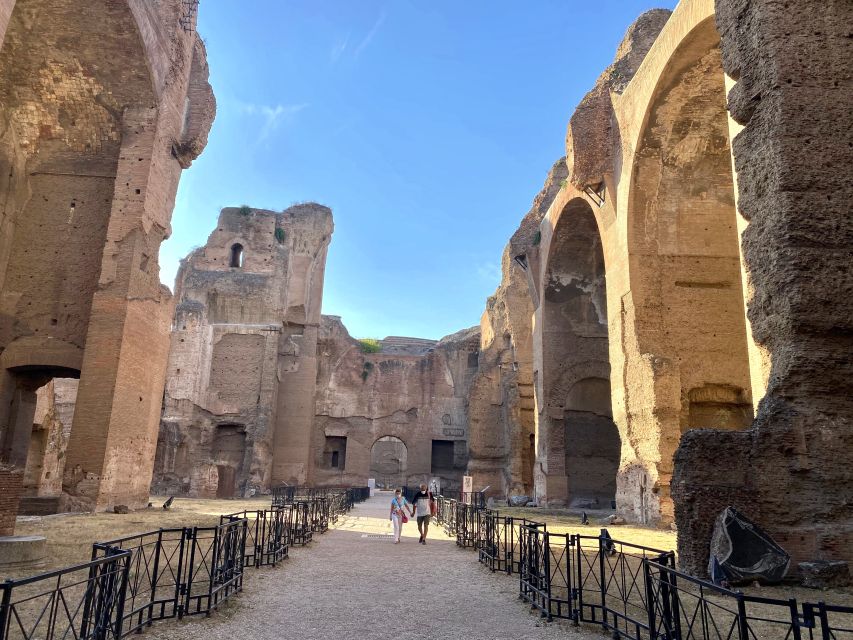
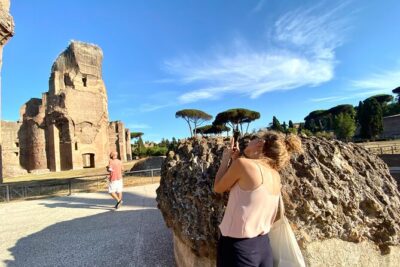
The Baths of Caracalla are one of Rome’s great surprises: huge brick walls, mosaic floors, and soaring remains that make the Colosseum feel almost modest. Your guide explains how Romans moved through the baths, from warm rooms to hot chambers, and how engineers heated the floors below.
I like the calm setting and the chance to study a major Roman site without the crush found around the Colosseum. I also like the small-group format, capped at 10 people, and guides such as Chiara, Lars, Francesca, Mario, and Anestis, who have been praised for clear explanations and an easy sense of humor.
The main catch is Circus Maximus. It was the largest venue for public games, but little of the original structure remains above ground. The baths provide the visual drama, while the circus depends more on your guide’s storytelling and your imagination.
Key points to know before booking
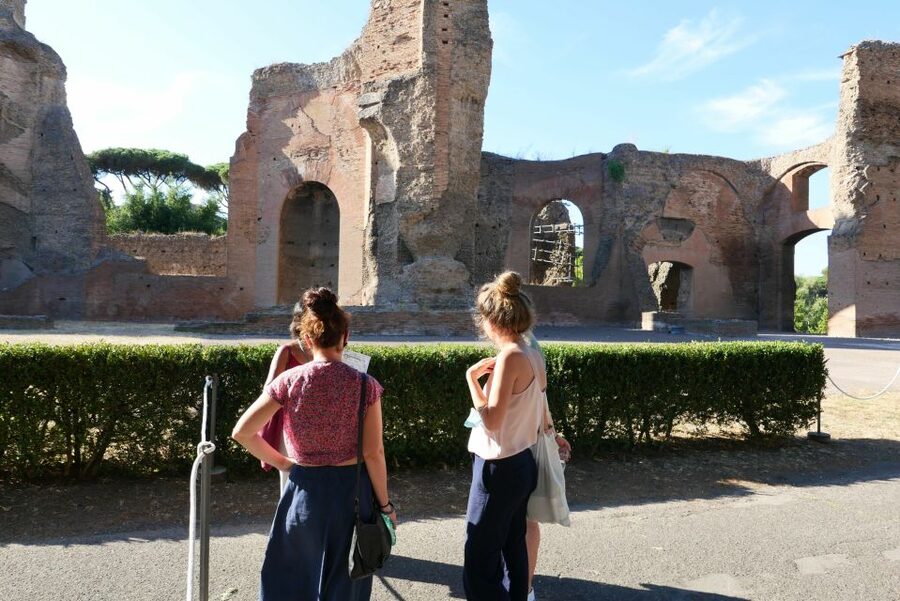
- Caracalla’s scale is the star: Gigantic walls, mosaics, and surviving architectural details make the baths easy to picture as a working Roman complex.
- The tour lasts 90 minutes: You spend about one hour at the baths and 30 minutes at Circus Maximus.
- Circus Maximus is mostly an open archaeological site: Expect history and stories rather than a complete arena.
- Small groups help: The maximum group size is 10, with private and semi-private options available.
- Guides add real value: The experience focuses on ancient routines, engineering, heating systems, mosaics, games, and Roman myths.
- Comfortable shoes matter: You will walk through a large archaeological area, and large bags, trolleys, strollers, pets, and drones are not allowed.
Why the Baths of Caracalla are worth your Rome time
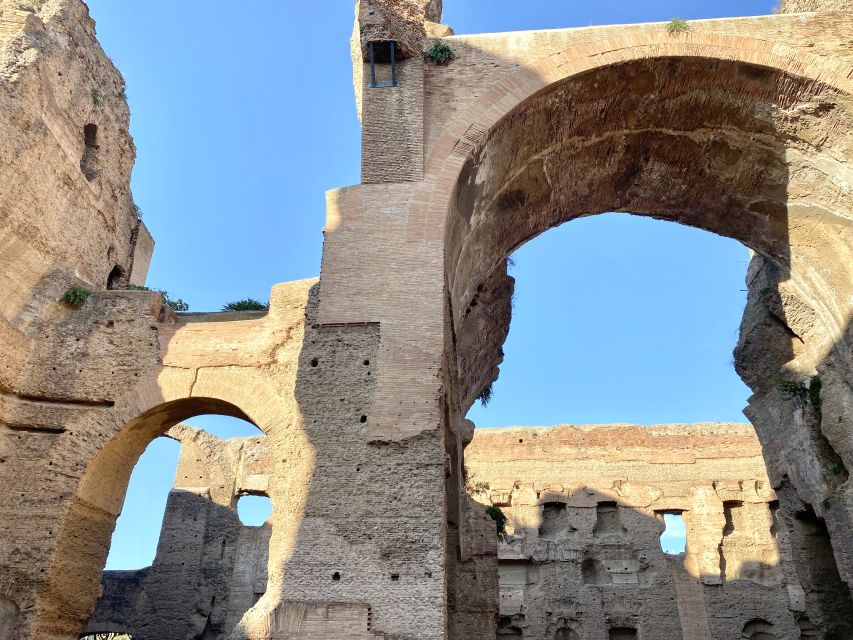
Rome gives you plenty of famous ruins, but the Baths of Caracalla offer a different kind of spectacle. This was not simply a place to wash. It was a vast public complex for exercise, social life, relaxation, conversation, and personal care.
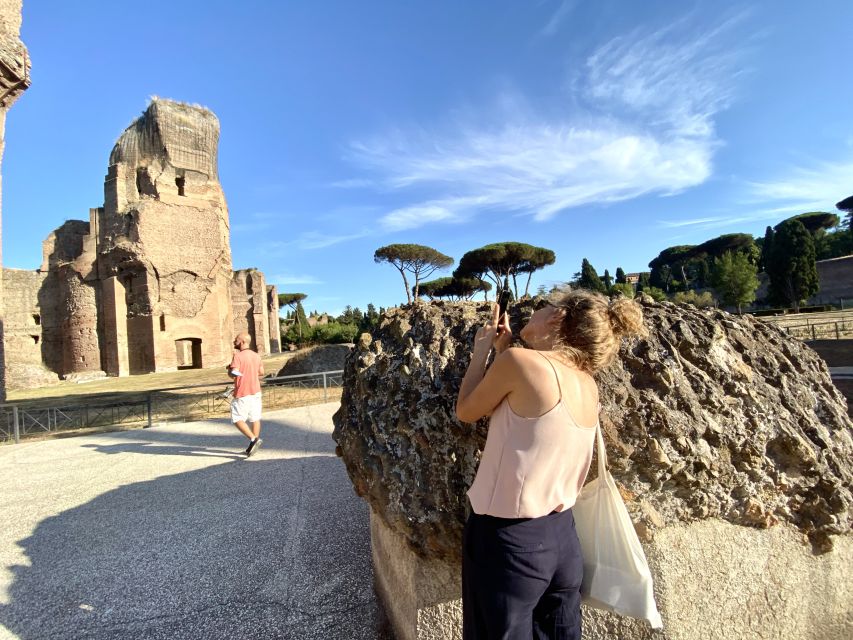
The surviving walls give you a strong sense of size. Even in ruin, the rooms are enormous. A guide helps you understand that this was built for ordinary public use on a grand Imperial scale, not as a private palace for a small circle of elites.
I especially like the way this tour focuses on a typical day at the baths. Instead of hearing only dates and emperors, you follow the movement of an ancient bather through the complex. That practical approach makes the site easier to grasp.
You learn how Roman visitors used different rooms for different temperatures. The guide also explains the labor behind the heating system, including how heat moved beneath the floors and how staff maintained suitable temperatures from room to room.
That engineering detail is one of the strongest parts of the visit. Roman construction can look simple from a distance, but the baths reveal a system that required planning, fuel, workers, maintenance, and careful control.
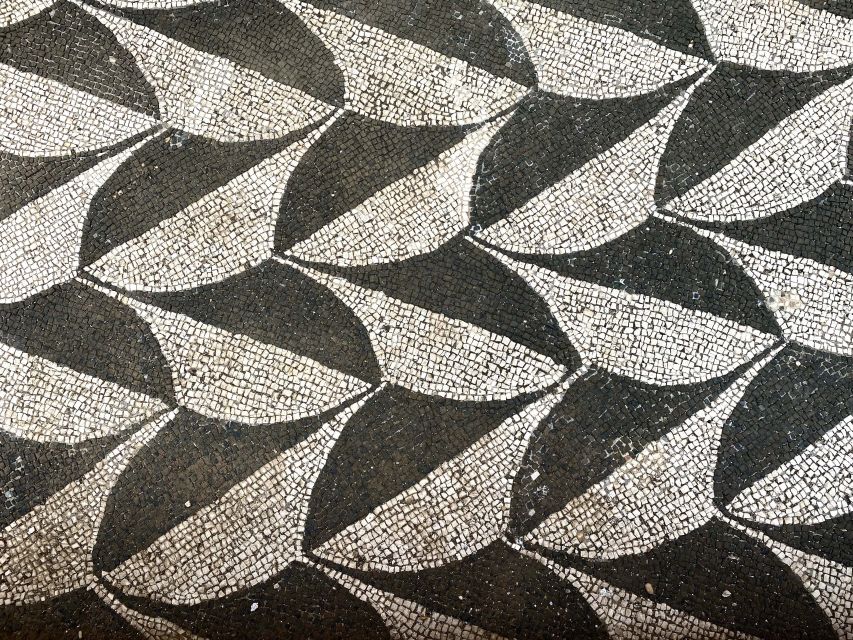
Look closely at the surviving geometric mosaics. They are not just decoration. They show how much care went into a place designed for public use, and they help you picture the polished, richly finished interiors that have largely disappeared.
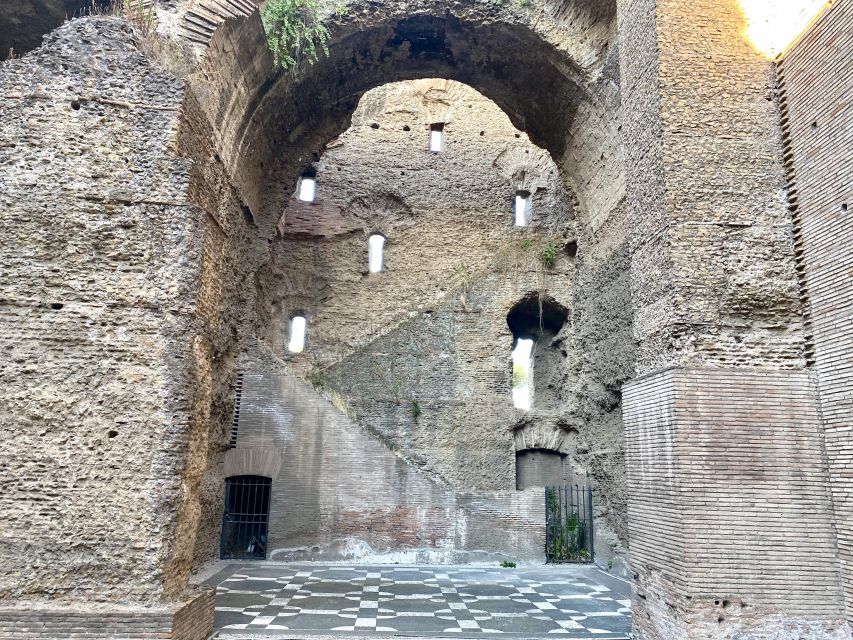
Some of the best moments come when the guide points out fragments that are easy to miss on your own. A remaining section of floor or wall can seem small until you understand where it fitted into the original building.
More Circus Shows in Italy
- Rome: Small-Group Tour of Caracalla Baths and Circus Maximus
★ 5.0 · 140 reviews - Rome: Roman Forum, Palatine, and Circus Maximus Tour
★ 4.7 · 117 reviews - Rome: Circus Maximus Virtual Reality Game near the Colosseum
★ 4.8 · 42 reviews
What the one-hour Caracalla visit feels like
The first hour is the core of the experience. You meet your guide at the exit of the Circo Massimo Metro station, in the direction of Laurentina, in front of the FAO building. Look for a yellow sign with the local partner’s name.
Arrive at least five minutes early. That leaves time for the sign-up process and avoids starting the tour while the group is being organized.
Once inside the baths, expect an outdoor archaeological walk through a large site. The complex is accessible to wheelchair users, but you should still wear comfortable walking shoes because the tour covers a substantial area.
The guide’s job here is not just to point at walls. You get an explanation of how the rooms worked, how people used the site, and how the building was supplied and heated. The best guides, including those praised for extending tours or adjusting their pace, turn the ruins into a sequence of daily activities.
You might hear about the services available for the body and mind, the movement from room to room, and the social role of the baths. These details make the site feel less like a dead monument and more like a busy public institution.
The buildings are also useful for understanding Imperial ambition. Rome did not build only for survival. It built huge public facilities to serve and impress its population. Caracalla’s baths show both sides of that idea: practical services and grand political display.
Allow yourself time to look upward. The walls are what make this place so memorable. Even without its original roofs and decoration, the height and width of the complex remain startling.
Mosaics, heating, and the practical side of Roman engineering
A common weakness of ancient-site visits is that the ruins can become a blur of stone. This tour avoids that problem by focusing on how the building functioned.
The heating system gives you a useful example. Rather than treating Roman engineering as a vague claim about ancient brilliance, the guide explains the underfloor arrangement and the work needed to control temperatures. You begin to see the baths as a machine that had to be constantly supplied, operated, and repaired.
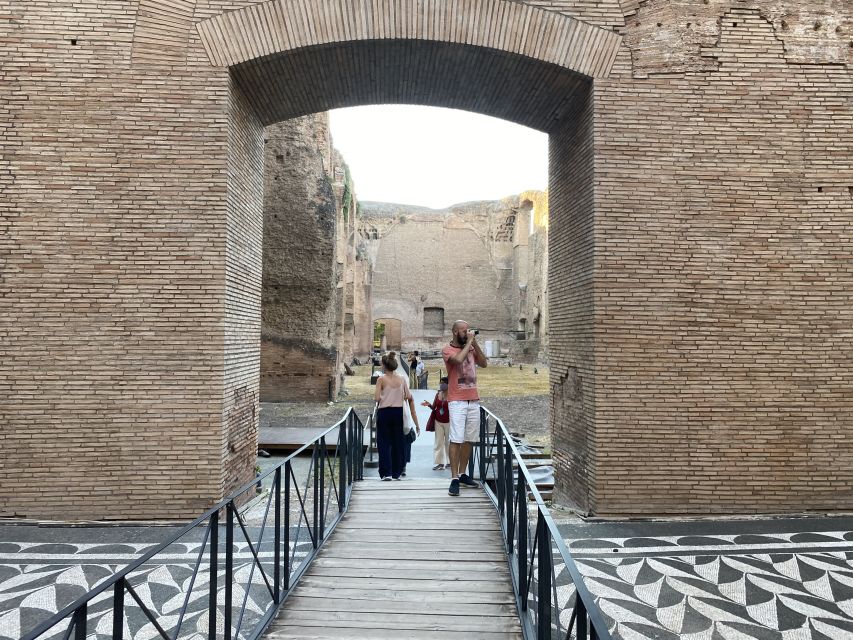
The mosaics add another layer. Their geometric patterns help you picture the finished interiors, but they also show how Roman public buildings combined utility with visual pleasure. A bathhouse was a place to use, but it was also a place to see and be seen.
I would pay close attention during this section if you enjoy architecture, archaeology, or ancient technology. You do not need specialist knowledge to follow it. The explanations are designed to show what you are looking at and why it mattered.
The site also rewards people who prefer quieter places. The area around the baths feels more open and peaceful than the streets immediately around the Colosseum. That makes it a good choice when you want ancient Rome without spending the entire visit in a dense crowd.
Circus Maximus, chariots, and the limits of the ruins
After the baths, the tour moves to Circus Maximus for about 30 minutes. This was Rome’s great venue for public games and is described as the largest structure ever built for such events.
Its scale is important, but the present-day experience is different from Caracalla. Much of the circus is now an open area, and there is not the same amount of standing architecture to inspect.
You should book this tour knowing that Circus Maximus is mainly a storytelling stop. The guide supplies the missing structure through explanations of the Roman Ludi, the extended public celebrations that could include chariot races, gladiator contests, and other spectacles.
The location helps you understand the scale of those events. Your guide can explain how crowds gathered and how the venue fitted into Roman public life. You walk over the ground where races and ceremonies once took place, but you should not expect a preserved arena with intact seating and gates.
The circus also reaches back before the fully developed Roman city. The tour touches on early myths, gods, and the quasi-legendary origins of the site. That gives the stop a different flavor from the engineering focus at Caracalla.
If you prefer visible ruins at every turn, you may find this part less satisfying. One visitor described the baths as excellent but found little to see at the circus. That is a fair warning. The 30 minutes work best when you enjoy historical reconstruction and can accept that the site leaves more to the imagination.
More Circus and Acrobatic Shows in Rome:
- Rome: Colosseum, Circus Maximus, Forum & Ancient Rome Tour
★ 4.3 · 32 reviews - Rome: E-bike Tour From The Circus Maximus To The Catacombs
★ 5.0 · 3 reviews - Rome: Caracalla, Colosseum, Circus Maximus Private Tour
★ 5.0 · 3 reviews - Rome: Private Caracalla Baths & Circus Maximus Tour for Kids
★ 5.0 · 2 reviews
How the guides shape the experience
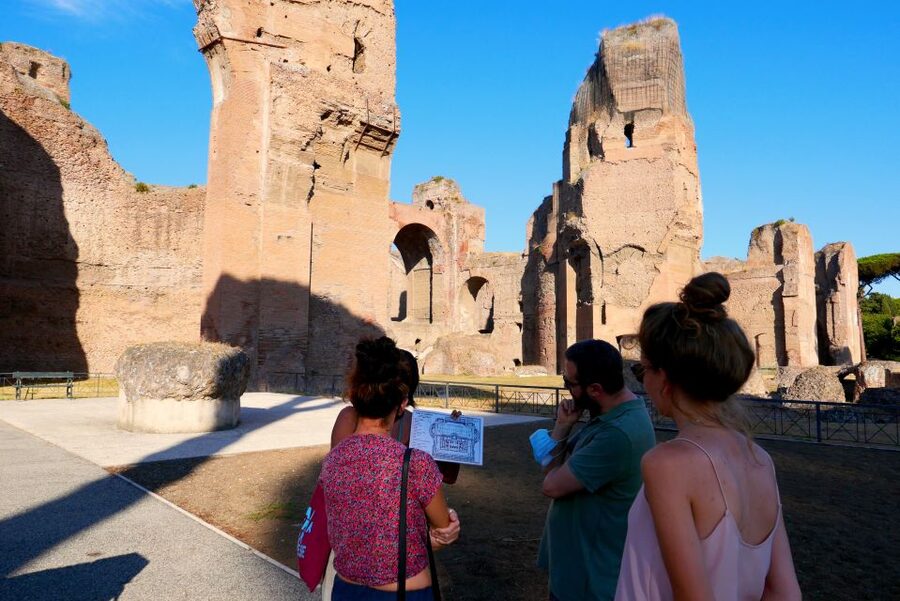
The guide is a major part of the value here. The tour is offered in English, Italian, French, Portuguese, Spanish, and German, and the guide uses a headset so you can hear clearly while walking through the site.
Names that have drawn especially warm praise include Chiara, Lars, Francesca, Mario, Anestis, Samuele, and Sam. Their strengths vary, but the pattern is clear: good explanations, patience with questions, and a talent for making the remains easier to picture.
Several guides have also helped visitors with broader Rome plans. That can be useful if this is early in your stay and you want local suggestions for your next activities. Still, the main value remains the ancient-site explanation rather than general trip planning.
The small-group limit of 10 makes a real difference. You can ask questions without holding up a large crowd, and the guide can usually respond to the group’s pace. Private and semi-private options suit families or couples who want more control over the conversation.
There is also a record of tours becoming effectively private when few people booked a particular language departure. That is not something you should count on, but it can make a small scheduled group feel unusually personal.
The included headsets are useful in large spaces. At Caracalla, the guide may be some distance away while you are looking at a wall, floor, or room, so clear audio helps you keep following the explanation.
Price, timing, and what the $77 covers
At $77 per person, this is not Rome’s cheapest short activity. The tour lasts 1.5 hours, and only the Caracalla entrance fee is specifically included, along with the headset, live archaeologist guide, and on-site assistance.
The value depends on how you use it. If you walk through the baths alone, you will see the scale and some of the mosaics, but you may miss the sequence of rooms, the heating system, and the social purpose of the complex. The guide gives you the framework that turns impressive ruins into a functioning place.
The price feels easier to justify for a private or very small group, especially if you care about archaeology and want to ask questions. It is harder to defend if you want a long visit or expect both sites to contain equally extensive remains.
One past visitor found the cost high compared with longer Rome activities. That is a sensible concern. This is a compact tour, not a half-day program. Its strength is focus and expert interpretation, not quantity.
The activity includes no food, drinks, hotel pickup, or hotel drop-off. You make your own way to the Metro meeting point, then follow the guide to the sites.
Free cancellation is available up to 24 hours before the start time, and you can reserve now and pay later. The tour may be canceled in poor weather, in which case you receive the choice of another date or a full refund.
Who should book this archaeological walk
I would recommend this tour to you if you have already seen Rome’s headline sights and want a quieter ancient site with strong architectural remains. It also suits first-time visitors who want to understand daily Roman life rather than focus only on emperors and battles.
Families can benefit from the clear sequence of activities. Children may find the heating system, chariot races, and huge rooms easier to follow than a long lecture about political history.
It is also a good fit for people with an interest in architecture, public works, mosaics, or Roman social life. The baths offer plenty to inspect, and the guide’s explanations give shape to what remains.
You may want something else if you need a fully preserved arena, a long tour, or a broad overview of all ancient Rome. Circus Maximus is not a substitute for a complete stadium visit, and the 90-minute format leaves no room for a slow, unstructured exploration.
Bring comfortable shoes and travel light. Large backpacks, trolleys, strollers, pets, weapons, sharp objects, and drones are not allowed inside the monuments. Visitors under 18 and European citizens under 25 should carry official identification, or a digital copy.
Should you book the Caracalla and Circus Maximus tour?
Book it if the Baths of Caracalla are your main target. They provide the strongest visual experience, and a skilled guide can explain the heating, mosaics, rooms, and daily routine in a way that is difficult to reconstruct alone.
Treat Circus Maximus as a short historical add-on rather than an equally preserved monument. If you accept that balance, the tour gives you two different views of Roman leisure: one through surviving architecture and the other through stories of games, crowds, myths, and lost buildings.
At $77, I would choose the small-group or private option when available, especially for families and history-minded visitors. For a short, guided look at one of Rome’s most impressive archaeological complexes, it offers solid value, provided you know where the experience is strongest.
FAQ
How long does the tour last?
The tour lasts 1.5 hours. About one hour is spent at the Baths of Caracalla and about 30 minutes at Circus Maximus.
Where does the tour meet?
Meet at the exit of the Circo Massimo Metro station in the direction of Laurentina, in front of the FAO building. Look for a yellow label with the local partner’s name.
How early should I arrive?
Arrive five minutes before the scheduled start time so you can complete the sign-up process.
Is the entrance fee included?
Yes. Entrance to the Baths of Caracalla is included.
Are headsets provided?
Yes. Sterilized headsets are provided so you can hear the guide clearly.
What languages are available?
Tours are offered in English, Italian, French, Portuguese, Spanish, and German.
Is the tour private or shared?
You can choose a private or small-group tour. The maximum group size is 10 participants.
Is the tour wheelchair accessible?
Yes, the activity is listed as wheelchair accessible.
Can I bring luggage or a stroller?
No. Trolleys, large backpacks, large bags, and baby strollers are not allowed inside the monuments.
What happens if bad weather cancels the tour?
You can choose an alternative date or receive a full refund if the activity is canceled because of unfavorable weather.
Just added around Rome
- Rome: Private Caracalla Baths & Circus Maximus Tour for Kids★ 5.0 · 2 reviews
- Rome: Rooftop Bar Opera Show★ 4.6 · 94 reviews
- Rome: E-bike Tour From The Circus Maximus To The Catacombs★ 5.0 · 3 reviews
- Rome: Musical Biography of Frank Sinatra Concert★ 3.9 · 100 reviews
- Rome: Gladiator Show and Museum Tickets★ 4.5 · 237 reviews
- Rome: Caracalla, Colosseum, Circus Maximus Private Tour★ 5.0 · 3 reviews
- Rome: Colosseum, Circus Maximus, Forum & Ancient Rome Tour★ 4.3 · 32 reviews
- Rome: Night Life Walking Tour and Burlesque Show Entry★ 5.0 · 3 reviews
Rome Shows, compared.
Small-Group Tour of Caracalla Baths and Circus Maximus
Read our review →



Circus Maximus Virtual Reality Game near the Colosseum
Read our review →Browse the lists this show appears in