
Review · ROME
Rome: Colosseum, Circus Maximus, Forum & Ancient Rome Tour
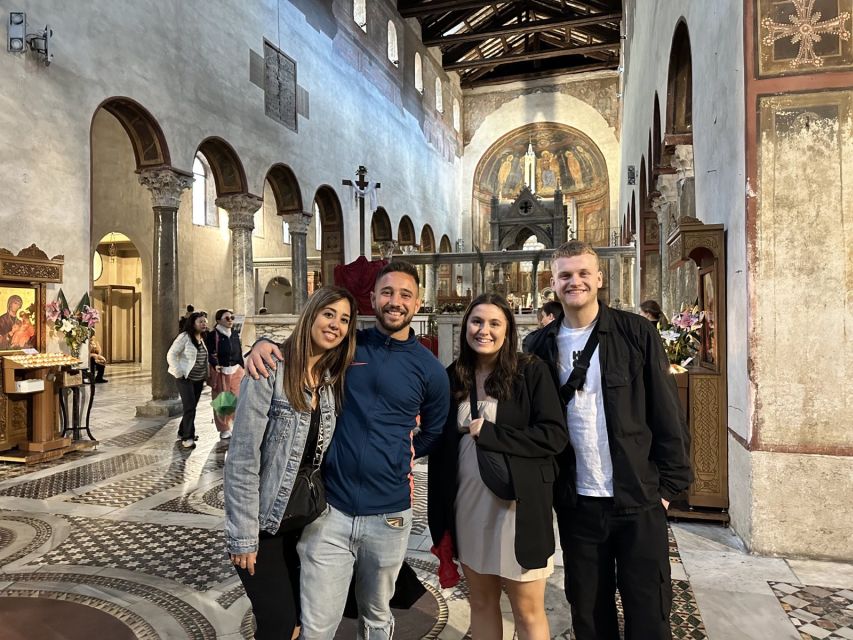
Rome’s ancient center is more than the Colosseum. This two-hour walk threads together quieter Roman ruins, the Jewish Ghetto, Tiber Island, Capitoline Hill, and the great forums before finishing outside the Colosseum. It gives you a useful street-level picture of how Rome’s public, political, and religious life fit together.
I like the unusual route, especially the Theatre of Marcellus and the walk over Ponte Fabricius to Tiber Island. I also like that guides such as Bruno, Gabriel, Francesco, and Sam have been praised for clear explanations, humor, warmth, and easy answers to questions. The main drawback is price: at $243.56 per person, two hours of outdoor sightseeing is costly, particularly since entrance tickets and the Colosseum visit are not included.
Key points to know before booking
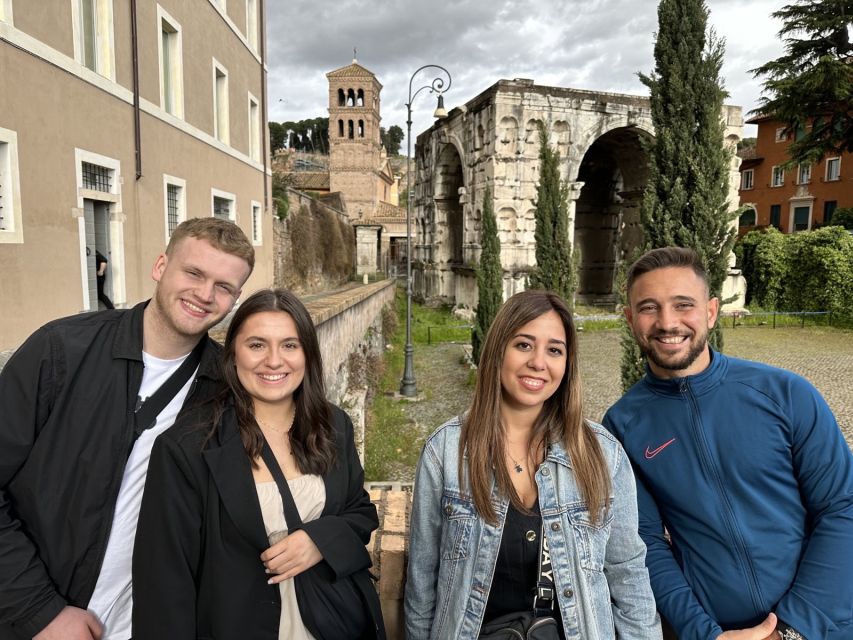
- The route begins in Rome’s Jewish Ghetto, at Piazza Cinque Scole, then moves through ancient and medieval layers of the city.
- The Colosseum is viewed only from outside, so you will need a separate ticket and visit if you want to enter.
- Theatre of Marcellus can look like a smaller Colosseum, making it one of the more memorable stops on the walk.
- Capitoline Hill brings you to Michelangelo’s famous square and good context for Roman government and public life.
- The Roman Forum, Forum of Augustus, Forum of Caesar, and Forum of Nerva are seen from the route, not entered as part of this activity.
- Comfortable shoes are essential, and the walk is not suitable for wheelchair users or people with mobility impairments.
Why this route gives you more than a Colosseum photo
Many Rome walks rush straight to the Colosseum. This one takes a different approach. You begin among ancient ruins and historic streets, then build toward the better-known sights. I like that order because Rome makes more sense when you see its smaller pieces first.
At the start, you meet your English-speaking guide in front of the Basilica of Sant’Anastasia al Palatino. The meeting point is near the Palatine and Ancient Rome, but you should arrive 15 minutes early. The guide waits no more than 10 minutes after the scheduled start, and late arrivals do not receive a refund.
The walk lasts two hours, so expect a steady outdoor tour rather than a long stop at each monument. Your guide supplies the interpretation, while you take in the ruins, streets, bridges, and public squares along the way.
More Circus Shows in Italy
- Rome: Caracalla Baths & Circus Maximus — Private or Shared
★ 4.7 · 835 reviews - Rome: Small-Group Tour of Caracalla Baths and Circus Maximus
★ 5.0 · 140 reviews - Rome: Roman Forum, Palatine, and Circus Maximus Tour
★ 4.7 · 117 reviews
Piazza Cinque Scole and Rome’s Jewish Ghetto
Piazza Cinque Scole introduces you to the Jewish Ghetto, one of the city center’s most distinctive areas. The tour uses this setting as a starting point before moving toward Roman remains.
This is a smart first stop because it shows how Rome’s past is not arranged in separate museum rooms. Ancient stone, later buildings, religious sites, and working city streets share the same space. You begin with a sense of Rome as a living center rather than a collection of isolated ruins.
Your guide’s job here is important. The route contains many fragments that can look like ordinary walls without explanation. A good guide helps you understand what you are seeing and why the site matters. Bruno has been praised for his warm manner, humor, and ability to explain complex points in an easy way. Gabriel has also been singled out for giving an informative tour.
You will not spend the entire tour in the Jewish Ghetto, so this is an introduction rather than a full neighborhood visit. If you want a detailed look at the area’s food, synagogue, or community history, plan a separate visit.
Portico of Octavia and the walk to Tiber Island
From Piazza Cinque Scole, the route continues to the Portico of Octavia. This large ancient structure once marked the entrance to a market. Its surviving remains give you a useful reminder that Roman public life was not limited to temples and arenas.
The portico was part of a practical urban setting. People came here to trade, meet, and move through the city. That makes the stop valuable for understanding Rome as a place where commerce and public life operated beside monumental buildings.
The route then crosses Ponte Fabricius, described as the oldest bridge in Rome. The bridge connects the city to Tiber Island, giving you a change of pace after the ruins and narrow streets.
I like this part of the walk because the bridge helps connect geography with history. The Tiber was not simply scenery. It shaped how people moved through Rome, and the island remains a clear marker in the city’s layout. You get a look at how the historic center is tied together by water, bridges, and ancient routes.
The tour is outdoors and continues in rain or shine. Rome’s heat, rain, or uneven pavement can affect how comfortable you feel, so wear practical shoes and bring what you need for the forecast.
Theatre of Marcellus, one of the route’s best surprises
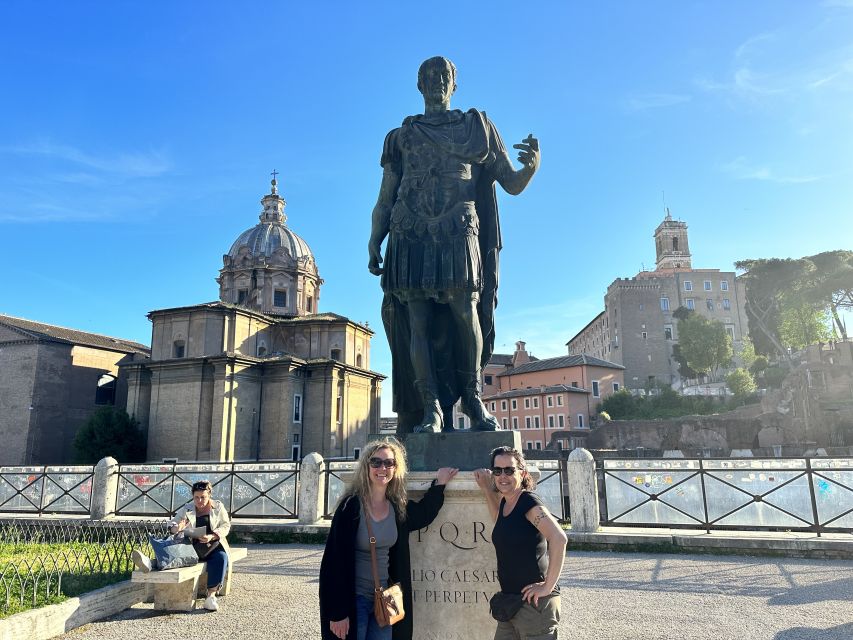
The Theatre of Marcellus is one of the tour’s most interesting stops. It is often mistaken for the Colosseum because of its curved stone exterior, but it is a different building with a different purpose.
Your guide can help you read the structure rather than simply photograph it. The theatre shows how Roman entertainment architecture appeared in more than one form. It also gives you a useful comparison before you reach the Colosseum later in the walk.
The nearby Temple of Apollo adds another layer. Here, the remains point to the religious side of Roman public life. The site may not have the visual punch of the Colosseum, but it rewards careful attention and good storytelling.
This is where the tour’s emphasis on outdoor monuments works well. You are not moving through a fixed exhibit with labels in front of every object. You are standing in the city, looking at ruins in their original setting while the guide explains their place in Roman life.
More Circus and Acrobatic Shows in Rome:
- Rome: Circus Maximus Virtual Reality Game near the Colosseum
★ 4.8 · 42 reviews - Rome: E-bike Tour From The Circus Maximus To The Catacombs
★ 5.0 · 3 reviews - Rome: Caracalla, Colosseum, Circus Maximus Private Tour
★ 5.0 · 3 reviews - Rome: Private Caracalla Baths & Circus Maximus Tour for Kids
★ 5.0 · 2 reviews
Capitoline Hill and Michelangelo’s elegant square
The route climbs Capitoline Hill, one of the most important rises in central Rome. The climb is not described as long, but it is still a reason to choose comfortable footwear and take the pace seriously if hills are difficult for you.
At the top, you see the square designed by Michelangelo. Its planned shape and graceful design contrast with the rough remains found elsewhere on the route. This stop also shifts the focus from ancient entertainment and religion to the civic life of Rome.
Capitoline Hill has long been tied to Roman government and public authority. From here, your guide helps you understand the social and political role of the nearby forums. The square is a good place to pause because it gives the ancient center a more organized visual frame.
Sam has been praised for being personable and able to make the afternoon enjoyable, while Francesco has been noted for answering many questions with ease. Those details matter on a history walk. You are likely to get more from the hill and the forums if you can ask about what you are seeing instead of simply following a fixed speech.
Via dei Fori Imperiali and the Roman Forum
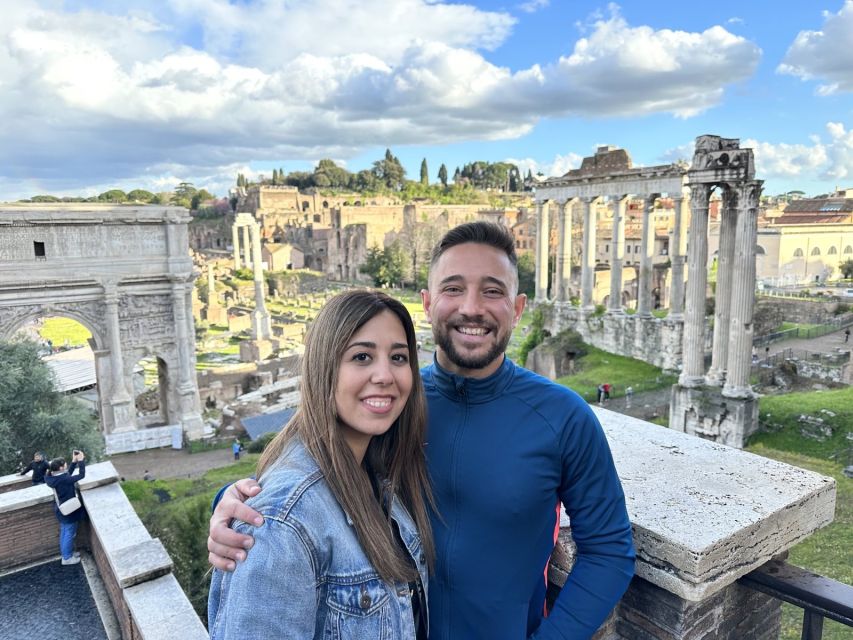
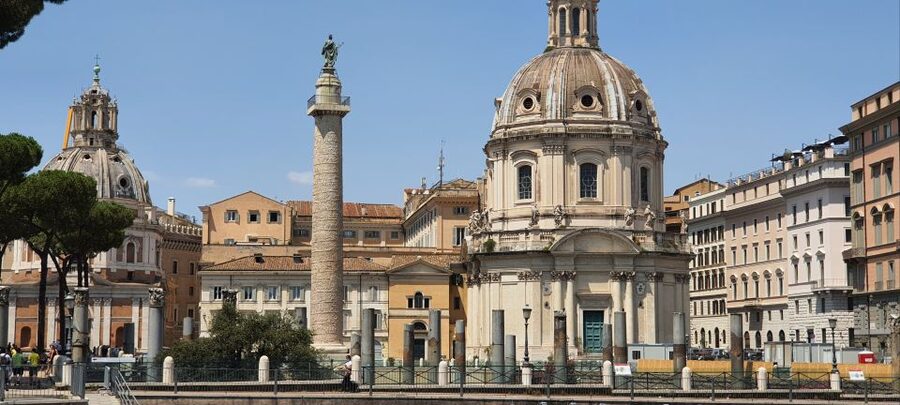
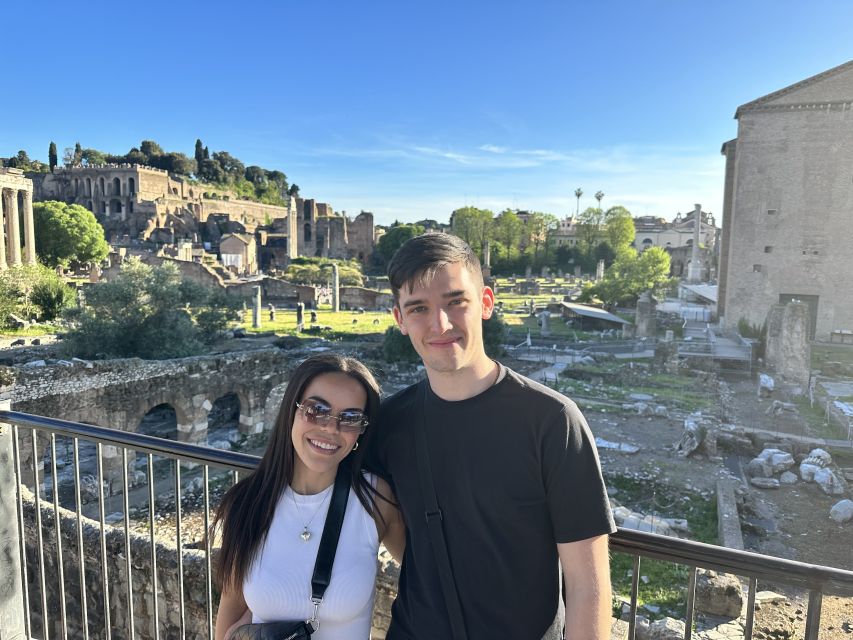
The walk continues along Via dei Fori Imperiali, where you look across the Roman Forum and several Imperial forums. The route includes views of the Forum of Augustus, Forum of Caesar, and Forum of Nerva.
These ruins can be hard to read on your own. Columns, foundations, broken walls, and scattered paving stones do not always show how the original spaces worked. The guide gives you a framework for the social and political life that took place here, helping you picture forums as centers of public business, debate, power, and ceremony.
Because entrance fees are not included, treat this portion as an exterior introduction. You will see and discuss the forum areas from the public route, but this activity is not a ticketed archaeological visit inside the Colosseum or a substitute for a full Forum entry.
That distinction is important when comparing the price. If you already have Ancient Rome tickets and want a guide to explain the surroundings before or after your visit, the tour may add useful context. If you expect a paid admission and an in-depth walk among the ruins, you may feel the package offers less than expected.
Circus Maximus and the scale of Roman entertainment
No Ancient Rome route feels complete without the Circus Maximus. This enormous site was used for chariot racing and helps you understand the scale of Roman public entertainment.
The Circus Maximus does not present itself like a complete arena. Much of its value comes from the size and shape of the open space, along with the guide’s explanation of how it functioned. You have to use your imagination more here than at a preserved monument.
That makes the guide especially important. A clear speaker can turn a broad field into a working stadium in your mind. The strongest feedback for this activity centers on the guides’ ability to explain, answer questions, and keep the tone friendly. Bruno, Francesco, Gabriel, and Sam are all named in positive comments connected with the tour.
If you prefer intact buildings and detailed interior access, Circus Maximus may feel less satisfying. If you enjoy seeing how a city was organized and want a sense of scale, it is a worthwhile stop.
Finishing outside the Colosseum
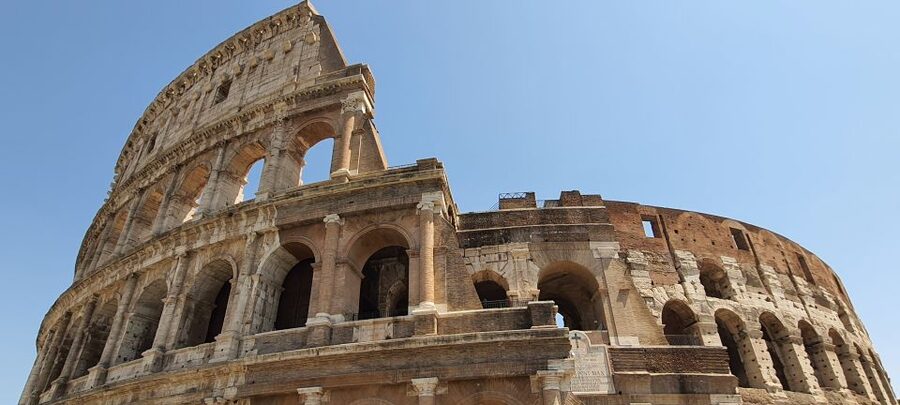
The tour ends outside the Colosseum, the most famous amphitheater in Rome. You get the essential exterior view and the guide’s historical context, but you do not go inside.
That limitation should shape your booking decision. The Colosseum interior, underground areas, and upper levels are not part of this activity. Entrance tickets and fees are also excluded, so arrange a separate visit if you want to explore the amphitheater.
Still, ending here makes sense. The route has already shown you bridges, markets, theatres, temples, government spaces, forums, and a racing stadium. The Colosseum then appears as one part of a much larger urban system, not as the whole story of Ancient Rome.
You also return to the original meeting point at the end. The activity does not provide transportation, so you should plan your next stop from that location.
What $243.56 means in practical terms
At $243.56 per person, this is an expensive two-hour walking tour. The guide is the central product. You are paying for an English-language explanation of a complicated part of Rome, not for admission, transportation, food, or a private interior visit.
The price may make sense if you want a focused introduction, value having a live guide answer questions, and prefer a route that includes less obvious places such as the Theatre of Marcellus, Temple of Apollo, Portico of Octavia, and Piazza Cinque Scole. It is also useful if you want to understand the wider center before tackling a separate Colosseum or Forum visit.
The value is weaker if you mainly want photographs of the Colosseum or expect to enter major monuments. You can see the primary sites only from outside, and the two-hour length leaves limited time for extended explanations at each stop.
The tour has a 4.3 rating from 32 reviews, with especially strong praise for the guides’ warmth, humor, clarity, and readiness to answer questions. I would put more weight on those guide qualities than on the rating alone, since the quality of the experience depends heavily on who leads your walk.
Free cancellation is available up to 24 hours before the start, and you can reserve now and pay later. Those options help if your Rome schedule is still changing, but they do not alter the tour’s basic limitations.
Who will enjoy this walk most
I would recommend this tour to you if you want a short, guided orientation to Ancient Rome and prefer a broad route over a single long monument visit. It suits first-time visitors who want help connecting the Jewish Ghetto, Tiber River, Capitoline Hill, forums, Circus Maximus, and Colosseum.
It also suits history-minded visitors who have already arranged their entry tickets and want an outdoor explanation of the city around them. The Theatre of Marcellus and Portico of Octavia are especially useful for anyone who wants more than the standard Colosseum stop.
You should think twice if you have mobility limits. The tour includes walking, a climb up Capitoline Hill, and outdoor surfaces. It is not suitable for wheelchair users or people with mobility impairments.
You should also skip it if your priority is entering the Colosseum. This activity will not replace a timed admission or a guided interior tour.
Should you book the Rome Ancient Center tour?
Book it if you value a lively English-speaking guide and want a compact route through Rome’s ancient center, with several stops that many visitors might otherwise miss. The best reason to choose it is not simply the Colosseum exterior. It is the way the Theatre of Marcellus, Tiber Island, Capitoline Hill, forums, and Circus Maximus build a wider picture of Rome.
At $243.56, I would book only if the guide-led context matters to you and you understand that admission is not included. If you want maximum sightseeing value per dollar, pair careful self-guided exploration with separate entrance tickets. If you want a personable guide to make the ruins easier to read, this walk can be a useful, lively introduction.
FAQ
How long does the tour last?
The walking tour lasts two hours.
What language is the tour conducted in?
The tour is conducted in English with a live guide.
Does the tour go inside the Colosseum?
No. The Colosseum is viewed from outside, and a visit inside is not included.
Are entrance tickets and fees included?
No. Entrance tickets and fees are not included in the activity price.
Where does the tour begin?
You meet the guide in front of the Basilica of Sant’Anastasia al Palatino.
Where does the tour end?
The activity ends back at the meeting point.
What should you bring?
You should bring comfortable shoes because the activity is an outdoor walking tour.
Is the tour suitable for wheelchair users?
No. The tour is not suitable for wheelchair users or people with mobility impairments.
Just added around Rome
- Rome: Private Caracalla Baths & Circus Maximus Tour for Kids★ 5.0 · 2 reviews
- Rome: Rooftop Bar Opera Show★ 4.6 · 94 reviews
- Rome: E-bike Tour From The Circus Maximus To The Catacombs★ 5.0 · 3 reviews
- Rome: Musical Biography of Frank Sinatra Concert★ 3.9 · 100 reviews
- Rome: Gladiator Show and Museum Tickets★ 4.5 · 237 reviews
- Rome: Caracalla, Colosseum, Circus Maximus Private Tour★ 5.0 · 3 reviews
- Rome: Wine, Legends, and Burlesque Extravaganza by Night★ 4.4 · 18 reviews
- Rome: Night Life Walking Tour and Burlesque Show Entry★ 5.0 · 3 reviews
Rome Shows, compared.
Caracalla Baths & Circus Maximus — Private or Shared
Read our review →
Small-Group Tour of Caracalla Baths and Circus Maximus
Read our review →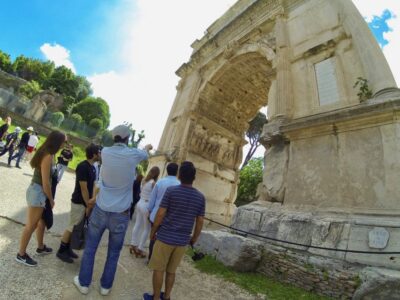
Browse the lists this show appears in