
Review · ROME
Rome: Private Caracalla Baths & Circus Maximus Tour for Kids
Rome’s Baths of Caracalla and Circus Maximus make a smart pair for families. One shows how Romans relaxed, exercised, and socialized. The other reveals how they watched chariot races, animal hunts, and acrobatic shows. Together, they explain what ancient Romans did when they were off duty.
I like the private format, since your guide can adjust the pace and answer the questions your children actually ask. I also like the use of games, reconstructions, and multimedia tools rather than relying on a long lecture. The main drawback is the tight two-hour schedule. You’ll see both sites, but this is an introduction, not a slow archaeological study.
Key points to know before booking
- Two major Roman sites in two hours: Begin at the Baths of Caracalla, then continue to Circus Maximus.
- Built for families: Games, reconstructions, curious facts, and multimedia tools help children stay involved.
- A private guide: Your group has its own English- or Italian-speaking guide, including a professional art historian and child-friendly guide.
- Guide Donato is praised for his work with children: He is described as friendly and especially good at bringing the baths and circus to life.
- No hotel transport: You meet outside the Baths of Caracalla and return to that same meeting point.
- Plan for walking: Comfortable shoes are important, and the tour is not suitable for wheelchair users.
Why the Baths of Caracalla are a good family starting point
The tour begins outside the entrance to the Baths of Caracalla. Your guide will hold a sign with your name, which makes the meeting point fairly simple to find. There is no hotel pick-up, so you need to arrange your own way to the baths.
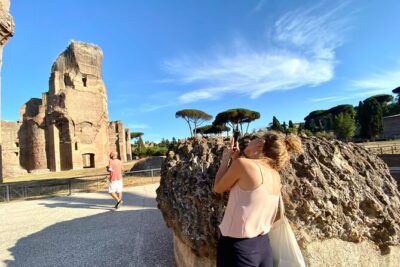
The baths were far more than a place to wash. They included pools, changing rooms, gyms, and saunas, all built into a huge public complex. Your guide uses these spaces to explain how Romans spent free time, met friends, exercised, and enjoyed public life.
For children, the most useful part is seeing the ruins as a working building rather than a pile of old stones. The guide can connect the remains to the practical questions kids tend to ask: How did the water get here? How were the rooms heated? How did Romans build such large walls and floors?
The heating system is one of the tour’s best subjects. Ancient Roman engineers used carefully planned systems to warm pools and rooms. You’ll also hear about aqueducts, pools, and construction methods. These details give the site a clear purpose, even when parts of the building are missing.
More Circus Shows in Italy
- Rome: Caracalla Baths & Circus Maximus — Private or Shared
★ 4.7 · 835 reviews - Rome: Small-Group Tour of Caracalla Baths and Circus Maximus
★ 5.0 · 140 reviews - Rome: Roman Forum, Palatine, and Circus Maximus Tour
★ 4.7 · 117 reviews
Ancient pools, mosaics, and Roman engineering
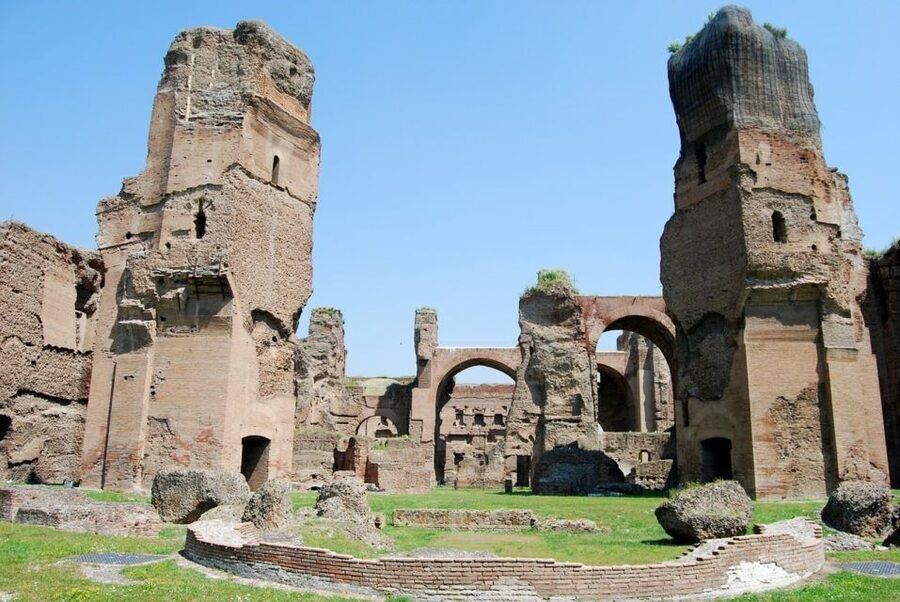
The Baths of Caracalla are especially useful for showing the scale of Roman public construction. The ruins include the remains of pools, changing areas, gyms, and sauna rooms. A guide can help you picture how one space connected to another and how many different activities took place under one roof.
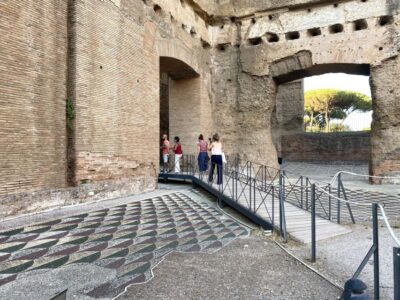
Mosaics provide another good entry point for younger visitors. The tour explains how mosaics were made, turning a decorative floor into a lesson in craft and patience. Children can relate to the small pieces that had to be arranged into larger patterns, while adults get a clearer idea of the care that went into Roman interiors.
The site also gives your guide room to talk about Roman building techniques. The Romans were excellent engineers, and the baths show that skill in practical form. Water had to be brought in, rooms had to be heated, and large public areas had to support heavy use.
The drawback is that ruins require imagination. Some rooms may be easy to understand once the guide explains them, but children may not always see the original building from the remaining walls. That is why the multimedia tools and reconstructions matter. They help bridge the gap between what is in front of you and what once stood there.
Keeping children involved without turning Rome into a classroom
A family tour succeeds or fails on its guide. A child-friendly guide should know when to explain, when to ask questions, and when to move on. This experience is designed around games, reconstructions, and unusual facts, so it has more variety than a standard site tour.
Donato is specifically praised for being friendly, good with children, and able to share interesting facts and stories about both locations. If he is assigned to your group, his approach should suit families who want history explained in a relaxed way. Since guide assignments can vary, the key benefit is the private format: your guide can respond to your group rather than following a fixed crowd-oriented script.
I would book this for children who enjoy stories, visual clues, and questions about how things worked. It may be less successful for a child who simply wants to run around. The Baths of Caracalla are an archaeological site, and adults still need to help children stay close and listen.
The tour is not designed for unaccompanied minors. Every child must be with an adult, and the private setting does not change that rule.
Moving from the baths to Circus Maximus
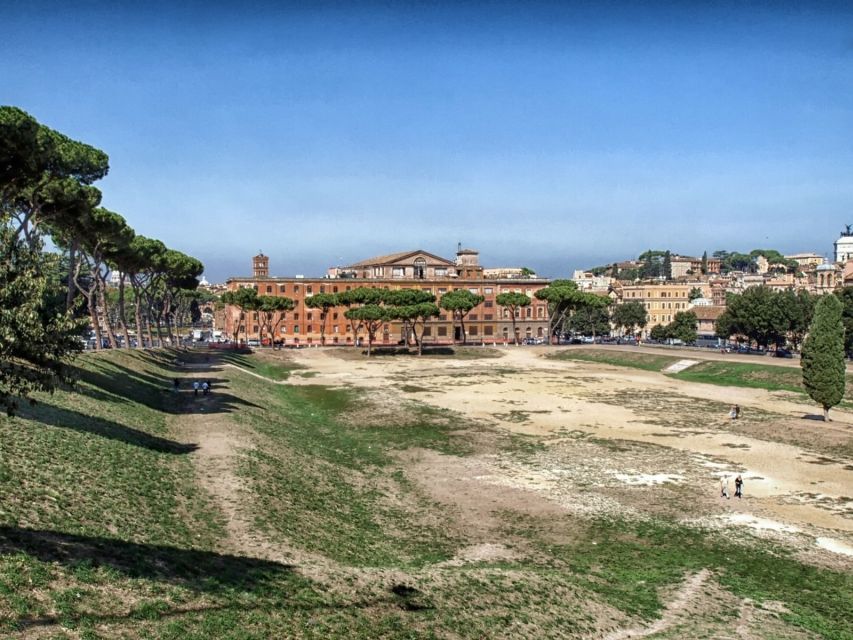
After the baths, the tour turns to Circus Maximus, described as the largest entertainment venue of the Roman Empire. It could hold 200,000 spectators and hosted chariot races, animal hunts, acrobatic shows, and other public spectacles.
Today, the site is much more open than the baths. Your guide’s storytelling does much of the work. You’ll be asked to picture a huge crowd, racing teams, cheering spectators, and the excitement of a chariot race. This is where children can connect with ancient Rome through competition and spectacle.
The guide also explains how Romans supported their favorite teams and sometimes placed bets. That makes the circus feel less like a distant monument and more like a place where people had strong loyalties and opinions, much as sports fans do today.
Circus Maximus had an important social role, too. It was described as the one entertainment venue where men and women could mingle, meet one another, and perhaps fall in love. That detail adds a human touch to the site. The circus was not only about racing. It was also a major place for people to see and be seen.
The panoramic views of Circus Maximus are one of the tour’s clear highlights. You can take in the size of the former arena and understand why it could hold such enormous crowds. Still, do not expect a preserved stadium with rows of seats and complete walls. The appeal lies in the scale, the setting, and the story your guide builds around it.
More Circus and Acrobatic Shows in Rome:
- Rome: Circus Maximus Virtual Reality Game near the Colosseum
★ 4.8 · 42 reviews - Rome: Colosseum, Circus Maximus, Forum & Ancient Rome Tour
★ 4.3 · 32 reviews - Rome: E-bike Tour From The Circus Maximus To The Catacombs
★ 5.0 · 3 reviews - Rome: Caracalla, Colosseum, Circus Maximus Private Tour
★ 5.0 · 3 reviews
What makes the private format worth the price
The listed cost is $137.07 per person. That is not a budget activity, especially for a family, so the value depends on how much you want a guide’s help.
You are paying for a private walking tour, entrance fees, admission tickets, and a professional guide. The guide is described as a Blue Badge guide, local guide, professional art historian, and child-friendly guide. You also avoid the long ticket line, which can matter in Rome when children are tired or the day is hot.
The private format is the biggest reason to consider the price. If your children lose interest during long explanations, your guide can shift the pace. If they become fascinated by mosaics or Roman heating, you can spend more time there. A large group tour cannot offer that same flexibility.
The two-hour length also helps control the cost and the children’s energy. You get two major sites without committing to a full day of ancient ruins. On the other hand, the short schedule means there is little time for lingering, extensive photography, or a detailed examination of every part of the baths.
Food and drinks are not included. Hotel pick-up and drop-off are not included either. You should plan your route to the Baths of Caracalla before the start time and bring water for your family, particularly if the weather is warm.
Timing, walking, and practical planning
The activity lasts two hours, with starting times available according to the date you choose. The meeting point is just outside the entrance to the Baths of Caracalla. Look for the guide holding a sign with your name.
The tour ends back at the meeting point. That makes it easy to continue your day from the baths, but it also means you should not expect transportation between the sites or back to your hotel.
Comfortable shoes are important. This is a walking tour through archaeological remains and open public space. The experience is not wheelchair accessible and is not suitable for wheelchair users, so families should consider that before booking.
A current valid passport is required on the day of travel. Confirmation is provided at booking, and the activity allows free cancellation up to 24 hours in advance for a full refund. You can also reserve now and pay later, which helps if your Rome schedule is still changing.
The tour is offered in English and Italian. If you have a strong language preference, check the available option when selecting your time.
How this tour fits into a Rome family itinerary
I would place this tour on a day when you want ancient Rome without the intensity of the Colosseum area. The baths and circus offer a different view of Roman life. You see recreation, engineering, public space, sport, and social habits rather than focusing only on emperors and battles.
It also works well early in a child’s Rome visit. The baths introduce basic ideas about Roman buildings and daily life. Circus Maximus then turns those ideas into a lively story about entertainment and crowds.
The two sites are also useful for children who find traditional museum visits tiring. There are no expectations of silent gallery behavior, and the guide can use games and multimedia tools to keep the experience active. Still, you should set realistic expectations. This is a history tour at genuine archaeological sites, not an amusement activity.
Because the tour is private, it suits families with different ages or interests. Adults can ask about architecture and ancient society while children focus on races, engineering, and strange Roman customs. The guide’s job is to connect those interests.
Who should book this experience
I would choose this tour if you want:
- A short introduction to two major Roman sites
- A private guide instead of a large group
- Activities designed for children
- Help understanding ruins that are difficult to picture alone
- A mix of Roman daily life, engineering, sport, and entertainment
- Skip-the-line entry and a fixed two-hour plan
I would think twice if you want a long, detailed archaeological visit. You may also prefer another activity if your group needs step-free access or private hotel transportation.
The tour is best for families who want history explained through stories and visual aids. It is especially useful when children need a reason to care about the ruins in front of them. The subject matter gives them plenty to grab onto: heated rooms, mosaics, chariots, betting, team loyalty, and a stadium built for an enormous crowd.
Should you book the Caracalla Baths and Circus Maximus tour?
Book it if your family wants a focused and lively introduction to ancient Roman leisure. The private format, child-friendly approach, and multimedia tools add real value, especially for younger children who might struggle with a standard adult history tour.
The strongest reason to choose it is the guide-led interpretation. The ruins themselves are impressive, but the story of how Romans heated rooms, built pools, watched races, and supported teams gives them meaning. Donato is praised for being warm and effective with children, and the tour’s structure is built around that kind of engaging guidance.
Skip it if you need wheelchair access, hotel transportation, or a longer visit with more time at each site. For everyone else, this is a practical two-hour choice that shows an entertaining, social side of Rome beyond the usual imperial monuments.
FAQ
How long does the tour last?
The tour lasts two hours.
Where does the tour begin?
It begins just outside the entrance to the Baths of Caracalla. The guide will hold a sign with your name.
Where does the tour end?
The activity ends back at the meeting point outside the Baths of Caracalla.
Are entrance fees included?
Yes. Entrance fees and admission tickets are included.
Is this a private tour?
Yes. The activity is arranged for a private group.
What languages are available?
The live guide is available in English and Italian.
Is the tour wheelchair accessible?
No. The tour is not wheelchair accessible and is not suitable for wheelchair users.
Just added around Rome
- Rome: Rooftop Bar Opera Show★ 4.6 · 94 reviews
- Rome: E-bike Tour From The Circus Maximus To The Catacombs★ 5.0 · 3 reviews
- Rome: Musical Biography of Frank Sinatra Concert★ 3.9 · 100 reviews
- Rome: Gladiator Show and Museum Tickets★ 4.5 · 237 reviews
- Rome: Caracalla, Colosseum, Circus Maximus Private Tour★ 5.0 · 3 reviews
- Rome: Colosseum, Circus Maximus, Forum & Ancient Rome Tour★ 4.3 · 32 reviews
- Rome: Wine, Legends, and Burlesque Extravaganza by Night★ 4.4 · 18 reviews
- Rome: Night Life Walking Tour and Burlesque Show Entry★ 5.0 · 3 reviews
Rome Shows, compared.
Caracalla Baths & Circus Maximus — Private or Shared
Read our review →
Small-Group Tour of Caracalla Baths and Circus Maximus
Read our review →



Browse the lists this show appears in