
Review · ITALY
Lucca: Musical Walking Tour with Puccini Museum Visit
Lucca’s musical story reaches far beyond opera. This two-hour walk links Puccini and Boccherini with David Bowie, Elton John, the Rolling Stones, Joe Cocker, and Ray Charles. Musical excerpts accompany the route, so you hear the city’s story instead of simply walking past its buildings. I especially like the visit inside Teatro del Giglio and the final stop at Puccini’s birthplace.
I also like the balance between classical and modern music. You move from a historic theater and cathedral to concert squares where major rock and pop acts have performed. The main drawback is cost clarity: the $34 tour price does not include museum or theater admission, with museum tickets sold separately for €5 on the day. If your main goal is a full theater visit, confirm exactly what will be open before booking.
Key details at a glance
- A musical route through central Lucca: Walk from Teatro del Giglio through Piazza Napoleone, San Martino Cathedral, the Boccherini Conservatory, Piazza dell’Anfiteatro, and Puccini’s birthplace.
- Musical excerpts during the walk: The guide uses music to bring Puccini, Paganini, Boccherini, and modern performers into the story.
- A mix of opera and rock: The route connects Lucca’s classical tradition with concerts by Bowie, Elton John, the Rolling Stones, Joe Cocker, and Ray Charles.
- A two-hour city walk: You return to the Teatro del Giglio meeting point, making this easy to fit into a day in Lucca.
- English and Italian guides: Vitoria has been singled out for her passionate and informed presentation.
- Extra entrance fees: The advertised price covers the guided tour, but museum and theater tickets are not included.
Why Lucca works so well as a music city
Lucca is compact, and that matters here. You can move between churches, squares, old streets, and music institutions without spending time on buses or taxis. The walk gives you a reason to notice places that might otherwise blur together during a standard city stroll.
The route also shows that Lucca’s music is not limited to Giacomo Puccini. Luigi Boccherini was born here, Niccolò Paganini lived in the city for a period, and modern performers have used Lucca’s public squares as concert venues. That range gives the tour more shape than a simple composer biography.
I would choose this for a second look at Lucca, or for a first visit if music is central to your travel plans. It is not designed as a broad introduction to every major sight in the city. Instead, it uses music as the thread connecting streets, buildings, performers, and local identity.
The guided format helps with context. A church facade can be easy to admire and forget, but learning about the musicians linked to it gives the stop a clear purpose. The musical excerpts should also help you connect names and places with actual sound.
More Broadway and West End Shows in Italy:
- Rome: Musical Biography of Frank Sinatra Concert
★ 3.9 · 100 reviews - NYC: Aladdin the Musical on Broadway
★ 4.8 · 1,800 reviews - NYC: The Lion King on Broadway
1,609 reviews
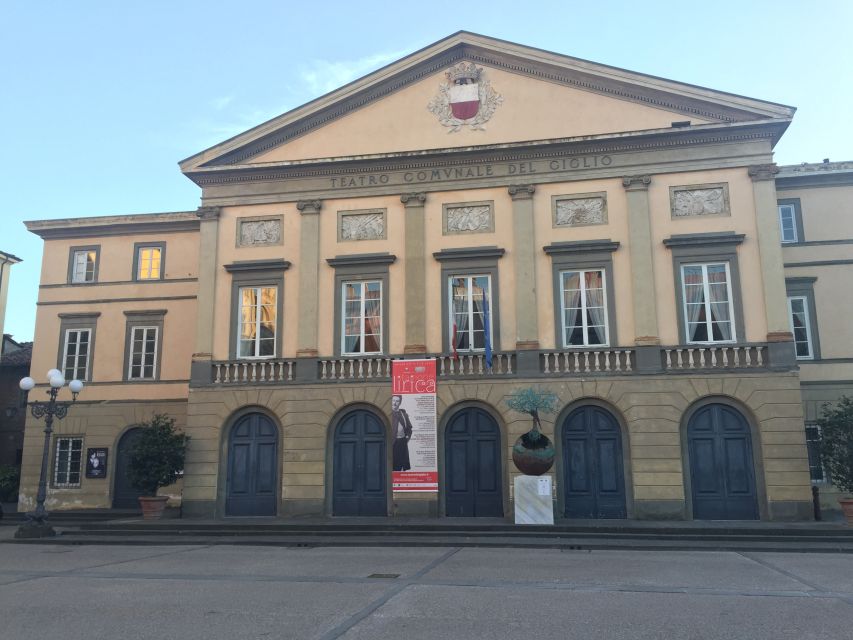
Starting inside Teatro del Giglio
The tour begins at the ticket office of Teatro del Giglio, one of the most important stops on the route. You start indoors, with a guided look at the theater and musical moments woven into the visit.
That opening is useful because it establishes Lucca’s formal concert tradition before the walk moves into public squares and medieval lanes. The theater gives you a setting for understanding how music was presented in the city, while the guide’s explanations place the building within Lucca’s wider cultural life.
Do not assume that theater admission is covered by the tour price. The stated inclusions list only the guided tour, and theater and Puccini Birthplace Museum entrance fees are separate. If the theater is closed, the activity substitutes another place of equal musical interest. That keeps the route going, but it may change the experience you had in mind when booking.
The tour uses live explanation and musical excerpts rather than a silent architectural visit. That suits you if you enjoy learning through stories and sound. If you want a long, technical tour of the theater’s design, this may feel lighter and more focused on the music.
Piazza Napoleone and Lucca’s modern concert past
After the theater, the walk reaches Piazza Napoleone. The square links Lucca’s older setting with its modern role as a concert venue. David Bowie, Elton John, and the Rolling Stones have all performed here, giving the stop a surprising connection to international popular music.
This is one of the tour’s most appealing changes of pace. You are not asked to choose between opera and rock. Instead, the guide shows how the same city can host a historic theater and large modern concerts within a short walk of each other.
I like this stop for another reason: it gives you a physical place for names you may already know from music. Rather than hearing a list of famous performers in the abstract, you stand in the square associated with their Lucca appearances.
The square is also a useful reminder that Lucca’s musical life continues beyond its historic buildings. The tour does not treat classical music as the only tradition worth discussing. That broad approach is a major reason this walk appeals to couples or families with different musical tastes.
San Martino Cathedral and centuries of music
The route continues to the facade of San Martino Cathedral. The cathedral is included here for its connection to musicians produced in Lucca over the centuries, not simply as an architectural photo stop.
You should expect to hear how religious and classical traditions helped shape the city’s musical culture. The guide’s musical excerpts make this section more active than a standard explanation delivered in front of a church.
The cathedral stop also breaks up the walk nicely. You move from a theater to an open square, then to one of Lucca’s major religious landmarks. The route keeps changing its setting while staying focused on music.
Because the tour lasts two hours, the cathedral visit is part of a moving city walk rather than a long interior study. If you want extended time inside San Martino Cathedral, you may need to return separately. The value here is the connection between the building, the city, and its musicians.
A few more shows around Italy worth a look
- Rome: Gladiator Show and Museum Tickets
★ 4.5 · 237 reviews - Syracuse: Museum Guided Tour with Sicilian Puppet show
★ 4.1 · 27 reviews - Seville: Puro Flamenco Show with Optional Museum Ticket
★ 4.8 · 6,088 reviews - Istanbul: Hodjapasha Whirling Dervishes Show & Exhibition
★ 4.4 · 4,790 reviews
Boccherini’s Lucca and the conservatory
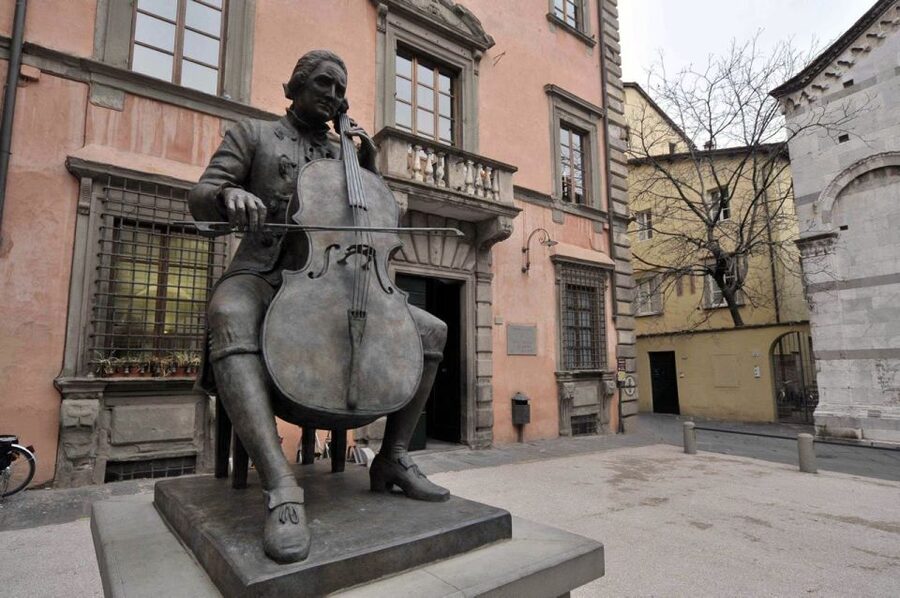
Next comes the Luigi Boccherini Conservatory, named for the cellist and composer born in Lucca. This stop adds a specific local figure to a route that could otherwise lean heavily on Puccini.
Boccherini is a good example of the tour’s wider purpose. Puccini may be Lucca’s most famous musical son, but he is not the only important composer connected with the city. The conservatory keeps that larger story in view.
I would pay attention to the contrast between the institution you see today and the historical figure behind its name. A conservatory is an active center for musical training, while Boccherini represents an earlier chapter in Lucca’s musical life. The guide links those periods through place and sound.
This part should suit you if you like learning about composers beyond the best-known names. It may be less satisfying if you want only Puccini, but that is not really the aim of the walk. The route is designed to widen your view of Lucca’s musical identity.
Piazza dell’Anfiteatro, from gladiators to concerts
The oval Piazza dell’Anfiteatro is one of Lucca’s most recognizable spaces. Its unusual shape comes from the Roman amphitheater that once occupied the site, when gladiatorial contests took place here.
The modern music connection is just as striking. Joe Cocker and Ray Charles have performed in the square, turning an ancient arena into a concert setting. The guide uses this contrast to show how public spaces can change purpose across centuries.
This is likely to be one of the most memorable visual stops. The oval layout helps you picture the Roman structure beneath the surrounding buildings, while the concert stories add a more recent layer. The musical excerpts give the stop an extra sensory touch.
Piazza dell’Anfiteatro can also be busy, and the tour may need to pause where the group can hear the guide. The supplied information does not give a group size, so you should not assume a private or small-group format. If you prefer quiet sightseeing, the square may feel more enjoyable outside the tour’s busiest periods, though starting times vary and must be checked when booking.
Paganini’s Lucca connection
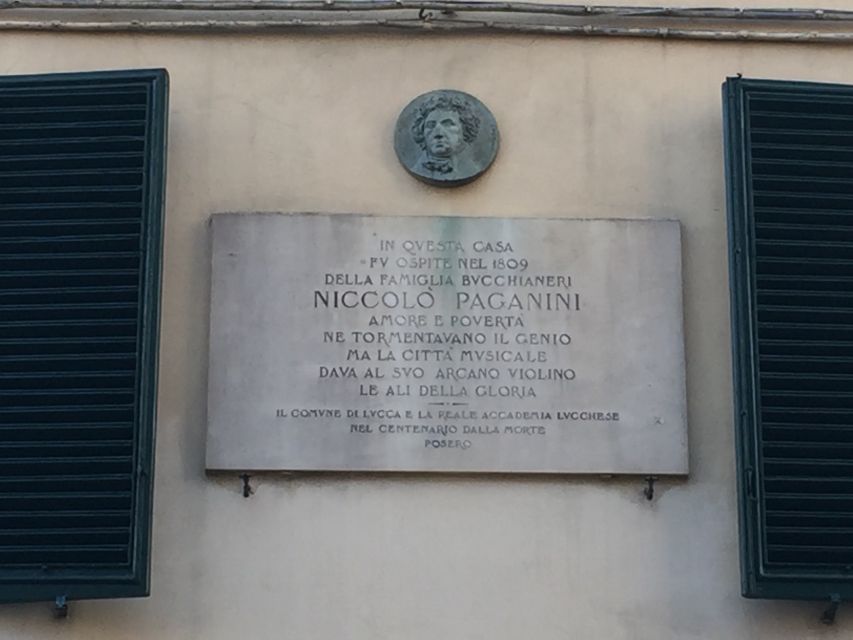
The walk then reaches the residence where Niccolò Paganini lived while he was in Lucca. Paganini is best known for his virtuoso violin playing, but the musical selection here includes one of his guitar and violin serenades composed in the city.
That detail gives the stop a personal angle. You are not only hearing about a famous violinist’s reputation. You are connecting him with a specific residence and a piece of music linked to his time in Lucca.
The serenade’s languid quality also changes the mood of the tour. Earlier stops bring up large concerts and public performance. Here, the focus turns toward a more intimate musical form and a more private chapter in Paganini’s life.
This is the kind of detail I value on a walking tour. A name in a textbook is easy to forget. A residence, a composition, and a short musical excerpt give the story a stronger anchor.
Finishing with Puccini at his birthplace
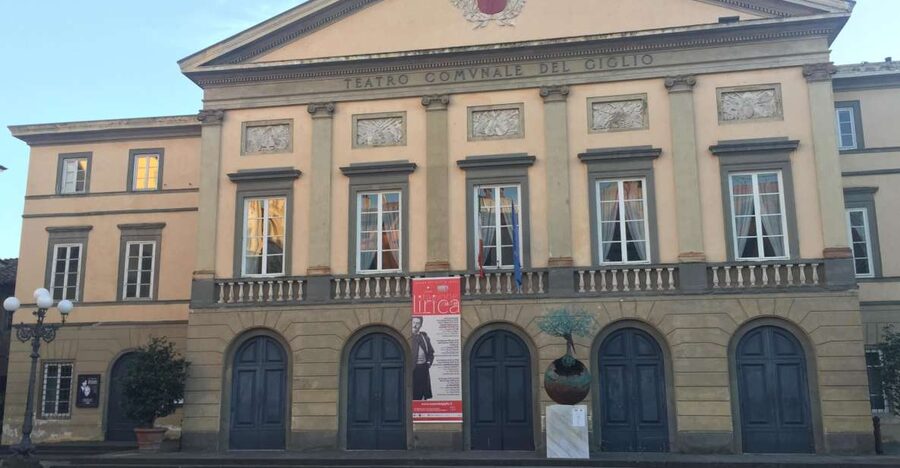
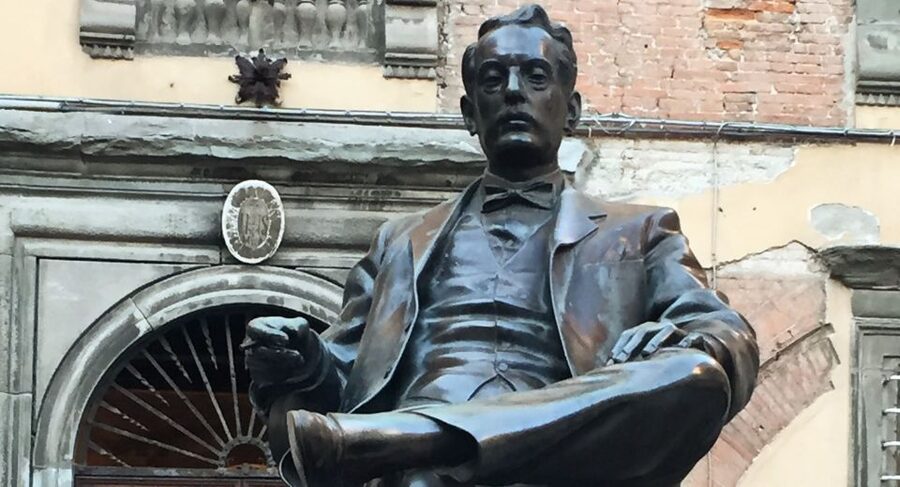
The final destination is the birthplace of Giacomo Puccini, Lucca’s most famous composer and celebrity. Ending here makes sense. After meeting several musicians and tracing different musical traditions, the route closes with the figure most closely associated with the city.
The Puccini Museum is housed at the birthplace, and the museum entrance is not included in the base price. The tour information says tickets can be bought from the guide on the day for €5. Children under 15 go free on the walking tour but still need to pay the museum entrance fee.
The museum gives the walk a clear finish rather than ending at a random street corner. You reach the place connected directly to Puccini’s early life, after hearing how Lucca’s theaters, churches, squares, and conservatory fit into its musical story.
Allow for the possibility that the actual museum time may be limited by the two-hour format. The information confirms the visit to the birthplace and identifies the museum fee, but it does not specify how long you spend inside. If Puccini is your main reason for booking, ask the guide how the museum visit is handled on your chosen date.
What the musical excerpts add
The musical excerpts are central to the tour’s character. You are not simply given dates and names. The guide uses pieces connected with the people and places along the route, including Paganini’s guitar and violin serenade.
That approach is especially helpful if you recognize music more easily than composers’ names. A short excerpt can make Puccini or Boccherini feel less distant, and it gives the route a rhythm as you move through the city.
The mix is not limited to opera. You hear about classical composers, but you also visit places linked to Bowie, Elton John, the Rolling Stones, Joe Cocker, and Ray Charles. I would recommend this tour to someone who likes music broadly, not only to an opera specialist.
The quality of the experience depends heavily on the guide. Vitoria has been praised for a passionate, informed presentation, so if she is leading your departure, you can expect strong personal energy. Guide assignments can vary, and the listed languages are English and Italian.
Price, timing, and practical value
The tour costs $34 per person and lasts two hours. That is fair value if you want a themed city walk with a theater visit, musical excerpts, and the Puccini connection. It is less of a bargain once you add museum or theater admission, so compare the total cost with your plans for visiting those sites separately.
The route begins and ends at the ticket office of Teatro del Giglio. Since the activity returns to its starting point, you do not need to arrange transport back across town. Wear comfortable shoes and comfortable clothing, since the experience combines walking, standing, and sightseeing in historic streets.
Free cancellation is available up to 24 hours before the activity, and you can reserve now and pay later. Those terms help if your Lucca schedule is still shifting. Starting times vary, so check availability rather than building your day around an assumed departure.
The information includes both wheelchair accessible and not suitable for people with mobility impairments. That is a contradiction you should resolve before booking. Ask the provider about the exact route, theater access, street surfaces, and museum entry if you use a wheelchair or have limited mobility.
Who should book this Lucca music walk
I would book this if you want a focused introduction to Lucca through music rather than a standard list of monuments. It works particularly well for classical music fans, Puccini admirers, and people who enjoy seeing how modern concerts fit into an old city.
It is also a good choice for mixed-interest groups. One person can follow the Puccini and Paganini material, while another may be more interested in the Rolling Stones, Bowie, Elton John, Joe Cocker, or Ray Charles.
I would skip it if you want a general Lucca orientation, a long museum visit, or a purely architectural tour. The route gives context to several places, but it does not promise extended time at every stop.
Should you book it?
Book this tour if the idea of hearing music while walking through Lucca appeals to you. The combination of Teatro del Giglio, Piazza Napoleone, the cathedral, Boccherini’s conservatory, Piazza dell’Anfiteatro, Paganini’s residence, and Puccini’s birthplace gives you a thoughtful route through the city.
Before paying, check the theater’s opening status, confirm the extra entrance fees, and ask about accessibility if needed. With those details clear, the walk offers a useful mix of local composers, major concert names, and musical excerpts that make Lucca easier to understand and remember.
FAQ
Where does the musical walking tour begin?
It begins at the ticket office of Teatro del Giglio in Lucca.
Where does the tour end?
The activity ends back at the Teatro del Giglio meeting point.
How long does the tour last?
The walking tour lasts two hours.
What languages are available?
The live guide service is available in English and Italian.
Are museum and theater entrance fees included?
No. Theater and Puccini Birthplace Museum entrance fees are not included in the tour price. Museum tickets can be purchased from the guide on the day for €5.
Do children under 15 pay for the tour?
Children under 15 go free on the walking tour, but they must still pay the museum entrance fee.
What happens if Teatro del Giglio is closed?
If the theater is closed, the tour visits another place of equal musical interest.
More Walking Tours in Italy
- Venice:Theatrical Walking Carnival Show & Casanova’s Secrets
★ 4.5 · 319 reviews - Messina Street Food Walking Tour and astronomical clock show
★ 5.0 · 5 reviews - Rome: Night Life Walking Tour and Burlesque Show Entry
★ 5.0 · 3 reviews - London West End Musical Silent Disco Walking Tour Top 1% Rated
★ 5.0 · 1,057 reviews
Just added around Italy
- Mozzarella Live Show & Tasting in a Cheese Factory★ 5.0 · 2 reviews
- Syracuse: Sicilian Puppet Show with visit behind the scenes★ 4.8 · 49 reviews
- Syracuse: Museum Guided Tour with Sicilian Puppet show★ 4.1 · 27 reviews
- Rome: Rooftop Bar Opera Show★ 4.6 · 94 reviews
- Rome: Private Caracalla Baths & Circus Maximus Tour for Kids★ 5.0 · 2 reviews
- Rome: E-bike Tour From The Circus Maximus To The Catacombs★ 5.0 · 3 reviews
- Rome: Musical Biography of Frank Sinatra Concert★ 3.9 · 100 reviews
- Rome: Gladiator Show and Museum Tickets★ 4.5 · 237 reviews
Italy Shows, compared.
Caracalla Baths & Circus Maximus — Private or Shared
Read our review →
Glass Blowing Show Visit Murano Glass Factory & Showroom OMG
Read our review →

Small-Group Tour of Caracalla Baths and Circus Maximus
Read our review →
Browse the lists this show appears in