
Review · ISTANBUL
Istanbul: Hodjapasha Whirling Dervishes Show & Exhibition
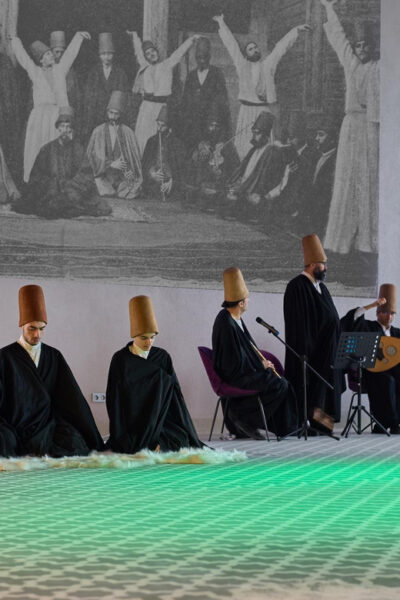
The striking thing here is that this is not a quick folk-dance performance. It is a Mevlevi Sema ceremony, a solemn Sufi ritual built around music, prayer, and the controlled spinning of dervishes. The setting, a restored 550-year-old Ottoman Turkish bath, gives the hour a special sense of place.
I like the live musical program, with traditional instruments such as the ney, oud, kanun, and percussion. I also like the small exhibition, which helps explain the symbols before you take your seat. The main caution is simple: if you expect a lively stage show, the quiet, repetitive, religious nature of the ceremony may feel slow.
Key points to know before booking
- The ceremony takes place in a restored Ottoman bath: The domed HodjaPasha Culture Center is part of the experience, not just a convenient hall.
- The program lasts about one hour: It begins with classical Turkish music and continues through the seven-part Sema ceremony.
- The spinning has religious meaning: The movement represents a spiritual journey toward love, knowledge, and union with the divine.
- Silence is required: Photography, talking, applause, and other interruptions are not permitted during the ceremony.
- Arrive early for the exhibition: The display in the foyer provides useful background and can make the ritual easier to follow.
- Seating is assigned by booking order: Reserve early if sitting near the front matters to you.
Entering the HodjaPasha Culture Center near Sirkeci
The meeting point is easy to reach. HodjaPasha Culture Center sits about 100 meters from the Sirkeci Tram Stop, in central Istanbul near Sultanahmet and the Golden Horn side of the historic peninsula. You do not need to plan a complicated transfer or a long walk through an unfamiliar neighborhood.
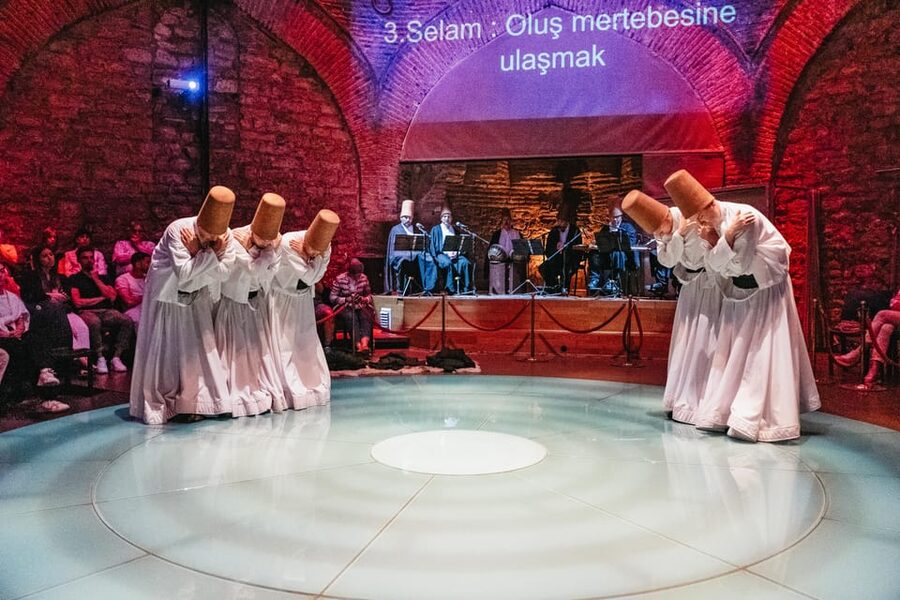
The building is a major part of the appeal. You enter a restored Ottoman Turkish bath dating back 550 years, then make your way toward the domed central performance room. Its old stone surfaces and rounded architecture help carry the music, especially the sustained notes of the ney, the reed flute associated with Mevlevi music.
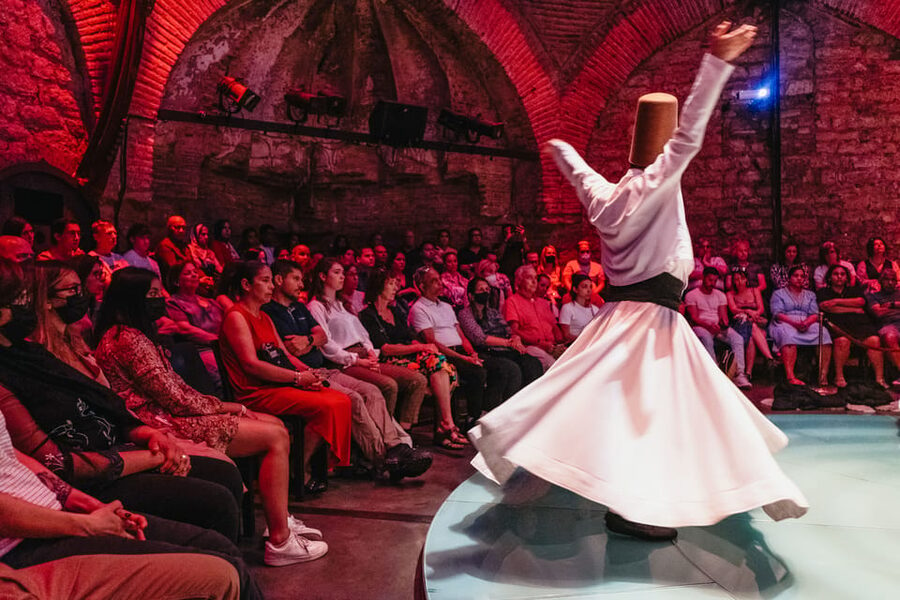
The venue is intimate rather than grand. That is good news for sightlines. The performance area is not a distant stage, and the room’s size lets you see the movements clearly. One practical drawback is the seating. Several chairs may be placed close together, and some people have found them uncomfortable for the full hour.
If you have any trouble with stairs, take note before booking. The venue includes steps leading upstairs, and the activity is not suitable for wheelchair users. Children under seven are not admitted.
More Turkish Night Shows in Istanbul
- Istanbul: Bosphorus Dinner Cruise & Turkish Night Show
★ 4.8 · 12,954 reviews - Istanbul: Bosphorus Dinner Cruise with Turkish Night Show
★ 4.6 · 1,950 reviews - Istanbul: Whirling Dervishes Ceremony and Mevlevi Sema
★ 4.3 · 1,694 reviews
Read the exhibition before the music begins
I recommend arriving early. The foyer includes panels and artifacts explaining the Mevlevi tradition, the role of the dervish, and the meaning of the Sema. A program booklet is also provided, but the exhibition gives you a better chance to look at the material at your own pace.
This preparation matters. Without context, the spinning can look like a remarkable physical feat and little more. With some background, you can follow the ceremony as a sequence of symbols rather than a single repeated movement.
The Sema is linked to the spiritual path of human beings. The turning represents movement away from the self and toward divine love. The ceremony also reflects the birth of humanity and the soul’s ascent through thought and love. You do not need a detailed understanding of Sufism to appreciate it, but a few minutes with the explanatory panels will help you notice more.
The exhibition is not a guided lecture. No personal guide is identified for this experience, and there is no promise of a question-and-answer session. If you arrive with detailed questions about Sufi belief, you may find the written material useful but limited. This is primarily a performance and ceremony, not a formal class.
The opening concert sets the tone
The program begins with classical Turkish music before the dervishes enter. This opening is one of the strongest parts of the experience for anyone who enjoys traditional music.
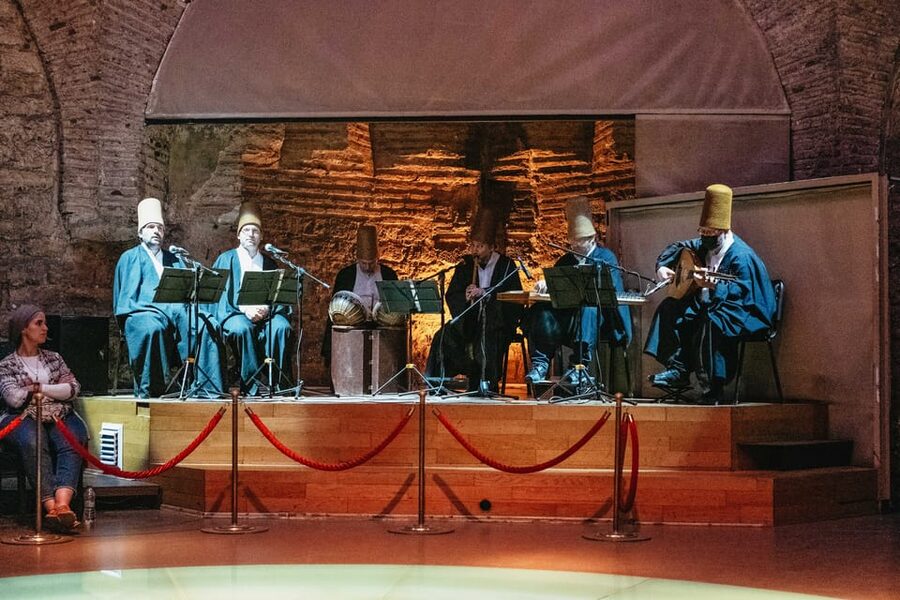
The ensemble may include vocalists, a ney, oud, kanun, and Ottoman-era percussion. The kanun is a zither-like instrument, while the oud is a short-necked lute. Together with the reed flute and voices, they create a sound that is more measured and meditative than a typical concert.
The music uses traditional Turkish modes and includes both composed passages and instrumental improvisation. The ney is especially important to the mood. Its breathy sound can feel almost human, with long notes that seem to hover in the stone room.
You are asked to remain quiet from the beginning. Turn off your phone, avoid conversation, and save coughing or movement for a natural pause if possible. The old bathhouse carries sound well, so even a small distraction can travel through the room.
This strict quiet may surprise you. There is no applause during the ceremony, and photography is forbidden. Some people may miss having a souvenir photo, but the rule also protects the atmosphere. You can give the ritual your full attention instead of watching it through a phone screen.
Understanding the seven parts of the Sema ceremony
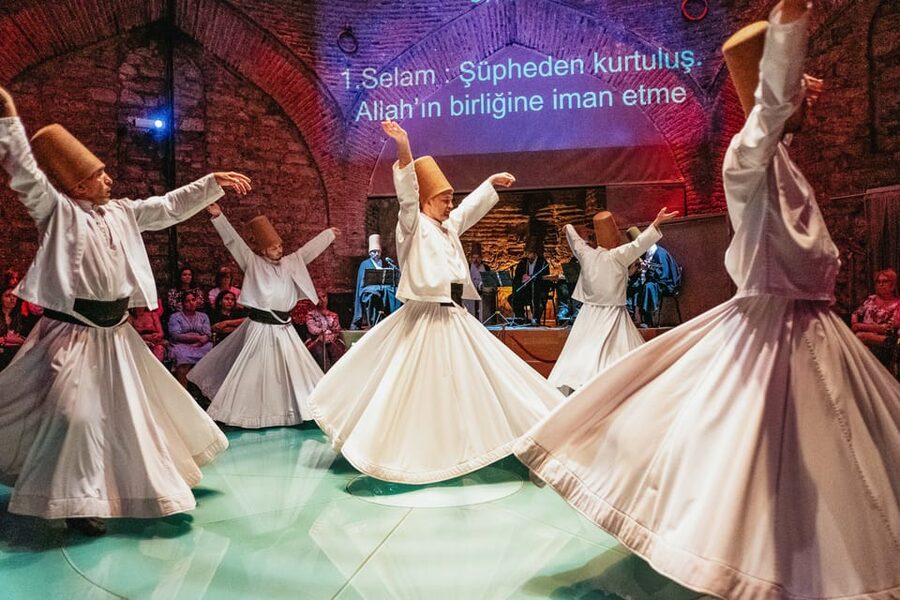
Once the musicians have established the mood, the dervishes and sheikh take their places. The ceremony includes praise for the Prophet Mohammed, followed by the drum’s entrance and the seven-part Sema.
The ceremony is not built like a modern dance show, with a plot, bright effects, or spoken explanations between sections. Its structure is formal and devotional. The dervishes move through repeated stages, and each part carries spiritual meaning.
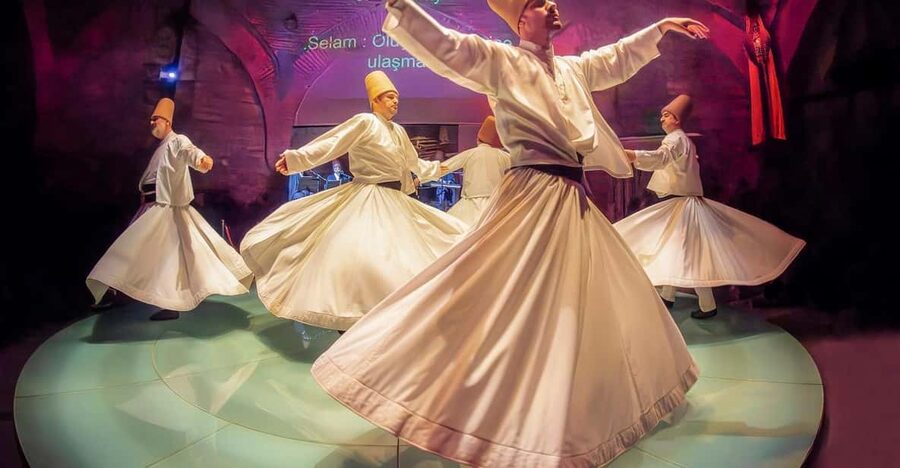
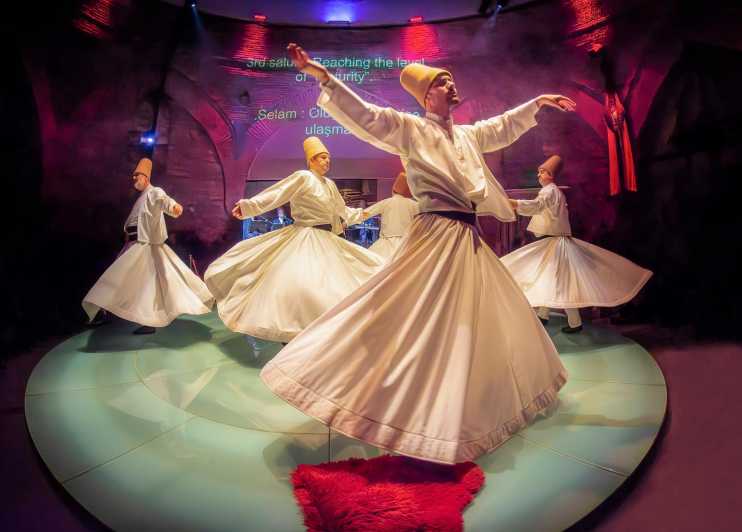
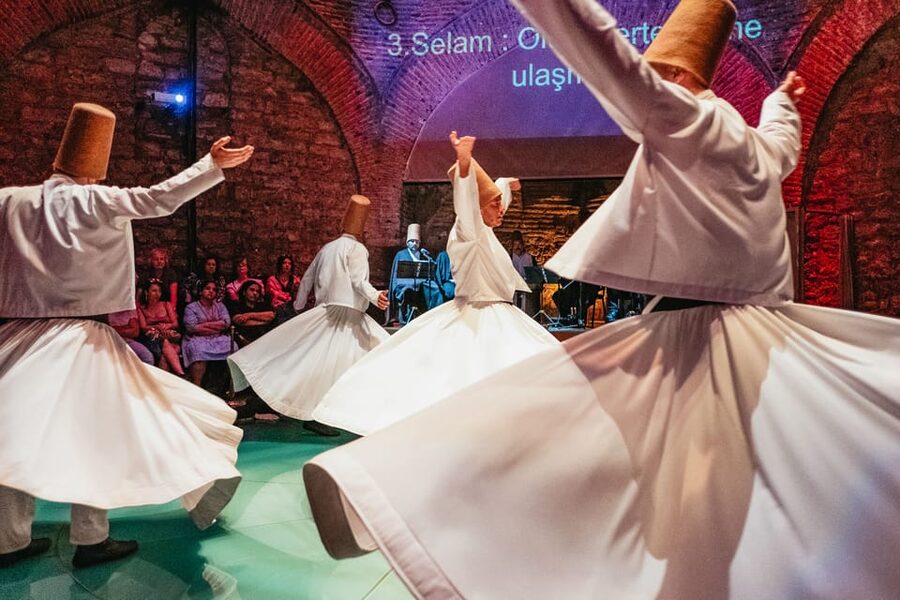
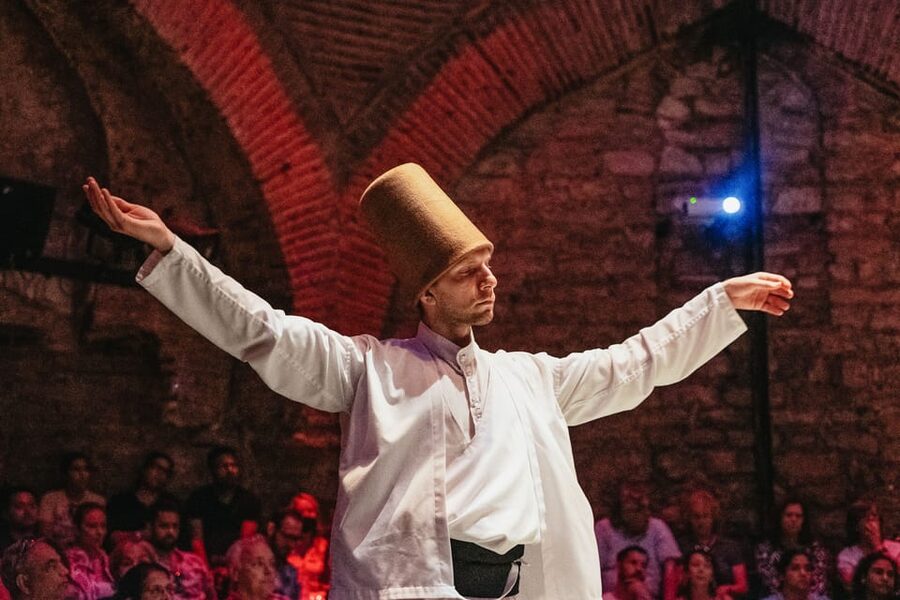
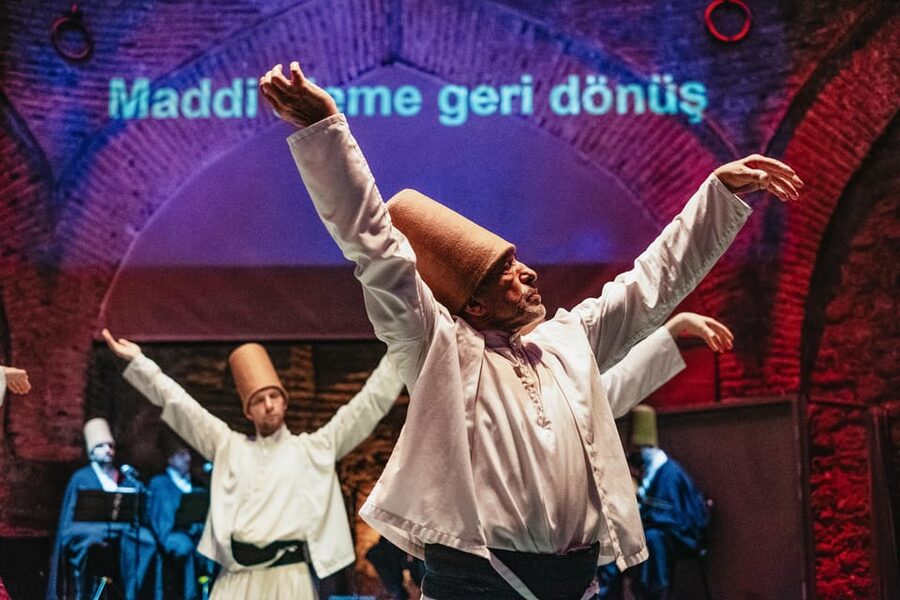
The most familiar image is the whirling itself. The dervishes extend one hand upward and the other downward, turning around the room while also rotating on their own axis. The movement requires control, balance, and years of practice. They can turn for long stretches, then stop with remarkable precision.
The visual effect is powerful, but the ceremony asks you to watch patiently. The whirling may last for more than 35 minutes across the different sections, and the movement can feel repetitive if you are looking only for entertainment. I found the repetition easier to appreciate when treated as prayer rather than choreography.
The dervishes wear distinctive white garments that open as they turn. Their spinning creates a calm, almost hypnotic rhythm. In the close setting, you may even feel air moving as the skirts pass nearby. That physical sense of motion adds something that photographs cannot convey.
The ending includes a Fâtiha for the souls of prophets, martyrs, and believers, followed by a prayer for the salvation of the country. This final section reinforces the fact that you are watching a religious ceremony, not simply a staged cultural display.
Same place, a different night out:
- Istanbul: Bosphorus Dinner Cruise & Show with Private Table
★ 4.8 · 62,058 reviews - Istanbul: Bosphorus Cruise with Dinner Show
★ 4.4 · 2,181 reviews - Bosphorus Dinner Cruise with Show and Private Table
★ 4.5 · 2,021 reviews - Istanbul: Hodjapasha Rhythm of The Dance Show
★ 4.7 · 1,451 reviews
Why the intimate setting works
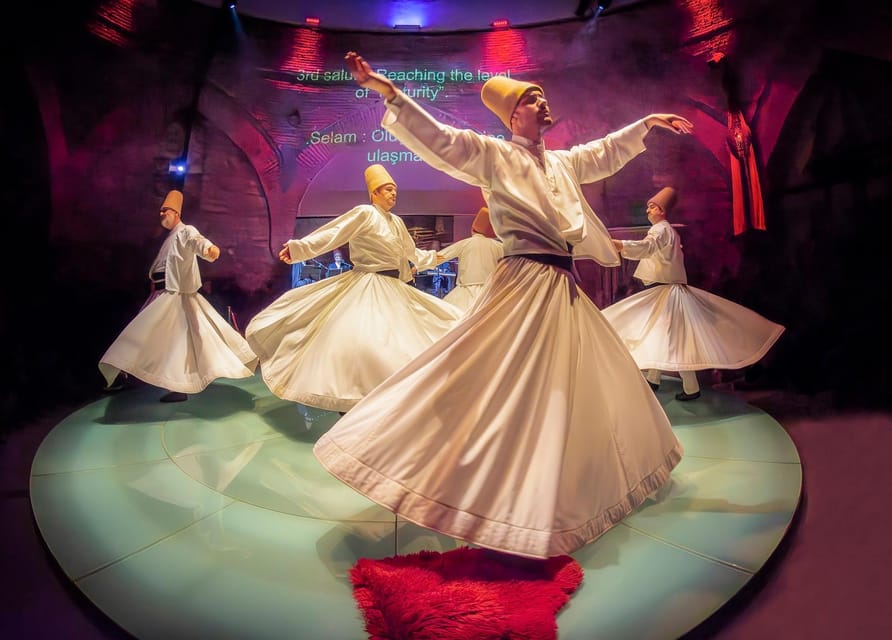
The HodjaPasha venue has the right scale for this performance. You are close enough to see the controlled footwork and the changing positions of the dervishes, yet the domed room gives the ceremony room to breathe.
The building’s age also changes the mood. A modern theater might make the event feel more like a concert. Here, the old bathhouse, stone surfaces, and central dome create a quieter setting that suits the music and prayer.
The center’s small size means seats are not all equally desirable, even though the performance area is visible from throughout the room. Seating is assigned on a first-booked, first-served basis. If you want the best chance of a favorable position, book early rather than assuming you can choose when you arrive.
Do not arrive 10 or 15 minutes after the start. Late arrivals can be distracting, especially once the room has gone silent. Early arrival gives you time to pass through the exhibition, find your place, and settle before the music begins.
What the $32 price includes
At $32 per person, this is not the cheapest evening activity in Istanbul. The ceremony lasts only one hour, and there is no meal, hotel pickup, or extended guided visit included.
The value depends on what you want. If you are paying for a fast-paced show with lots of spectacle, you may feel the price is high. If you want access to a historic venue, live traditional music, a cultural exhibition, and a complete Sema ceremony in one compact visit, the cost is easier to justify.
The ticket includes entry to the ceremony, a program booklet, and bottled drinking water. Complimentary drinks are also part of the experience, according to the activity details. The booklet and exhibition are useful additions because they help explain what you are seeing instead of leaving you with only the visual impression of spinning figures.
For a one-hour program, the lack of transport is not a serious weakness. The center is central and close to public transportation, so you can easily pair it with other sights in Sultanahmet or Sirkeci. The experience works well as an evening cultural stop rather than a full-day outing.
Free cancellation is available up to 24 hours before the start time, and you can reserve now and pay later. Those options are useful if your Istanbul schedule is still changing.
Who will appreciate this ceremony most
I would choose this experience if you are curious about Sufism, Islamic devotional practice, Ottoman culture, or traditional Turkish music. It is also a good choice if you want something quieter after a day of mosques, bazaars, and crowded streets.
You do not need to be religious to value the ceremony. The program offers a window into a spiritual tradition that is often reduced to the familiar image of spinning robes. Here, you see the music, prayer, movement, and setting as parts of one practice.
It is less suitable for young children, restless groups, or anyone who wants audience interaction. You must sit quietly, avoid applause, and keep your camera away. The ceremony rewards attention, not casual drop-in sightseeing.
The experience can also feel limited if your main interest is dance technique. You will see impressive physical control, but the spinning is not presented as a series of tricks. The meaning comes from the repetition and ritual order.
Practical advice for a respectful visit
Plan to arrive early enough to read the exhibition and take your seat without rushing. The foyer can answer many basic questions, and it gives you a clearer frame for the ceremony.
Wear something comfortable for sitting. The chairs may be close together and are not praised for comfort, so the hour can feel long if you are sensitive to cramped seating.
Keep your phone switched off rather than merely silenced. Photography and video are not allowed, and talking or applause can interrupt the ritual. A cough drop or water may be sensible if you often cough, since the room is quiet and the music includes delicate ney passages.
Think of the event as a religious observance open for respectful viewing. That mindset makes the rules feel reasonable and helps you understand why the program does not pause to explain every action.
Should you book the HodjaPasha Sema ceremony?
Book it if you want a calm, focused encounter with Turkish music and Mevlevi tradition in a historic setting. The strongest elements are the old bathhouse, the live ensemble, the helpful exhibition, and the controlled, deeply serious performance by the dervishes.
Skip it if you need a lively show, comfortable spacious seating, or plenty of explanation during the event. The whirling can feel repetitive, and one hour of silence is not for everyone.
For most culturally curious visitors, I think it is a worthwhile Istanbul stop, especially when you arrive early and treat it as a ceremony rather than a tourist spectacle. At $32, it offers a compact and distinctive experience, with enough historical setting and musical quality to make the price reasonable.
FAQ
Where does the Mevlevi Sema ceremony take place?
It takes place at the HodjaPasha Culture Center, about 100 meters from the Sirkeci Tram Stop in central Istanbul.
How long does the experience last?
The ceremony lasts one hour.
What is included in the ticket?
The ticket includes the Mevlevi Sema ceremony, a program booklet, and bottled drinking water. Complimentary drinks are also provided during the experience.
Can I take photographs or videos?
No. Photography is not allowed inside, and photography and video are prohibited during the ceremony.
Can I applaud during the performance?
No. Talking, applause, and other disruptions are not permitted. The event is a solemn religious ceremony and requires silence.
Are children allowed?
Children under seven are not permitted to attend.
Is the venue wheelchair accessible?
The activity is not suitable for wheelchair users. The venue also includes stairs leading to the performance area.
How are seats assigned?
Seats are allocated according to booking order. Booking early gives you a better chance of receiving a preferred seat.
Can I cancel my booking?
You can cancel up to 24 hours in advance for a full refund. A reserve-now, pay-later option is also available.
More Museums in Istanbul
- Seville: Puro Flamenco Show with Optional Museum Ticket
★ 4.8 · 6,088 reviews - Museum of Broadway
★ 4.5 · 306 reviews - Rome: Gladiator Show and Museum Tickets
★ 4.5 · 237 reviews - New York City: Museum of Broadway Entry Ticket
★ 4.6 · 113 reviews
Just added around Istanbul
- Istanbul: Belly Dancing, Show, & Dinner at Sultana’s Ticket★ 3.8 · 71 reviews
- Istanbul: Legends Show – Live Storytelling by Hagia Sophia★ 4.5 · 9 reviews
- Istanbul: Whirling Dervish Show★ 5.0 · 2 reviews
- Istanbul: Dinner Cruise & Dance Shows with Private Table★ 4.9 · 15 reviews
- Istanbul: Magic of Bosphorus, Full Meal & Turkish Night Show★ 4.5 · 204 reviews
- Istanbul: Whirling Dervish Ceremony★ 5.0 · 3 reviews
- Istanbul: Bosphorus Tour With Whirling Dervish Show★ 3.7 · 31 reviews
- Istanbul City Sightseeing Tour & Turkish Dinner & Show★ 3.4 · 16 reviews
Istanbul Shows, compared.
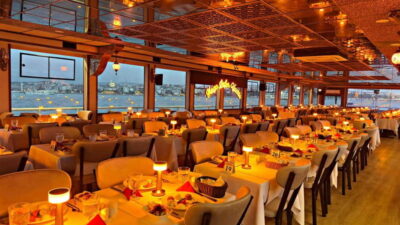
Bosphorus Dinner Cruise & Show with Private Table
Read our review →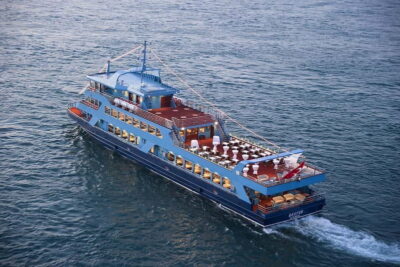
Bosphorus Dinner Cruise & Turkish Night Show
Read our review →
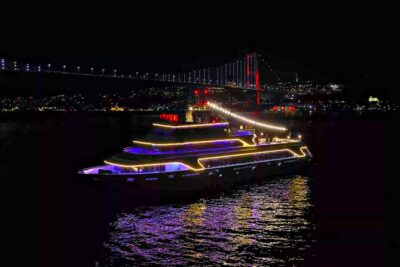
Bosphorus Dinner Cruise with Show and Private Table
Read our review →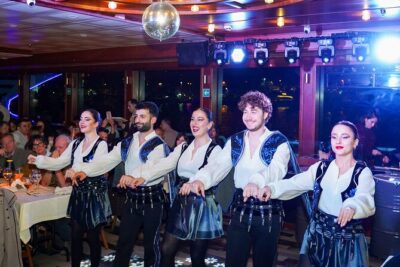
Bosphorus Dinner Cruise with Turkish Night Show
Read our review →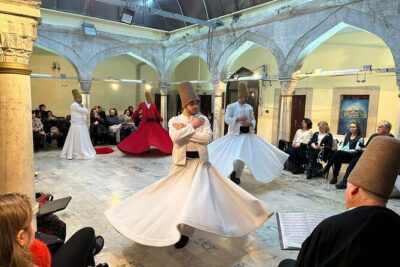
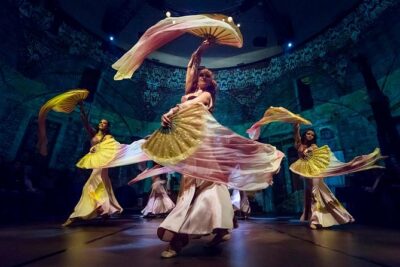
Browse the lists this show appears in