
Review · TURKEY
Pamukkale: Traditional Whirling Dervish Ceremony
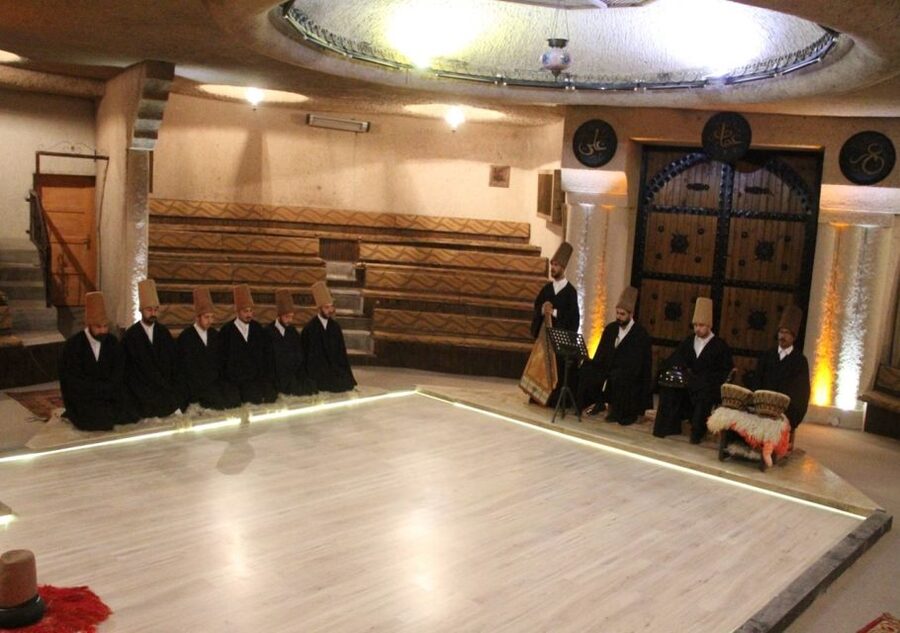
The heart of this Pamukkale evening is the sema ceremony, where Sufi dervishes pray, chant, and turn in slow, controlled circles. Their white costumes carry meaning: the cloak represents the grave, while the tall hat represents the gravestone. As the ceremony continues, removing the cloak suggests release from worldly ties.
I like two things here. First, the one-hour format gives you a clear look at the ceremony without taking up a whole day. Second, the $29 price includes hotel transfer, entrance, and full insurance, which makes this a simple add-on to a Pamukkale visit. The main consideration is that this is a religious and symbolic ceremony, not a fast-moving stage show, so you should expect a quiet, reflective hour rather than constant spectacle.
Key points
- A ceremony with 800 years of tradition: The performance presents the long-standing Sufi practice of prayer, music, chanting, and whirling.
- The Circling of Veled: This opening dance represents resurrection from the grave and gives the ceremony a clear symbolic center.
- Costumes that tell the story: The cloak and hat represent the grave and gravestone, while removing the cloak signals spiritual freedom.
- One focused hour: The short duration fits neatly before or after other Pamukkale plans.
- Hotel transfer included: You do not need to arrange separate transport for the ceremony.
- Wheelchair accessible: The activity is listed as accessible for wheelchair users.
What the Pamukkale dervish ceremony is really about
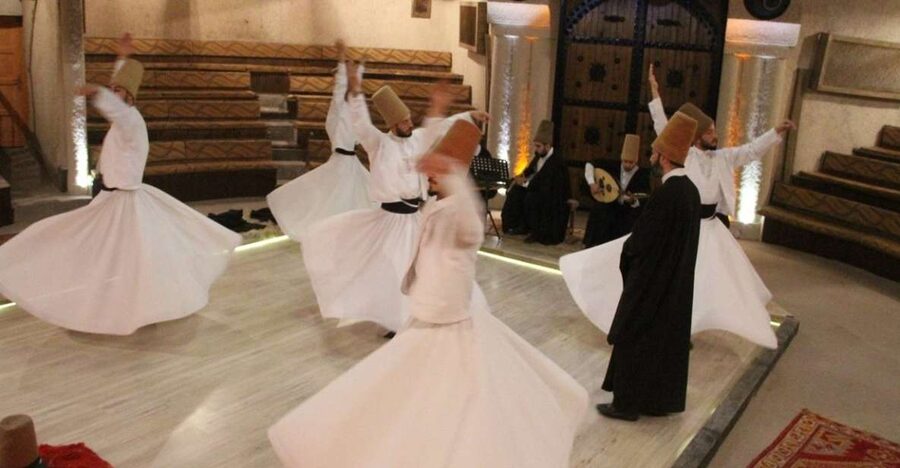
The semazens, or whirling dervishes, follow a Sufi Muslim tradition built around humility, discipline, and spiritual effort. Their goal is to leave behind the ego and move closer to God. The ceremony expresses that goal through prayer, music, movement, and carefully ordered gestures.
That context matters. You are not simply watching dancers spin in costume. Each movement has a religious meaning, and the calm pace is part of the point. The ceremony asks you to watch closely and let the repetition settle your attention.
The tradition also has a strong place in Turkish folklore. Dervishes are often linked with mysticism and miraculous powers because of their closeness to God. The formal ceremony, however, is better understood through its spiritual discipline than through the folklore surrounding it.
For me, that makes this a useful cultural experience after a day focused on Pamukkale’s famous white terraces. The terraces are natural and dramatic. The dervish ceremony offers something quieter, with the focus placed on belief, ritual, and human control.
More Cultural Shows in Turkey
- Istanbul Traditional Turkish Dinner and Dervish Experience
★ 5.0 · 490 reviews - Göreme: Dinner and Folk Show at a Cave Restaurant
★ 4.4 · 302 reviews - Bosphorus Dinner Cruise with Folklore Show & Belly Dancers
★ 5.0 · 259 reviews
Beginning with prayer and ordered movement
The program starts with a prayer. This immediately sets a different tone from a standard dance performance. The opening is not there simply to fill time. It establishes the religious purpose of the ceremony and prepares the semazens for the movements that follow.
The master dervish then indicates where each participant should stand. You will see that the performance follows a set order, rather than unfolding as an improvised show. Positions, gestures, and timing all matter.
This order is one reason the ceremony can feel calm. The participants are not trying to surprise you with new tricks every few minutes. They are carrying out a sequence that depends on control and concentration.
If you prefer performances with narration, rapid action, or a clear theatrical plot, you may find the opening slow. If you enjoy watching ritual and detail, the deliberate beginning gives you time to understand what is happening.
The Circling of Veled and its meaning
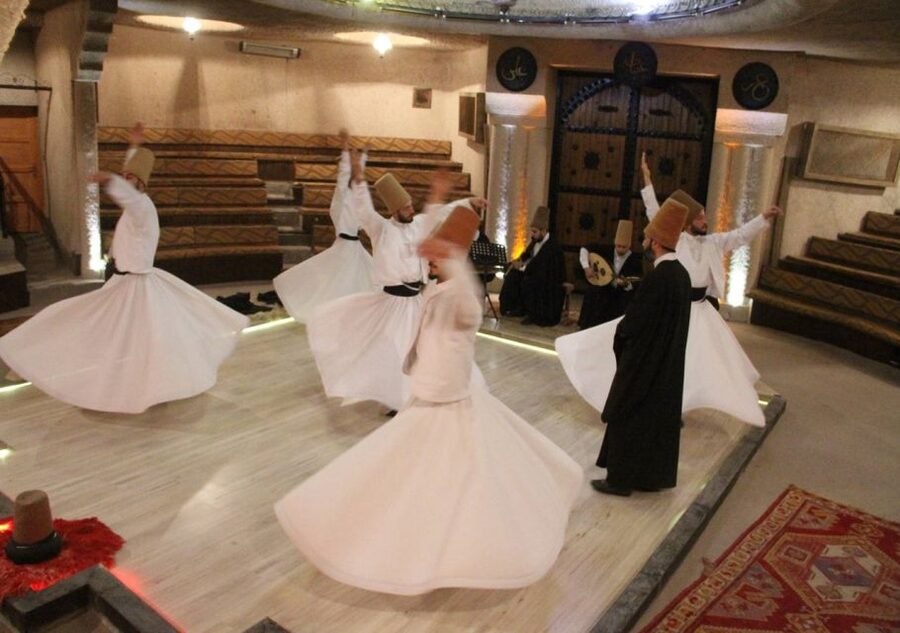
Once the dervishes take their positions, the Circling of Veled begins. This dance symbolizes resurrection from the grave. It is one of the clearest moments in the program because the movement connects directly to the ceremony’s ideas about death, rebirth, and spiritual change.
The circling is not presented as a stunt. The point is not how many turns someone can complete. The movement forms part of a path toward spiritual freedom, and the repeated turning helps express that path.
You may notice that the ceremony asks for patience. The meaning builds through repetition rather than through explanation alone. I recommend watching the position of the hands, the turning of the body, and the way the group moves as one instead of focusing only on the spinning.
The show is described as featuring chanting and music as well as dance. These parts work together to create the ceremony’s calm, inward mood. You might find the atmosphere relaxing, especially after a busy sightseeing day, though the effect will depend on your interest in spiritual performance.
Reading the white cloak and tall hat
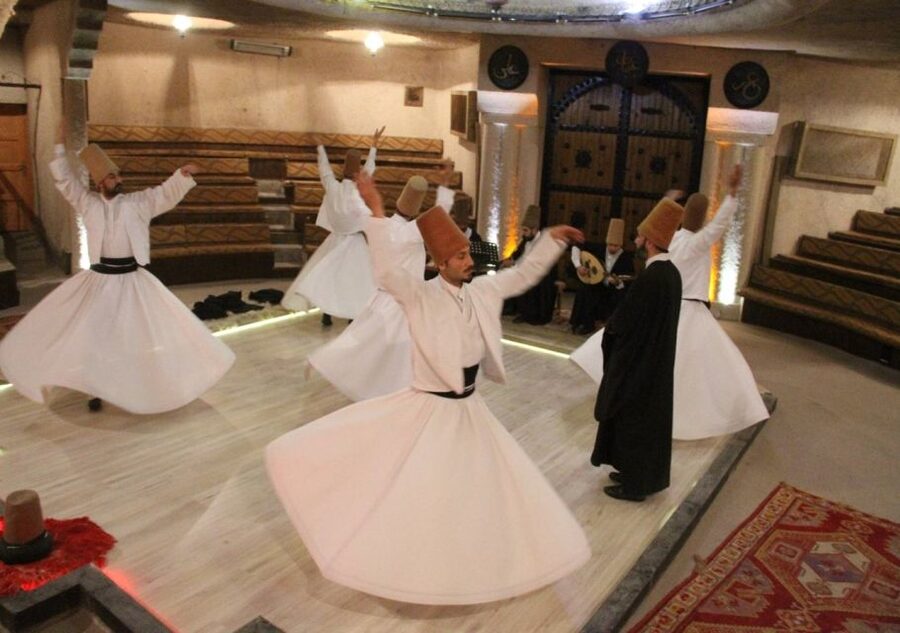
The clothing gives you a helpful way to follow the ceremony. The cloak represents the grave, and the tall hat symbolizes the gravestone. These are not random costume choices added for visual effect. They point to the ceremony’s view of the human body, death, and the search for a higher spiritual state.
As the performance continues, the dervishes gradually remove their cloaks. This represents reaching spiritual freedom. The change is simple, but it gives the ceremony a visible progression. You can see the movement from earthly attachment toward release.
I like this visual language because it helps you understand the ceremony without needing a long lecture. Even if you are new to Sufi traditions, the clothing and gestures give you several clear points to watch.
The costumes may also shape your expectations. The performance is not built around colorful sets or changing outfits. Its visual power comes from white garments, controlled movement, and the contrast between stillness and turning.
More Turkish Night Shows in Turkey:
- Istanbul: Bosphorus Dinner Cruise & Turkish Night Show
★ 4.8 · 12,954 reviews - Istanbul: Hodjapasha Whirling Dervishes Show & Exhibition
★ 4.4 · 4,790 reviews - Istanbul: Bosphorus Dinner Cruise with Turkish Night Show
★ 4.6 · 1,950 reviews - Istanbul: Whirling Dervishes Ceremony and Mevlevi Sema
★ 4.3 · 1,694 reviews
Why the whirling requires serious training
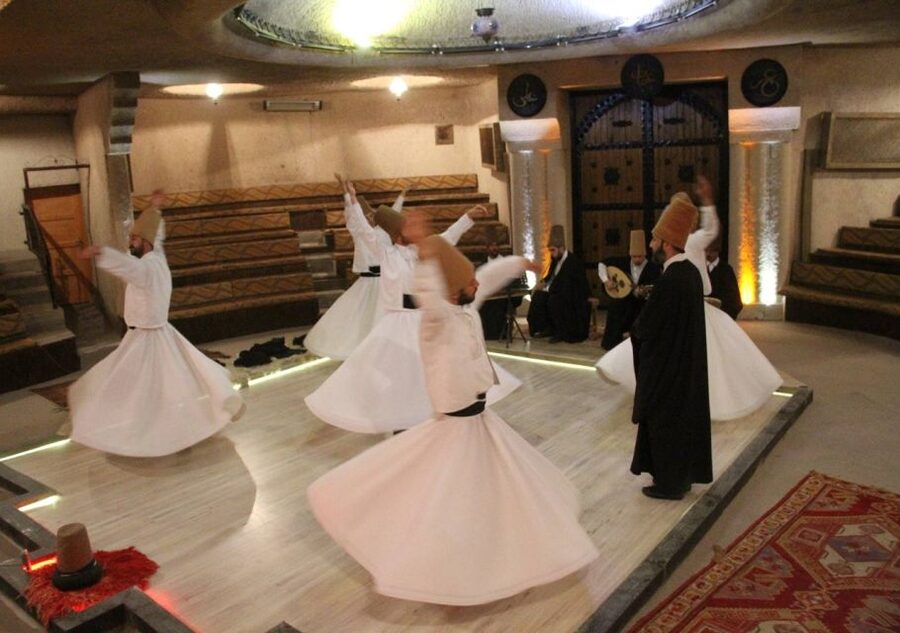
The dervishes follow an intense physical and spiritual practice. The ceremony combines balance, concentration, repeated movement, prayer, and religious discipline. What looks effortless from the audience requires preparation.
That preparation is important when you assess the performance. The whirling may appear simple at first, but maintaining control while turning takes physical skill. The semazens also need to keep their movements within the structure of the ritual rather than treating the ceremony as a personal display.
You can watch for that control during the performance. Notice how the turning remains measured and how the ceremony keeps its sense of order. The aim is not simply to make the audience gasp. It is to express a spiritual journey through the body.
The program’s emphasis on austerity and poverty also explains why the show may feel restrained. The dervish ideal is tied to abandoning the ego and reducing attachment to worldly concerns. The ceremony reflects that ideal through simplicity and discipline.
A one-hour cultural stop in Pamukkale
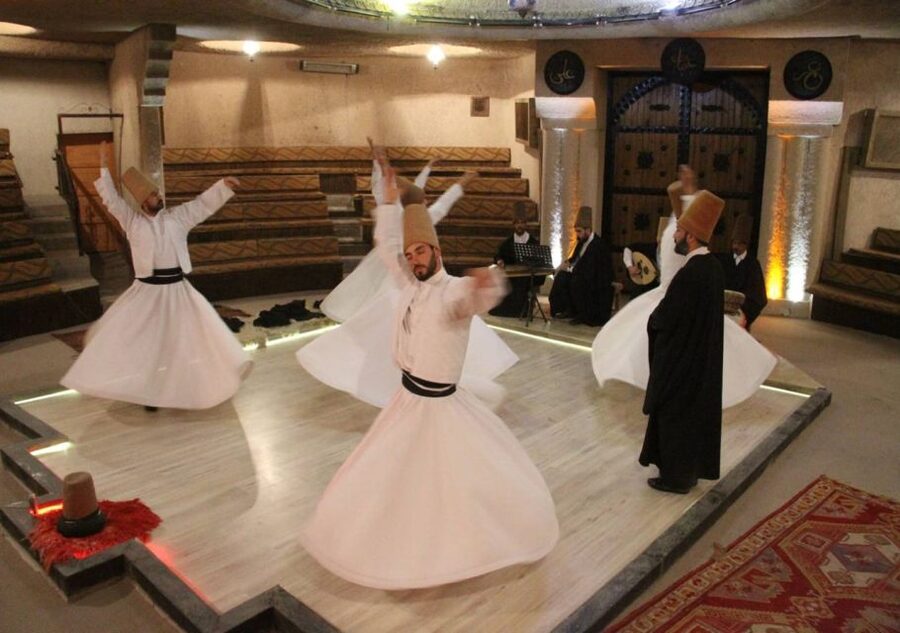
At around one hour, this is an easy activity to fit into a day in the Aegean Coast Region. It is long enough to present the major stages of the ceremony, but short enough that it will not dominate your entire schedule.
The timing works especially well if you want something beyond Pamukkale’s natural sights. You can spend your daylight hours with the terraces and other plans, then use this ceremony for a cultural change of pace. The supplied schedule does not specify the exact starting time, so you need to check availability for the date you want.
Free hotel transfer is included. That adds real value because you do not need to arrange a separate ride to the ceremony. The exact pickup details are not provided, so check the meeting instructions when booking and allow time for the transfer.
The activity is listed as wheelchair accessible. That is useful if access is a major concern, but you should still confirm the practical transfer and seating details for your own needs, since those specifics are not given.
What the $29 price covers
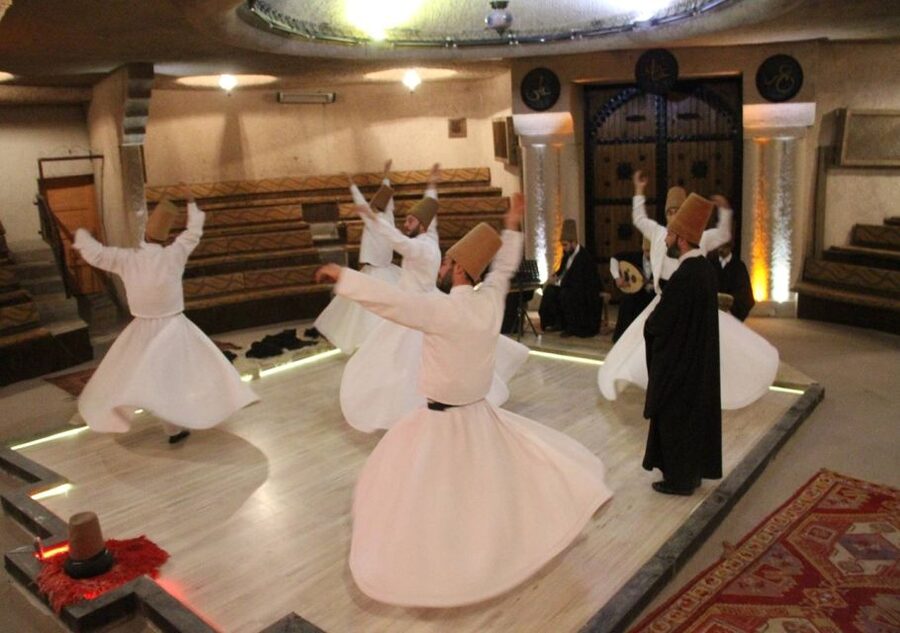
The price is $29 per person. For a one-hour cultural program, that is a reasonable cost, especially because the package includes hotel transfer, entrance, and full insurance.
The transfer is the biggest practical benefit. A low ticket price can lose its value if you must pay separately for transport, arrange a taxi, or spend time finding the venue. Here, the included hotel transfer makes the cost easier to judge.
Entrance is also included, so there is no separate admission charge listed for the ceremony. Personal spending is not included, and the information does not specify any extras. Plan to pay for your own incidental expenses if needed.
I would not choose this program solely because it is inexpensive. The value depends on your interest in Sufi ceremony and symbolic performance. If you want an hour of music, prayer, chanting, and traditional movement, the price is sensible. If you want a large-scale dance production packed with action, you may feel the hour is less rewarding.
Who will enjoy this most
This ceremony suits you if you like cultural activities that explain how people express faith through music and movement. It is also a good choice if you want a quiet evening activity after sightseeing and prefer a focused one-hour program.
You will likely appreciate it if you enjoy symbolism. The prayer, the master dervish’s instructions, the Circling of Veled, and the changing costume all give you details to follow.
Families and mixed-age groups may find the short duration useful, though the material is spiritual and the pacing is calm. Anyone looking for a loud, comic, or highly theatrical show should set different expectations.
It is also a practical choice for a first introduction to whirling dervishes. The ceremony presents the main stages in a compact format, with English-language instruction listed for the activity. Since no individual instructor name is provided, you should not expect a named personal guide to lead you through the event.
What may not suit you
The biggest drawback is the gap between a religious ceremony and a tourist performance. The activity is presented for visitors, but its subject is still a spiritual practice. You should approach it with respect and avoid treating the whirling as a novelty act.
The pace may feel too slow if you need constant visual change. The ceremony develops through prayer, positioning, chant, and repeated turning. Those elements are central, but they do not create the same kind of excitement as a concert or theatrical dance show.
The description also gives no details about venue layout, seating arrangement, audience size, or the exact transfer route. That does not make the activity unsuitable, but it means you should check those points if they matter to your decision.
How to watch with more understanding
Before the ceremony begins, keep three ideas in mind: ego, death, and spiritual freedom. The dervishes seek to leave the ego behind. The cloak and hat refer to the grave and gravestone. Removing the cloak represents a release from earthly limits.
Then watch the order of the program. First comes prayer. Next, the master dervish directs the positions. The Circling of Veled follows, and the semazens continue through the ceremony with music, chant, and whirling.
You do not need specialist knowledge to follow it. Simply watch how stillness gives way to motion, how the group keeps its form, and how the costume changes support the spiritual meaning.
I also suggest resisting the urge to judge the performance only by the physical act of spinning. The turning is the most famous feature, but the ceremony includes much more than that. Its power comes from the combination of prayer, movement, music, costume, and discipline.
Booking flexibility and practical planning
The activity allows free cancellation up to 24 hours in advance for a full refund. That gives you room to adjust plans if your Pamukkale schedule changes.
You can also reserve now and pay later. This is helpful if you are arranging several activities and want to hold a place without paying immediately.
The listed language is English, and the activity is wheelchair accessible. Duration is approximately one hour. Starting times depend on availability, so confirm the time before you build the rest of your day around it.
Because hotel transfer is included, provide the correct hotel details when arranging the activity. The supplied information does not specify the pickup window or return arrangements, so those are sensible points to confirm.
Should you book the Pamukkale dervish ceremony?
Book it if you want a short, structured introduction to Sufi ceremony and appreciate performances built on symbolism, prayer, music, and controlled movement. The included hotel transfer and entrance make $29 a fair price, and the one-hour format is easy to fit into a Pamukkale visit.
Skip it if you want a fast, purely entertaining dance show or if you are unlikely to enjoy a quiet religious performance. This is best approached with patience and respect.
My practical call is simple: if your Pamukkale plans already cover the natural sights, this ceremony adds a different side of Turkish culture without demanding a full evening. Go for the meaning as much as the whirling.
FAQ
How long does the Pamukkale dervish ceremony last?
The ceremony lasts approximately one hour.
How much does the activity cost?
The price is $29 per person.
What is included in the price?
The price includes free hotel transfer, the entrance fee, and full insurance.
Is hotel transfer included?
Yes. Free hotel transfer is included.
What happens during the ceremony?
The program begins with a prayer. The master dervish then directs the semazens to their positions, followed by the Circling of Veled, chanting, music, and whirling. The costume symbolism is also part of the presentation.
What does the Circling of Veled represent?
The Circling of Veled symbolizes resurrection from the grave.
What do the dervishes’ clothes symbolize?
The cloak represents the grave, and the tall hat represents the gravestone. Removing the cloak represents reaching spiritual freedom.
Is the activity wheelchair accessible?
Yes. The activity is listed as wheelchair accessible.
Can I cancel for a refund?
Yes. You can cancel up to 24 hours in advance for a full refund.
More Traditional and Cultural Shows in Turkey
- Istanbul: Traditional Turkish Dinner and Dervish Experience
★ 5.0 · 109 reviews - Mystical Whirling Dervish Ceremony at Motif Cultural Centre
★ 4.6 · 82 reviews - Istanbul: Traditional Whirling Dervishes Near Hagia Sophia
★ 4.1 · 82 reviews - Turkish Dance Show at Hodjapasha Cultural Centre in Istanbul
★ 4.7 · 56 reviews
Just added around Turkey
- Whirling Dervishes Show in Pamukkale with Hotel Pick Up★ 4.5 · 16 reviews
- Whirling Dervish show in Cappadocia★ 5.0 · 15 reviews
- Cappadocia Whirling Dervishes ceremony w/optional hotel transfer★ 4.0 · 4 reviews
- Dervish show in Cappadocia★ 4.5 · 8 reviews
- Turkish night show with dinner and unlimited free alcohol★ 3.5 · 22 reviews
- Cappadocia Turkish Night Show, Dinner & Unlimited Drinks & Pickup★ 5.0 · 37 reviews
- Traditional whirling Dervishes Dance Show in Cappadocia★ 5.0 · 5 reviews
- Turkish Night Show in Cave Restaurant with Dinner and Transfer★ 3.5 · 2 reviews
Turkey Shows, compared.
Bosphorus Dinner Cruise & Show with Private Table
Read our review →
Bosphorus Dinner Cruise & Turkish Night Show
Read our review →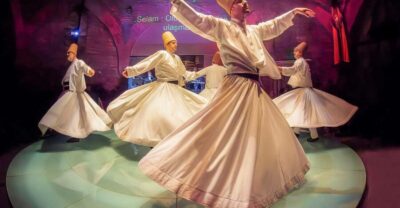
Hodjapasha Whirling Dervishes Show & Exhibition
Read our review →
Bosphorus Dinner Cruise with Show and Private Table
Read our review →
Bosphorus Dinner Cruise with Turkish Night Show
Read our review →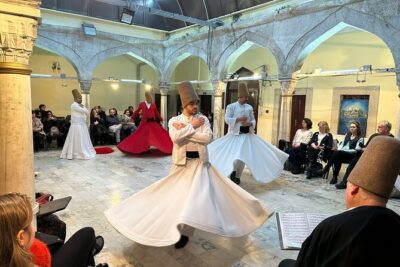
Browse the lists this show appears in