
Review · OSAKA
Osaka: Noh Performance with English Subtitles and Workshop
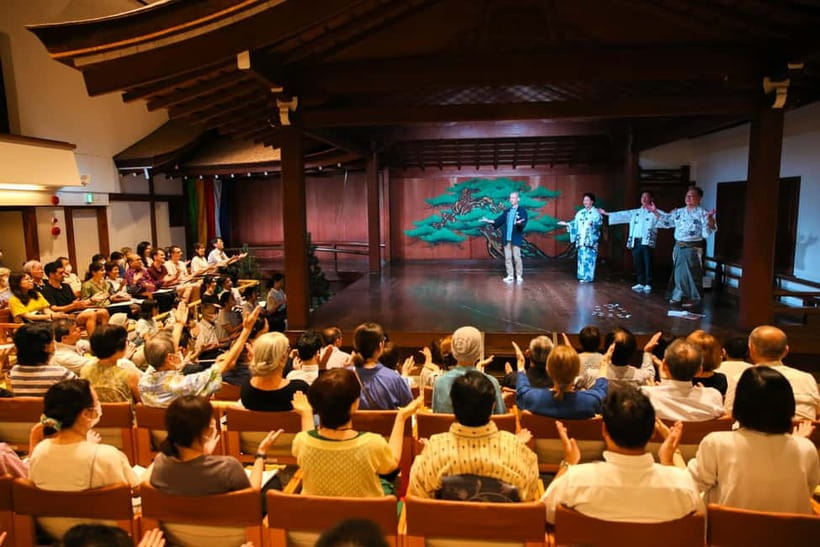
Osaka’s Yamamoto Noh Theater gives you a rare chance to see traditional Japanese theater without needing Japanese. A short explanation sets up the performance, English subtitles help you follow the story, and the workshop afterward lets you handle masks, costumes, and instruments rather than simply watching from your seat.
I like the small, focused two-hour format and the theater’s setting in a former samurai residence area near Osaka Castle. I also like that the staff make room for questions, with an English translator available and the owner answering more than 10 audience questions after one performance. The main drawback is that Noh is slow and highly stylized, so anyone seeking fast action may find the hour-long play demanding.
Key points to know before you book
- English subtitles make Noh approachable: You can follow the performance even if you do not speak Japanese.
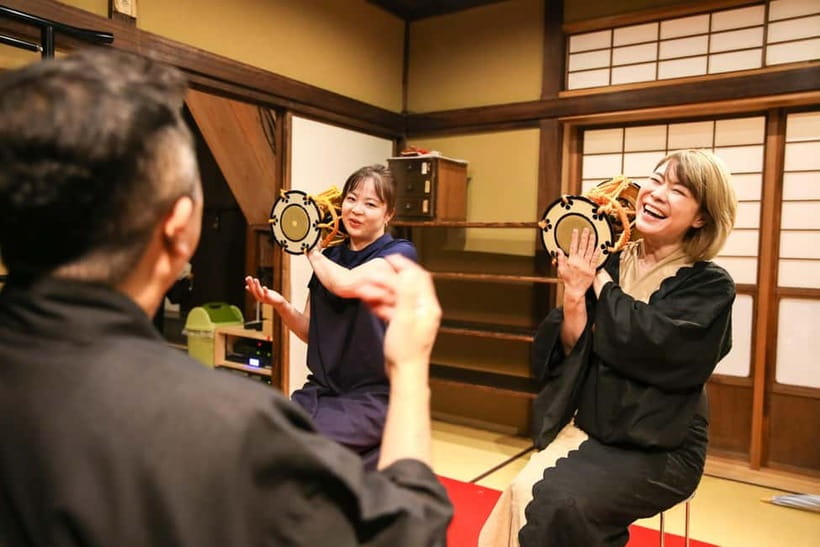
- The workshop is hands-on: Try Noh masks, costumes, and musical instruments after the show.
- The theater dates to 1927: It is Osaka’s oldest Noh theater and became a Japanese Tangible Heritage site in 2006.
- Osaka Castle is nearby: The theater is about a 10-minute walk from the castle grounds.
- Expect a serious art form: The performance is designed for beginners, but Noh uses deliberate movement and a measured pace.
- The price is modest: At $32 per person for two hours, this is a useful cultural stop for the cost.
Why this Noh performance works for first-time viewers
Noh can be hard to approach on your own. The masks conceal much of the actor’s face, the movement is controlled, and the stories draw from Japanese tradition. Without context, you may admire the look of it while missing what is happening.
This experience deals with that problem from the start. Before the performance, you receive an explanation of Noh and guidance on what to watch. That short introduction matters because it gives you a framework for the music, gestures, masks, and stage action.
You also get English subtitles during the performance. They do not turn Noh into ordinary theater, and you still need to watch the actors and listen to the instruments, but they give you the basic story and meaning. For a first visit, that support is a major advantage.
The format is aimed at beginners rather than specialists. You do not need to arrive with background knowledge of Japanese theater. You only need patience and an interest in seeing an art form that works through suggestion, ritual, and careful motion instead of rapid plot changes.
A few more shows around Japan worth a look
- Tokyo: Family Sumo Workshop & Live Wrestling Show with Lunch
★ 4.9 · 99 reviews - Tokyo: Taishu Engeki Show with Kimono and Sword Lesson
★ 5.0 · 12 reviews - Kyoto: Japanese Koto Musical Instrument Class
★ 4.9 · 11 reviews
Inside Yamamoto Noh Theater, Osaka’s oldest Noh venue
Yamamoto Noh Theater was established in 1927. It is identified as the oldest Noh theater in Osaka and was registered as a Japanese Tangible Heritage site in 2006.
That setting gives the performance more weight than a modern entertainment venue would. You are seeing Noh in a theater with a long connection to the art, in an area once associated with samurai residences. The building itself is part of the visit, even though the main event is the performance.
The theater is about a 10-minute walk from Osaka Castle. That makes it easy to pair with a visit to the castle, but you should allow enough time to arrive calmly. Noh is a formal art, and rushing in after a long castle visit would work against the mood.
The location also gives you a useful way to plan your day. You can visit Osaka Castle first, then walk to the theater, or attend the performance and explore the castle area afterward. The exact starting time varies, so check availability when booking before fixing the rest of your schedule.
The opening explanation gives you a way into Noh
The experience begins with an explanation before the performance. This is one of the most valuable parts for someone who has never seen Noh.
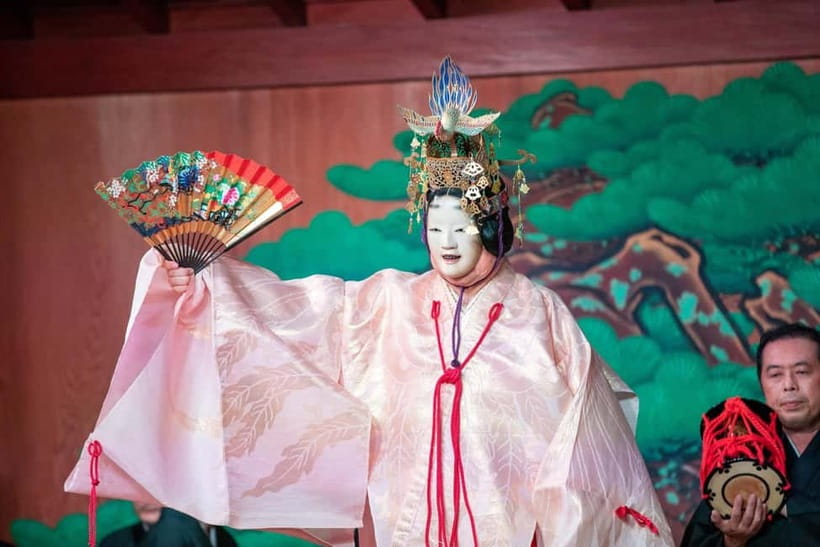
You can expect an introduction to the art form and the Yamamoto Noh Theater. The goal is not simply to give dates. It helps you understand the role of the masks, costumes, movement, music, and stage presentation before the play begins.
That preparation changes the way you watch. A small gesture may carry meaning. A masked figure may represent a character whose emotions are shown through posture and movement rather than facial expression. The music is not background decoration, either. It is part of the structure and mood of the piece.
The explanation also gives you permission to watch slowly. You are not expected to understand every cultural reference at once. Instead, you can focus on the performance’s shapes, sounds, and rhythm while using the English subtitles to keep track of the story.
An English-speaking host or greeter is available, and the program is offered in English and Japanese. One performance also included a human translator who helped with questions after the play. That kind of direct support is useful because it lets you ask about points that subtitles cannot fully explain.
The performance: a one-hour lesson in patience
The central play lasts about one hour, according to the experience details. That is long enough to give you a real sense of Noh, but short enough to fit into a busy Osaka schedule.
You should not expect a conventional stage show with constant movement or quick scene changes. Noh is deliberate. Actors use controlled gestures, formal movement, masks, and music to build the performance. The pace asks you to pay attention to small changes.
This is where the English subtitles help most. You can glance at the translated text when you need to understand the action, then return your attention to the actors. If you try to read every word continuously, you may miss the visual details, so use the subtitles as a guide rather than the entire show.
The musical side of Noh is important, too. The performance uses traditional instruments, and the sound helps establish the rhythm and atmosphere. One useful point raised about the workshop is that visitors may want to see more than one instrument up close, since the musical tools are easy to hear during the performance but harder to understand from a seat.
For me, the appeal is the chance to see how much a performer can express with restraint. If you like theater, ritual, costume, or Japanese culture, the concentration of Noh can be rewarding. If you prefer a lively show built around dialogue and action, you may need to adjust your expectations.
Same place, a different night out:
- Mt Fuji & Hakone Cruise, Drum Show Bullet Train 1 Day from Tokyo
★ 4.0 · 7,413 reviews - Tokyo: Sumo Show Experience with Chicken Hot Pot and a Photo
★ 4.8 · 6,678 reviews - Tokyo: Sumo Show and Dining Experience
★ 4.8 · 2,742 reviews - Tokyo: Japanese Dance Cabaret Theater Asakusa-Kaguwa Ticket
★ 4.8 · 2,270 reviews
The workshop turns watching into participation
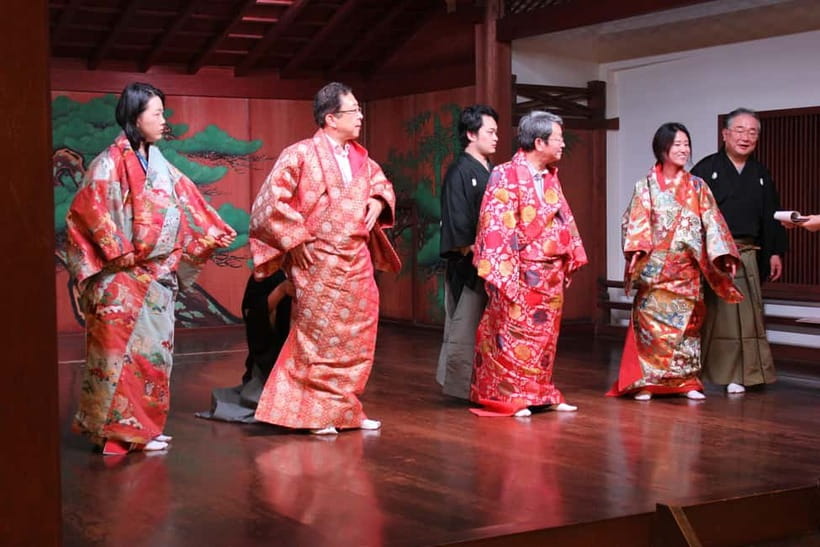
After the play, the experience becomes more relaxed and practical. You can try on Noh masks and costumes, and you can explore the musical instruments used in the performance.
This is a strong feature because it answers questions that naturally arise during the show. How does a mask change the actor’s expression? What does the costume feel like? How are the instruments held? The workshop lets you move from looking at these objects to examining them directly.
Trying on a mask also gives you a better idea of the skill involved in Noh. A mask covers much of the face, so the actor must communicate through posture, head angle, and carefully controlled movement. Even a simple hands-on demonstration can help you see the performance with sharper eyes.
The costume portion adds another layer. Noh clothing is not just decorative. Its shape and weight affect how the performer moves and how the character appears on stage. The chance to try it gives the art a physical quality that a subtitle alone cannot provide.
You can also look more closely at the instruments. The program includes the chance to explore them, not just hear them during the play. One practical limitation is that the available instrument experience may not give equal time to every instrument, so do not expect a full music lesson. Think of it as an introduction connected to the performance you have just watched.
Questions and conversation after the play
The program leaves room for audience questions, which adds real value for people who want more than a brief stage visit.
At one performance, the theater’s owner answered more than 10 questions after the one-hour play. An English translator helped communicate with people who did not speak Japanese. That tells you something useful about the tone of the event: it is not only a show followed by a quick exit.
Questions can help clarify matters that are difficult to explain in a short introduction. You might want to know why the actors move in a certain way, how masks affect the performance, or how the theater preserves Noh in a modern city. The supplied details do not promise a fixed question-and-answer format at every session, so treat it as a valuable possibility rather than a guaranteed private discussion.
The presence of an English translator is especially helpful. English subtitles cover the performance, but a person can respond to a specific question in a way that written text cannot. If something catches your attention, remember it during the play so you can ask about it afterward.
A $32 cultural experience near Osaka Castle
At $32 per person, this is reasonably priced for a two-hour program that includes the performance, the introductory explanation, subtitles, and the workshop.
The value is not based on duration alone. You are paying for access to a historic theater, a formal Noh performance, language support, and direct contact with masks, costumes, and instruments. Many cultural activities give you only a view from the audience. This one adds context and a hands-on element.
The price is easiest to justify if you already plan to visit Osaka Castle. The short walk between the two places means you can combine a major sightseeing stop with a specialized cultural experience without spending much extra time on transport.
The value is less certain if you are unsure about slow theater. Noh is not a casual stage attraction that works for everyone. You will get more from the $32 ticket if you are willing to watch closely and accept a measured pace.
The high overall rating of 4.9 from eight ratings suggests that the format has worked very well for the people who chose it. Still, the number of ratings is small, so I would use that figure as an encouraging sign, not as a promise that every visitor will love the style.
Who should book this experience
I would recommend this for adults and older children who want a clear introduction to an important Japanese art form. It suits you especially well if you enjoy theater, history, traditional music, costume, or unusual cultural activities.
It is also a good choice if you have already seen the major Osaka sights and want something less routine. The theater’s location near Osaka Castle makes it easy to add to a sightseeing day, while the two-hour length keeps the commitment manageable.
The experience may be less suitable if you want a fast-paced performance or a show that explains every cultural detail in depth. The introduction and subtitles make Noh easier to follow, but they do not change its basic character.
Children under seven are not permitted. For older children, consider attention span and interest in theater before booking. The masks and costumes may appeal to them, but the one-hour performance requires quiet focus.
The theater is wheelchair accessible, which is useful for visitors who need step-free access. English and Japanese are supported, and the host or greeter can assist in those languages.
How to fit it into an Osaka day
The simplest plan is to pair the performance with Osaka Castle. The theater is around a 10-minute walk from the castle, so you can organize the two visits in either order.
If you visit the castle first, leave enough energy for the performance. Osaka Castle can take more time and walking than expected, and Noh is best approached when you are not hurrying or worn out.
If the performance starts earlier, visit the theater first and then continue toward the castle area. This can give you a cultural introduction before a larger sightseeing stop. Check the available start time before booking, since the schedule is not fixed in the information provided.
The program lasts two hours, but allow a little extra time around the start and finish. You will want time to find the theater, settle in, and take part in the workshop without watching the clock.
Photography inside is not allowed, and video recording is also prohibited. That rule means you should plan to experience the performance directly rather than trying to document it. Keep your phone away during the show and save your memories for afterward, outside the theater if permitted.
Final decision: should you book Yamamoto Noh Theater?
Book it if you want an accessible introduction to Noh, value historic settings, and like the idea of trying masks, costumes, and instruments after the performance. The English subtitles and opening explanation remove much of the usual barrier, while the nearby Osaka Castle makes the location practical.
Skip it if you need constant action or dislike formal theater with a slow rhythm. Noh asks for attention, but the reward is a close look at a Japanese art form that few short Osaka activities explain so clearly.
For $32, I see this as a strong cultural choice for curious adults, older children, and anyone who wants more than another standard sightseeing stop. The hands-on workshop and chance to ask questions make it more useful than a performance alone.
FAQ
How long does the Osaka Noh experience last?
The activity lasts two hours. The performance itself is about one hour, with an explanation before it and a workshop afterward.
Are English subtitles provided?
Yes. English subtitles are provided during the Noh performance, making it easier for people who do not speak Japanese to follow the story.
Is there an explanation before the performance?
Yes. You receive an explanation before the show to help you understand Noh and what to watch for during the performance.
Can I try on Noh masks and costumes?
Yes. After the performance, you can try on Noh masks and costumes and explore musical instruments used in the show.
Where is Yamamoto Noh Theater located?
The theater is in Osaka’s former samurai residence area, about a 10-minute walk from Osaka Castle.
Is the theater accessible by wheelchair?
Yes. The activity is listed as wheelchair accessible.
Are children allowed to attend?
Children under seven are not allowed to attend. The information does not specify an upper age limit.
Can I take photographs or record video inside?
No. Photography inside and video recording are not allowed.
Just added around Japan
- Authentic Kabuki Transformation & Mini Performance at Aioiza Gifu★ 4.5 · 3 reviews
- Kabuki Talk★ 5.0 · 10 reviews
- Tokyo: English Standup Comedy Night★ 5.0 · 4 reviews
- Experience the Asakusa Kabuki Opera Show!★ 5.0 · 99 reviews
- Tokyo: Taishu Engeki Show with Kimono and Sword Lesson★ 5.0 · 12 reviews
- Tokyo: Traditional Geisha Experience Show & Japanese Dinner★ 4.2 · 59 reviews
- Tokyo: Rainbow Bridge Day Cruise Show Unlimited Soft Drinks★ 4.5 · 86 reviews
- Tokyo: Taiko Drum Experience in Kabukicho with Dinner★ 5.0 · 3 reviews
Osaka Shows, compared.
Sumo Show & Experience w/ Optional Kimono & Hot Pot
Read our review →
Sumo Stage Show with Bento or Snack + Fight & Photo
Read our review →
English Stand Up Comedy Show at Osaka Comedy Club
Read our review →
OSAKA NIGHT FUSION Japanese Taiko Kabuki Samurai Dance Show
Read our review →
Osaka Umeda: PICCADILLY DINNER SHOW & NIGHTCLUB with Tasting
Read our review →
Osaka Umeda:PICCADILLY LIVE SHOW & NIGHTCLUB TICKET & Shisha
Read our review →
Browse the lists this show appears in