
Review · TOKYO
Tokyo: Taishu Engeki Show with Kimono and Sword Lesson
Taishu Engeki gives you something most Tokyo theater visits do not: a close look at popular Japanese stage entertainment, followed by your own turn in a kimono with a folding fan and practice sword. The colorful show mixes drama, music, dance, and choreographed swordplay in an intimate Asakusa theater.
I like the small group of six, which keeps the workshop personal, and the way the program joins a professional performance with hands-on practice. The beginner-friendly movements are taught without pressure. The main drawback is that the theater uses flashing lights and loud sounds during the show, and the active workshop is not suitable for pregnant women.
Key points to know before booking
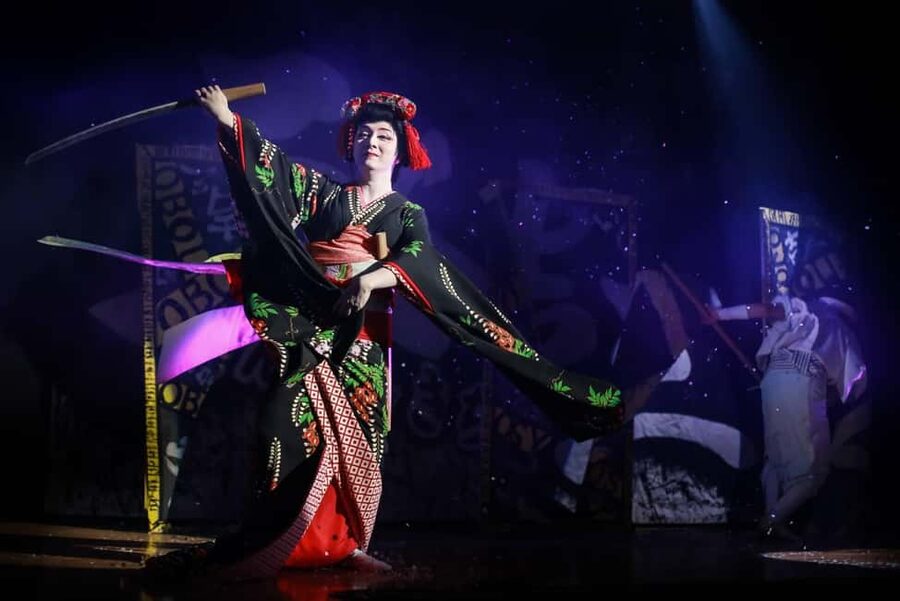
- Watch Taishu Engeki at Mokubakan: See an accessible form of Japanese theater with dance, music, expressive acting, and stage combat.
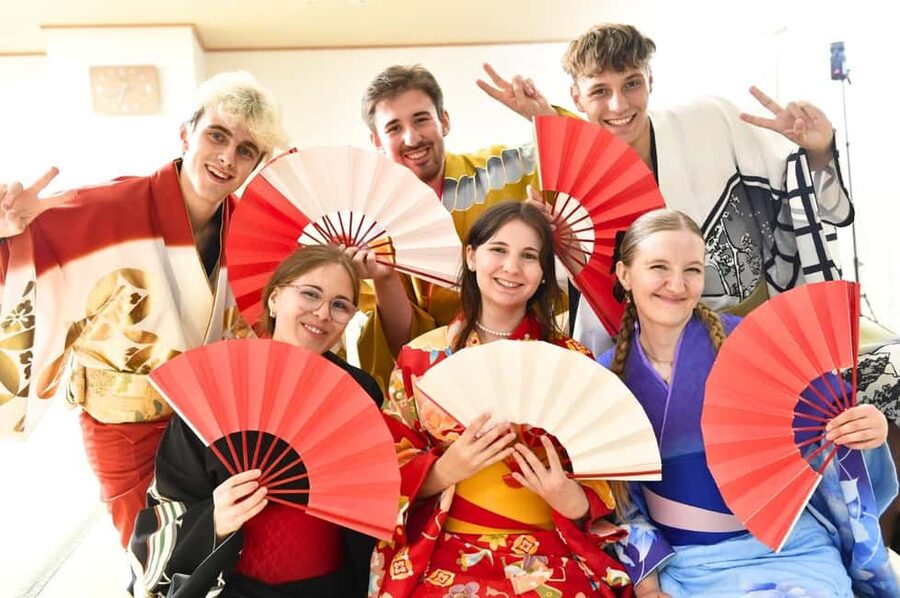
- Wear a traditional kimono: The outfit turns the workshop into a proper stage experience, not just a quick photo stop.
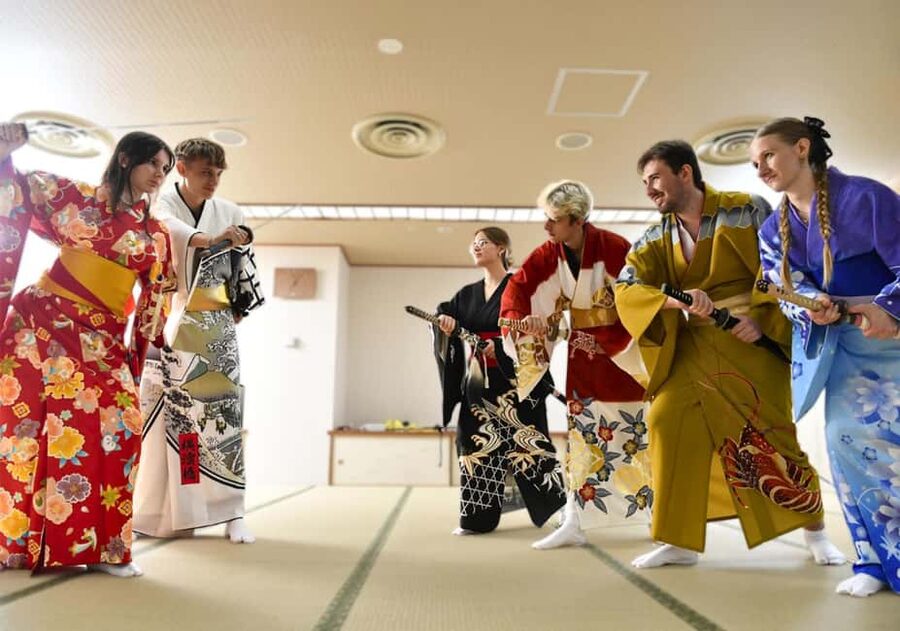
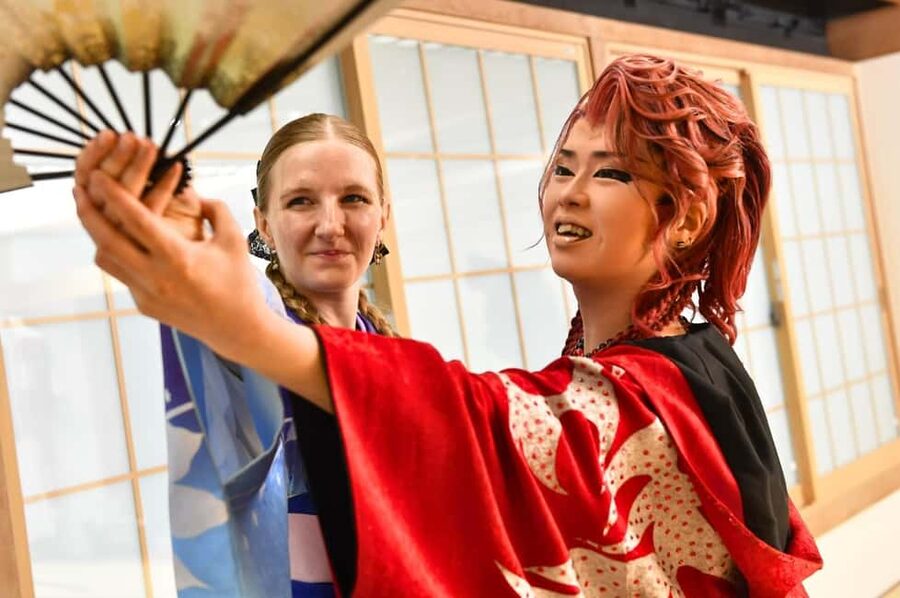
- Learn fan and sword movements: A local professional dancer teaches simple choreographed sequences for beginners.
- Keep the group intimate: The activity is limited to six participants, so you get room to move and receive help.
- Plan around the schedule: The afternoon program meets at 2:20 p.m., while the evening program meets at 5:40 p.m. and reverses the order.
- Excellent value at $12: At the stated price, you receive a theater performance, workshop, kimono dressing, and photos in one three-hour program.
Why Taishu Engeki feels different from standard Tokyo theater
Taishu Engeki means popular theater, and its appeal is easy to understand even if you do not speak Japanese. It combines emotional storytelling, dance, music, costume, and sword action in a format designed for direct contact with the audience.
This is not a formal Kabuki or Noh performance. Those art forms have strict traditions and can require more preparation from a first-time viewer. Taishu Engeki is more immediate. Facial expression, body movement, music, and visual drama do much of the storytelling, so you can follow the mood and action without translating every line.
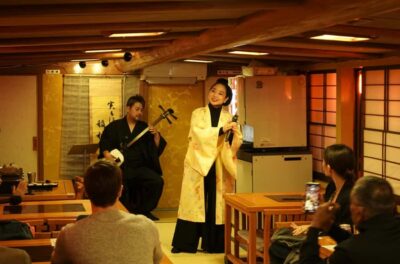
The close setting matters. The performance takes place at Mokubakan Theater in Asakusa, a venue devoted to Taishu Engeki since 1977. One participant described the stage as close enough that you can feel the performers’ steps and jumps. That proximity gives the show a physical quality that a large theater often loses.
You will also see the onnagata tradition, in which male actors perform female roles with carefully controlled movement, posture, and elegance. For many visitors, this is one of the most striking parts of the show. It is not presented as a museum piece. You are watching a living stage style with music, costume changes, movement, and theatrical flair.
A few more shows around Tokyo worth a look
- Tokyo: Family Sumo Workshop & Live Wrestling Show with Lunch
★ 4.9 · 99 reviews - Dublin: Irish Music and Dance Show with Dance Lesson
★ 4.7 · 567 reviews - Tango Porteño Show with Optional Dinner and Tango Lesson
★ 4.0 · 97 reviews
Meeting at Mokubakan in Asakusa
The afternoon program begins with a 2:20 p.m. meeting time. Your program leader meets you in front of Asakusa Mokubakan Theater, at the marked meeting point. The exact coordinates provided are 35.7143669128418, 139.79486083984375.
Arrive on time. The program moves from the theater to a separate cultural venue, and a late arrival could affect your place in the schedule. Your international program leader introduces the theater and explains the basics of Taishu Engeki before the performance begins.
The evening option starts at 5:40 p.m. and uses a different meeting point at 1 Chome-38-6 Asakusa, Taito City, Tokyo 111-0032. Check your booked time carefully. The evening schedule reverses the order, so you do the cultural workshop before watching the show.
That change can affect how the experience feels. In the afternoon, you watch professionals first and then try the movements yourself. In the evening, you learn the basic actions before seeing them used on stage. Neither order is clearly better, but the evening version may help you watch the performance with a sharper eye for fan gestures and sword choreography.
The professional show: color, music, and close-up action
The performance is the heart of the program. You watch the same type of show enjoyed by local Japanese audiences, rather than a shortened demonstration created only for visitors.
Expect a mix of drama, dance, music, and swordplay. The story may not be fully clear in words, but the performers communicate through expressive movement and strong visual cues. That makes the show a good choice if you want traditional entertainment without committing to a long, formal theater production.
The program includes a small token of appreciation. You are also guided through the local custom of offering a small gift or tip to a favorite performer, known as ohana o okuru. This is a useful cultural detail because it gives you a way to take part in the theater’s social customs, not just sit quietly in the audience.
You do not need to feel obliged to make a large gesture. The important point is learning that this kind of audience appreciation is part of the performance culture. Your program leader can explain how to take part.
The show uses flashing or strobe-style lights and loud sounds. These effects are limited to the professional theater portion, not the workshop. If you are sensitive to light or noise, contact the provider before booking and consider this part of your decision.
A short walk to the kimono workshop
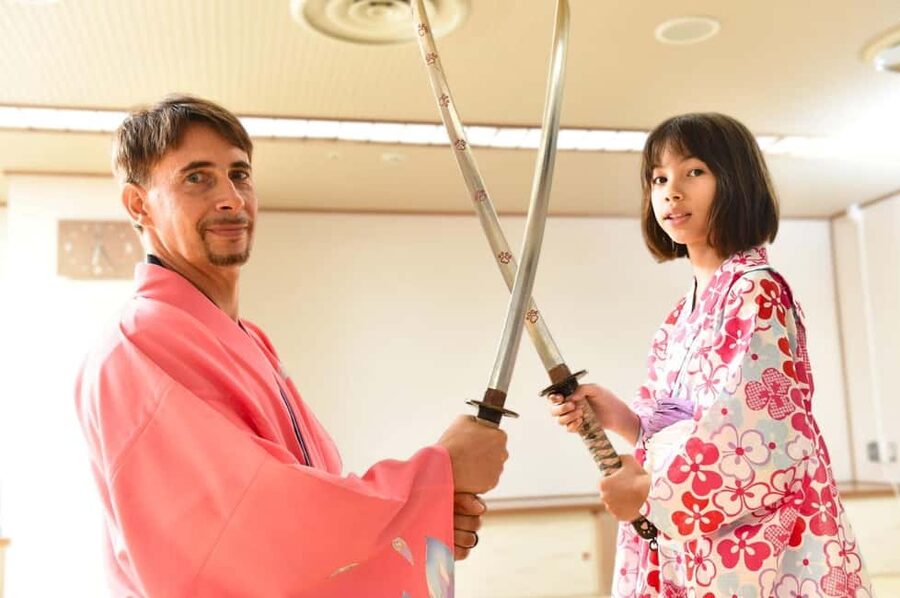
After the performance, the group walks for about five to seven minutes to a separate cultural venue. This transfer is short, but comfortable shoes still make sense. You will be moving again during the workshop, and kimono footwear and layers can feel less forgiving than normal sightseeing clothes.
The second space includes a traditional tatami room. This change in setting helps separate the audience experience from the hands-on lesson. You leave the theater atmosphere behind and enter a quieter room where the instructor can focus on your group.
The six-person limit is a real advantage here. Fan and sword movements are easier to follow when the instructor can see each person. A large class would make the activity feel more like a demonstration. Here, you have a better chance to receive correction and encouragement.
Same place, a different night out:
- Mt Fuji & Hakone Cruise, Drum Show Bullet Train 1 Day from Tokyo
★ 4.0 · 7,413 reviews - Tokyo: Sumo Show and Dining Experience
★ 4.8 · 2,742 reviews - Tokyo: Japanese Dance Cabaret Theater Asakusa-Kaguwa Ticket
★ 4.8 · 2,270 reviews - the SUMO show
★ 5.0 · 1,960 reviews
Kimono dressing and the value of the photo session
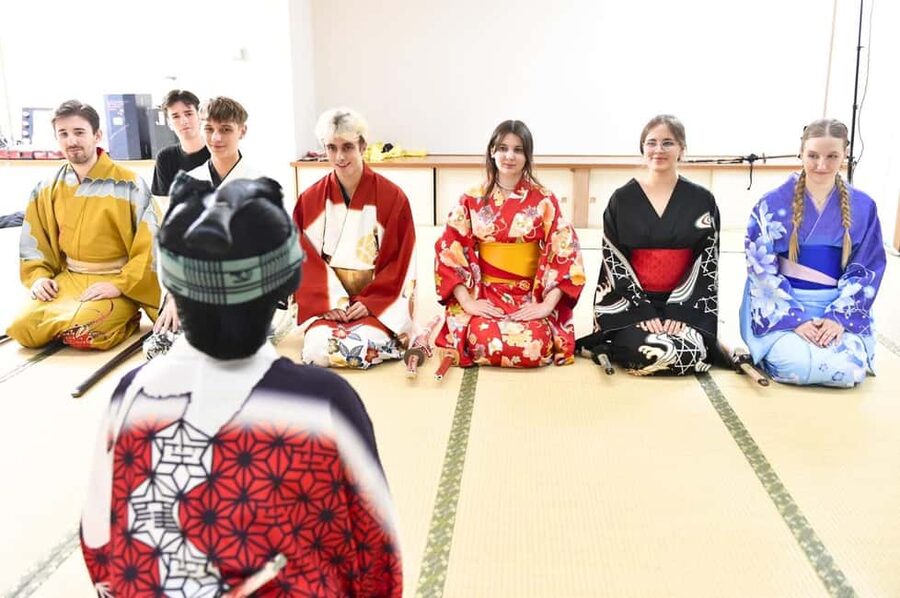
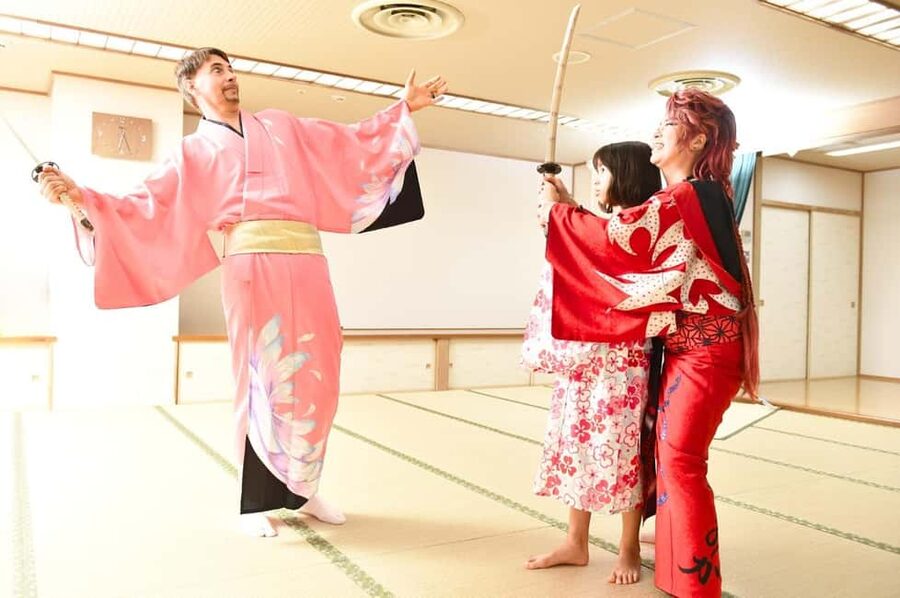
The kimono is not just a costume added for a quick picture. Wearing it changes the way you move. Your posture becomes more careful, your steps get smaller, and even a simple fan gesture feels more deliberate.
The dressing is part of the cultural experience, though the supplied details do not specify how long the dressing itself takes or who assists with each garment. Plan to follow instructions patiently. Traditional clothing is structured, and rushing would work against the point of the activity.
The final photo session gives you a record of the experience. Staff and the instructor can help with photos and videos, according to the program details and participant experiences. You should have a chance to preserve the kimono, fan, and sword practice as more than a memory in your phone.
This is especially useful for families, couples, and friends who want a shared activity rather than separate portraits. It also gives solo visitors a clear reason to join a small group. The photos capture you taking part in a performance tradition, not simply posing beside a landmark.
Learning fan dance and samurai swordplay
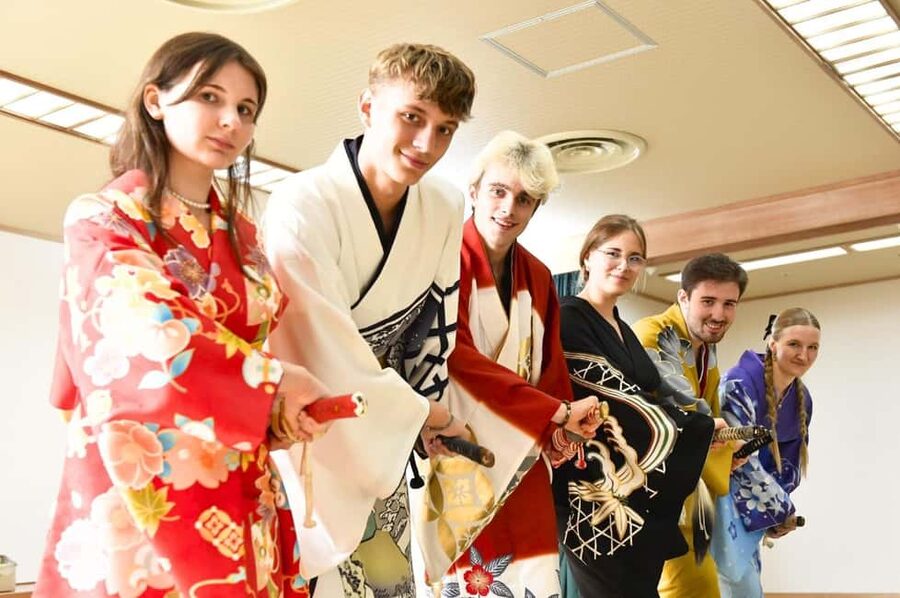
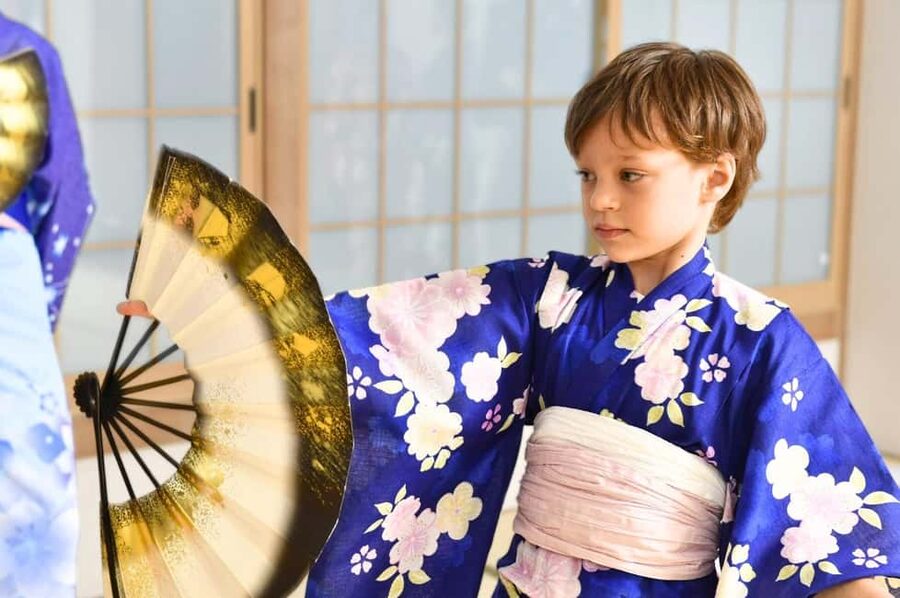
The workshop teaches two different types of movement. The folding fan lesson introduces the graceful side of Japanese stage dance. The sword session, described as chanbara, uses choreographed combat-dance movements rather than difficult martial arts training.
You are not expected to become a stage performer in one session. The instruction is designed to be fun and easy to follow. Basic gestures, timing, posture, and theatrical expression matter more than physical strength or technical skill.
The sword work is stage movement, not a real fight. That distinction matters for safety and for your expectations. You will learn how performers create the appearance of action through controlled, rehearsed gestures.
A participant described feeling like the main character in an anime after the show and workshop. That is a fair way to picture the tone: theatrical, playful, and visual. The activity has enough structure to feel authentic, but not so much pressure that a beginner cannot join.
The workshop is physically active. Tell staff immediately if you feel dizzy, sick, or unwell. Pregnant women should not book this experience. The provided information does not list additional mobility requirements, so contact the provider if you have concerns about kneeling or moving in a tatami room.
How the three hours are organized
For the afternoon slot, the flow is:
- Meet the program leader at 2:20 p.m.
- Receive an introduction to Mokubakan and Taishu Engeki.
- Watch the professional theater performance.
- Walk five to seven minutes to the cultural venue.
- Change into a kimono.
- Learn fan dance and choreographed sword movements.
- Take commemorative photos.
The total duration is three hours, though the exact performance and workshop timing can change. The program notes that schedules and performance content may change without prior notice.
For the evening slot, the order is reversed. You meet at 5:40 p.m. at the separate address, complete the workshop first, and then attend the theater performance. This may suit you if you prefer to finish with the professional show, but allow enough time for the full three-hour program.
English and German instruction is available. The program is not a large bus tour. It is a small group activity, limited to six participants, with an international program leader.
Is $12 good value?
At the stated price of $12 per person, this is unusually good value. You are not paying for only a short theater ticket. The fee includes the live performance, a guided introduction, a walk to the cultural venue, kimono dressing, the fan and sword workshop, and commemorative photos.
The price also makes the activity an easy addition to a Tokyo day. Many cultural experiences cost much more once clothing, instruction, and photography are added separately. Here, they are joined in one three-hour program.
Still, check the current price when booking. Tour prices can change, and the published figure may not remain available. You should also remember that the experience is not a full study of Japanese theater. It is a lively first meeting with one popular performance style.
If you want a quiet, scholarly presentation, this may feel too theatrical. If you want a polished show followed by simple participation, the price is hard to argue with.
Who will enjoy this Asakusa experience most?
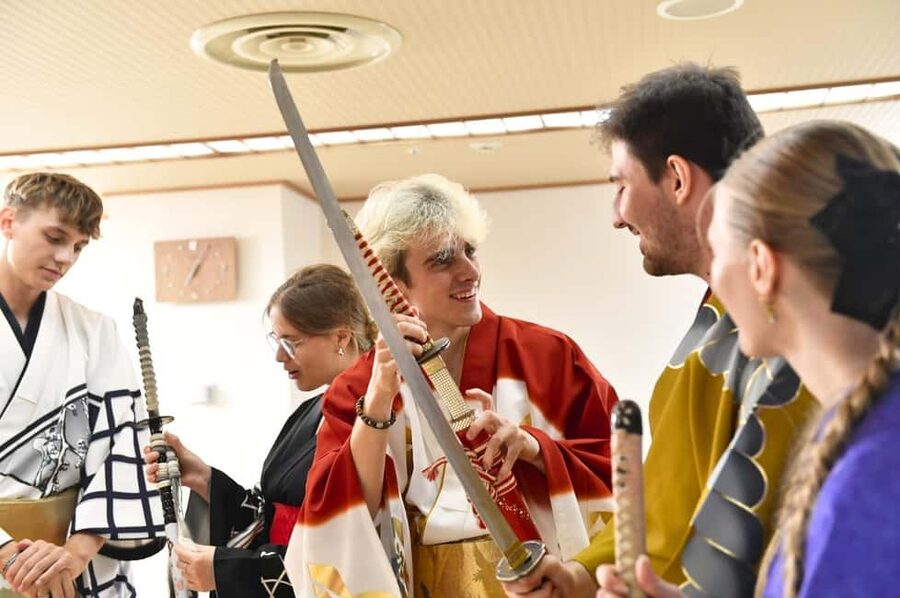
I would recommend it to first-time visitors who want a compact introduction to Japanese culture without spending an entire evening at a formal theater. It works particularly well for people who enjoy costumes, dance, photos, and activities that let you participate.
Friends can have fun with the workshop because everyone learns the same short sequences together. Couples and families can use the photo session as a shared souvenir. Solo visitors benefit from the small group and clear instruction.
The program also suits anime and stage fans. The sword movements are theatrical and choreographed, while the kimono and fan work add a graceful contrast. You get both sides of Japanese stage performance in one visit.
It may be less suitable for anyone sensitive to loud sound or flashing light. Pregnant women should not participate, and anyone who dislikes active lessons or changing clothes should consider a theater ticket-only option instead.
Practical details that affect your decision
The activity does not allow alcohol or drugs. Harassment, offensive conduct, behavior that makes others uncomfortable, or intentional damage to property can end participation immediately.
The provider offers free cancellation up to 24 hours before the scheduled start for a full refund. You can also reserve now and pay later, which helps if your Tokyo plans are still changing.
The most useful practical advice is simple: arrive early enough to find the meeting point, wear clothing that is easy to change out of, and use comfortable footwear for the short walk and active lesson. Do not treat the sword section as a combat class. Its purpose is performance, timing, and fun.
Should you book the Taishu Engeki workshop?
Book it if you want an affordable, small-group activity that combines a real Japanese theater performance with a chance to wear a kimono and learn fan and sword movements. The strongest part is the contrast between watching trained performers at close range and then trying a simplified version of their stage language yourself.
Skip it if flashing lights, loud sound, or physical activity are serious concerns, or if you want a long, formal explanation of Kabuki or Noh. This is popular theater with plenty of color and action, not a quiet lecture.
For $12 at the stated rate, the program offers a lot: three hours in Asakusa, a dedicated Taishu Engeki venue, personal instruction, and photos to take home. I would choose the afternoon schedule if I wanted to see the professionals before trying the movements, and the evening schedule if I preferred to learn first and then watch the performance with those movements in mind.
FAQ
How long does the Taishu Engeki experience last?
The experience lasts three hours.
What time does the afternoon program meet?
The afternoon program has a meeting time of 2:20 p.m.
What time does the evening program meet?
The evening program has a meeting time of 5:40 p.m.
Where does the afternoon program meet?
The program leader meets you in front of Asakusa Mokubakan Theater at the marked meeting point.
Where does the evening program meet?
The evening program uses a different meeting point at 1 Chome-38-6 Asakusa, Taito City, Tokyo 111-0032.
What will I learn in the workshop?
You will learn beginner-friendly movements using a folding fan and a samurai sword as part of choreographed Japanese stage dance.
Is the workshop suitable for beginners?
Yes. The workshop focuses on enjoyment and simple movements rather than difficult choreography.
Which languages are available?
The program is available in English and German.
How many people can join the group?
The group is limited to six participants.
Just added around Tokyo
- Tokyo: Traditional Geisha Experience Show & Japanese Dinner★ 4.2 · 59 reviews
- Tokyo: Rainbow Bridge Day Cruise Show Unlimited Soft Drinks★ 4.5 · 86 reviews
- Tokyo: Taiko Drum Experience in Kabukicho with Dinner★ 5.0 · 3 reviews
- Tokyo: Know about Kabuki performing – Ginza Walking★ 4.2 · 3 reviews
- Tokyo: Learn about Japanese Traditional art KABUKI in Ginza★ 3.2 · 5 reviews
- Tokyo: KABUKI, BUNRAKU, etc. presented by National Theatre★ 4.6 · 135 reviews
- Tokyo: Family Sumo Workshop & Live Wrestling Show with Lunch★ 4.9 · 99 reviews
- Tokyo GINZA: KONPARU Japanese Cabaret Show with Drink★ 4.8 · 38 reviews
Tokyo Shows, compared.
Japanese Dance Cabaret Theater Asakusa-Kaguwa Ticket
Read our review →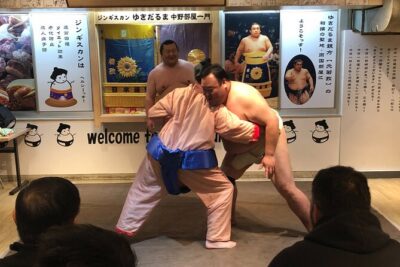
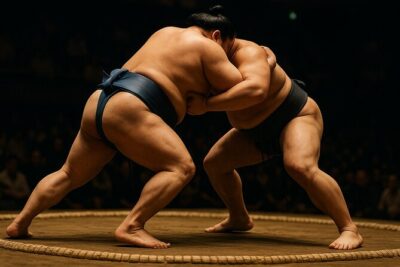
Tokyo Shinjuku Sumo Show & Experience with Photo
Read our review →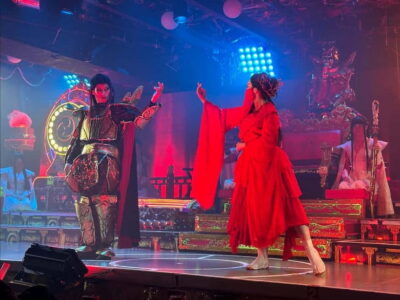

Mt Fuji & Hakone Cruise, Drum Show Bus 1 Day from Tokyo
Read our review →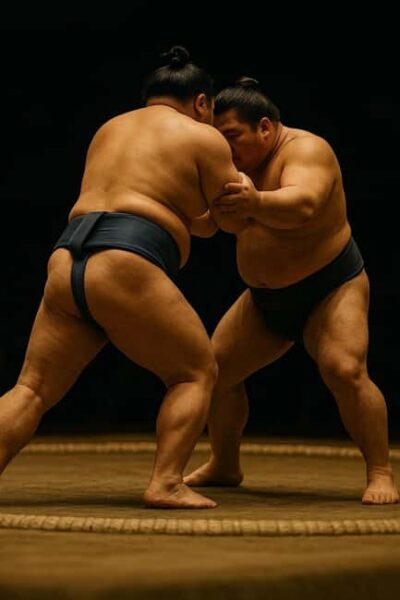
Yakatabune Dinner Cruise with Japanese Show & Drinks
Read our review →Browse the lists this show appears in