
Review · JAPAN
Experience the Asakusa Kabuki Opera Show!
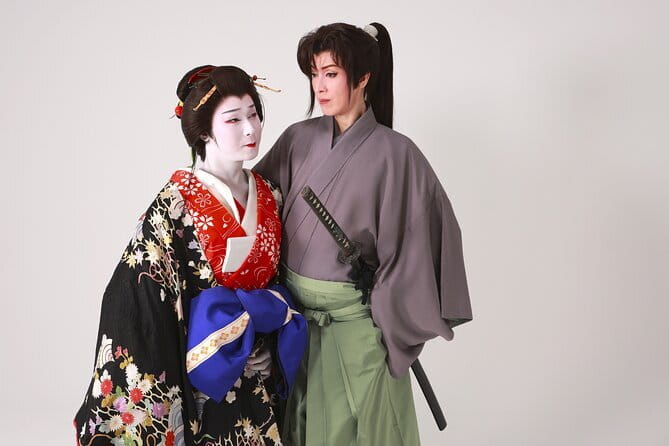
Carmen gets a striking Japanese makeover here: the Spanish heroine becomes Karume, an oiran in Edo-period Yoshiwara. The production brings Kabuki acting and opera singing into the same compact theater, with English subtitles to keep the story clear.
I like the 90-minute length, which fits neatly into an Asakusa day, and I like the way the show welcomes newcomers with audience interaction, snacks, and a soft drink. The main caution is that subtitles may not always match the live words perfectly, so this is best enjoyed as a visual and musical performance rather than a word-for-word translation.
Key points to know before you book
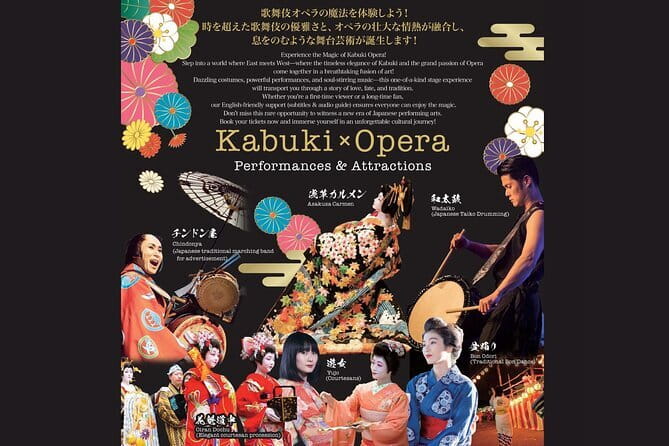
- Carmen becomes Karume: Bizet’s free-spirited Spanish woman is recast as an oiran living in Yoshiwara.
- Kabuki meets opera: Traditional movement, dramatic expressions, Japanese instruments, opera singing, drums, and dance share one stage.
- English subtitles are provided: You can follow the story even without Japanese.
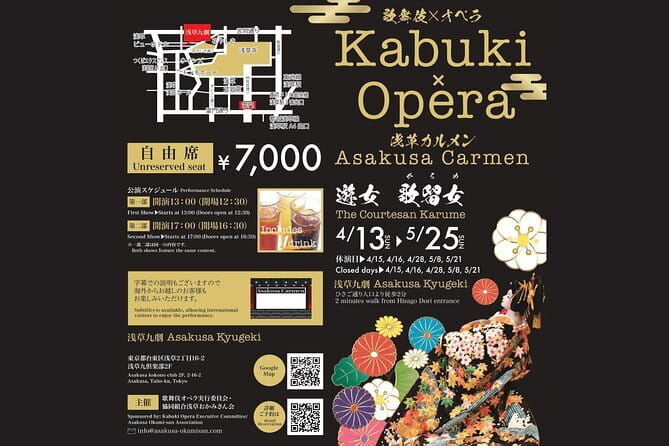
- The show is compact and lively: The performance lasts about 90 minutes and takes place at Asakusa Kyugeki.
- Audience participation is part of the fun: You may be invited into the action rather than asked to sit quietly through a formal performance.
- The ticket includes extras: Admission, one soft drink, bottled water, and snacks are included.
A Japanese Carmen with a new name and setting
The familiar Carmen story is not simply translated into Japanese. It is rebuilt around Karume, an oiran living in Yoshiwara, the famous pleasure district associated with Asakusa. Carmen is a woman who refuses to be owned. Karume is also confined, though her cage is shaped by the world around her.
That change gives the story a different emotional weight. You are not just watching a Western opera with Japanese costumes. You are seeing two versions of a woman who wants control over her own fate. One woman keeps running from confinement. The other was sold into it. Their paths meet through the stage language of Kabuki.
The production also explores the way men desire, control, and are controlled by women. That theme gives the performance more substance than a simple culture show. It keeps the central question focused on freedom, choice, and the price of independence.
You do not need to know Bizet’s opera before arriving. The familiar outline helps, but the English subtitles and clear visual storytelling make the action easy to follow. If you already know Carmen, you may enjoy noticing where the Japanese version changes the emphasis.
More Opera Shows in Japan:
- Ho Chi Minh: A O Show Bamboo Circus at Saigon Opera House
★ 4.8 · 1,258 reviews - Madrid: Opera and Zarzuela Show and Dinner
★ 4.8 · 509 reviews - Rome: Freddie Mercury Opera Show
★ 3.9 · 381 reviews
What happens inside Asakusa Kyugeki
Asakusa Kyugeki provides an intimate setting for the performance. A compact theater matters here because Kabuki depends on expressive faces, precise gestures, and controlled movement. From a close seat, a raised eyebrow, a fixed stare, or the famous Kabuki mie, the dramatic pose held at a key moment, can carry as much force as a full speech.
The show combines highly stylized Kabuki movement with the vocal power of opera. Traditional Japanese music and instruments work alongside operatic passages, drums, and dance. The result shifts in mood from comic and playful to tense and emotional.
This is not a quiet concert where you are expected to sit still and observe from a distance. The production uses interaction to pull you into its world. Audience participation is one reason it works well for first-time Kabuki viewers, though anyone who prefers a strictly formal theater experience may find the involvement less comfortable.
The production also uses gender-reversal casting in important roles. A male actor plays the female lead, while a female actor plays the male lead. This connects with Kabuki’s long tradition of stylized gender performance, while giving the Carmen story another layer to consider.
Why the Kabuki and opera mix works
Kabuki and opera both rely on heightened performance. Neither aims for ordinary conversation or naturalistic movement. Both use music, costume, gesture, and strong vocal expression to show inner feeling.
That common ground helps the two forms share the stage. Kabuki offers controlled movement, striking poses, bold facial expression, and the visual character of Edo Japan. Opera adds broad melodies and emotional force. Japanese instruments and drumming add a different rhythm from the music you may expect from Carmen.
You might not respond equally to every part. Some moments will feel instantly readable through movement and music. Other sections may seem unfamiliar if you have never seen Kabuki. The production helps by keeping the story active and by using English subtitles throughout.
The subtitles are useful, but they may not line up perfectly with every sung or spoken word. Live theater moves quickly, and the translation can be close rather than exact. I would not treat this as a serious problem. You can follow the main story, then let the acting, music, and stage pictures fill in the rest.
A 90-minute performance that fits an Asakusa day
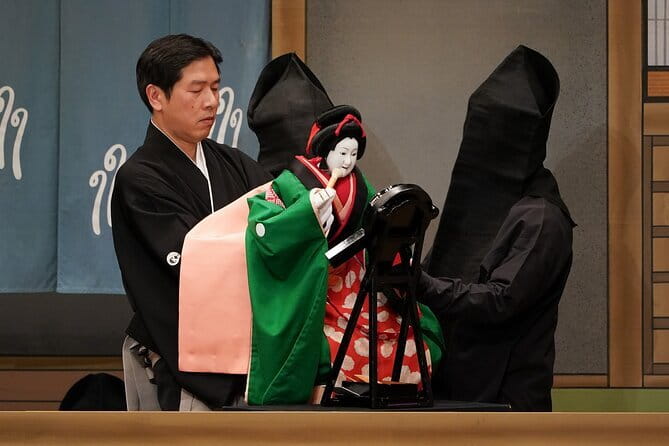
The performance lasts about an hour and a half. That is long enough to give the story room to develop, but short enough to pair with Asakusa’s temples, shopping streets, and restaurants.
This timing also suits visitors who are testing the waters with Japanese theater. Traditional Kabuki performances can be long and difficult to approach without preparation. Here, the shorter format and the familiar Carmen connection make the first step easier.
You receive one soft drink, bottled water, and snacks with the admission. These are modest extras, not the reason to book, but they make the experience feel welcoming and practical. You can settle in without needing to arrange refreshments during the show.
The performance is booked in advance by many people, often around 34 days ahead. That pattern suggests you should not assume you can wait until the last day, especially if your Tokyo schedule is fixed. A mobile ticket makes the booking simple, and confirmation is provided at the time of booking.
A few more shows around Japan worth a look
- Mt Fuji & Hakone Cruise, Drum Show Bullet Train 1 Day from Tokyo
★ 4.0 · 7,413 reviews - Tokyo: Sumo Show Experience with Chicken Hot Pot and a Photo
★ 4.8 · 6,678 reviews - Tokyo: Sumo Show and Dining Experience
★ 4.8 · 2,742 reviews - the SUMO show
★ 5.0 · 1,960 reviews
English subtitles make the show accessible
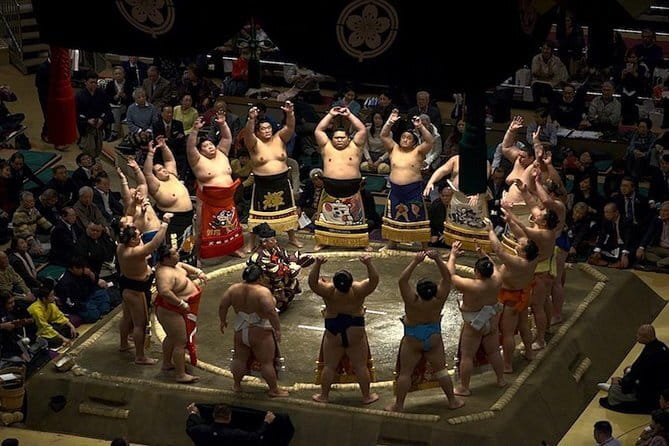
For many international visitors, the subtitles are the deciding feature. You can enjoy the Kabuki style without needing to understand Japanese, and the story remains easy to track from beginning to end.
The subtitles also help explain the relationship between the Japanese setting and the original Carmen plot. You are not left to guess why Karume acts as she does or how the different characters connect.
Still, subtitles require a little attention. You may find yourself looking between the screen and the actors, especially during fast musical passages. If you stare at the text for every word, you could miss an expressive gesture or a striking stage picture.
My advice is to use the subtitles as a guide, not as a script. Read enough to understand the scene, then watch the performers. The show’s physical language is a major part of the point.
Interactive theater with a welcoming tone
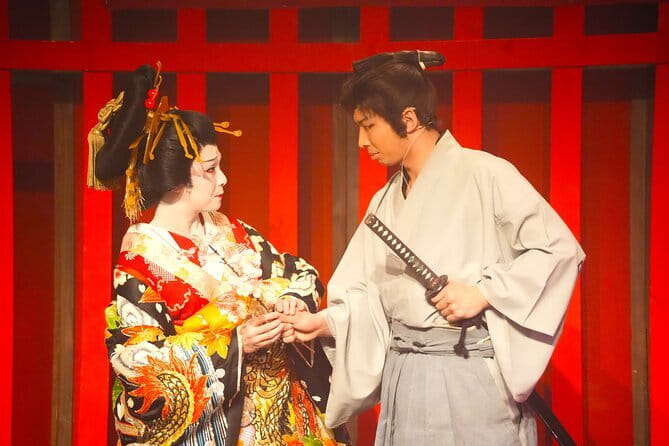
The interactive elements help break down the barrier between a formal Japanese performance and a visitor who has never attended Kabuki. You are not expected to arrive with special knowledge. The production explains how to enjoy the performance and encourages a more relaxed response.
That welcoming tone is especially useful if you are visiting Japan for the first time or if you worry that Kabuki will be too difficult to understand. The show can be enjoyed by visitors and local audience members together, and the presence of English subtitles makes it practical for an international crowd.
There is a tradeoff. Interaction means the atmosphere is more playful and direct than a conventional theater production. If you want a solemn, traditional Kabuki evening with no audience involvement, this may not be the right choice.
For most people, though, the interaction makes the 90 minutes pass quickly. It gives the performance a sense of occasion without requiring you to study Kabuki beforehand.
The emotional core: freedom, control, and loneliness
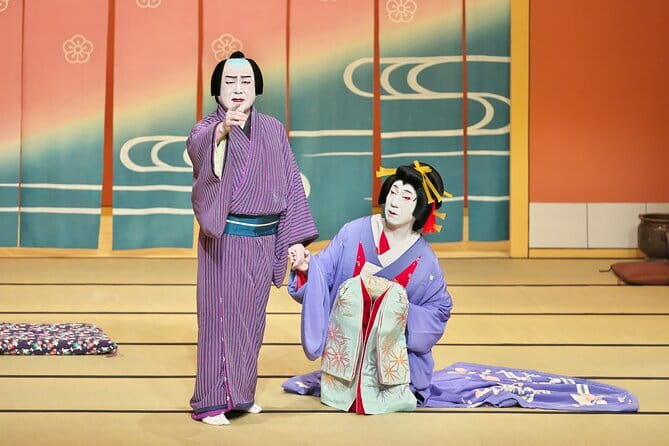
The strongest material comes from the contrast between Carmen and Karume. Their lives look completely different on the surface. One belongs to Spain and the other to Edo Japan. One is associated with freedom, while the other is confined by her status as an oiran.
Yet both understand the desires of men. Both can influence others, and both can be influenced or controlled in return. Their power is real, but it is never complete.
That tension prevents the story from becoming a simple tale of romance. The question is not only who loves whom. It is also who gets to choose, who is trapped, and what happens when a woman claims a life of her own.
The ending asks you to consider what freedom means when the available choices all carry a cost. You may read it as tragedy, defiance, or a dignified refusal to surrender. The production leaves room for that judgment.
How much value do you get for $49.68?
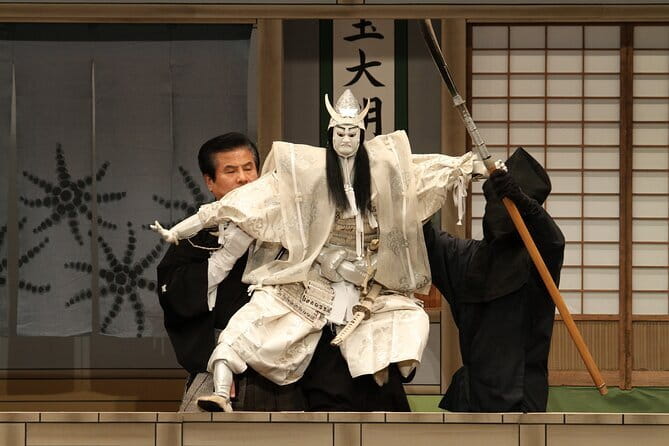
At $49.68 per person, this is not the cheapest short activity in Tokyo. But the price includes a full 90-minute performance, English subtitles, a soft drink, bottled water, snacks, and admission to a specialized theater production.
The value depends on what you want from an evening in Asakusa. If you only want a quick cultural demonstration, cheaper options may exist. If you want a polished stage show with a full story, costumes, live performance, and a clear connection between Japanese and Western traditions, the price is easier to justify.
I especially like that you are not paying for a long transfer or a full-day schedule. The activity is focused. You can place it beside other Asakusa plans rather than giving up an entire day.
The production also offers something difficult to find elsewhere: Carmen reworked as an Edo-era oiran story and performed through Kabuki conventions. That original idea gives the ticket value beyond the included refreshments.
Who will enjoy Asakusa Kabuki Opera
This experience suits you if you want a first taste of Kabuki but do not want to commit to a long traditional program. It also works well if you enjoy opera, theater, Japanese music, or performances that mix old forms with new ideas.
You will probably get the most from it if you:
- Want English support during a Japanese performance
- Enjoy dramatic singing, dance, costumes, and stylized acting
- Like stories about freedom, power, and difficult choices
- Prefer an activity lasting about 90 minutes
- Are comfortable with audience interaction
- Want something more unusual than a temple visit or standard stage show
It may not suit you if you dislike subtitles, dislike being included in a performance, or want a fully traditional Kabuki production with no modern adaptation. The Carmen connection helps first-time viewers, but this remains a theatrical fusion rather than a standard opera or conventional Kabuki play.
Practical details for planning your visit
Asakusa Kyugeki is near public transportation, so you can reach it without arranging private transport. Private transportation is not included, but you do not need a private vehicle for the experience itself.
Most people can participate. If you feel unwell on the day, you should not attend, and participation may be refused for safety reasons.
Free cancellation is available up to 24 hours before the start time for a full refund. Changes or cancellations made less than 24 hours before the start time are not accepted for a refund, and the cut-off follows Tokyo local time.
Use the mobile ticket supplied with your booking. Since many people reserve well ahead, I would book once your Tokyo dates are firm rather than leaving this for the final evening of your trip.
Should you book this Asakusa performance?
Book it if you want a short, lively introduction to Japanese theater with enough English support to follow the plot. The best reasons are the unusual Karume and Carmen pairing, the strong mix of Kabuki and opera, the close theater setting, and the audience interaction.
I would be more cautious if you want a purist version of either art form. This is a bold adaptation, not a museum piece. Its appeal comes from the meeting of styles, the gender-reversal casting, and the way an old story is made to speak through an Edo-period setting.
For many Tokyo itineraries, it is an excellent use of an evening or open afternoon in Asakusa. At $49.68, you are paying for a distinctive 90-minute performance rather than a generic cultural activity. If that sounds like your kind of theater, reserve ahead and give yourself time to enjoy Asakusa before or after the curtain.
FAQ
Where does the performance take place?
The show takes place at Asakusa Kyugeki in Tokyo, Japan.
How long does the performance last?
The performance lasts approximately 90 minutes.
Is the show performed in English?
English subtitles are provided, so you can follow the story even if you do not understand Japanese.
What is the performance about?
The story reimagines Carmen as Karume, an oiran living in Yoshiwara during Japan’s Edo period. It explores freedom, desire, control, love, and the choices available to the two central women.
What is included in the ticket?
The ticket includes the 90-minute performance, admission, bottled water, one soft drink, snacks, and English subtitles.
Is private transportation included?
No. Private transportation is not included, though the theater is near public transportation.
Is a mobile ticket available?
Yes. The experience includes a mobile ticket.
Can most people participate?
Yes. Most people can participate. Anyone feeling unwell on the day should refrain from attending, and participation may be denied for safety reasons.
What is the cancellation policy?
You can cancel at least 24 hours before the start time for a full refund. Cancellations or changes made less than 24 hours before the start time are not accepted for a refund.
Just added around Japan
- Authentic Kabuki Transformation & Mini Performance at Aioiza Gifu★ 4.5 · 3 reviews
- Kabuki Talk★ 5.0 · 10 reviews
- Tokyo: English Standup Comedy Night★ 5.0 · 4 reviews
- Tokyo: Taishu Engeki Show with Kimono and Sword Lesson★ 5.0 · 12 reviews
- Tokyo: Traditional Geisha Experience Show & Japanese Dinner★ 4.2 · 59 reviews
- Tokyo: Taiko Drum Experience in Kabukicho with Dinner★ 5.0 · 3 reviews
- Tokyo: Rainbow Bridge Day Cruise Show Unlimited Soft Drinks★ 4.5 · 86 reviews
- Tokyo: KABUKI, BUNRAKU, etc. presented by National Theatre★ 4.6 · 135 reviews
Japan Shows, compared.
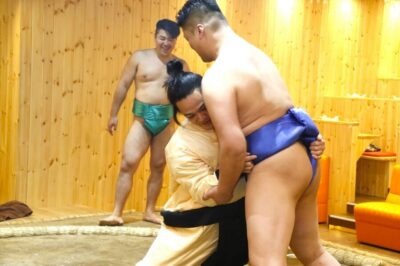
Sumo Show Experience with Chicken Hot Pot and a Photo
Read our review →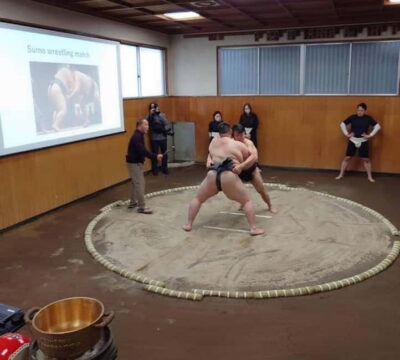
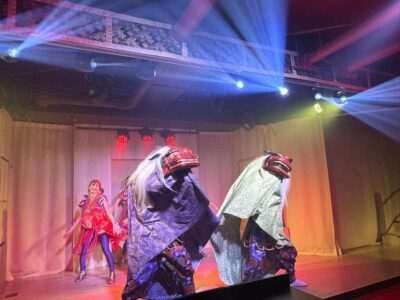
Japanese Dance Cabaret Theater Asakusa-Kaguwa Ticket
Read our review →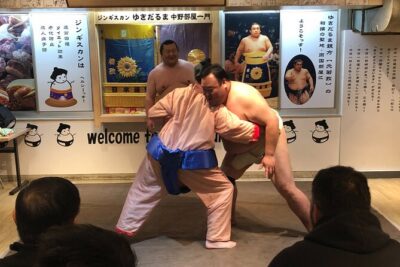
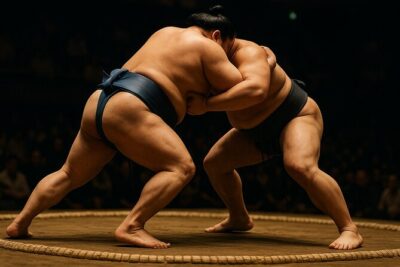
Tokyo Shinjuku Sumo Show & Experience with Photo
Read our review →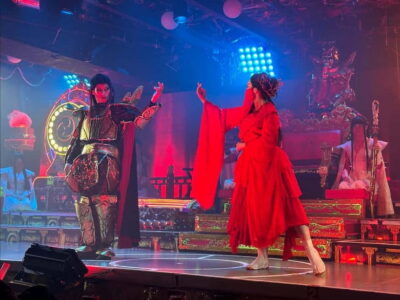
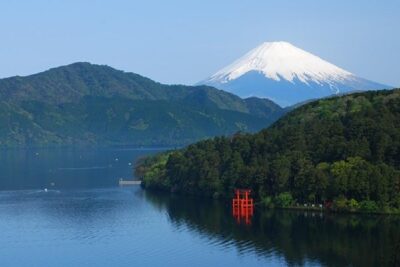
Mt Fuji & Hakone Cruise, Drum Show Bus 1 Day from Tokyo
Read our review →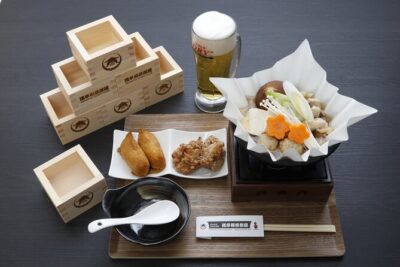
Tokyo Sumo Entertainment Show with Chicken Hot Pot and Photo
Read our review →Browse the lists this show appears in