
Review · TOKYO
Tokyo: Japanese Dance Cabaret Theater Asakusa-Kaguwa Ticket
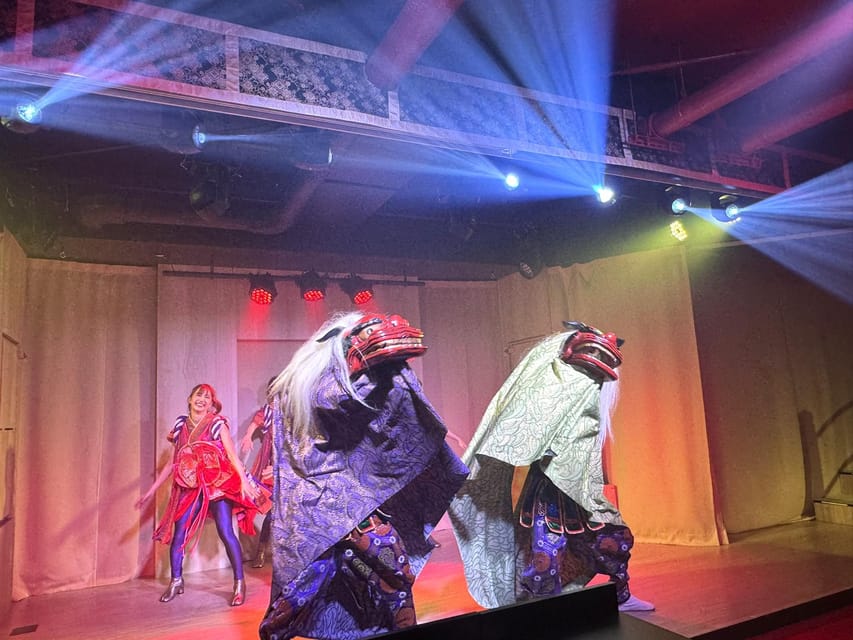
Asakusa-Kaguwa turns a night in Tokyo into a fast-moving stage show of Japanese dance, drama, music, lasers, and elaborate costumes. The one-hour production is easy to follow without much Japanese, using expressive acting and visual storytelling rather than long spoken scenes.
I like the small theater setting, where the dancers can greet you before the curtain and pose for photos afterward. I also like the mix of old and new: kimono-style garments and traditional dance share the stage with electronic music, bright lighting, and theatrical effects.
The main thing to consider is the price. At $49 per person, the standard ticket is fair if you value live entertainment, but add-ons can make the evening costly. The pre-show all-you-can-drink option may offer limited value if you only have one drink before the performance.
Key points to know before booking
- The show lasts one hour, but your full visit can last up to two hours with drinks, introductions, photos, and time in the theater.
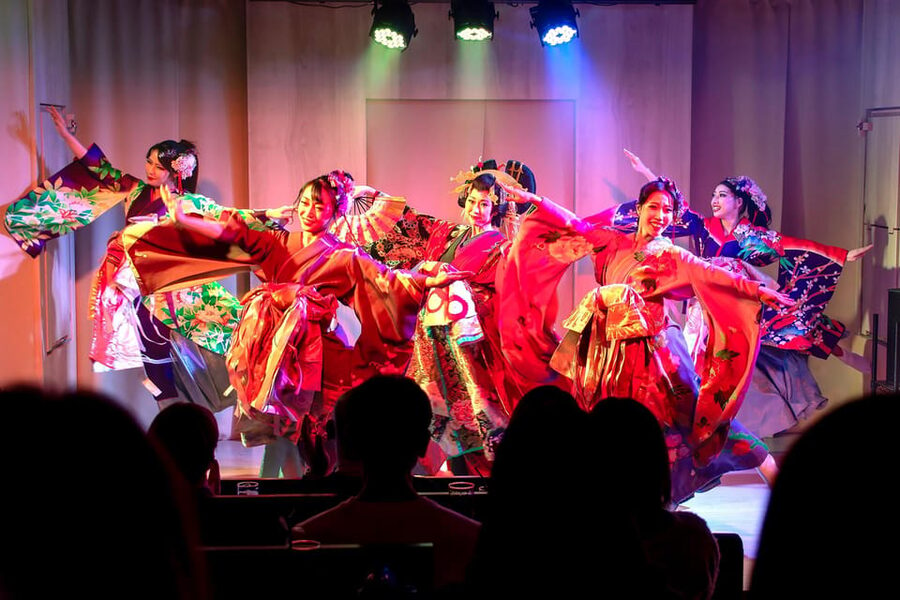
- Traditional Japanese culture meets modern stagecraft, including ornate costumes, contemporary music, lights, acting, and dance.
- One drink is included with standard seating, while selected premium options include front-row or VIP sofa seating and drinks before the show.
- The cast meets the audience before the performance, and some ticket types include a photo opportunity with all the dancers.
- The theater is intimate, which makes the performers feel close, but assigned seats and the steep stairs are worth noting.
- Asakusa makes this easy to pair with sightseeing, especially if you want an evening activity after visiting the area’s temples and old shopping streets.
What kind of Japanese show is Asakusa-Kaguwa?
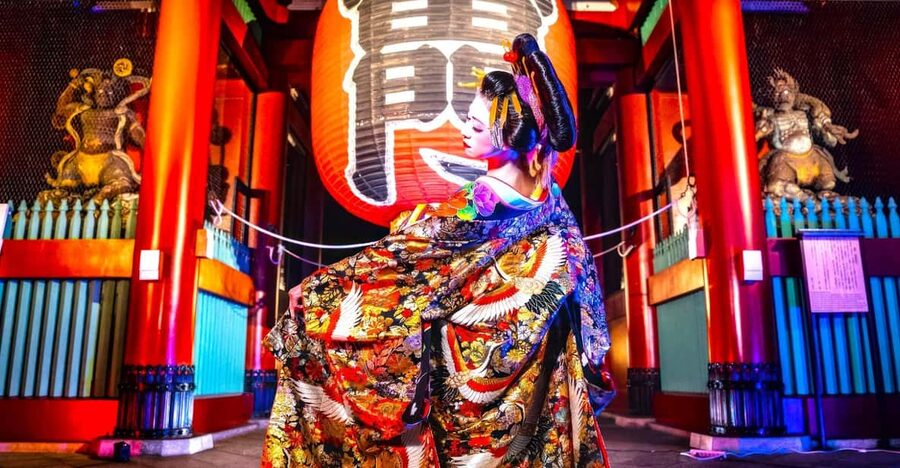
This is not a quiet classical dance recital. It is a theatrical cabaret built around movement, costume changes, music, story, and personality.
The production combines traditional Japanese visual ideas with modern entertainment. You might see graceful gestures and formal garments in one scene, followed by dramatic acting, electronic music, colored lights, or a high-energy dance number. The result is a little like Japanese stage drama compressed into one lively hour.
That mixture is the heart of the experience. You do not need to know the details of every cultural reference to follow the basic emotions. The performers use facial expressions, movement, music, and clear stage action to carry the story. That makes the show a good choice if you want a Japanese cultural experience but do not speak Japanese.
The tone can shift quickly. One moment may be elegant and touching, and the next may be playful, dramatic, or slightly wild. If you prefer a strictly traditional performance, this may feel too modern. If you enjoy theater with surprises, the mix is likely to work well.
More Theatre Shows in Japan
- Tokyo: KABUKI Show at Kabukiza Theatre Admission Ticket
★ 4.8 · 152 reviews - Tokyo: KABUKI, BUNRAKU, etc. presented by National Theatre
★ 4.6 · 135 reviews - Kyoto: Non-Verbal Theatre Show Tickets at GEAR
★ 4.9 · 198 reviews
Arriving in Asakusa before the curtain
Asakusa is one of Tokyo’s best areas for an evening walk. The district gives you a useful setting for the show, since you can spend the afternoon or early evening around traditional sights before entering a deliberately theatrical red-colored interior.
The exact meeting point can vary according to the ticket option, so check your voucher carefully. The performance schedule normally lists doors opening at 4:00 p.m. for the 5:00 p.m. show and at 7:00 p.m. for the 8:00 p.m. show. In April 2026, an additional early show is listed, with doors at 1:00 p.m. and the performance from 2:00 to 3:00 p.m.
One timing detail matters: the performance begins one hour after the time printed on the voucher. Do not arrive before the voucher time. Once the doors open, arriving at least 15 minutes before the show is sensible, even if you do not plan to take photos.
The theater has steep stairs and no elevator. If stairs are difficult for you, contact the staff for assistance before or upon arrival. This is not a minor point, especially if you are tired after a full day in Tokyo.
The pre-show hour: drinks, introductions, and photos
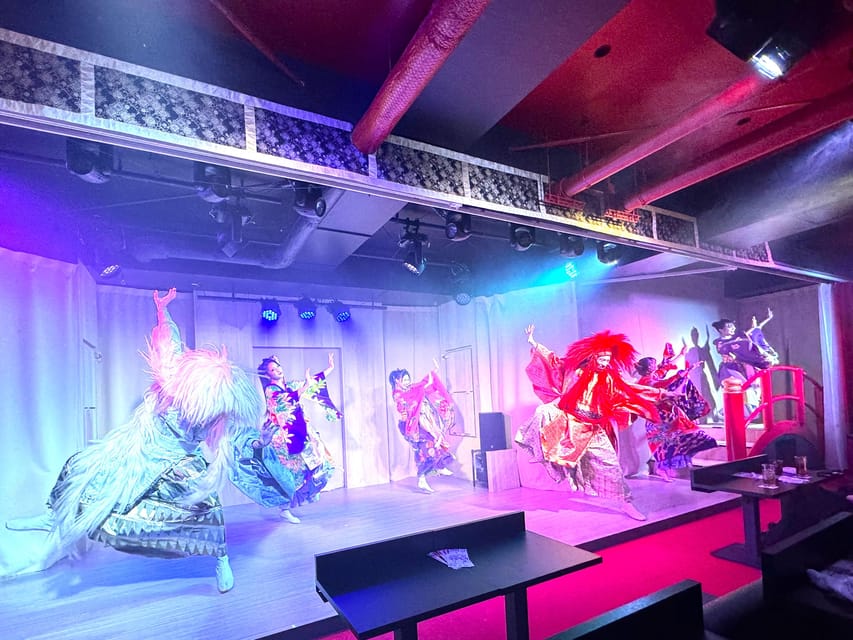
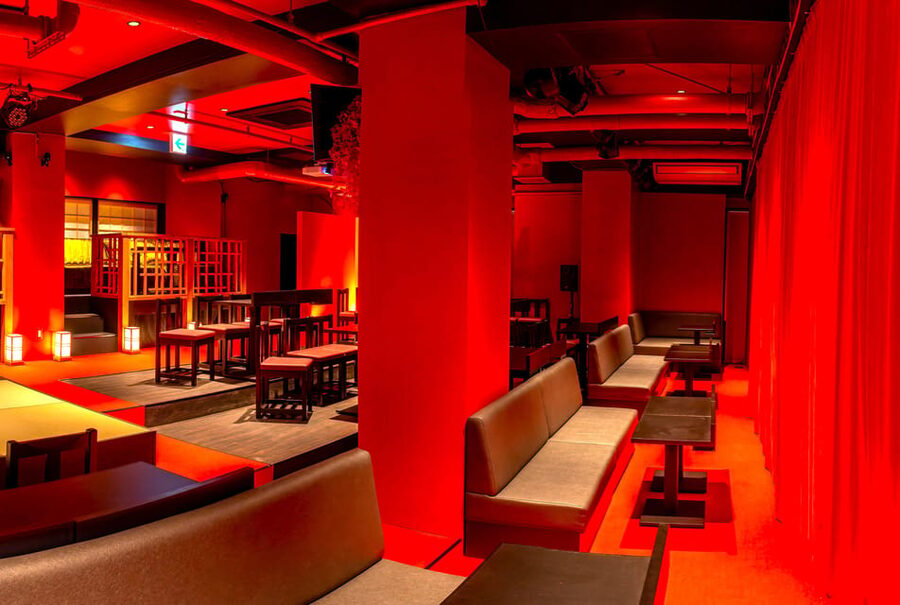
The show itself lasts one hour, but the visit can begin well before the first dance. After entering, you receive the drink included with your ticket and can look around the theater. The red Japanese-style interior gives the room a strong visual identity before the stage lights even come on.
The performers may introduce themselves before the show. This personal contact changes the way you watch the performance. Instead of seeing an anonymous cast, you have faces and names to connect with once the costumes, lighting, and music begin.
Selected options include a photo opportunity with all the dancers on stage. Some ticket choices also include original sparkling wine. Premium seating includes all-you-can-drink service until the show starts, while regular seating includes one drink.
I would not automatically pay extra for unlimited drinks. The pre-show period is limited, and one person may only finish a beer or cocktail before the curtain. The upgrade makes more sense if you want front-row or VIP sofa seating, or if the social time with the performers is important to you.
Food is available separately. The theater offers pizza, fried chicken, and vegetarian snacks made with soy meat. These choices are practical rather than a full Japanese dinner, so plan to eat elsewhere if you want a proper meal in Asakusa.
One hour of costumes, choreography, and drama
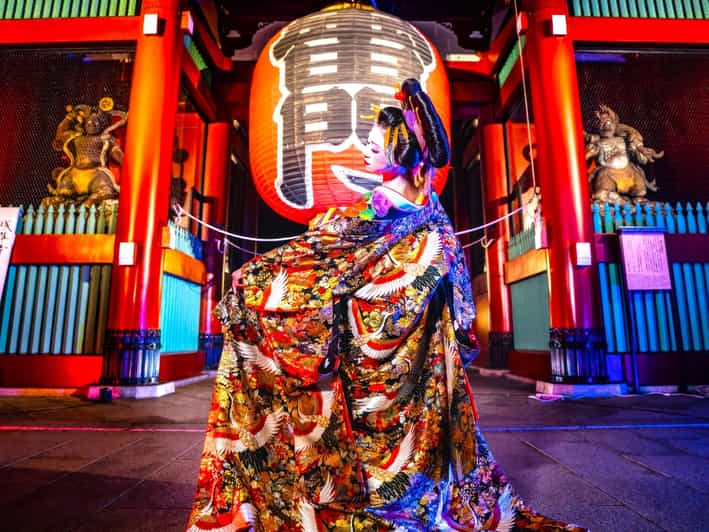
Once the music starts, the production moves quickly. The strongest element is the variety. The cast uses different Japanese garments and changes the mood from graceful dance to dramatic acting, then to modern choreographed numbers supported by lights and sound.
The performers are not only dancers. The production depends on expression and character work, which helps the story make sense even when you do not understand every word. The show can be emotional, and some scenes are designed to pull you into the characters’ feelings rather than simply display technique.
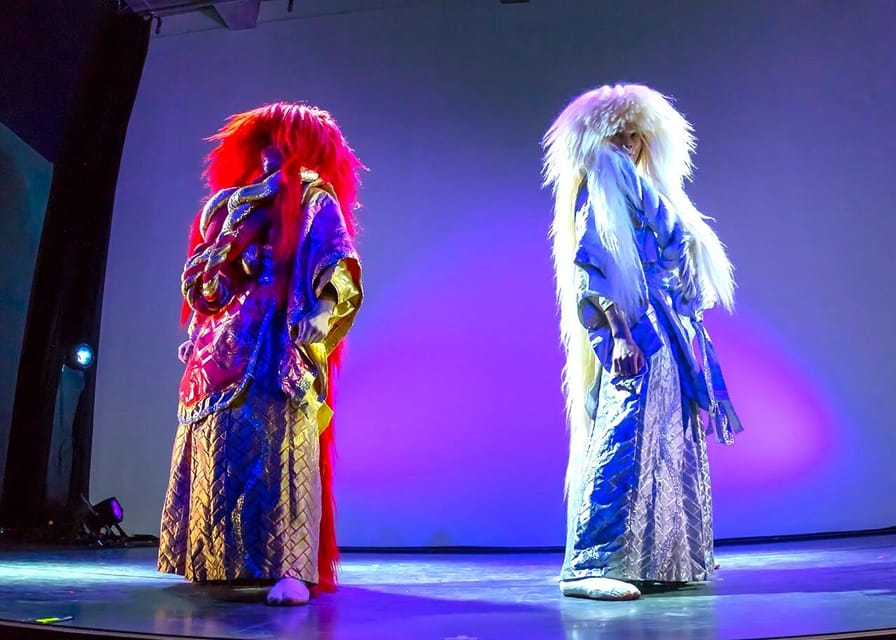
The stage technology also matters. Lighting, sound, lasers, and music help create a larger feeling than the compact theater might suggest. The setting remains intimate, but the show does not feel bare or low-budget.
You should expect a stylized version of Japanese culture, not a museum lesson. The garments, gestures, and stage references draw from traditional forms, but the presentation is made for a modern international audience. That is why the show can appeal to families, teenagers, first-time visitors, and people who usually do not seek out dance performances.
More Cabaret Shows in Tokyo:
- Tokyo GINZA: KONPARU Japanese Cabaret Show with Drink
★ 4.8 · 38 reviews - Paris: Moulin Rouge Cabaret Show Ticket with Champagne
★ 4.7 · 16,088 reviews - Paris: Dinner Show at the Moulin Rouge
★ 4.8 · 3,333 reviews - Paris: Crazy Horse Cabaret Show
★ 4.7 · 2,726 reviews
Seating and the value of premium options
Seats are assigned by the theater in reservation order. You cannot count on choosing your exact place, so book earlier if being close to the stage matters to you.
The standard ticket includes one drink and a regular seat. At about $49, that price is reasonable when you consider the live cast, one-hour production, theater setting, and pre-show access. It is not a bargain-basement activity, but it is also not priced like a major international musical.
Premium options may include a front-row seat or VIP sofa table seat, all-you-can-drink service until the show begins, photos with the cast, or original sparkling wine. These extras can suit a special evening, but I would compare the cost carefully. The show is the main attraction, and a standard ticket still gives you the central performance.
The best value depends on your priorities:
- Choose standard seating if you mainly want to see the show and have one drink.
- Consider front-row or VIP seating if you care about proximity and a more social pre-show.
- Choose the photo option if meeting the full cast is a major part of the appeal.
- Treat unlimited drinks as a bonus, not the main reason to upgrade.
At the end, tipping may be suggested. This is not clearly built into the ticket, so bring some extra cash if you want to thank the performers. You should not feel pressured to select a single favorite when the entire cast contributes to the production.
How personal is the experience?
The cast interaction is one of the most unusual parts of the evening. Dancers may come by before the show, introduce themselves, and offer a chance to talk or take pictures. That makes the room feel friendly, especially if you are attending alone.
Some people will love this. It gives you an easy way to meet the performers and understand the personalities behind the costumes. The friendly atmosphere also helps families and first-time theatergoers settle in.
Others may prefer a quieter pre-show. If you arrive tired or would rather sit alone with your drink, the introductions may feel more active than expected. You do not need to take photos or chat at length, but the event is designed to be social as well as theatrical.
The staff is described as polite and quick, and English support is available during the experience. Do not expect a formal guided lesson about every dance style. The emphasis is on connection, spectacle, and an accessible evening out.
Who will enjoy this most?
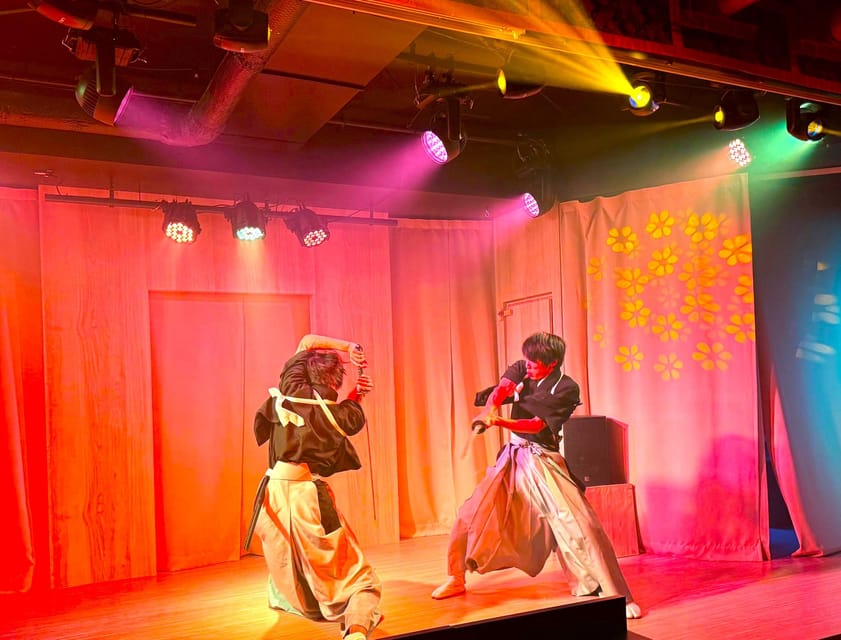
I would recommend Asakusa-Kaguwa to you if you want something different from temples, observation decks, shopping, and food tours. It gives you a planned evening with a clear start and finish, while still offering a taste of Japanese performance culture.
It is especially suitable for:
- First-time visitors who want a Japanese show that does not require fluency in Japanese.
- Couples looking for a colorful night activity.
- Families with children or teenagers, since children can attend and the visual style is easy to follow.
- People who enjoy dance, costumes, acting, or stage lighting.
- Solo visitors who like friendly cast interaction.
- Anyone already spending time in Asakusa.
You may want to skip it if you dislike audience participation, photos, cabaret-style entertainment, or quick shifts between traditional and modern styles. It is also not the right pick if you want a solemn classical performance with detailed cultural explanation.
Planning the evening in Asakusa
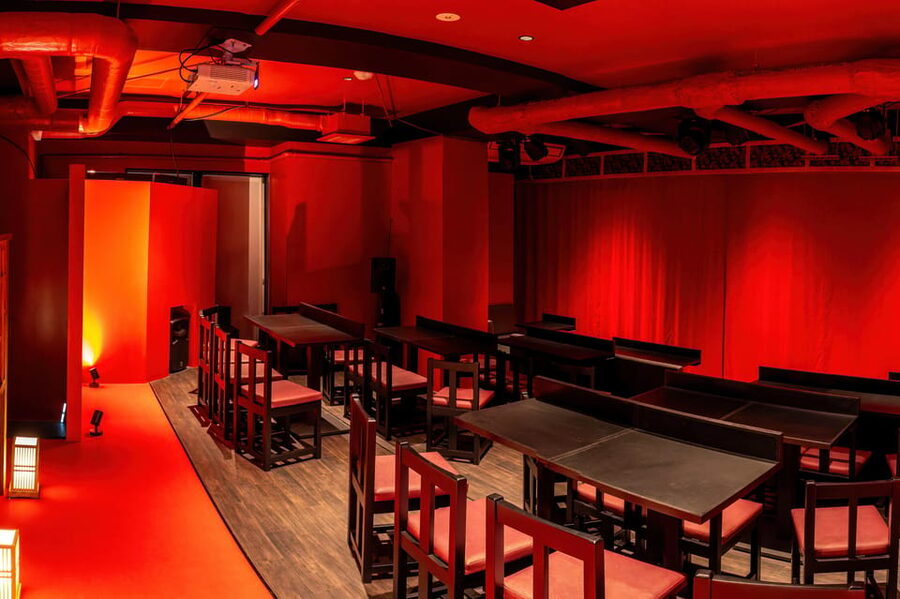
Give yourself enough time to enjoy Asakusa before the theater. You can visit the area’s traditional sights, eat an early meal, and then arrive for the door-opening time printed on your voucher.
Do not plan a tight connection immediately after the show. The main performance ends after one hour, but photos, farewells, and collecting your things can extend the visit. The total stay may reach two hours.
Food inside is simple and ordered separately. Pizza, fried chicken, and soy-meat vegetarian snacks can help if you need something small before the curtain, but I would make a separate dinner plan if food is a central part of your evening.
The show is also a useful rainy-day choice. You spend the important part of the evening indoors, and the Asakusa location lets you combine entertainment with sightseeing in one district.
The main strengths and drawbacks
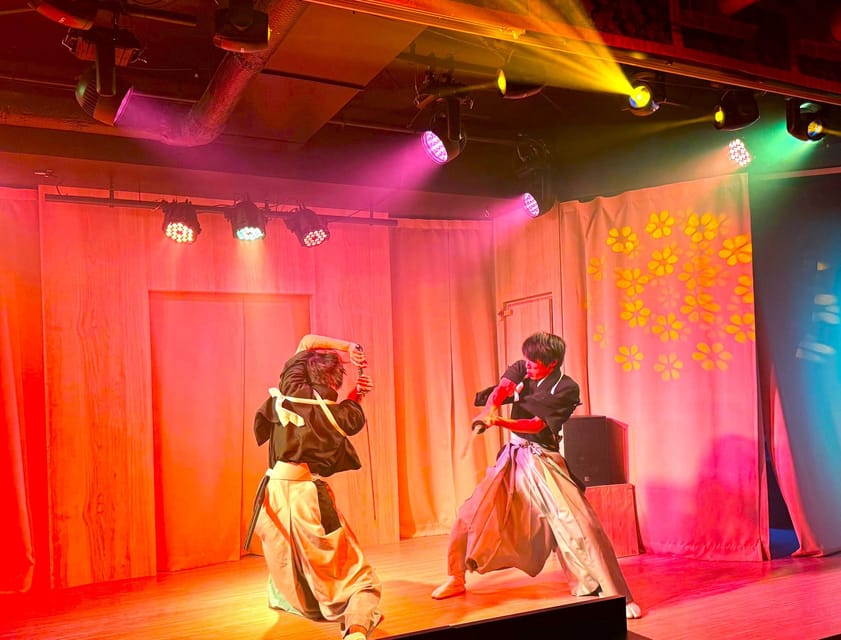
The biggest strength is the production’s emotional range. It is not just a sequence of dances. Acting, music, costumes, and lighting create stories that can be funny, dramatic, and moving in the same hour.
The second strength is accessibility. The show can communicate across language barriers, and the cast interaction gives the evening a warm human element. You do not need prior knowledge of Japanese dance to understand the broad mood of each scene.
The intimate theater is another plus. You are close enough to notice expressions and costume details, not watching tiny figures from a distant balcony.
The drawbacks are practical and financial. Seats are assigned, so your location depends on booking order and option. The stairs are steep, there is no elevator, and premium add-ons may not repay their cost if you only want the performance.
The tipping request may also catch you off guard. If you prefer a fully fixed-price theater experience with no extra spending, keep this in mind and decide in advance how you want to handle it.
Should you book the Asakusa-Kaguwa show?
I would book it if you want a lively, visual introduction to Japanese performance culture and you are happy with a modern cabaret format. The combination of traditional garments, expressive dance, contemporary music, theatrical storytelling, and close contact with the cast gives you much more than a short dance demonstration.
For the best value, start with the standard ticket and one included drink. Upgrade only when front seating, photos, sparkling wine, or pre-show drinks are important to you. Arrive on time, wear shoes suitable for steep stairs, and leave room in your evening for the social part of the experience.
If you are staying in Tokyo’s Asakusa district, this is an easy way to turn sightseeing into a full night out. It will not suit every taste, but for families, couples, solo visitors, and anyone curious about a colorful Japanese stage show, it is a strong choice.
FAQ
How long does the Asakusa-Kaguwa experience last?
Your total stay can last up to two hours. The main performance lasts one hour, with additional time for drinks, introductions, photos, and pre-show activities.
How long is the actual show?
The performance lasts one hour. The regular evening schedules list a 5:00 to 6:00 p.m. show and an 8:00 to 9:00 p.m. show.
What does the standard ticket include?
The standard ticket includes one performance, one drink, and a regular seat.
Are premium seating options available?
Yes. Depending on the option selected, premium choices can include a front-row seat or VIP sofa table seat, all-you-can-drink service until the show starts, a photo opportunity with the dancers, or original sparkling wine.
Can children attend the show?
Yes. The show can be enjoyed with children and families. If you bring an infant, make an infant reservation so the theater can track attendance. Children up to five years old are free.
Is food available at the theater?
Yes. Food is ordered separately and may include pizza, fried chicken, and vegetarian snacks made with soy meat.
Do I need to arrive early?
Arriving at least 15 minutes before the show starts is recommended for a smooth entry. The voucher time refers to door opening, and the performance begins one hour after that stated time.
Is the theater accessible for people with mobility issues?
The stairs to the venue are steep and there is no elevator. Staff can assist people who need help, but you should take care when planning the visit.
Can I cancel the booking?
You can cancel up to 24 hours in advance for a full refund. A reserve-now, pay-later option is also available.
More Theatre Shows in Tokyo
- Seville: Live Flamenco Dancing Show Ticket at the Theater
★ 4.7 · 16,396 reviews - Barcelona: Flamenco Show at the Theater
★ 4.5 · 10,739 reviews - Malaga: Teatro Flamenco Malaga Live Flamenco Show
★ 4.7 · 4,254 reviews - Prague: WOW Show Black Light Theater
★ 4.0 · 3,990 reviews
Just added around Tokyo
- Tokyo: Taishu Engeki Show with Kimono and Sword Lesson★ 5.0 · 12 reviews
- Tokyo: Traditional Geisha Experience Show & Japanese Dinner★ 4.2 · 59 reviews
- Tokyo: Taiko Drum Experience in Kabukicho with Dinner★ 5.0 · 3 reviews
- Tokyo: Rainbow Bridge Day Cruise Show Unlimited Soft Drinks★ 4.5 · 86 reviews
- Tokyo: KABUKI, BUNRAKU, etc. presented by National Theatre★ 4.6 · 135 reviews
- Tokyo: Know about Kabuki performing – Ginza Walking★ 4.2 · 3 reviews
- Tokyo: Learn about Japanese Traditional art KABUKI in Ginza★ 3.2 · 5 reviews
- Tokyo: Family Sumo Workshop & Live Wrestling Show with Lunch★ 4.9 · 99 reviews
Tokyo Shows, compared.
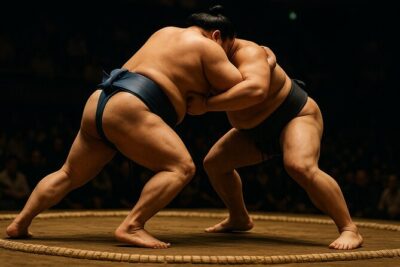
Tokyo Shinjuku Sumo Show & Experience with Photo
Read our review →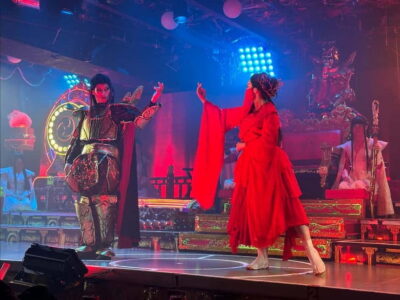
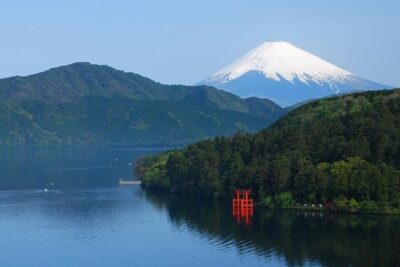
Mt Fuji & Hakone Cruise, Drum Show Bus 1 Day from Tokyo
Read our review →
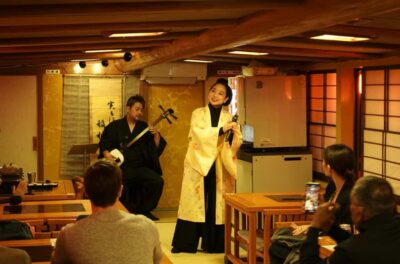
Yakatabune Dinner Cruise with Japanese Show & Drinks
Read our review →
Tsukiji Fish Market: Street Food & Culture Walking Tour
Read our review →Browse the lists this show appears in