
Review · JAPAN
Tokyo: Sumo Show Experience with Chicken Hot Pot and a Photo
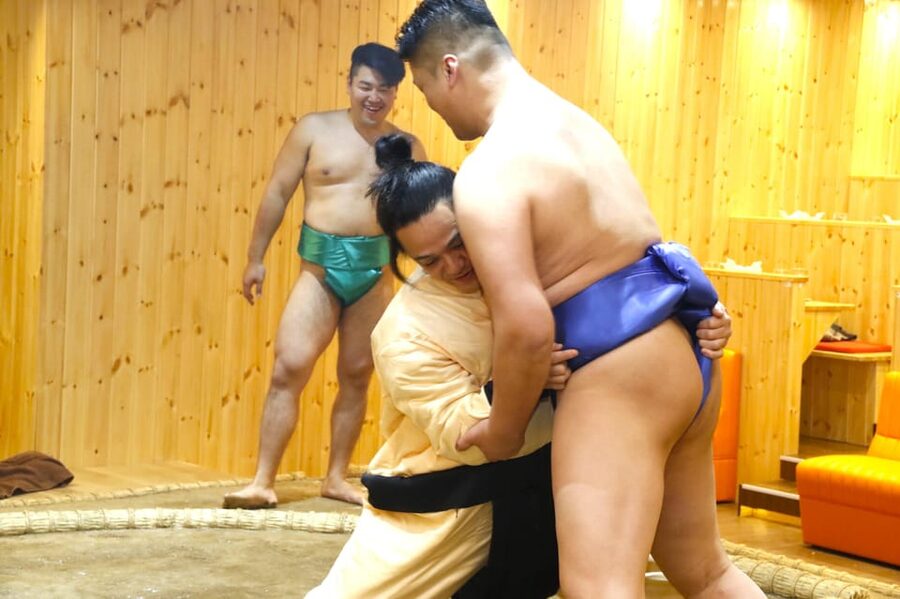
The best part of this Tokyo experience is that you do not just sit and watch. You learn the basic rituals, cheer through a playful match, eat chicken hot pot beside a real dohyo, and may even be invited into the ring to test your strength against a retired wrestler. The bilingual host, including presenters such as Lala, keeps the pace lively and explains what you are seeing.
I especially like the family-friendly humor and the combination of food, culture, and audience participation. The printed photo with the wrestlers and geisha is also a useful touch, since it gives you something more lasting than a quick snapshot on your phone. The main consideration is simple: this is a staged entertainment show, not a serious morning practice or official tournament.
- Real dohyo at the center: Every seat faces the ring, with VIP and VVIP upgrades for a closer view.
- More than a wrestling display: Learn about sumo rituals, rules, exercises, and techniques through English and Japanese commentary.
- A full Japanese meal: Chicken chanko-nabe, side dishes, one complimentary drink, and additional food available during the meal.
- Audience participation: A small number of people can challenge a retired wrestler, with a lottery used if too many people volunteer.
- A geisha dance opens the program: The kimono-clad performance adds a traditional Japanese element before the comic sumo action.
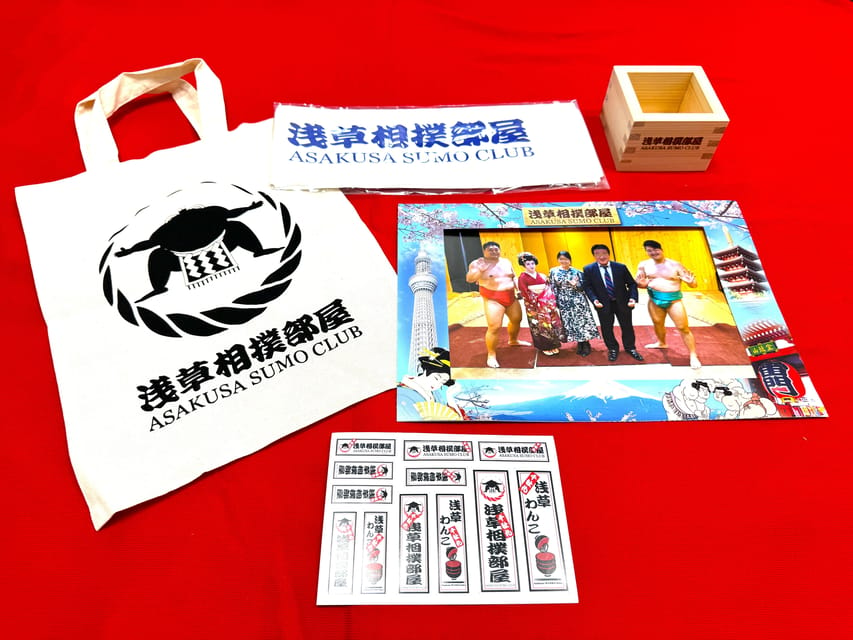
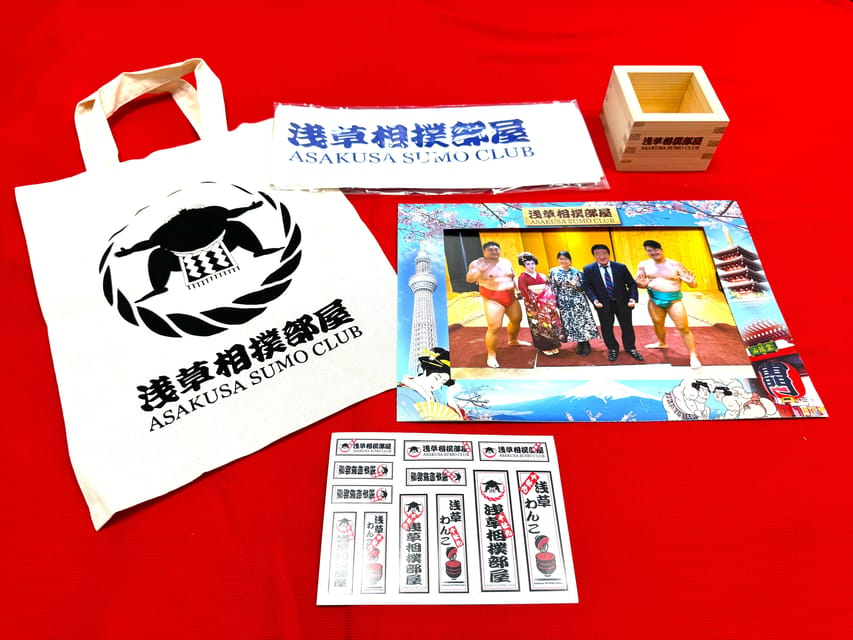
- A practical keepsake: Take home a printed group photo and a souvenir set, with contents varying by season.
A sumo show built for participation
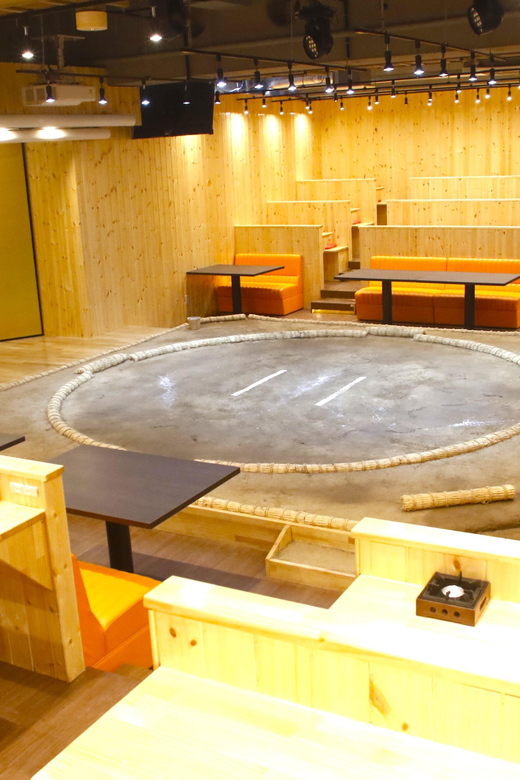
At Asakusa Sumo Club, the dohyo is the room’s focal point. You sit around a real sumo ring rather than facing a distant stage, so the action stays close even with standard seating. The space is designed for an intimate meal and show, not for the scale of a professional tournament arena.
That difference matters. If you want the solemn quiet of a grand sumo tournament or a look inside the daily life of an active stable, this is not the right substitute. If you want to understand the sport while laughing, eating, and taking part, it is a much easier introduction.
The show lasts about two hours. That is a useful length for a family outing or an evening activity between sightseeing stops in Asakusa. You get enough time for explanation and demonstrations without committing half a day to a formal cultural performance.
What happens before the wrestling
The program begins with an explanation of sumo’s long place in Japanese culture. The host introduces the ring, basic etiquette, and the rules that can seem mysterious if you have only seen short clips of sumo bouts.
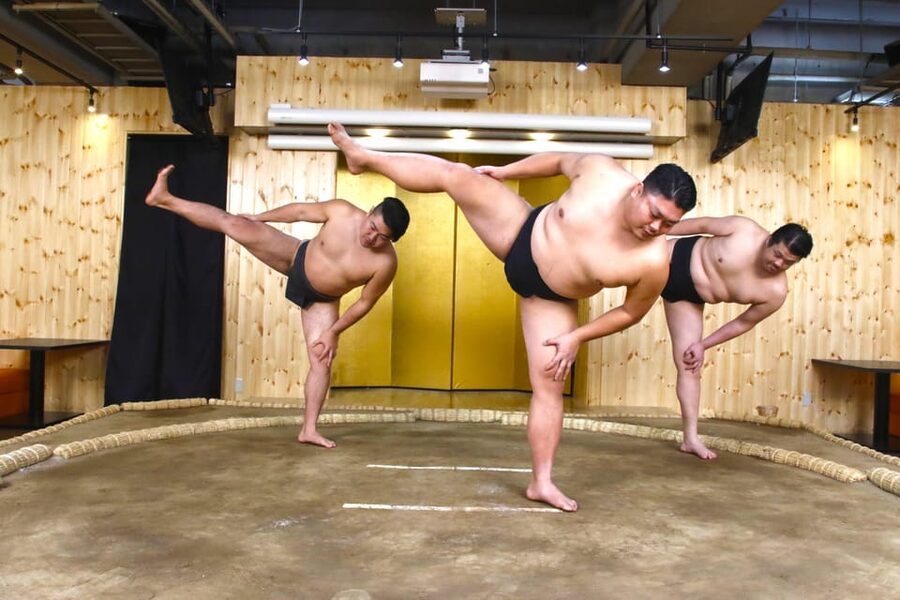
You also watch demonstrations of morning exercises and classic sumo techniques. These sections give the show some substance. You are not simply watching large athletes push each other around. You learn how balance, footwork, grip, timing, and ritual all shape a bout.
The commentary is delivered in English and Japanese by a moderator. That bilingual format makes the show accessible without turning it into a long lecture. The host keeps the explanations moving, then shifts back to jokes and audience interaction before the pace becomes heavy.
Presenters such as Lala have received particular praise for keeping the room involved, while Benjamin has also been singled out for helping create a well-organized program. The tone is casual, and the humor is a major part of the evening. One small caution: comedy is personal. Most of the program is warm and playful, but you may not connect with every host’s style.
A few more shows around Japan worth a look
- Mt Fuji & Hakone Cruise, Drum Show Bullet Train 1 Day from Tokyo
★ 4.0 · 7,413 reviews - Tokyo: Sumo Show and Dining Experience
★ 4.8 · 2,742 reviews - the SUMO show
★ 5.0 · 1,960 reviews
A geisha dance sets the tone
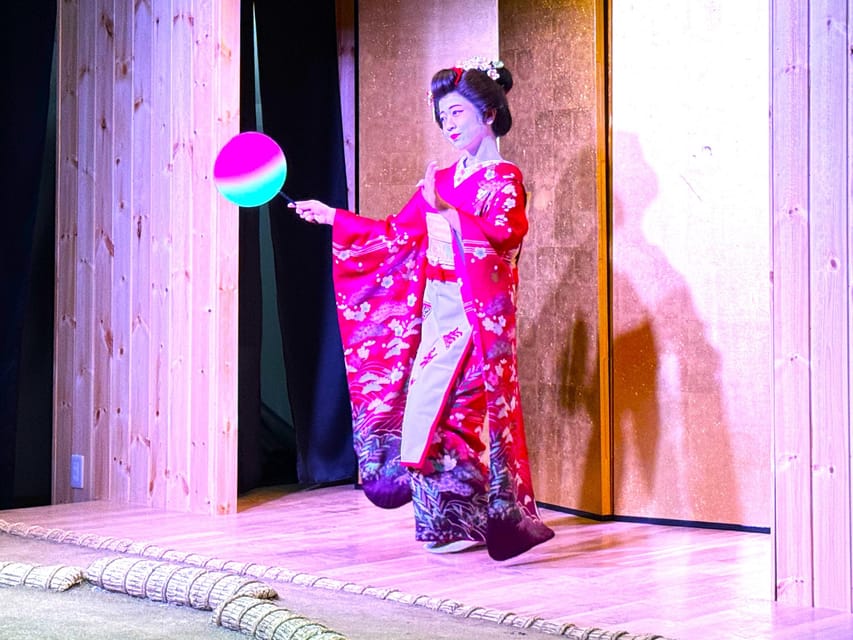
Before the sumo matches, a geisha performs a traditional Japanese dance in an elegant kimono. This is a short cultural performance, not a full geisha training session or a lesson in the history of the profession.
Still, it adds an important change of mood. The dance gives the opening a formal Japanese flavor before the show moves into louder cheering and comic contests. If you have never seen a geisha dance, it may be one of the more unusual parts of your Tokyo schedule.
The contrast works well. You begin with ceremony, then move to exercises, explanations, wrestling techniques, and audience challenges. The evening feels varied rather than like one long match.
Chicken chanko-nabe and Japanese side dishes
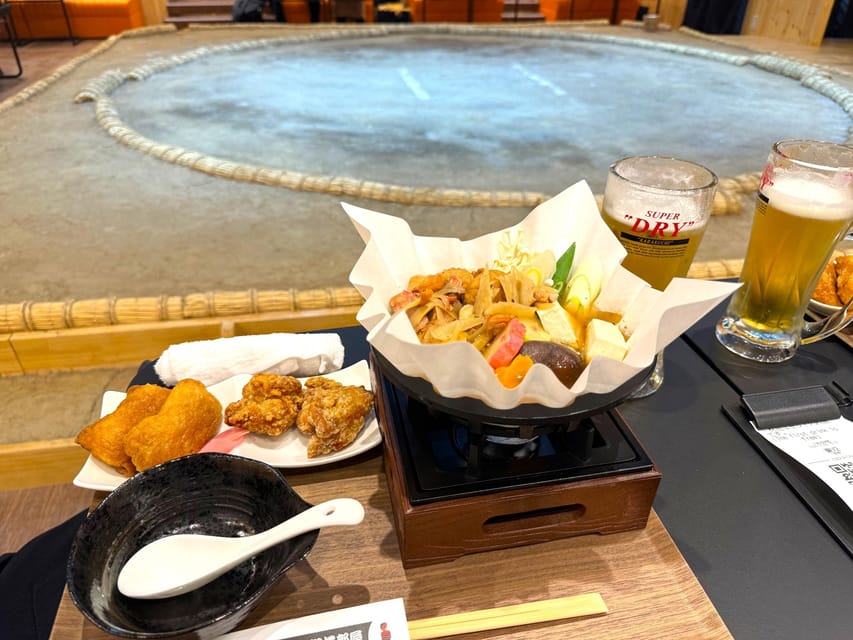
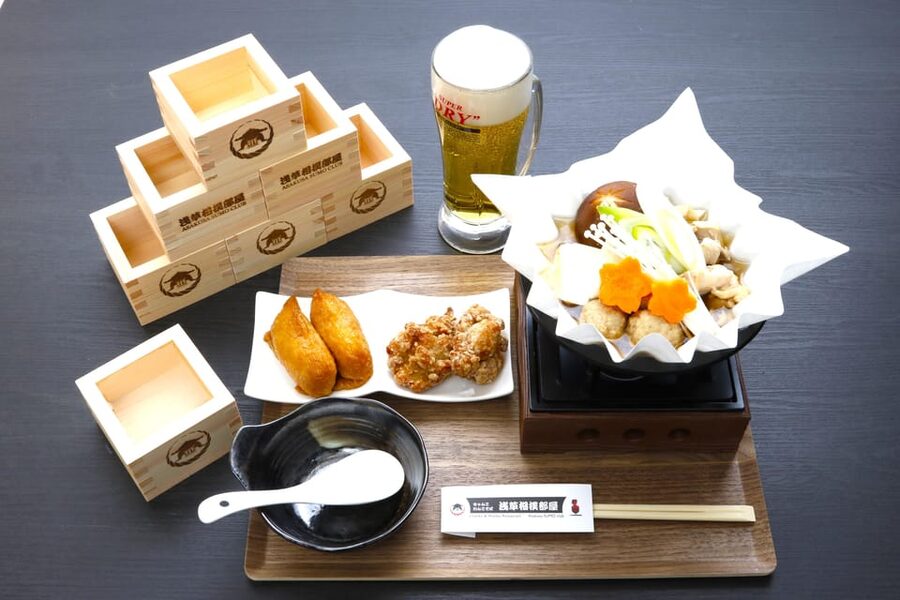
Your meal is built around chanko-nabe, the hearty hot pot traditionally associated with sumo wrestlers. Here, the main version is chicken hot pot, served with Japanese side dishes such as edamame, inari sushi, and sweet rolls.
The food is included in the ticket, and the meal is advertised as all-you-can-eat. You can order additional portions using a QR code, which makes it easy to request more of particular items instead of taking a large mixed serving. One drink is included, with more available for purchase.
This is good value at $103 per person because the price covers a meal, a live performance, bilingual hosting, one drink, a printed photo, and a souvenir set. Tokyo entertainment can become expensive once meals and drinks are added separately, so the package is easier to assess than a show with many extras charged at the door.
I would keep expectations sensible about the food. The hot pot and side dishes are a useful part of the experience, and many people find the meal delicious and plentiful. A few comments describe the food as more limited than expected. Think of it as a satisfying Japanese meal that supports the show, not as a destination restaurant meal.
The hot pot is served at the table, and one person specifically found the paper bowls over an open flame unsettling. If that setup makes you nervous, ask staff for help. The restaurant format also means you may share a table or sit alongside other people, rather than having a private dining space.
The retired wrestlers bring the energy
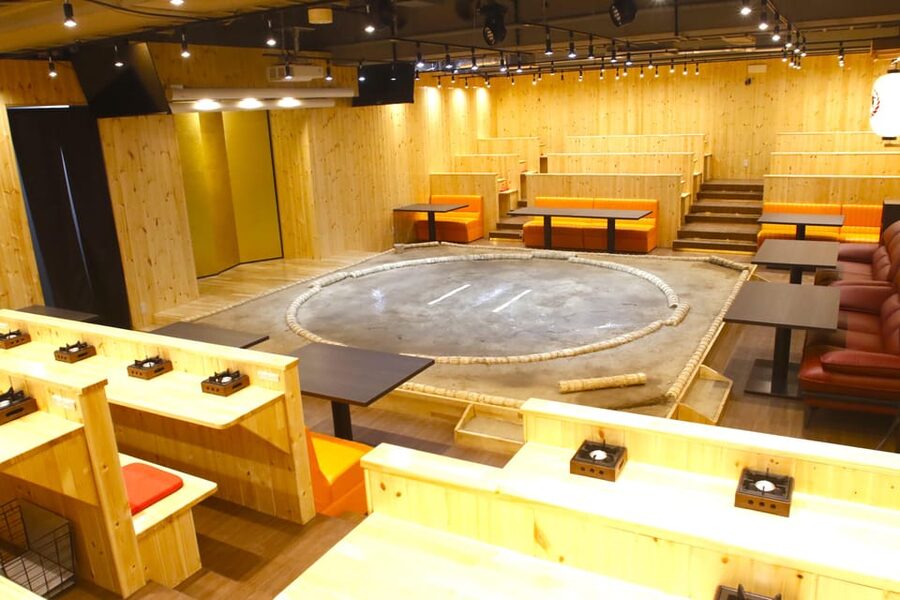
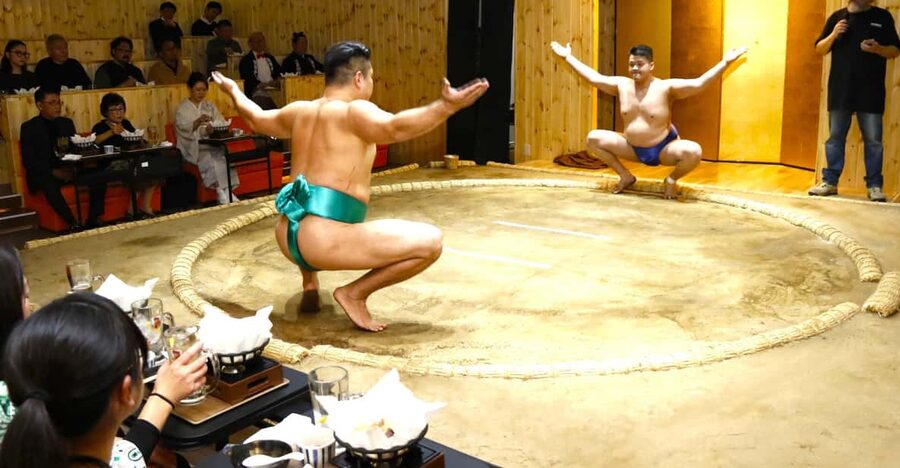
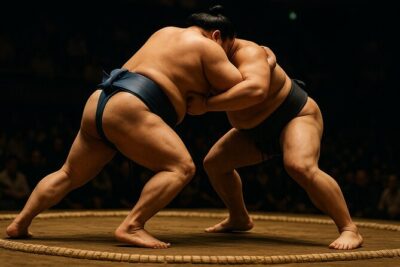
The central match is a best-of-three contest between retired professional sumo wrestlers. This is where the experience moves firmly into entertainment. The wrestlers use their size, expressions, comic timing, and interaction with the room to keep both adults and children engaged.
You will see traditional movements and recognizable sumo techniques, but you should not expect the tension of a professional tournament bout. The matches are arranged for the audience, and the wrestlers are there to explain, entertain, and interact.
That is not a flaw unless you book it expecting serious competition. The show is strongest when you treat it as a cultural performance with real sumo expertise rather than as a sporting event. The retired wrestlers make the rules easier to understand because you can watch the techniques close up and then see them explained in plain language.
The format works especially well for mixed-age groups. Children can laugh at the broad humor and physical action, while older family members can follow the history, ritual, and food. The experience has also suited three-generation groups, with children taking part in the challenge and older relatives enjoying the seated format.
Same place, a different night out:
- Tokyo: Japanese Dance Cabaret Theater Asakusa-Kaguwa Ticket
★ 4.8 · 2,270 reviews - Tokyo Shinjuku Sumo Show & Experience with Photo
★ 5.0 · 1,750 reviews - Tokyo: Samurai Restaurant Show Ticket with 2 Drinks
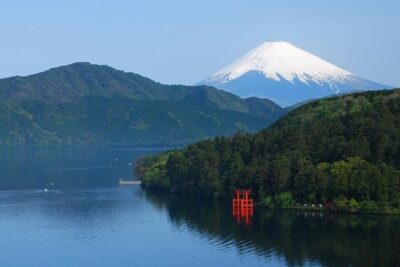
★ 4.5 · 1,307 reviews - Mt Fuji & Hakone Cruise, Drum Show Bus 1 Day from Tokyo
★ 4.0 · 1,287 reviews
Should you enter the dohyo?
The Sumo Challenge is the most memorable feature for people who want to do more than watch. A limited number of participants can step into the ring and challenge one of the wrestlers.
There is an important catch: challenger places are limited. If too many people volunteer, the participants are selected by lottery. You should treat the challenge as a possible bonus, not as something guaranteed by your ticket.
If you are chosen, expect a playful contest rather than a dangerous fight. The point is to let you feel the scale and force of a sumo wrestler while the room cheers. It can be a highlight for children, teenagers, and adults who enjoy being part of the show. If public participation makes you uncomfortable, you can simply watch from your seat.
The challenge also gives the program a clear finale. Instead of ending after the wrestlers have performed for you, the show lets a few people experience the dohyo firsthand. That personal connection is a big reason this activity feels different from a standard stage performance.
Choosing between Standard, VIP, and VVIP
All seats provide a view of the dohyo, so Standard seating is the sensible choice if you mainly want the meal and the program. You will still be close enough to follow the explanations and watch the action.
VIP seating places you in the front row. This is useful if you want to see the wrestlers’ expressions, follow the techniques at close range, or improve your chance of feeling fully involved in the room.
VVIP seating offers premium central seats with the clearest and least obstructed view. It may be worth considering for a special occasion, a photographer, or anyone who dislikes looking past other people. One person who chose VIP felt the upgrade was worth the extra cost, but the right choice depends on how much you value proximity.
I would not assume that Standard seating is poor. The ring sits at the center, and the setup is intentionally intimate. Upgrade when the close view is important to you, not simply because a higher category sounds better.
What is included, and what is not
The $103 ticket includes:
- Two hours of entertainment
- English and Japanese commentary
- Sumo demonstrations and a best-of-three match
- The geisha dance
- Chicken chanko-nabe and Japanese dishes
- One complimentary drink
- A printed photo with the sumo wrestlers
- A souvenir set
- The chance to enter the Sumo Challenge, subject to limited places and possible lottery selection
Infants do not receive meals, seating, or souvenirs as part of the package. Babies under one year are not suitable for this activity.
Souvenir contents can change by season. The printed photo is more predictable, but you should regard the gift bag as a pleasant extra rather than choosing the tour for a specific item.
Dietary needs and access
Vegetarian and vegan meals can be arranged, but you need to request them at least two days before the experience. Gluten-free and halal meals are not available. You may bring your own food if you need to manage those dietary requirements.
Wheelchair access is available, but wheelchair-accessible seating is limited. Tell the operator when booking if you need that arrangement. The meeting point can vary according to the seating option you select, so check the details attached to your booking rather than assuming every ticket uses the same entrance.
The experience may use shared seating. That is normal for this type of small-group restaurant show, but it is worth knowing if you are planning a quiet private meal.
Who will enjoy this most?
I would recommend the show to you if you want an easy introduction to sumo and prefer culture with a sense of humor. It works particularly well for families, first-time visitors to Japan, and anyone who wants an evening activity that combines dinner and entertainment.
It also suits people who have already watched sumo but want to understand the rituals and techniques more clearly. Seeing the movements close to the dohyo can make the sport easier to follow than watching a fast match on television.
I would hesitate if your main goal is serious sumo. This is not a visit to an active stable, and it does not show the private routine of current wrestlers. It is also not ideal if you need a strict gluten-free or halal meal provided on site.
Value at $103 per person
The ticket price is not cheap, but it covers several separate parts of an evening: a cultural show, a hot pot meal, drinks, audience participation, a photo, and souvenirs. If you already planned to pay for dinner and another Tokyo activity, the combined value is strong.
The price becomes easier to justify for families because children and adults can enjoy the same program. You do not need to split up for a serious lecture while younger children wait. The food, humor, and challenge keep the evening active.
For a solo visitor or a couple on a tight budget, Standard seating is the best way to control the cost. For a birthday, anniversary, or once-in-a-lifetime Tokyo visit, VIP or VVIP may make sense if the closer view matters to you.
Free cancellation up to 24 hours before the start and reserve-now, pay-later booking add useful flexibility. Check the starting time and meeting point for your specific option, since those details can vary.
Should you book the Asakusa Sumo Club show?
Book it if you want accessible Japanese culture with dinner and plenty of laughs. The bilingual commentary, geisha dance, retired wrestlers, and chance to enter the ring give you more than a meal with a short performance attached.
Do not book it expecting a professional tournament, an active-stable visit, or a quiet gourmet dinner. The food supports the two-hour show, and the wrestling is designed for fun.
For most people, I would choose Standard seating unless a front-row view is a priority. Reserve vegetarian or vegan food at least two days ahead, tell the operator about wheelchair seating at booking, and remember that the Sumo Challenge is not guaranteed. With those expectations in place, this is a lively and well-rounded way to spend an evening in Asakusa.
FAQ
How long does the Tokyo Sumo Show Experience last?
The experience lasts about two hours.
What does the ticket cost?
The listed price is $103 per person.
Is the show performed by active sumo wrestlers?
No. The entertainment show is performed by retired professional sumo wrestlers.
Is this a serious sumo practice session?
No. It is a fun, family-friendly show with demonstrations, explanations, matches, and audience interaction. It is different from a serious morning practice tour.
Is the sumo challenge guaranteed?
No. Only a limited number of people can challenge a wrestler. If too many people apply, participants are selected by lottery.
What food is included?
The meal includes chicken chanko-nabe and Japanese dishes. The meal is described as all-you-can-eat, and one drink is included.
Can I order additional drinks?
Yes. One drink is complimentary, and additional drinks can be purchased.
Are vegetarian or vegan meals available?
Yes, but you must request a vegetarian or vegan meal at least two days in advance.
Can the operator provide gluten-free or halal meals?
No. Gluten-free and halal meals are not available. You may bring your own food for dietary needs.
Is the experience wheelchair accessible?
Yes, but wheelchair-accessible seating is limited. You should state your requirements when booking.
Are photos and souvenirs included?
Yes. You receive a printed photo with the sumo wrestlers and a souvenir set. The contents of the souvenir set may vary by season.
Can infants attend?
Babies under one year are not suitable for the activity. Infants do not receive meals, seating, or souvenirs.
Just added around Japan
- Authentic Kabuki Transformation & Mini Performance at Aioiza Gifu★ 4.5 · 3 reviews
- Kabuki Talk★ 5.0 · 10 reviews
- Tokyo: English Standup Comedy Night★ 5.0 · 4 reviews
- Experience the Asakusa Kabuki Opera Show!★ 5.0 · 99 reviews
- Tokyo: Taishu Engeki Show with Kimono and Sword Lesson★ 5.0 · 12 reviews
- Tokyo: Traditional Geisha Experience Show & Japanese Dinner★ 4.2 · 59 reviews
- Tokyo: Rainbow Bridge Day Cruise Show Unlimited Soft Drinks★ 4.5 · 86 reviews
- Tokyo: Taiko Drum Experience in Kabukicho with Dinner★ 5.0 · 3 reviews
Japan Shows, compared.
Japanese Dance Cabaret Theater Asakusa-Kaguwa Ticket
Read our review →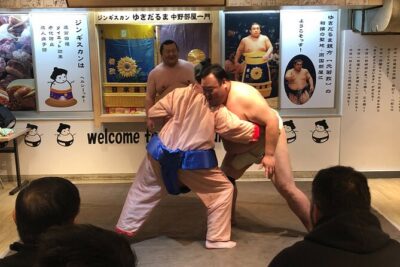
Tokyo Shinjuku Sumo Show & Experience with Photo
Read our review →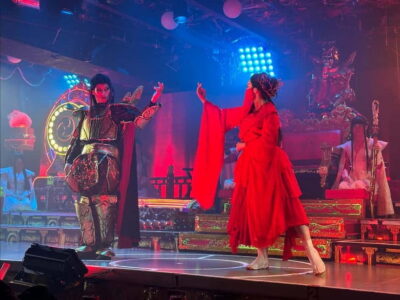
Mt Fuji & Hakone Cruise, Drum Show Bus 1 Day from Tokyo
Read our review →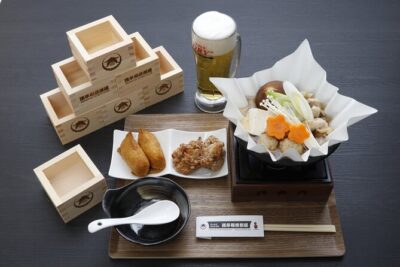
Tokyo Sumo Entertainment Show with Chicken Hot Pot and Photo
Read our review →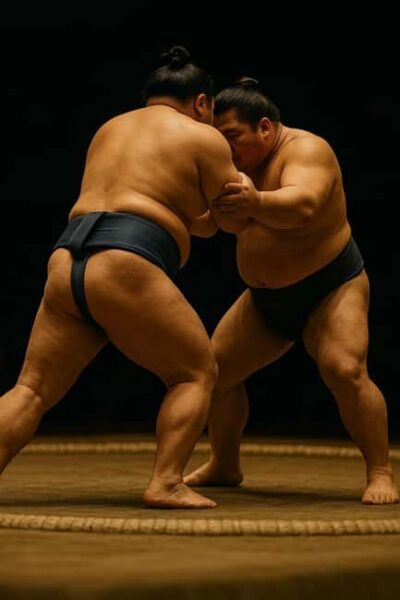
Browse the lists this show appears in