
Review · TOKYO
Tokyo Shinjuku Sumo Show & Experience with Photo
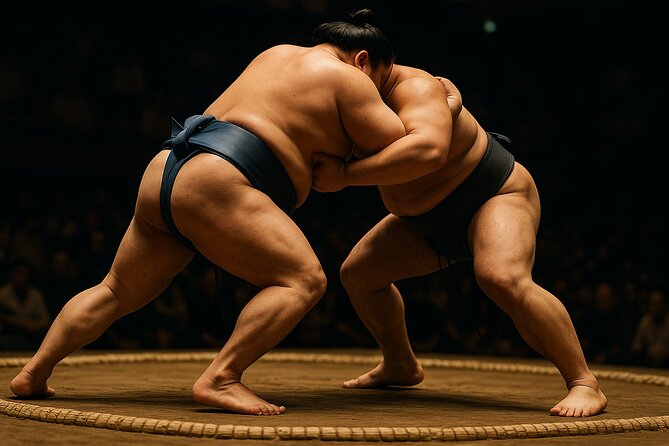
The best part of this Shinjuku experience is the close look at sumo beyond the slap and shove. You see two real wrestlers perform, then learn why they throw salt, stomp the ring, and follow such careful pre-match rituals. A bilingual MC keeps the explanations clear and adds plenty of humor.
I like the audience participation, especially the chance to step onto the dohyō for a friendly challenge. I also like the mix of sport and culture: you learn rules, tactics, origins, training customs, and the wrestlers’ daily world while watching them work the room.
The main consideration is expectation. This is a lively cultural show, not a serious tournament bout. It is best for a fun, accessible introduction to sumo, not for watching a full professional competition in silence.
Key points to know before booking
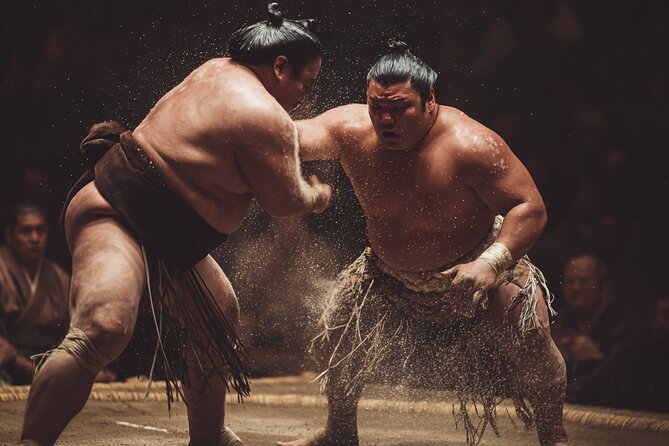
- Two wrestlers perform live: You get close to the action instead of watching from a distant arena seat.
- A bilingual MC explains the sport: Hosts such as Shane and Manny have been praised for clear explanations and easy humor.
- You can join the action: Audience members may challenge a wrestler, and children can take part in playful inflatable-suit bouts.
- The 90-minute format works well: It gives you a proper introduction without taking over your day in Tokyo.
- Photos are part of the experience: You can take pictures with the wrestlers after seeing them perform.
- The Shinjuku setting is convenient: The venue is near public transportation and easy to reach by train.
What happens inside Shinjuku Sumo Club
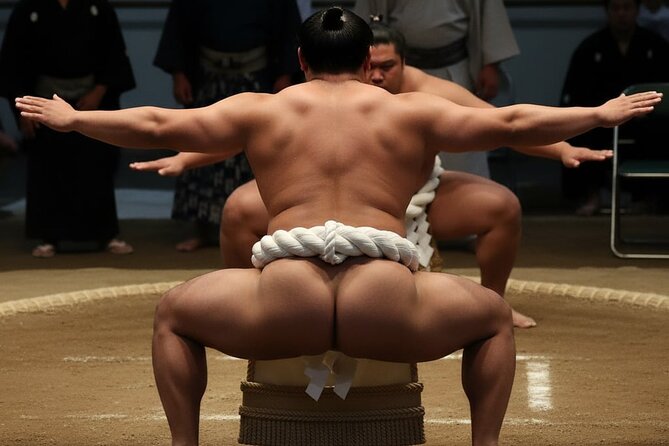
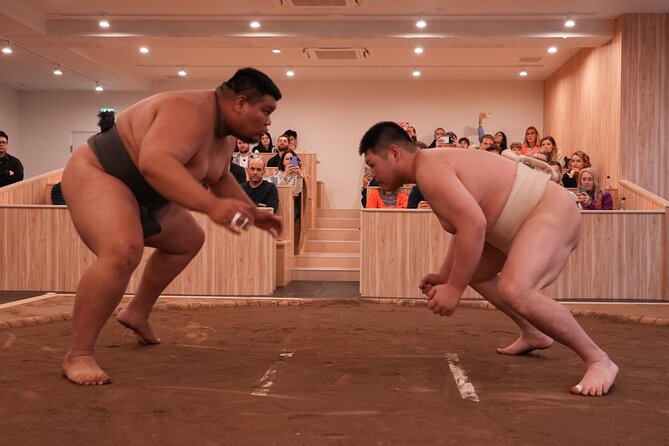
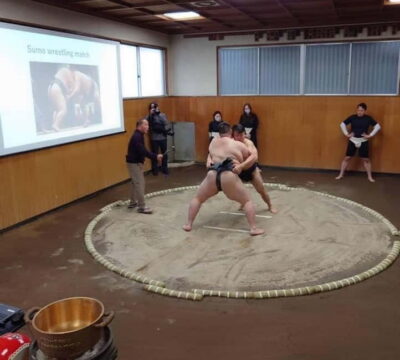
You enter a traditional-style venue in Shinjuku and find the focus already fixed on the dohyō, the raised sumo ring. The room is designed for a close-up experience, so the wrestlers are not tiny figures far across a sports hall. Their size, balance, speed, and control are easy to appreciate from nearby.
The show begins with an introduction to sumo and its place in Japanese culture. If you know little about the sport, this helps you follow what comes next. If you have seen sumo on television, you will still pick up useful details about the parts that broadcasts often skip.
The bilingual MC explains the basic rules and the purpose of each movement. That includes the pre-match rituals, salt throwing, and dramatic ring stomping. These actions can look mysterious at first, but the explanations give them meaning and help you see that sumo is not simply two large men pushing each other.
The pace is friendly and theatrical. The host talks to the audience, answers questions, and uses humor to keep the information from feeling like a lecture. Past sessions have featured MCs named Shane, Manny, and Mr. So, with the style varying slightly by host. The common thread is a light but respectful presentation.
A few more shows around Tokyo worth a look
- Mt Fuji & Hakone Cruise, Drum Show Bullet Train 1 Day from Tokyo
★ 4.0 · 7,413 reviews - Tokyo: Sumo Show and Dining Experience
★ 4.8 · 2,742 reviews - the SUMO show
★ 5.0 · 1,960 reviews
Watching real wrestlers show speed and control
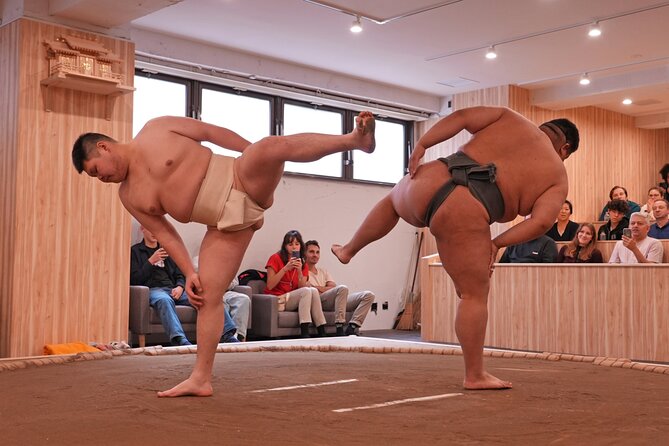
The two wrestlers are the heart of the experience. You see them demonstrate techniques and perform bouts that show how much skill sits behind the sport’s short matches. Their size is striking, but so is their movement. A good sumo wrestler must react quickly, hold balance, read an opponent, and use timing rather than brute force alone.
The performance also gives the wrestlers room to be funny. They play to the audience and respond to the MC, so the show feels social rather than formal. That works especially well for families and mixed-age groups. A child may enjoy the comedy first and absorb the cultural details along the way.
I would not book this expecting the tension of a major tournament. The action is presented for entertainment and education, and some sessions use retired wrestlers. That is not a weakness if you want a first look at the sport. It simply means the purpose is connection and explanation, not ranking points or a championship result.
The balance is good: you get genuine athletes demonstrating a serious Japanese tradition, but you also get laughs and audience interaction. The sport remains honorable without becoming stiff.
Why the rituals matter
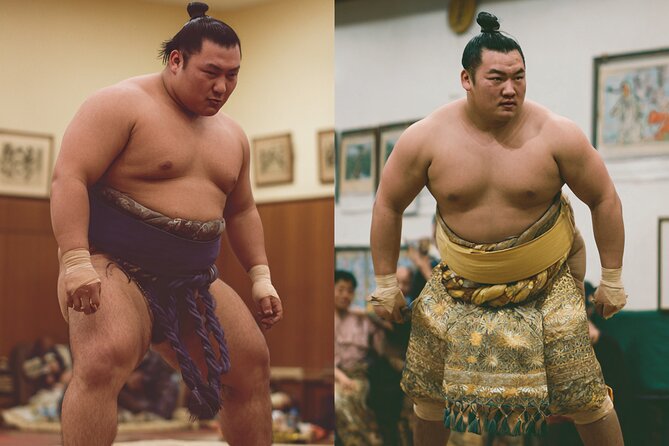
Sumo has a strong ceremonial side, and the show takes time to explain it. The salt throwing, for example, is not just a dramatic flourish. The ring stomping and other pre-bout actions help show how sumo connects physical competition with ritual and respect.
I appreciate this section because it gives you a better lens for the rest of your Japan trip. You may see sumo references in shops, television broadcasts, museums, or newspaper coverage. After this show, the gestures and rules will mean more than they did before.
The explanations cover the origins of sumo, its rules, tactics, and lifestyle. You also get a sense of the discipline behind the sport. The presentation does not turn the wrestlers into cartoon figures. It lets them answer questions and show some personality, which makes the tradition feel human.
For first-time visitors, this context is the real value. You are not only watching a spectacle. You are learning how to watch it.
Stepping onto the dohyō
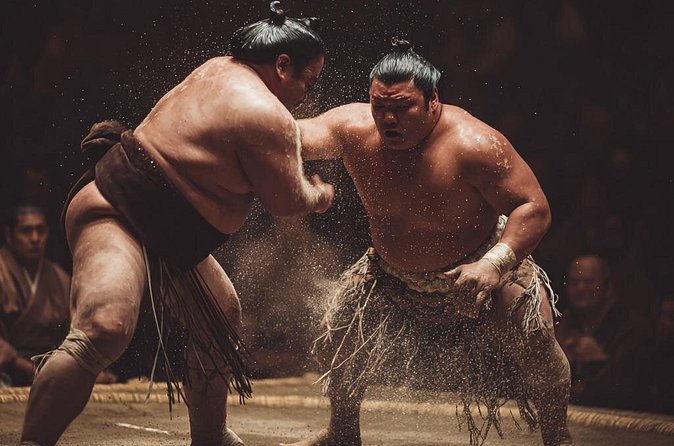
The audience participation is one of the strongest reasons to choose this experience. At a suitable point in the show, members of the audience can try a friendly sumo challenge against one of the wrestlers.
You should see this as playful participation, not a test of strength. The wrestlers control the exchange and keep it entertaining. The fun comes from standing in the ring, trying the stance, and discovering how difficult it is to move someone who knows how to use balance and leverage.
Children may also take part in inflatable sumo costumes. This is a particularly good feature for families because it lets younger children join the theme without facing the physical scale of a full-grown wrestler. It also produces some of the funniest moments of the session.
Not everyone will want to participate, and you do not need to wrestle to enjoy the show. You can watch the demonstrations, ask questions, cheer from your seat, and take photos. The range of participation makes the event work for both outgoing and more reserved members of a group.
Same place, a different night out:
- Tokyo: Japanese Dance Cabaret Theater Asakusa-Kaguwa Ticket
★ 4.8 · 2,270 reviews - Tokyo: Samurai Restaurant Show Ticket with 2 Drinks
★ 4.5 · 1,307 reviews - Mt Fuji & Hakone Cruise, Drum Show Bus 1 Day from Tokyo
★ 4.0 · 1,287 reviews - Tokyo: Sumo Show and Experience in Shinjuku
★ 4.8 · 1,001 reviews
Photos, questions, and personal contact
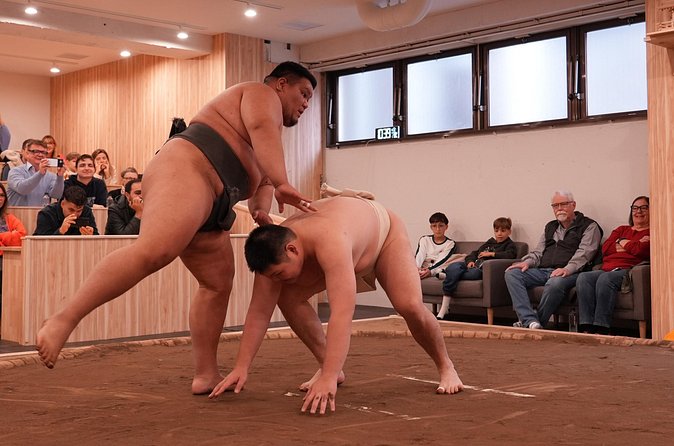
The photo session gives the experience a clear finish. After seeing the wrestlers in action, you can take pictures with them and get a closer look at their size and presence. This is more memorable than a standard stage performance because you have already seen what they can do in the ring.
You can also ask questions. That exchange is useful because it moves the event beyond a prepared presentation. Questions about rules, tactics, training, and sumo life help connect the formal tradition with the people practicing it.
The tone remains friendly. The wrestlers are presented as athletes and personalities, not just costumes for a photo opportunity. That matters if you want a respectful cultural activity rather than a quick tourist picture.
If photography is important to you, keep your phone ready during the later part of the experience. The included photo opportunity is one of the features built into the activity, but the exact flow may depend on the session and the number of people taking part.
Is $79.59 a fair price?
At $79.59 per person, this is not the cheapest way to fill 90 minutes in Tokyo. The value depends on what you want from the event.
If you only want to see a few minutes of sumo action, the price may feel high. You are paying for more than a bout. The cost includes the venue, bilingual explanation, live demonstrations, audience participation, the question period, and photos with the wrestlers. Admission is included, and the format gives you a guided introduction rather than leaving you to work out the rules alone.
I think the price makes more sense for a first visit to Japan, a family outing, or a short Tokyo schedule. You get a contained experience with a clear start and finish, and you do not need prior knowledge of sumo to follow it.
The value is weaker for someone who wants only serious competitive sumo. For that, you should look for a real tournament or another event focused on competition. This show is about access, explanation, and fun.
One practical point: some sessions include a drink, but the refreshment may be limited to a bottled water rather than a broad drink choice. Snacks and additional drinks may be available for purchase. Do not book it mainly for food or drinks.
Who will enjoy this most?
I would recommend this experience to families with children, couples looking for something different, and anyone who wants a simple introduction to Japanese culture. It also suits first-time visitors who have heard of sumo but do not know the rules or rituals.
The bilingual presentation helps if you do not speak Japanese. You are not left guessing why the wrestlers perform each movement. The MC explains the action in accessible language, and the humor keeps the pace comfortable.
It is also a strong choice for mixed groups. One person may come for the sport, another for the culture, and a child for the chance to challenge a wrestler. Everyone gets a different entry point.
I would be more cautious if your main goal is an intense sporting contest. The event is designed to entertain, educate, and involve the audience. The wrestlers may be retired, and the bouts are demonstrations rather than tournament matches.
Getting there and planning your timing
The venue is in Shinjuku and near public transportation. The location is reported to be easy to find from the train, which is useful in a district where the streets around the stations can feel confusing at first.
Give yourself extra time. Heavy traffic can slow taxis and road transport, and arriving just before the start creates needless stress. A 30-minute buffer is sensible if you are coming from another part of Tokyo or traveling at a busy time.
The experience lasts about 1 hour and 30 minutes. That is long enough to cover the history, rules, rituals, demonstrations, participation, and photos without becoming a full-day commitment. I would pair it with dinner or an evening walk in Shinjuku rather than trying to squeeze in a distant attraction immediately afterward.
Confirmation is provided at booking, and the ticket is mobile. Keep the ticket easy to reach on your phone. Free cancellation is available if you cancel at least 24 hours before the start time. Changes or cancellations inside that window are not accepted for a refund.
Is the show authentic?
That depends on what you mean by authentic. You are seeing real wrestlers demonstrate real sumo movements, rituals, and techniques. You are also taking part in a show built for an international audience.
I see that as a fair trade. The bilingual host, explanations, questions, and playful challenges make the sport easier to understand. You are not pretending to attend a professional tournament. You are being given a friendly doorway into a tradition that can otherwise feel difficult to approach.
The experience treats sumo with respect while allowing the wrestlers to be entertaining. That combination is why it works. You leave with more than a photo, but you also get the lighthearted evening that many people want while on holiday.
Should you book the Shinjuku Sumo Show?
Book it if you want a fun and clear first introduction to sumo, especially if your group includes children or people who know little about the sport. The close setting, bilingual explanations, live demonstrations, friendly challenges, and photo session give you plenty for the price.
Skip it if you want a full tournament atmosphere, serious competitive stakes, or a long evening of matches. This is a cultural performance with real athletes, not a substitute for professional sumo competition.
For most first-time visitors, I think the 90-minute format is the strongest argument. It is easy to fit into a Tokyo schedule, easy to understand, and different from the usual temple, shopping, and observation-deck routine. If sumo is on your Japan wish list but you are not sure where to begin, this is a sensible place to start.
FAQ
How long does the Shinjuku Sumo Show last?
The experience lasts approximately 1 hour and 30 minutes.
Where does the sumo experience take place?
It takes place at Shinjuku Sumo Club in Shinjuku, Tokyo.
Is the show suitable for children?
Yes. The experience is family-friendly and includes audience participation. Children may be able to take part in playful bouts using inflatable sumo costumes.
Do I need to understand Japanese sumo before attending?
No. A bilingual MC explains the rituals, rules, tactics, origins, and movements in an accessible way.
Can I participate in sumo myself?
Yes. Audience members have the opportunity to step onto the dohyō for a friendly sumo challenge. You can also ask questions and take photos with the wrestlers.
Can I cancel for a full refund?
Yes, if you cancel at least 24 hours before the experience starts. Cancellations or changes made less than 24 hours before the start time are not refunded.
Just added around Tokyo
- Tokyo: Taishu Engeki Show with Kimono and Sword Lesson★ 5.0 · 12 reviews
- Tokyo: Traditional Geisha Experience Show & Japanese Dinner★ 4.2 · 59 reviews
- Tokyo: Rainbow Bridge Day Cruise Show Unlimited Soft Drinks★ 4.5 · 86 reviews
- Tokyo: Taiko Drum Experience in Kabukicho with Dinner★ 5.0 · 3 reviews
- Tokyo: Know about Kabuki performing – Ginza Walking★ 4.2 · 3 reviews
- Tokyo: Learn about Japanese Traditional art KABUKI in Ginza★ 3.2 · 5 reviews
- Tokyo: KABUKI, BUNRAKU, etc. presented by National Theatre★ 4.6 · 135 reviews
- Tokyo: Family Sumo Workshop & Live Wrestling Show with Lunch★ 4.9 · 99 reviews
Tokyo Shows, compared.
Japanese Dance Cabaret Theater Asakusa-Kaguwa Ticket
Read our review →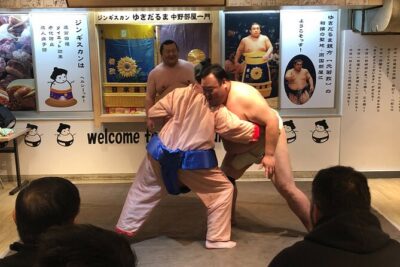
Mt Fuji & Hakone Cruise, Drum Show Bus 1 Day from Tokyo
Read our review →
Yakatabune Dinner Cruise with Japanese Show & Drinks
Read our review →
Tsukiji Fish Market: Street Food & Culture Walking Tour
Read our review →Browse the lists this show appears in