
Review · KYOTO
Kyoto: Japanese Koto Musical Instrument Class
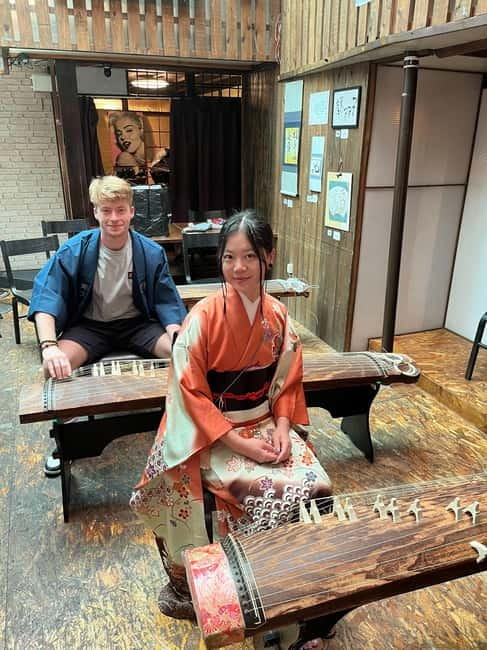
Kyoto’s koto class gives you something many sightseeing stops cannot: a chance to make traditional Japanese music yourself. At Gojo Paradiso, you first hear the instrument played, then sit down with guidance and work toward Sakura Sakura, the familiar folk song associated with Japan.
I like the small group of no more than 10, which gives a beginner a fair chance to ask questions. I also like the patient teaching style praised by several participants, including Natsuko, who helped first-time musicians feel capable rather than intimidated.
The main consideration is time. Ninety minutes is enough for a rewarding introduction, not a full course in koto playing. Children under 10 cannot join, and you must reserve at least one day ahead.
Key points at a glance
- Play Sakura Sakura yourself: The lesson moves beyond watching a performance and puts the instrument in your hands.
- Meet at Gojo Paradiso: The venue sits beside the Takase River on Kiyamachi Street, within easy walking distance of two Keihan stations.
- Learn with patient guidance: The instructor teaches in English or Japanese and welcomes complete beginners.
- Keep the group intimate: A maximum of 10 participants makes this more personal than a large cultural demonstration.
- Pay $32 for 90 minutes: With the koto, materials, and expert instruction included, the price is reasonable for a hands-on Kyoto activity.
- Bring home a personal memory: Photos and videos are welcome, giving you more than a quick look at an instrument behind glass.
Why playing the koto feels different from watching a performance
The koto is a long Japanese string instrument with a sound that can feel calm, clear, and spacious. You do not simply sit in an audience while someone explains its history. You learn how it feels under your own hands, which makes the tradition easier to remember.
That matters in Kyoto, where many cultural experiences involve looking, listening, and moving on. Here, the central moment is active. You hear the instructor play, then attempt the same piece yourself. Even if your musical background is limited or nonexistent, the class is designed to give you a small success within the session.
The first target is Sakura Sakura, one of the best choices for a short beginner lesson. You are not expected to master a complex concert piece. Instead, you work toward a recognizable Japanese melody that gives the lesson a clear purpose.
The activity has also worked well for people who had never played an instrument before. One participant described feeling, for the first time, that learning an instrument might actually be possible. That is an important distinction. The class is not trying to turn you into a professional koto player in an afternoon. It gives you a friendly first step.
More Broadway and West End Shows in Japan:
- NYC: Aladdin the Musical on Broadway
★ 4.8 · 1,800 reviews - NYC: The Lion King on Broadway
1,609 reviews - NYC: MJ the Musical on Broadway
1,510 reviews
Arriving at Gojo Paradiso beside the Takase River
Gojo Paradiso is on Kiyamachi Street along the Takase River. From Keihan Kiyomizu Gojo Station, allow about five minutes on foot. From Keihan Shichijo Station, the walk is about 10 minutes. The venue is listed as 386 meters from Kiyomizu Gojo Station.
This location works well if you are already exploring central Kyoto. You do not need to build a whole day around the class, and the 90-minute length fits neatly between other plans. You could pair it with nearby sightseeing before or after, though you should leave enough time to reach the venue without rushing.
The meeting point is especially useful for people who prefer public transportation. You have a clear rail reference and a short walk rather than a remote countryside transfer. The venue is also wheelchair accessible, which makes this cultural activity available to more visitors.
One practical tip: make sure you identify Gojo Paradiso before your class day. Kiyamachi Street and the river area can be busy with restaurants and other destinations, so checking the route from your station in advance will help you arrive calmly.
The opening performance sets the tone
The class begins with a live performance. This is more than a pleasant introduction. It lets you hear the instrument properly before your own attempts begin.
The koto’s sound is central to the experience, and listening first gives you a useful reference. You can hear the pace, tone, and shape of the melody before worrying about hand position or finding the right notes. The opening also shows why this instrument has remained an important part of Japanese musical culture.
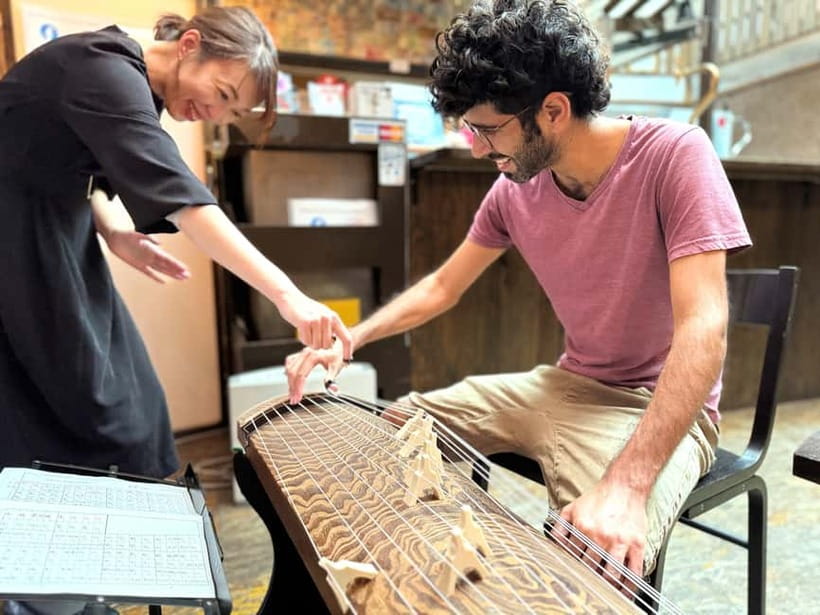
A strong teacher makes a major difference here. The instructor is described as friendly, patient, and highly capable. Those qualities matter in a lesson involving an unfamiliar instrument. You need someone who can explain the basics clearly, notice when you are uncertain, and keep the pace comfortable.
The class is offered in English or Japanese. That does not mean every musical idea will be translated in the same way, but it does give you a practical language choice when booking. English-speaking visitors can take part without needing Japanese musical vocabulary in advance.
Learning Sakura Sakura step by step
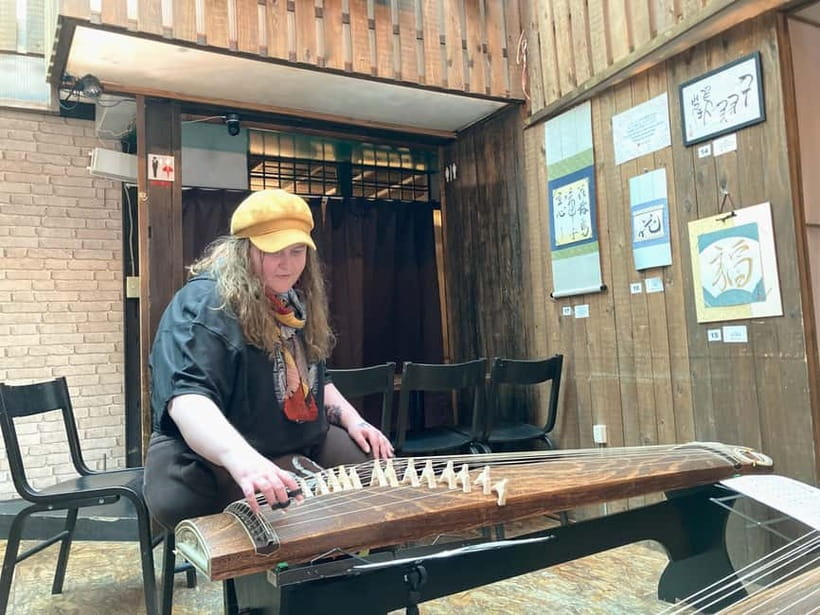
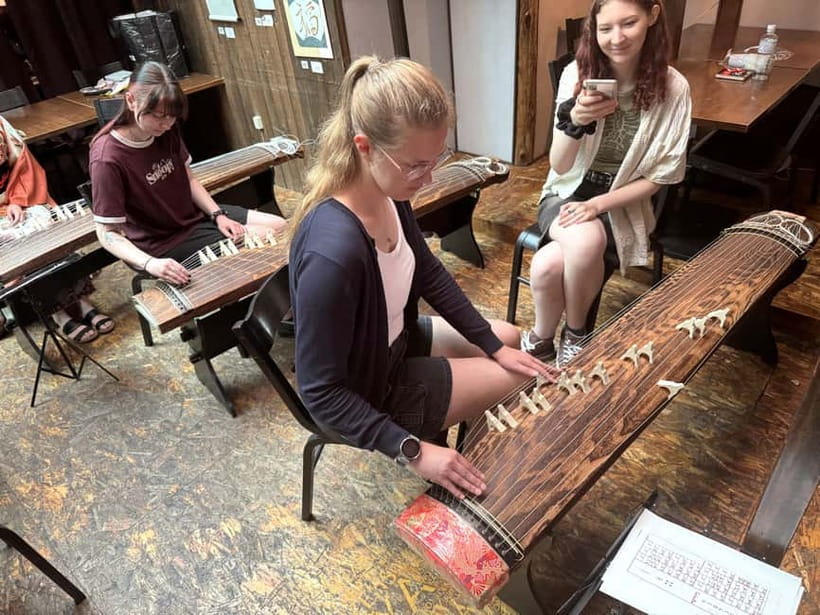
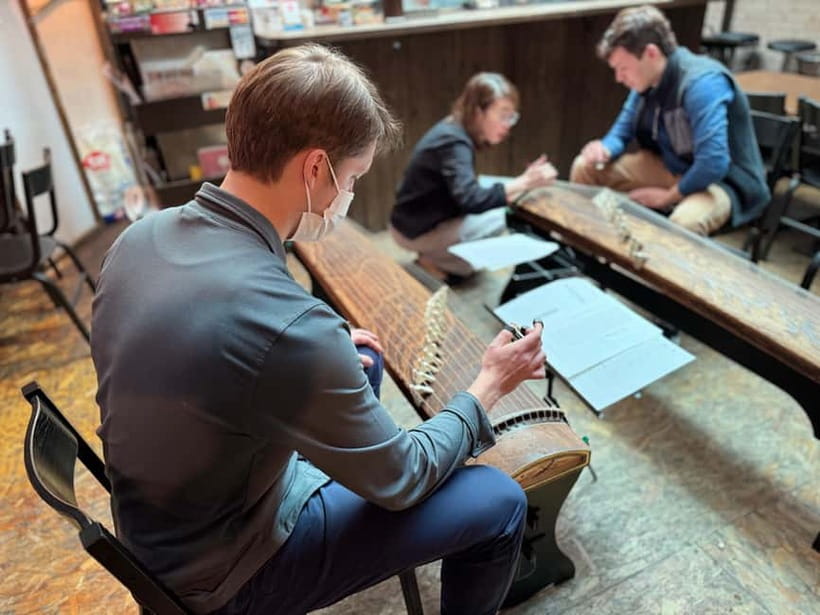
After the performance, you begin trying the koto. The goal is to play Sakura Sakura, a well-known Japanese folk song that suits a short introductory class.
You will need to pay attention to the instructor and copy the guidance carefully. The appeal is not instant perfection. It is the small progression from watching, to trying, to recognizing part of the melody under your own fingers.
This is where the class earns its price. You are not paying only for admission to a cultural venue. Your fee includes the koto, the required materials, and expert instruction. At $32 per person, that is a fair cost for 90 minutes of focused teaching, especially in a small group.
The group limit of 10 is another value point. A larger class might make the experience cheaper, but it could leave you waiting while others practice. With fewer participants, you have a better chance to receive individual help. The class can still feel social, but it is not built around watching a crowd take turns.
The exact pace will depend on the group and your own comfort. Some people may reach the song sooner, while others will need more support. That is normal. The best way to approach this is as a first encounter with the instrument, not as a test.
A few more shows around Japan worth a look
- Tokyo: Family Sumo Workshop & Live Wrestling Show with Lunch
★ 4.9 · 99 reviews - Tokyo: Taishu Engeki Show with Kimono and Sword Lesson
★ 5.0 · 12 reviews - Osaka: Noh Performance with English Subtitles and Workshop
★ 4.9 · 8 reviews - Dublin: Irish Music and Dance Show with Dance Lesson
★ 4.7 · 567 reviews
What the instructor adds to the experience
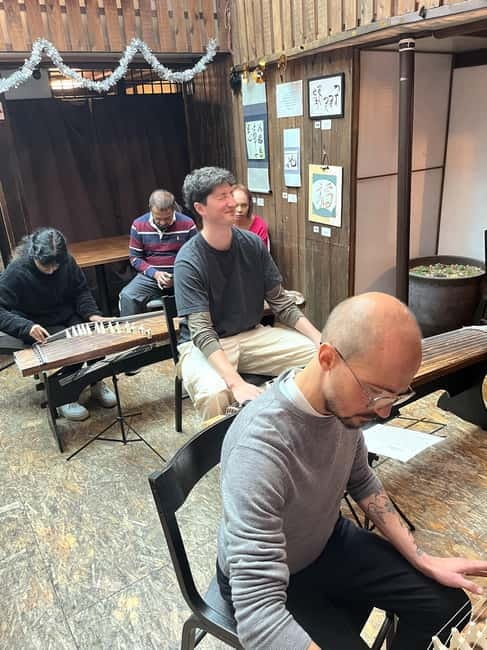
The teaching style receives the strongest praise. Participants repeatedly point to the instructor’s friendliness, patience, and ability to explain the instrument. One person who had never played an instrument before felt comfortable enough to learn the basics. Another said the lesson was worthwhile even when attending alone.
That last point is useful if you are traveling solo. The class does not depend on arriving with a large group. You can join on your own and still receive direct attention from the instructor.
Natsuko is named specifically in the feedback as a skilled and encouraging teacher. If she leads your session, you can expect the same focus on patient instruction that makes this experience appealing. Since staff assignments can vary, check the current booking information if meeting a particular instructor matters to you.
The instructor also helps connect the physical act of playing with Japanese tradition. You are not just learning a tune from a worksheet. You are handling an instrument tied to centuries of Japanese music, while hearing how it should sound in practiced hands.
Trying additional songs after the basics
Once you have worked through Sakura Sakura, you may be able to try other songs. This gives the class some flexibility. If you learn quickly, you are not forced to stop the moment you reach the first goal.
The option to continue also makes the experience suitable for people with different levels of musical confidence. A complete beginner can focus on the main melody. Someone with previous music experience may want to test another song or spend more time refining the first one.
Do not count on a long list of extra pieces. The session lasts 90 minutes, and Sakura Sakura is the stated core song. Think of additional music as a possible bonus rather than the main reason to book.
This structure is sensible. It gives the teacher a clear lesson plan while leaving room for the group’s pace. You get enough direction to avoid feeling lost, but not so much pressure that the class becomes rigid.
Photos, videos, and a memory you can keep
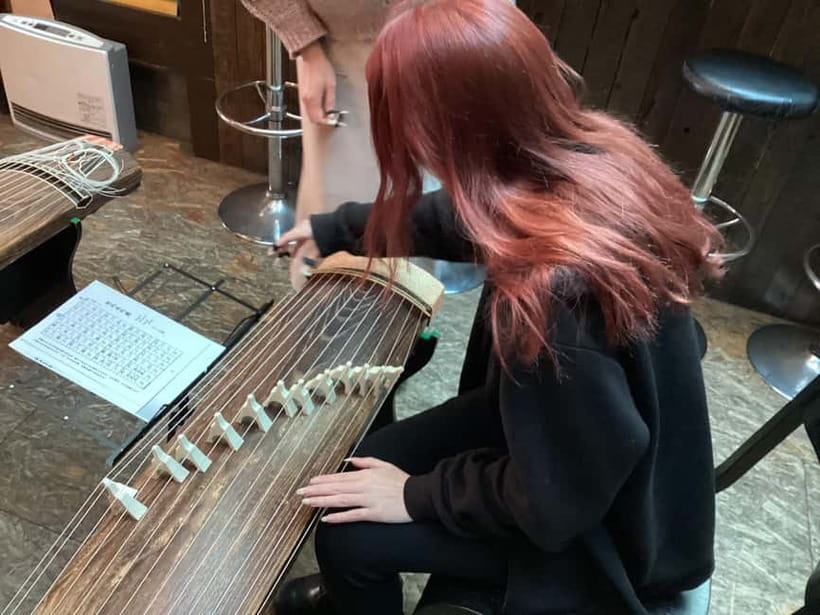
You are encouraged to capture the moment with photos and videos. This matters because the experience is visual as well as musical. A photograph of you seated with the koto tells a more personal story than a picture of an instrument in a display case.
If you are traveling with someone, take turns photographing each other. Solo participants can ask for help when appropriate. The class creates a natural record of your first attempt, including the instrument, the setting, and the act of playing.
The most lasting part may not be whether you remember every note. It may be the memory of making a Japanese melody with your own hands. That is why this works well for visitors who want a cultural activity that feels personal without requiring advanced preparation.
Who will get the most from this Kyoto class
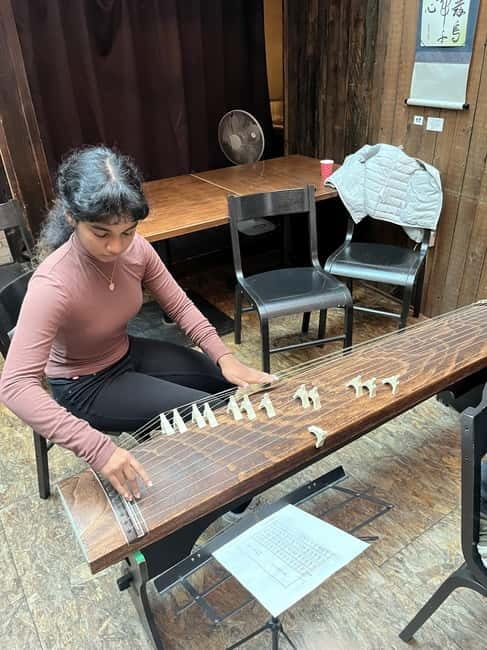
I would recommend this class to music lovers, culture enthusiasts, and curious visitors who want more than a passive introduction to Japan. You do not need to read music or have played an instrument before. The lesson is built for beginners.
It is also a good choice for a short Kyoto schedule. Ninety minutes is long enough to feel substantial but short enough to fit around other plans. The central location and nearby Keihan stations make it practical for an afternoon or evening plan, depending on available start times.
Families should note the age rule. Children under 10 are not suitable for this activity, so it is better for older children, teenagers, and adults. The provided information does not specify a children’s teaching format, so you should not assume that younger children can join.
Wheelchair users can consider the class because the activity is listed as wheelchair accessible. If you have specific mobility needs, confirm the arrangements when booking, but the accessibility information is a positive feature.
Where the $32 price fits your Kyoto budget
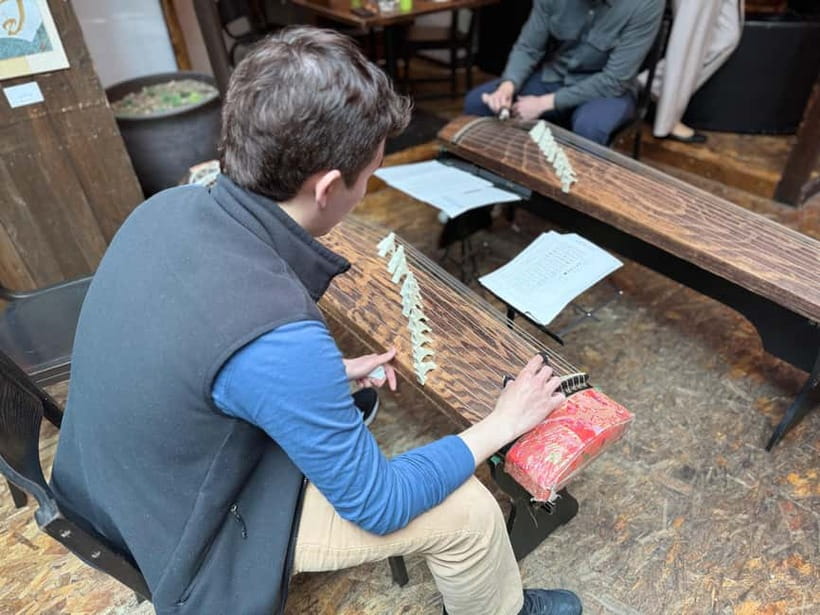
At $32 per person, this is not the cheapest way to fill 90 minutes in Kyoto. It is also not simply a performance ticket. The cost covers an expert instructor, use of the koto, and all necessary materials.
That makes the price easier to justify if you value participation. You receive a structured lesson, a chance to play a traditional instrument, and personal guidance in a small group. The value is strongest for someone who would otherwise spend money on several short cultural stops without actively taking part in any of them.
The value is weaker if you only want to hear koto music. A live performance or concert may suit you better. This class asks you to concentrate, follow instructions, and practice. The reward comes from doing, not just observing.
Free cancellation up to 24 hours before the activity adds useful flexibility. You can also reserve now and pay later, which helps if your Kyoto schedule is still changing. Just remember that a reservation is required at least one day in advance, so this is not a good last-minute option.
What to know before you book
Plan to reserve ahead, especially if you want a particular date. The maximum group size is 10, and the class needs at least one day’s notice.
Wear something that lets you sit and use your hands comfortably. No special equipment is needed because the koto and materials are provided. You should not need prior musical training.
The class is taught in English or Japanese. If language support is important to you, check the available instructor details at booking. The experience is short enough for most visitors, but you should allow extra time for the walk from the station and for finding Gojo Paradiso along Kiyamachi Street.
Expect a welcoming introduction, not a formal conservatory lesson. The teacher’s patience is a major part of the experience, and the class is meant to help you enjoy your first contact with the koto.
Should you book this koto experience?
Book it if you want a hands-on cultural activity with a clear goal, a friendly instructor, and a manageable 90-minute schedule. It is especially good for first-time musicians, solo visitors, couples, and anyone who wants a memory that involves doing rather than simply looking.
Skip it if you only want a concert, dislike structured instruction, or need an activity for children under 10. At $32, the class offers solid value when you take part fully. You may not leave as a koto expert, but you can leave having played Sakura Sakura yourself, which is a fine Kyoto achievement.
FAQ
How long does the Kyoto koto class last?
The class lasts 90 minutes.
How much does the koto class cost?
The price is $32 per person.
Where does the class meet?
It meets at Gojo Paradiso, along the Takase River on Kiyamachi Street.
How do I reach Gojo Paradiso?
The venue is about a five-minute walk from Keihan Kiyomizu Gojo Station and about a 10-minute walk from Keihan Shichijo Station. It is listed as 386 meters from Kiyomizu Gojo Station.
Do I need musical experience?
No. The class is designed for beginners, and no prior experience is required.
Which song will I learn?
The main song taught is Sakura Sakura. If you finish the basics, you may also be able to try other songs.
Is the class available in English?
Yes. The instructor teaches in English and Japanese.
Can children join the experience?
Children under 10 cannot join the class.
Is the activity wheelchair accessible?
Yes. The activity is listed as wheelchair accessible.
How many people can join one class?
The class is a small-group activity with a maximum of 10 participants.
Can I cancel my reservation?
Yes. You can cancel up to 24 hours in advance for a full refund.
Do I have to pay when I book?
No. The reserve-now, pay-later option lets you reserve a place without paying immediately.
Just added around Japan
- Authentic Kabuki Transformation & Mini Performance at Aioiza Gifu★ 4.5 · 3 reviews
- Kabuki Talk★ 5.0 · 10 reviews
- Tokyo: English Standup Comedy Night★ 5.0 · 4 reviews
- Experience the Asakusa Kabuki Opera Show!★ 5.0 · 99 reviews
- Tokyo: Taishu Engeki Show with Kimono and Sword Lesson★ 5.0 · 12 reviews
- Tokyo: Traditional Geisha Experience Show & Japanese Dinner★ 4.2 · 59 reviews
- Tokyo: Rainbow Bridge Day Cruise Show Unlimited Soft Drinks★ 4.5 · 86 reviews
- Tokyo: Taiko Drum Experience in Kabukicho with Dinner★ 5.0 · 3 reviews
Kyoto Shows, compared.
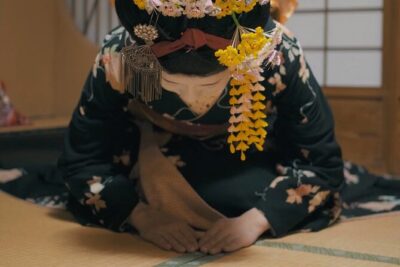
Kyoto Gion Cultural Walk & Geisha Show with Dining Options
Read our review →Kyoto Gion Cultural Walk & Geisha Show with Dining Options
Read our review →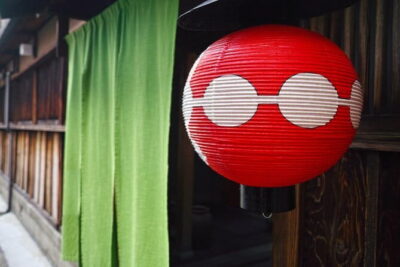
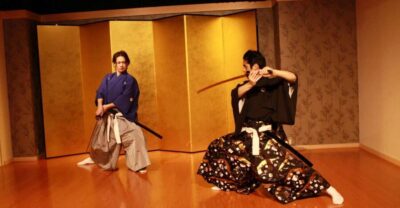
Gion Walking Tour, Geisha Show and Japanese Game in Kyoto
Read our review →
Browse the lists this show appears in