
Review · KYOTO
Gion Walking Tour, Geisha Show and Japanese Game in Kyoto
Watching a maiko dance at close range is the heart of this two-hour Kyoto experience. You will first walk through Gion with an English-speaking guide, then sit for tea, a Japanese snack, a dance, questions, photos, and a traditional fan game with the performer.
I like the small limit of six participants, which gives you room to ask real questions instead of watching from the back of a crowded room. I also like the quiet lanes and cultural context provided by guides such as Ai, Rin, Soichiro, and Yoshino. The main consideration is that the walking portion includes stops at designated shops, which may feel less appealing if you want a pure history walk.
Key points at a glance
- A maiko performs a traditional dance during the second hour of the experience.
- You can ask direct questions about the life, training, and customs of maiko and geiko through your English-speaking guide.
- The fan game is hands-on, not just a performance watched from a seat.
- Groups are limited to six, allowing for a more personal exchange and easier photography.
- Gion’s quieter lanes and temple area add useful context before the show.
- Tea, a Japanese snack, and sometimes a signed fan provide small but memorable touches.
Why this Gion experience feels different
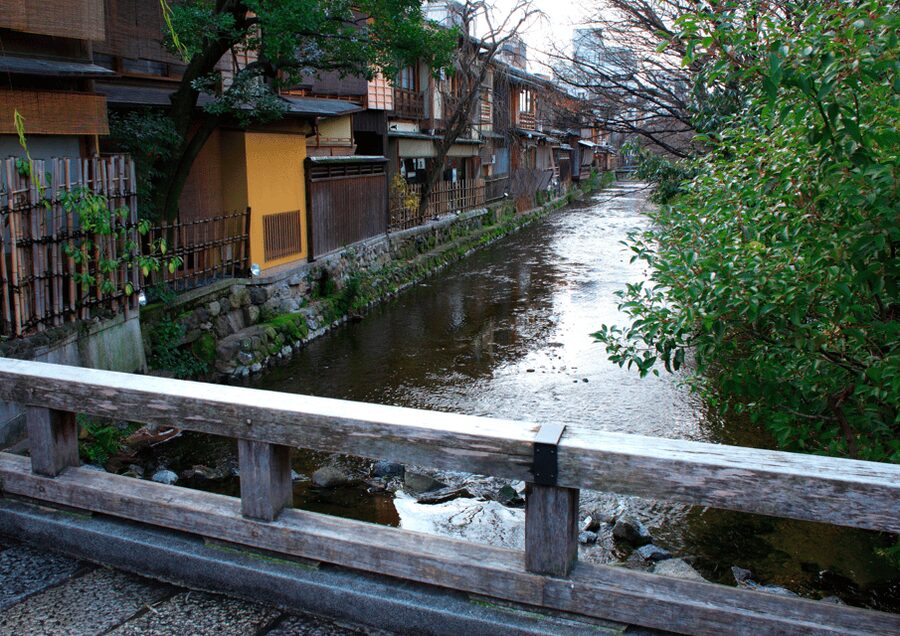
Kyoto offers many ways to see Gion. You can walk Hanamikoji Street alone, take photographs of traditional buildings, or hope to catch a maiko moving between appointments. Those options can be enjoyable, but they do not explain much about the world behind the white makeup, elaborate kimono, and formal movements.
This experience puts that explanation first. You spend one hour walking through Gion with a guide, then one hour meeting a maiko in a small indoor setting. The result is less about spotting a geisha from a distance and more about understanding the work, etiquette, and performance tradition connected with Kyoto’s geiko district.
The distinction between maiko and geiko matters. A maiko is a geisha apprentice, while geiko is the term commonly used in Kyoto for a fully trained geisha. Your guide explains this world in English and interprets the conversation during the show, so you do not need to rely on guesswork or catch only a few translated words.
More Walking Tours in Japan:
- Tsukiji Fish Market: Street Food & Culture Walking Tour
★ 5.0 · 669 reviews - Kyoto Gion Cultural Walk & Geisha Show with Dining Options
★ 5.0 · 518 reviews - Kyoto Gion Cultural Walk & Geisha Show with Dining Options
★ 5.0 · 483 reviews
Meeting at the Izumo-no-Okuni Statue
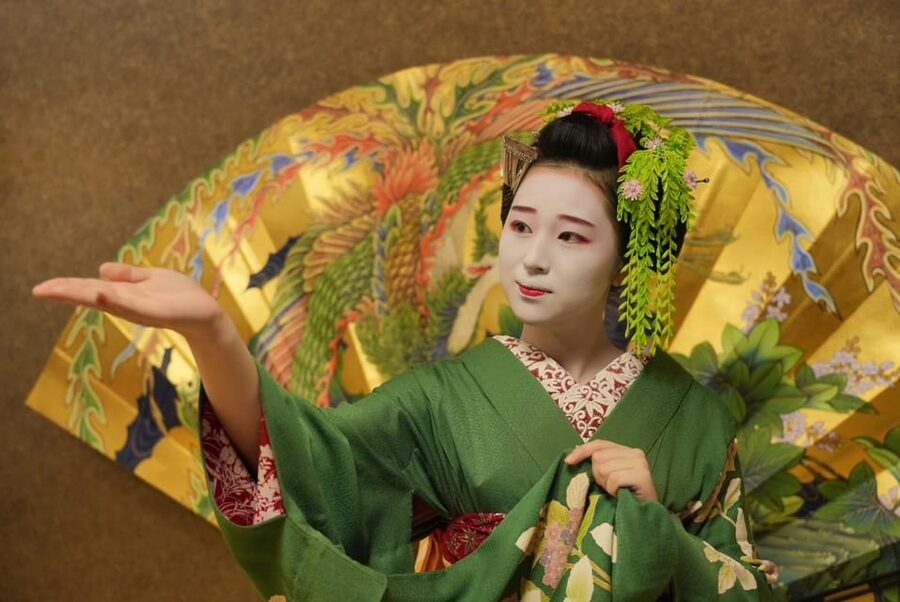
The meeting point is the Izumo-no-Okuni Statue, directly above Gion Shijo Station. Look for a guide holding a white board marked GuideMe Japan.
This is a practical starting point because Gion Shijo Station is easy to identify, but give yourself enough time to find the statue above the station rather than arriving at the last second. The tour ends at Hangesho, so you should not expect to return to the original meeting point.
The activity lasts two hours. Starting times vary, so check availability for your chosen date. Since the tour includes walking followed by floor seating in a separate room, comfortable clothing and shoes are sensible, though no special dress requirement is provided.
The first hour: Gion beyond the main street
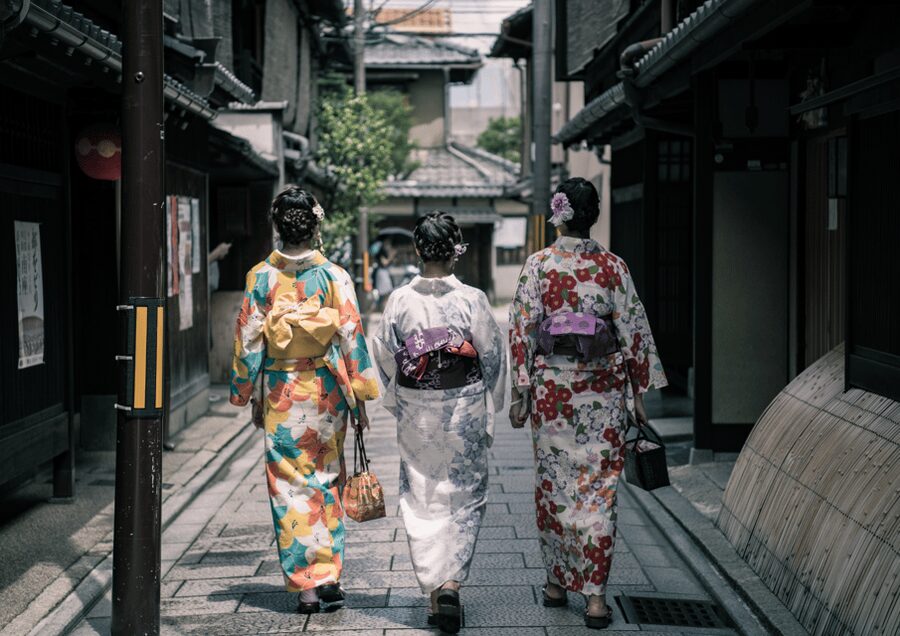
The walk begins in the main Gion area, where your guide introduces the district’s history and the traditions of maiko and geiko. You will see more than the postcard view. Guides have taken participants along quieter lanes, past a temple, and through side streets that are easier to miss when you explore alone.
This part is especially useful if you are new to Kyoto. A guide can explain why certain streets matter, how the entertainment district developed, and how local customs shape the area today. Ai, one of the guides praised for her warm manner and clear explanations, has also pointed out small businesses such as a shop engraving names on chopsticks and a candy shop.
Those stops add a local touch, since the shops are not simply decoration for visitors. At the same time, one participant disliked the planned stops at designated shops. If you prefer a tightly focused architectural walk with no commercial pauses, this is worth considering before you book.
The walking route is not presented as a long sightseeing hike. It lasts about an hour and leads into the maiko meeting. You will have time to ask your guide about what you see, and guides have helped explain when photography is acceptable and what etiquette to follow around people working in Gion.
That advice matters. Gion is not a theme park, and maiko and geiko are working professionals. A guide can help you avoid intrusive behavior, especially when taking photographs on public streets. The most respectful approach is to listen, follow local instructions, and treat the neighborhood as a living community rather than a stage set.
The second hour: a maiko performance up close
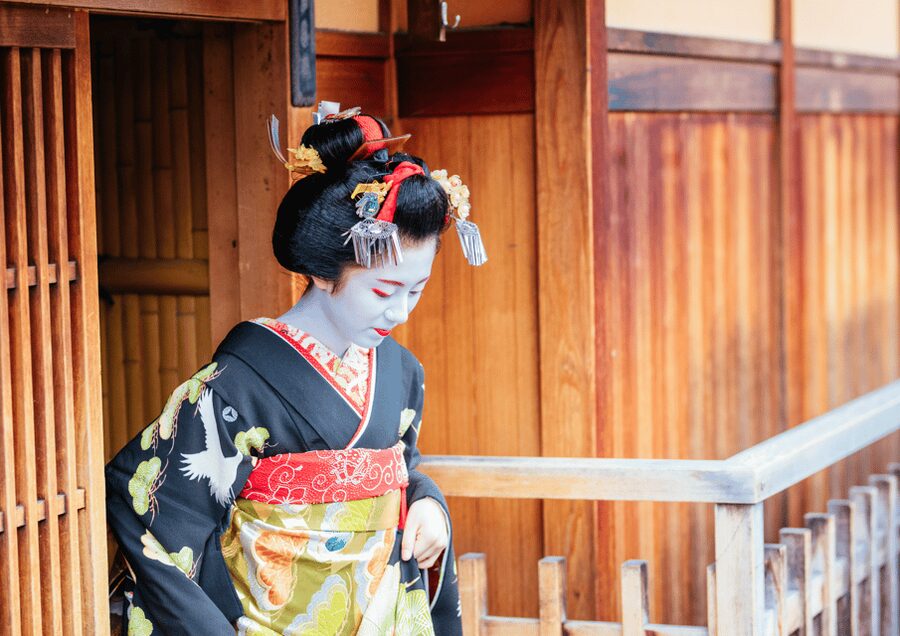
The main event takes place during the second hour. You will enter a separate room, sit down, and watch a maiko perform a traditional dance. One account describes the setting as a room inside a fan shop, with participants seated on pillows, tea, and candy or a Japanese snack provided.
This is a small-scale performance rather than a large theater production. That has two clear benefits. You can see the precise hand movements and costume details, and the atmosphere leaves room for conversation after the dance.
The dance itself is formal and controlled. The appeal is not speed or spectacle. It is the care in the gestures, posture, fan work, and musical tradition. Your guide provides background so you can better understand what you are seeing instead of treating it as a brief photo opportunity.
The performer’s name may vary by date. One earlier experience featured Kimi Soro, while other sessions have included different maiko. The company does not promise a specific performer in the information provided, so book this for the format and cultural exchange rather than for a particular individual.
A few more shows around Japan worth a look
- Mt Fuji & Hakone Cruise, Drum Show Bullet Train 1 Day from Tokyo
★ 4.0 · 7,413 reviews - Tokyo: Sumo Show Experience with Chicken Hot Pot and a Photo
★ 4.8 · 6,678 reviews - Tokyo: Sumo Show and Dining Experience
★ 4.8 · 2,742 reviews - the SUMO show
★ 5.0 · 1,960 reviews
Questions, translation, and the human side of maiko life
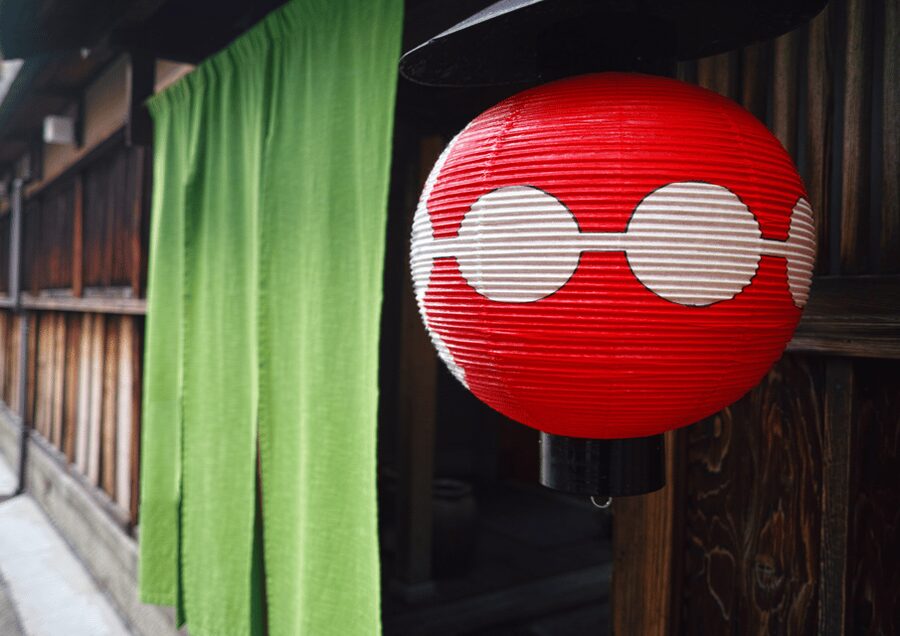
After the dance, you have time to ask questions. This is one of the strongest parts of the experience because it turns a performance into a conversation.
Your English-speaking guide interprets between you and the maiko. Guides such as Rin, Ai, and Yoshino have been praised for helping questions flow naturally and for explaining answers patiently. That support is important because the conversation may touch on training, daily life, performance, clothing, and the difference between maiko and geiko.
A small group makes this exchange work better. With no more than six participants, you should have a reasonable chance to ask something specific rather than listen to a long session shaped only by someone else’s interests. Families have also found the format accessible, including a group with a tween and a teen.
You should still remember that this is a scheduled cultural meeting, not an unrestricted interview. Ask politely, listen closely, and allow the guide to manage the pace. The best questions are curious and respectful rather than personal for the sake of novelty.
The traditional Japanese fan game
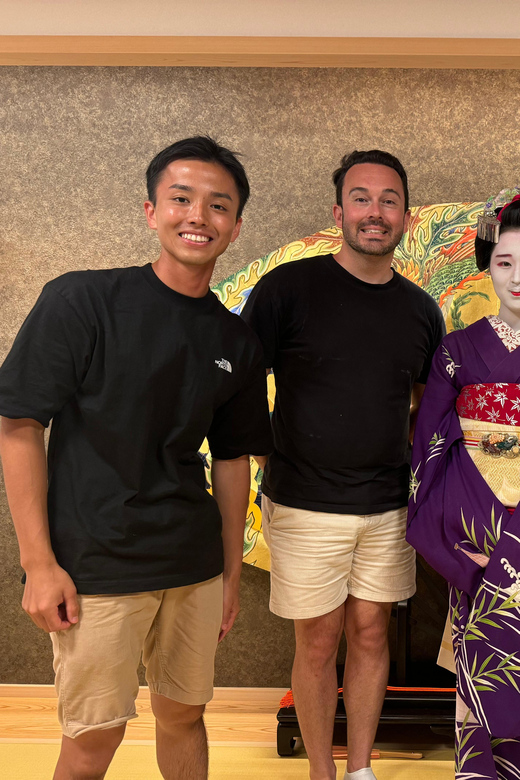
After the questions, you play a traditional Japanese fan game with the maiko. This is not just a demonstration. Each participant has a chance to try it, which adds a playful change of pace after the formal dance.
The game uses a fan and appears simple at first, but accuracy takes practice. One participant joked about scoring zero points, which is a fair warning not to treat the activity as a test of skill. The point is the shared experience, the laughter, and the chance to see how a traditional entertainment game works.
This activity also helps break down the distance between performer and audience. You are no longer sitting silently in front of a staged presentation. You are taking part, with the maiko guiding the exchange and your interpreter helping everyone follow along.
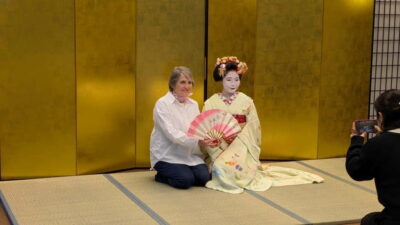
Photography is also part of the experience. Several accounts describe time for photographs with the maiko, and one earlier session included a signed premium fan as a keepsake. A signed fan is not specifically guaranteed in the supplied details, so treat it as a possible extra rather than part of the promised package.
What is included for $108
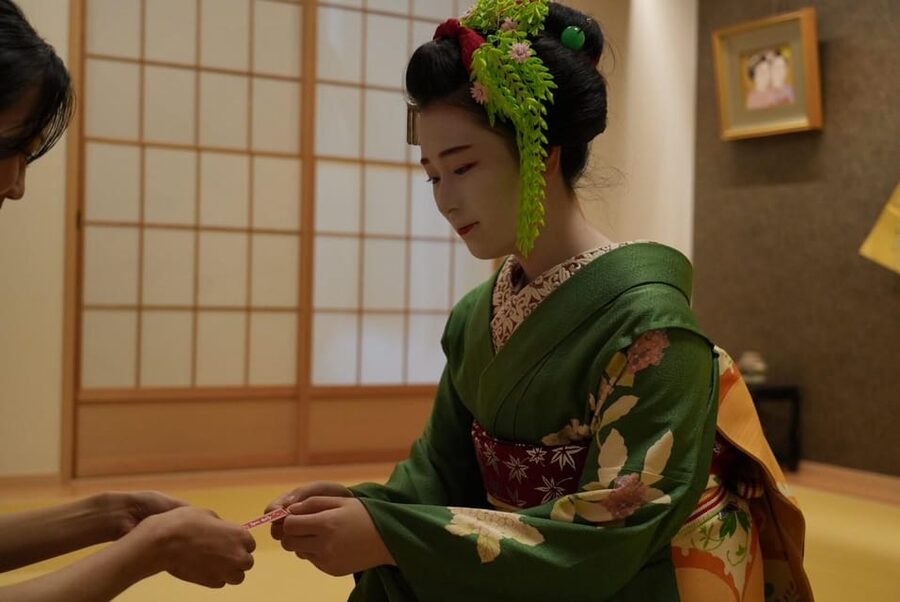
The price is $108 per person. That is not a bargain-priced neighborhood stroll, but you are paying for two distinct parts: a one-hour guided walk and a one-hour private-style cultural presentation with a maiko.
The value depends on what you want from Gion. If you only want to see the streets, you can explore them independently for little or no cost. If you want a direct meeting, an interpreted question session, a dance, tea, a snack, and a fan game in a group capped at six, the price is easier to justify.
Tea and a Japanese snack are included. Additional food is not included, so do not expect a meal. You should also allow for your own transportation to the meeting point and after the tour, though the starting location is at Gion Shijo Station.
The small group is a major part of the price. A large production may offer a lower per-person cost, but it cannot provide the same chance to ask questions or take part in the game. For a honeymoon, a special family outing, or a visitor with a strong interest in Japanese performing arts, the personal format may be worth the extra cost.
The guides make the experience work
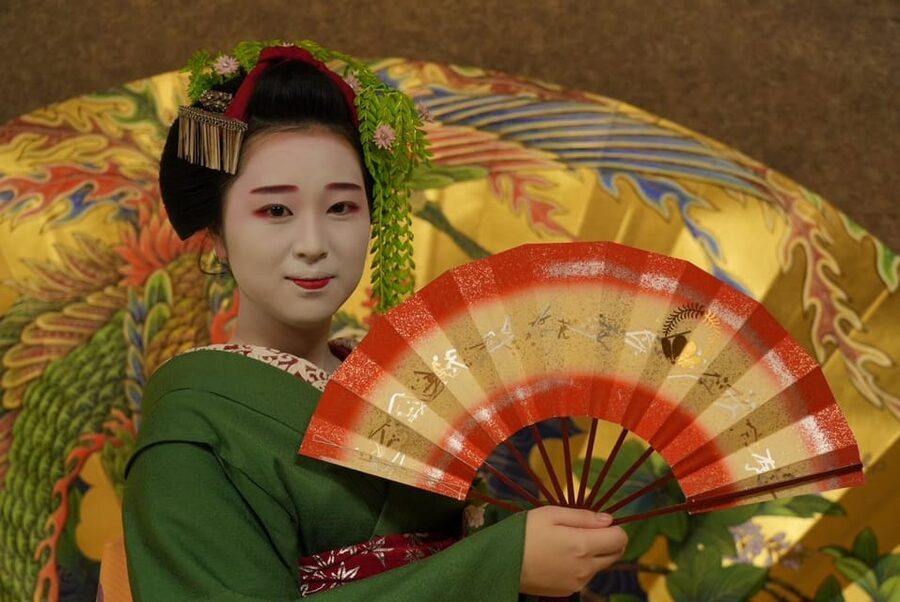
The guide is more than someone who leads you from one street to another. This person supplies the historical frame, manages etiquette, translates the questions, and keeps the conversation comfortable.
Ai has been especially praised for showing less obvious alleyways, explaining local customs, and helping participants understand when photographs are appropriate. Soichiro has led walks focused on the history of geiko culture and quieter parts of Gion. Rin and Yoshino have worked together on sessions that included detailed explanations before the performance.
Other named guides include Tang, Hikaru Kuroki, Tommy, and Yoshino. The guide assigned to your date may differ, but the activity is conducted in English. Strong interpretation is essential here. Without it, the dance would still be beautiful, but much of the meaning behind the conversation would be lost.
For families, Yoshino has been noted for being patient with a young child and even offering Japanese candy. That does not mean every session will be tailored in the same way, but it suggests that the small group can work well for mixed ages.
Etiquette and the feel of Gion
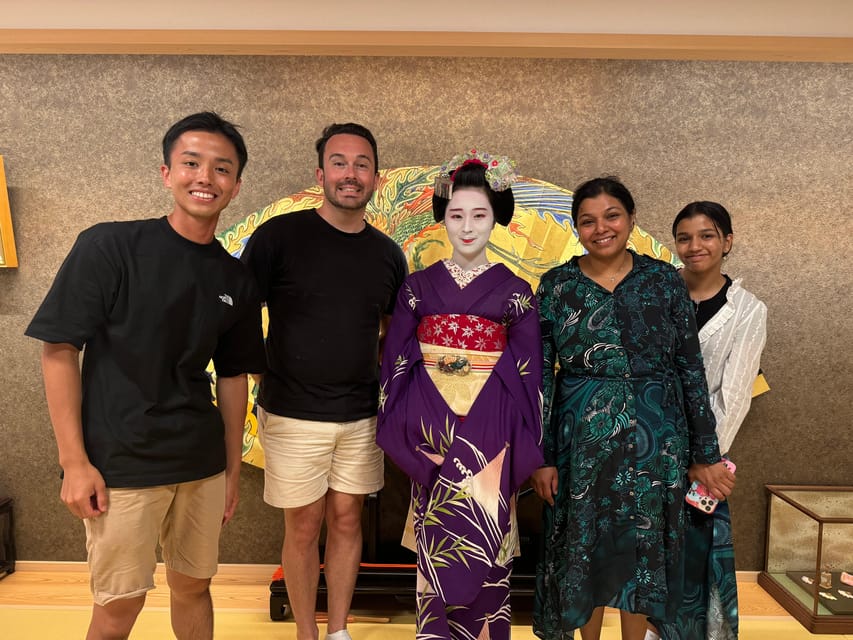
Gion is a working district, not merely a sightseeing area. The tour’s guidance on photography is therefore valuable. You may see maiko or geiko on the streets, but you should not assume that an unexpected encounter means you may follow, block, or photograph them freely.
The experience gives you a controlled chance to meet a maiko, ask questions, and take photographs in an appropriate setting. That is a better option for anyone who wants a close look without turning a private working moment on the street into a spectacle.
The walk also helps correct a common misunderstanding. The women you see are not simply performers appearing on demand for tourists. The guide’s explanations place the dance, clothing, training, and social customs in a larger cultural setting. You may not leave with every detail of Kyoto’s entertainment history, but you will have a clearer idea of what you are seeing.
Who should book this tour?
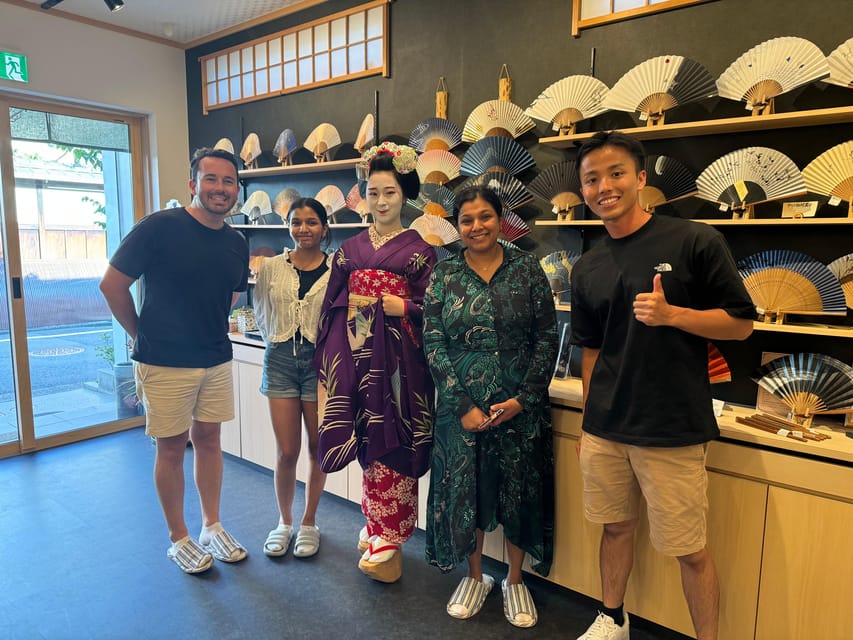
I would recommend this experience to anyone with a serious interest in Japanese culture, traditional dance, or the history of Kyoto’s geisha districts. It is also a strong choice for couples marking a special trip, families with older children, and visitors who prefer conversation over a large stage show.
The tour suits you especially well if you value personal attention. A group of six or fewer gives you a better chance to speak with the guide and participate in the fan game without feeling anonymous.
You may want to skip it if you are looking only for a self-guided walk through Gion, dislike scheduled shop stops, or expect a full evening of food and entertainment. The tour is short and focused. It does not include a meal, and the performance is cultural rather than theatrical in the modern concert sense.
Cancellation is free up to 24 hours before the activity for a full refund, and you can reserve now and pay later. Those terms help if your Kyoto schedule is still changing, but check the available starting time before committing.
Should you book the Gion maiko experience?
Book it if you want more than a photograph of Gion. The combination of a guided walk, a close maiko performance, interpreted questions, tea, and a fan game gives you several ways to connect with the district in only two hours.
The strongest reason to choose it is the small setting. You can watch the dance closely, ask about maiko life, and take part rather than simply sit in a crowd. The main tradeoff is the price and the possibility of designated shop stops during the walk.
For most visitors who want a respectful, personal introduction to Kyoto’s geiko culture, I think the $108 cost is reasonable. It is not the cheapest way to see Gion, but it offers access and explanation you cannot get from wandering Hanamikoji Street alone.
FAQ
How long is the Gion walking and maiko experience?
The experience lasts two hours. The first hour is a guided walk through Gion, and the second hour includes the maiko dance, questions, tea, a Japanese snack, and the traditional fan game.
Where does the tour begin?
The meeting point is the Izumo-no-Okuni Statue, directly above Gion Shijo Station. The guide will hold a white board marked GuideMe Japan.
Where does the tour finish?
The activity finishes at Hangesho.
Is the tour offered in English?
Yes. The tour includes a live English-speaking guide who interprets the conversation with the maiko.
How large is the group?
The group is limited to six participants.
What is included in the price?
The price includes the one-hour Gion walk, the one-hour maiko show, tea, a Japanese snack, and the traditional Japanese fan game with the maiko.
Can I cancel the booking?
You can cancel up to 24 hours in advance for a full refund. The experience also offers a reserve-now, pay-later option.
Just added around Japan
- Authentic Kabuki Transformation & Mini Performance at Aioiza Gifu★ 4.5 · 3 reviews
- Kabuki Talk★ 5.0 · 10 reviews
- Tokyo: English Standup Comedy Night★ 5.0 · 4 reviews
- Experience the Asakusa Kabuki Opera Show!★ 5.0 · 99 reviews
- Tokyo: Taishu Engeki Show with Kimono and Sword Lesson★ 5.0 · 12 reviews
- Tokyo: Traditional Geisha Experience Show & Japanese Dinner★ 4.2 · 59 reviews
- Tokyo: Rainbow Bridge Day Cruise Show Unlimited Soft Drinks★ 4.5 · 86 reviews
- Tokyo: Taiko Drum Experience in Kabukicho with Dinner★ 5.0 · 3 reviews
Kyoto Shows, compared.
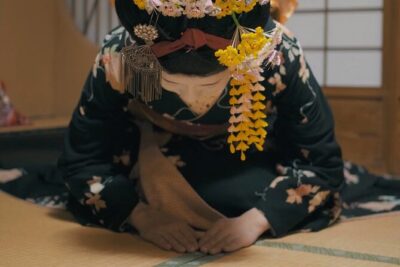
Kyoto Gion Cultural Walk & Geisha Show with Dining Options
Read our review →Kyoto Gion Cultural Walk & Geisha Show with Dining Options
Read our review →
Browse the lists this show appears in