
Review · KYOTO
Kyoto: Meet-and-Greet, Maiko Show and Experience
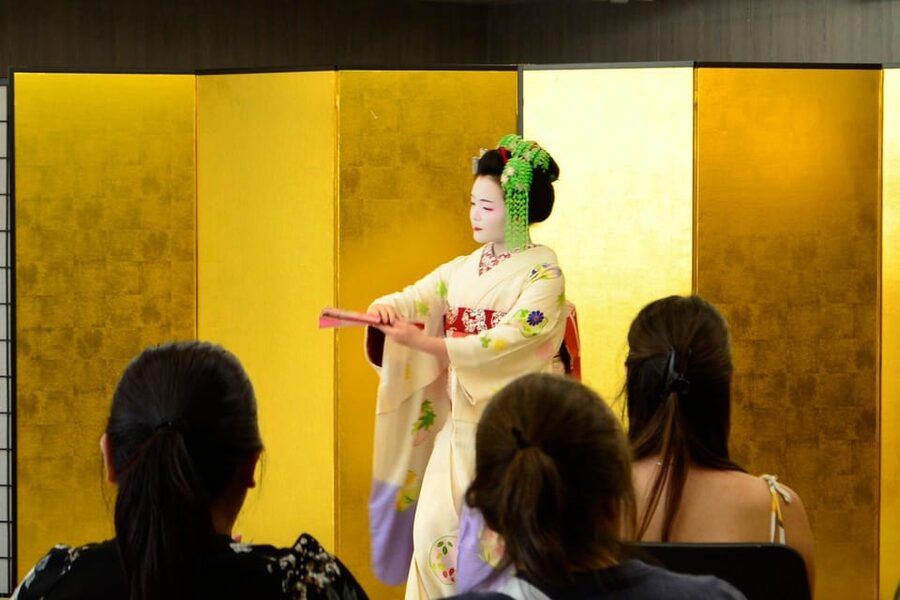
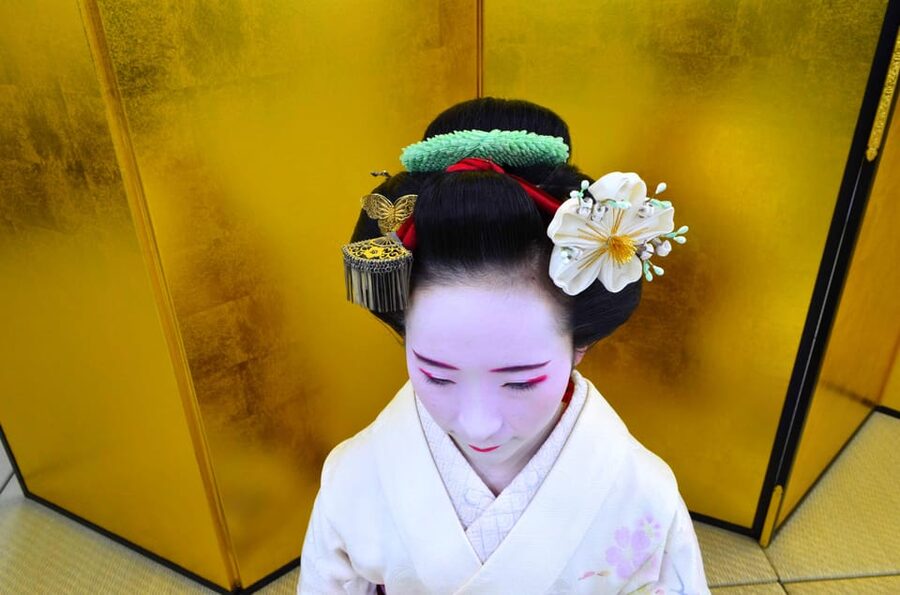
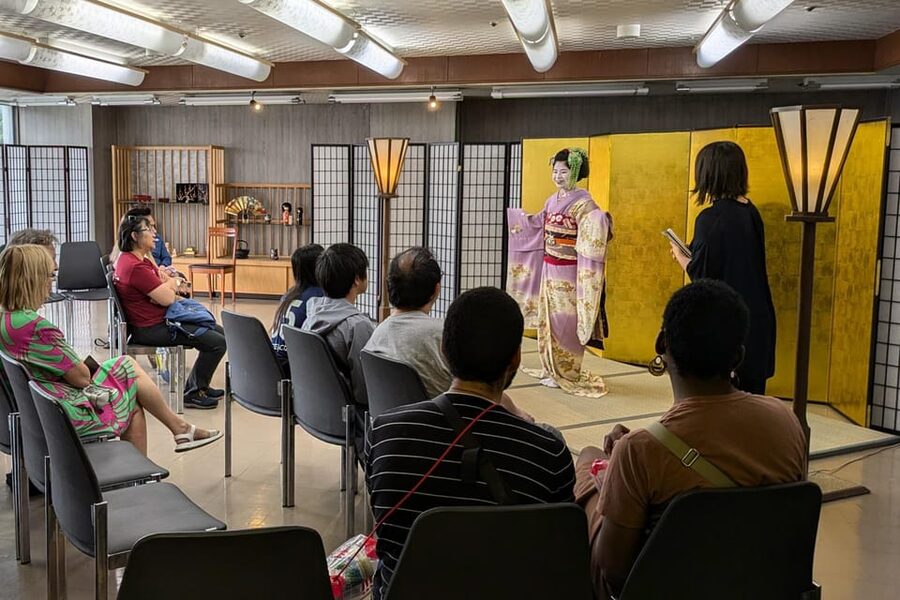
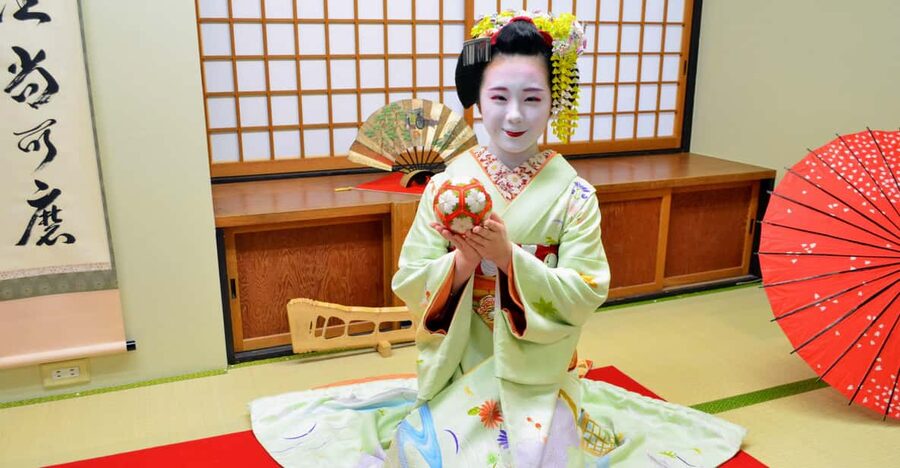
A young maiko enters in a richly decorated kimono, elaborate hairstyle, and white face makeup, then performs two traditional dances only a few steps from the audience. The dances last about 8 to 10 minutes altogether, but the close setting lets you notice the careful hand movements, controlled posture, and small changes in expression.
I like the clear English introduction and the chance to ask questions directly through the host. I also like the personal photo session, which gives you a simple souvenir without turning the event into a staged photo spectacle. The main drawback is that the dancing is brief, and the Kyoto Handicraft Center room feels more functional than theatrical.
Key points at a glance
- Two traditional dances: The performance lasts about 8 to 10 minutes, with seats close to the stage.
- English explanation: The host explains the maiko’s clothing, training, work, and place in Kyoto culture.
- Useful Q&A: You can ask questions about her daily life, path to becoming a geiko, and traditional arts.
- Small shared group: Capacity is limited to 30 people, so the session feels more personal than a large stage show.
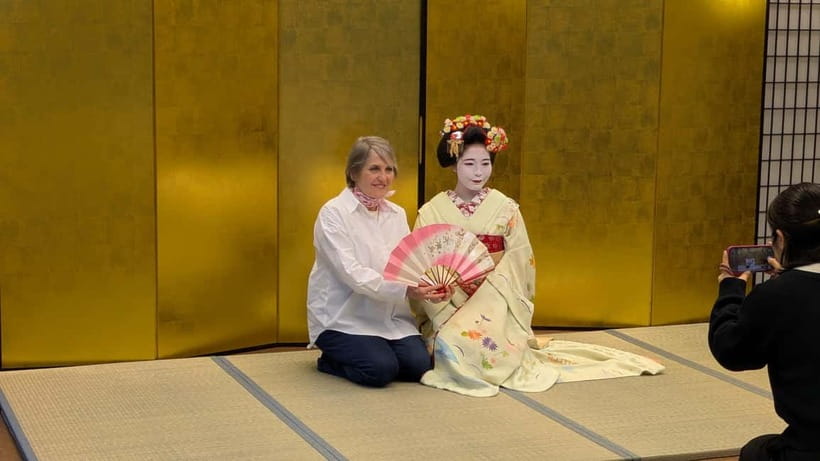
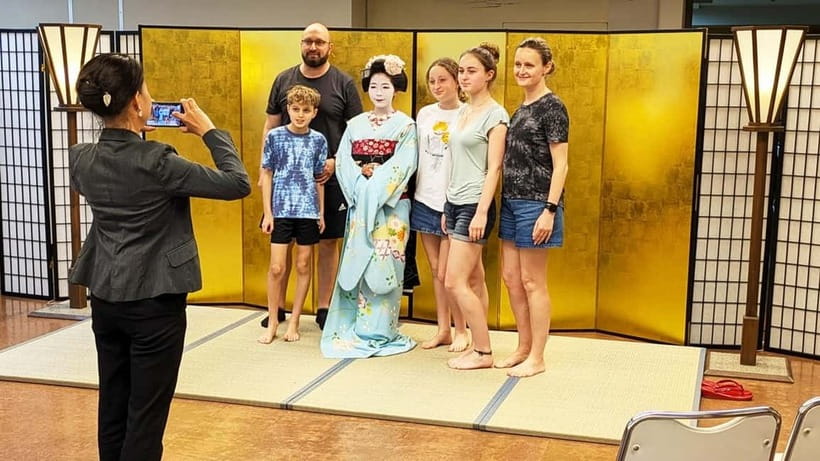
- Photo with the maiko: Bring your own smartphone or camera for a commemorative picture.
- Handicraft Center setting: Browse Japanese crafts and gifts before or after the show, with a small souvenir included.
Meeting a maiko without intruding on private life
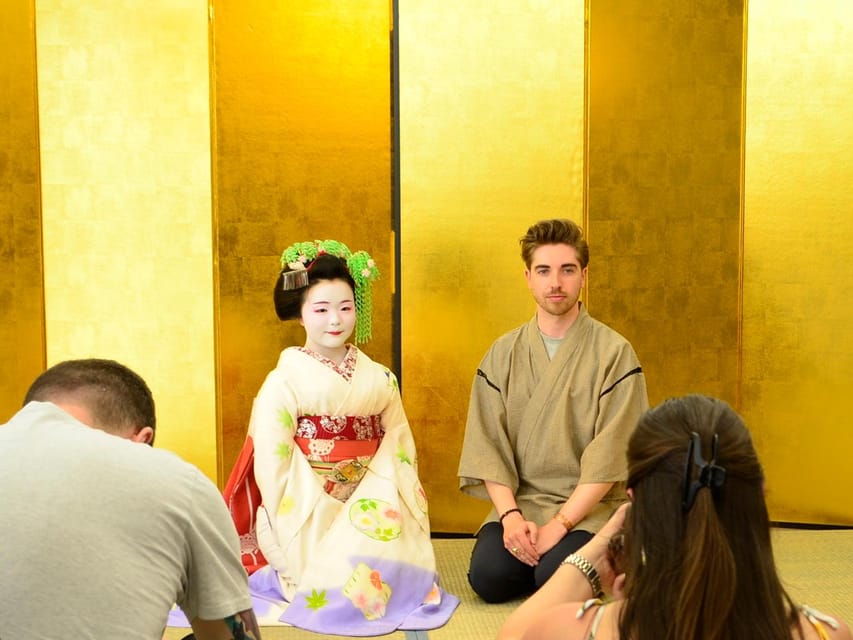
Seeing a maiko in Kyoto can be difficult. You might spot one hurrying through Gion, but a brief street sighting tells you little about her work or training. This event gives you a polite, structured way to meet one in person without following her through the city or treating a working performer like a photo opportunity.
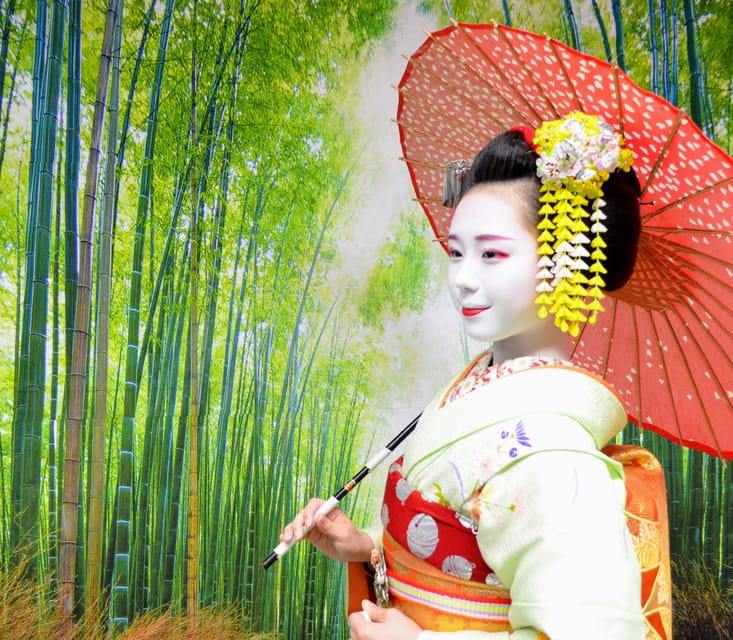
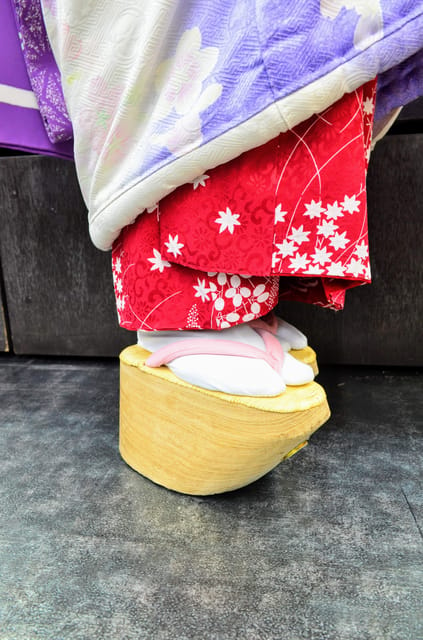
A maiko is a young apprentice geiko, the Kyoto term often used for geisha. She trains in dance, music, tea ceremony, conversation, social manners, and hospitality. Her clothing and makeup are not costume-shop decorations. They are part of a demanding traditional role, and the English-speaking host helps you understand what you are seeing.
The experience is designed for an international audience. The host introduces the maiko, invites her to the stage, and explains the meaning of her appearance and training. An interpreter then helps you ask questions and understand the answers. In several sessions, the interpreter Mina has been praised for making the subject easy to follow, while maiko Kanoshizu-san has been warmly received for her graceful performance and thoughtful responses.
This format matters. You get context before forming your own impression, and the questions have a clear place in the program. It also helps keep the exchange respectful and focused.
A few more shows around Japan worth a look
- Mt Fuji & Hakone Cruise, Drum Show Bullet Train 1 Day from Tokyo
★ 4.0 · 7,413 reviews - Tokyo: Sumo Show Experience with Chicken Hot Pot and a Photo
★ 4.8 · 6,678 reviews - Tokyo: Sumo Show and Dining Experience
★ 4.8 · 2,742 reviews
What happens during the 45-minute session
Reception opens 30 minutes before the scheduled start. Arrive at least 10 minutes early, since seating is free rather than assigned. The venue can accommodate up to 30 people, and all participants can sit.
The event begins with a short introduction. The host explains the role of a maiko, then invites her onto the stage. This opening is not filler. It gives you basic terms and background before the dance begins, which makes the small gestures easier to appreciate.
You then watch two traditional dances. Together they last roughly 8 to 10 minutes. Do not book this expecting a full evening performance. The value is in seeing a maiko at close range, where the restrained movement and detail of the costume are easy to notice.
Photography is allowed during the event, so you may take pictures of the dances from your seat. Be considerate with your flash and phone position, since the room is shared and the performance is short.
After the dances, the English-speaking host explains the maiko’s attire. The kimono, hair ornaments, makeup, and other details are discussed in plain language. This is one of the best parts for first-time visitors because the outfit can otherwise look beautiful but mysterious.
The Q&A follows. You can ask about training, work, daily life, traditional arts, and the route from maiko to geiko. The host translates the questions and answers, keeping the exchange moving without flattening it into a scripted speech.
Allow around 10 to 15 minutes for the photo session at the end. You use your own phone or camera, and the staff helps arrange the picture. Each person or group gets a personal memento, though the process is shared rather than a private portrait sitting.
A small gift is provided as you leave. You can also browse Japanese-made goods in the Kyoto Handicraft Center after the show.
Why the short dances still work
The most common point to understand is the balance of the program. The dancing is the visual centerpiece, but it is not the longest part. If you want an extended stage performance with several artists and a full musical program, this is too short.
I think the length works for visitors who want a first introduction. The program gives you enough time to see the movements, learn the basic cultural setting, speak with the maiko, and take a photograph without using half a day. Families and people with a packed Kyoto schedule may prefer this compact format.
The dances are also easier to watch from the small room. You are not looking at a distant figure on a large theater stage. You can see the kimono move, the hair ornaments frame the face, and the performer control each gesture.
Some people would gladly trade the photo session for another dance. That is a fair criticism if performance is your main reason for booking. Others value the photo because it turns the encounter into a personal memory. Think about which matters more to you before paying.
The Q&A is the heart of the experience
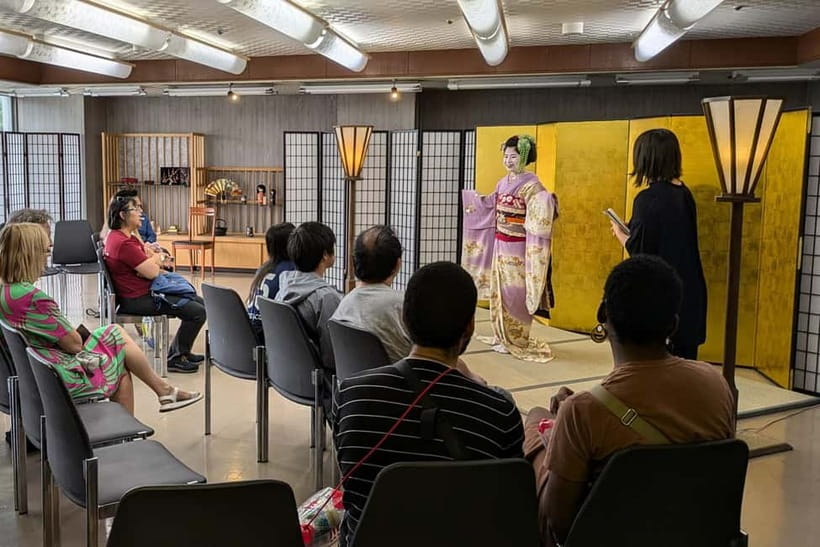
The question period gives this activity more substance than a short cultural demonstration. Instead of only watching an unfamiliar tradition, you can ask about the person behind the appearance.
The host translates into English, so you do not need Japanese language skills. The questions are asked in a group, and the answers are shared with everyone. Because the capacity is 30, the session is not guaranteed to feel like a private conversation, but it is small enough for audience participation.
The Q&A can also correct common misunderstandings. The host explains the difference between a maiko and a geiko, while the maiko can speak about her own training and choices. The program presents the tradition through a modern, human conversation rather than only through costume and dance.
Keep your questions concise and respectful. Questions about training, performance, clothing, music, and her path toward becoming a geiko fit the format well. The host may need to keep the session on schedule, so long or repeated questions can make the ending feel rushed.
This is also a good activity for older children and teenagers who want more than a passive show. Very young children are welcome, and children aged 0 to 2 can attend free if they do not need separate seats. Still, the setting asks for quiet attention during the dances. A disruptive child can affect everyone in the room, including the performer.
Same place, a different night out:
- Tokyo: Japanese Dance Cabaret Theater Asakusa-Kaguwa Ticket
★ 4.8 · 2,270 reviews - the SUMO show
★ 5.0 · 1,960 reviews - Tokyo Shinjuku Sumo Show & Experience with Photo
★ 5.0 · 1,750 reviews - Tokyo: Samurai Restaurant Show Ticket with 2 Drinks
★ 4.5 · 1,307 reviews
The Kyoto Handicraft Center setting
The meeting point is the West Building of the Kyoto Handicraft Center. On the first floor, take the elevator to the second floor and look for the MEET MAIKO welcome sign.
The location is practical rather than atmospheric. You are meeting inside a handicraft and arts center, not an old teahouse or traditional banquet hall. Some people appreciate the clean, easy-to-find arrangement. Others may find the meeting room a little corporate or sterile for a performance rooted in Kyoto’s historic entertainment districts.
The building adds a useful extra stop. Before or after the show, you can browse Japanese paintings, dolls, crafts, and other goods. One area includes museum-level pieces in display cabinets, including items marked not for sale. If you enjoy handmade Japanese objects, allow time to look around instead of rushing straight out.
The shopping is optional. You are not required to buy anything, and the show does not depend on a sales presentation. Still, the setting means the experience feels more like a cultural introduction inside a craft center than an evening of traditional theater.
Getting there and planning your timing
The activity does not include transportation, a shuttle, a meal, drinks, a local guide, or a photographer. You need to make your own way to the Handicraft Center and bring your own camera for the photo.
Give yourself extra time in Kyoto during high season. Taxis can be hard to catch, and city buses may be crowded. The directions inside the building are simple, but finding the center and reaching the second-floor reception area still takes a little planning.
Arrive at least 10 minutes before the show. Reception opens 30 minutes early, which is useful if you want to find the room, use the facilities, or browse the store before sitting down. Seats are free, so early arrival may also help you choose a comfortable place.
Late entry is permitted, so a delay does not automatically ruin the booking. Even so, arriving late means you may miss the introduction or the maiko’s entrance. Since the program is only 45 minutes, every part counts.
The event is conducted in English and is wheelchair accessible. It is not private, so you will share the room and the question period with other people.
Is $44 a fair price?
At $44 per person, this is not the cheapest short activity in Kyoto. You are paying for a 45-minute cultural program, English interpretation, a live dance demonstration, a question period, a group photo opportunity, and a small gift.
The price makes better sense if meeting a maiko is high on your Kyoto list. A chance encounter in Gion is uncertain, and a large theater performance may not offer direct conversation or a personal photograph. Here, the program combines all three elements: performance, explanation, and contact.
The value is less convincing if you mainly want dance. Since the two performances total only 8 to 10 minutes, you might prefer a longer stage show elsewhere. You are also paying for the setting and staff coordination, not just the minutes of dance.
I see the strongest value in the access and context. You receive an English explanation, learn how the role works, ask questions through a translator, and leave with a photo. For a first visit to Kyoto, that is a useful package, especially when you want something informative but do not want to spend an entire evening at a formal theater.
Free cancellation up to 24 hours before the start and reserve-now, pay-later booking make it easier to fit the event around a changing Kyoto schedule.
Who should book this experience?
I would choose this for a first-time visitor curious about geiko and maiko culture, especially if you want a direct introduction rather than a street sighting. It also suits families, couples, and solo visitors who like a small group and an opportunity to ask questions.
It is a good match if you value:
- A short activity that fits between major Kyoto sights
- English-language explanation
- A respectful meeting with a maiko
- A personal photo taken with your own phone
- A chance to browse Japanese crafts afterward
- A seated program suitable for different ages
I would hesitate if you expect an extended dance recital, a candlelit traditional room, or a private meeting. The venue is functional, the event is shared, and the performance portion is deliberately brief.
The event has earned a 4.8 rating from 286 reviews, with especially strong praise for the graceful dances, clear interpretation, friendly staff, and Q&A. The most useful criticism is just as clear: some people wanted more dancing, and the room could have had a more traditional atmosphere.
Should you book the Kyoto maiko experience?
Book it if you want a respectful, accessible introduction to Kyoto’s maiko tradition with real interaction rather than a costume display. The dances are short, but the explanation and Q&A give the 45 minutes purpose, and the photo session adds a personal finish.
Skip it if your priority is a long performance or an old-fashioned teahouse setting. For everyone else, $44 is a reasonable price for a compact cultural experience that lets you meet a maiko, understand her training, and leave with more than a quick glimpse through a crowded Kyoto street.
FAQ
How long does the maiko experience last?
The scheduled duration is 45 minutes. The dances take about 8 to 10 minutes in total, followed by an introduction, Q&A, and a 10 to 15 minute photo session.
Where does the activity take place?
It takes place at the Kyoto Handicraft Center in the West Building. Enter on the first floor, take the elevator to the second floor, and look for the MEET MAIKO welcome sign.
Is the experience conducted in English?
Yes. The host or greeter and event staff provide English-language assistance and translate the questions and answers.
Can I ask the maiko questions?
Yes. A question and answer session follows the dance performances. The English-speaking host translates between the audience and the maiko.
Can I take photographs?
Yes. Photography is allowed during the event, and you can take a commemorative photo with the maiko using your own camera or smartphone.
Is a photographer included?
No. A photographer is not included. You need to bring your own camera or smartphone for the commemorative picture.
Is the activity wheelchair accessible?
Yes, the activity is wheelchair accessible.
Can young children attend?
Yes. Children aged 0 to 2 can attend free of charge if they do not occupy separate seats. The activity is shared with other participants, and all attendees are seated.
Just added around Japan
- Authentic Kabuki Transformation & Mini Performance at Aioiza Gifu★ 4.5 · 3 reviews
- Kabuki Talk★ 5.0 · 10 reviews
- Tokyo: English Standup Comedy Night★ 5.0 · 4 reviews
- Experience the Asakusa Kabuki Opera Show!★ 5.0 · 99 reviews
- Tokyo: Taishu Engeki Show with Kimono and Sword Lesson★ 5.0 · 12 reviews
- Tokyo: Traditional Geisha Experience Show & Japanese Dinner★ 4.2 · 59 reviews
- Tokyo: Rainbow Bridge Day Cruise Show Unlimited Soft Drinks★ 4.5 · 86 reviews
- Tokyo: Taiko Drum Experience in Kabukicho with Dinner★ 5.0 · 3 reviews
Kyoto Shows, compared.
Kyoto Gion Cultural Walk & Geisha Show with Dining Options
Read our review →Kyoto Gion Cultural Walk & Geisha Show with Dining Options
Read our review →
Gion Walking Tour, Geisha Show and Japanese Game in Kyoto
Read our review →
Browse the lists this show appears in