
Review · KYOTO
Kyoto Gion Cultural Walk & Geisha Show with Dining Options
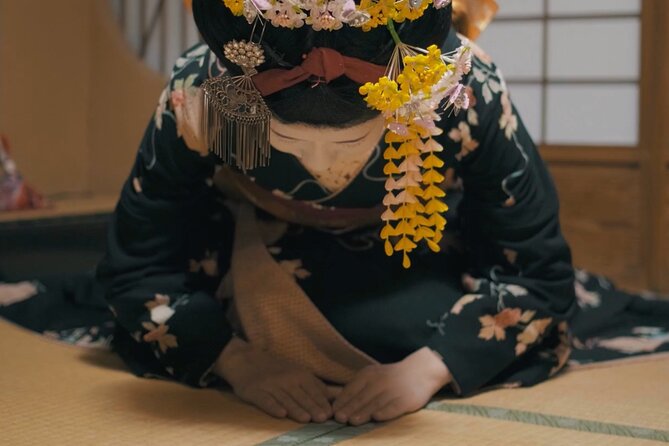
Kyoto’s geiko culture is usually seen from a distance, behind the doors of elegant teahouses. This experience brings you closer in a respectful way: you walk through Gion with a guide, learn what the work really involves, then meet a maiko, a geiko in training, for conversation and a traditional dance.
I like the small group of up to eight people, which gives you room to ask questions without shouting across a crowd. I also like the clear cultural focus. Guides such as Kenta, Ken, and Akari explain the difference between geiko and maiko and correct the Hollywood myths that often muddy the subject. The main consideration is mobility: the walk is not suitable for people with mobility impairments, and the meal portions may feel modest to big eaters.
Key points to know before booking
- Meet at a memorable central landmark: Find the statue of Izumo no Okuni near Exit 4 of Keihan Gion Shijo Station.
- See Gion with context: The 1.5 to 2 hour walk covers traditional streets, shrines, temples, schools, and entertainment districts.
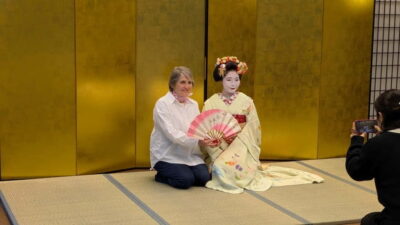
- Meet a real maiko: You can ask questions, take part in conversation, and watch one or two songs or dances.
- Choose your timing and meal: Select a Japanese lunch, an afternoon tea break, or an evening dinner with eight shared dishes.
- Keep the group personal: Numbers are limited to eight, making it easier to hear the guide and speak with the maiko.
- Plan for a cultural lesson, not just a show: The best part is understanding the training, rules, and daily life behind the costume.
Why this Gion experience feels different
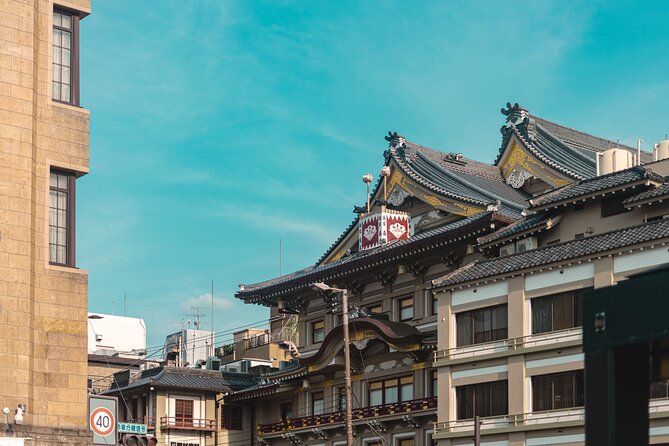
Many Gion visits amount to a slow walk down pretty streets, hoping to spot a maiko before she disappears into a doorway. This tour gives you a better framework. You learn what you are looking at, why the district developed, and how the geiko arts fit into Kyoto life today.
The word geisha is widely understood outside Japan, but in Kyoto the term geiko is also used. A maiko is an apprentice, still in training before becoming a geiko. The guide explains these terms, along with the customs, skills, and demanding preparation behind the elaborate appearance.
I especially value that the tour aims to protect the dignity of the women you meet. You are not being taken on a costume spectacle. The guide helps you understand appropriate behavior around the districts and during the meeting. That matters in Gion, where residents and working entertainers are often photographed without permission.
The experience lasts about 210 minutes. That is long enough to cover the walking portion without rushing, then settle into the performance and conversation. It is also short enough to fit neatly into a Kyoto sightseeing day.
More Cultural Shows in Japan
- Kyoto Gion Cultural Walk & Geisha Show with Dining Options
★ 5.0 · 483 reviews - Kyoto: Samurai Kenbu Traditional Sword Dancing Show
★ 4.5 · 426 reviews - Tokyo: Traditional Japanese Performing Arts Show and Dinner
★ 4.5 · 99 reviews
Starting beside the Izumo no Okuni statue
Your meeting point is in front of the statue of Izumo no Okuni near Exit 4 of Keihan Gion Shijo Station. This is a practical place to begin because it is easy to identify and puts you near the Kamo River and the Gion district.
Allow enough time to find the correct station exit. Kyoto’s station areas can be confusing, especially if you arrive by a different rail line. Large bags and luggage are not allowed, so leave suitcases at your accommodation or storage facility before meeting the guide.
The tour is offered in English. Past guides have included Kenta, Ken, and Akari. The strongest feature of their work is not simply knowing facts, but explaining them in clear, calm English and making room for questions. Kenta is often praised for his warmth and sense of humor, while Akari is described as especially enthusiastic and careful with group needs.
Walking through Gion beyond the postcard view
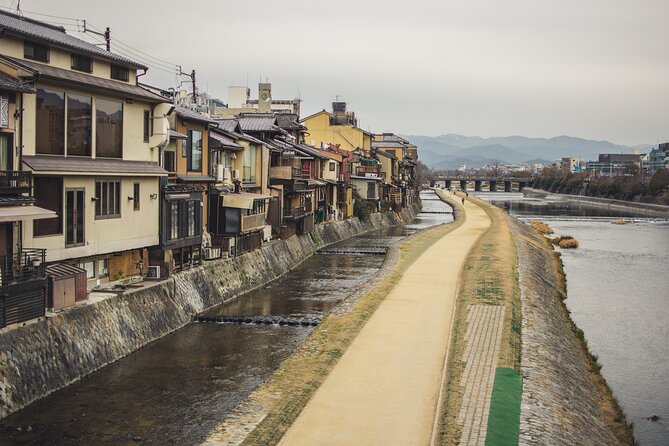
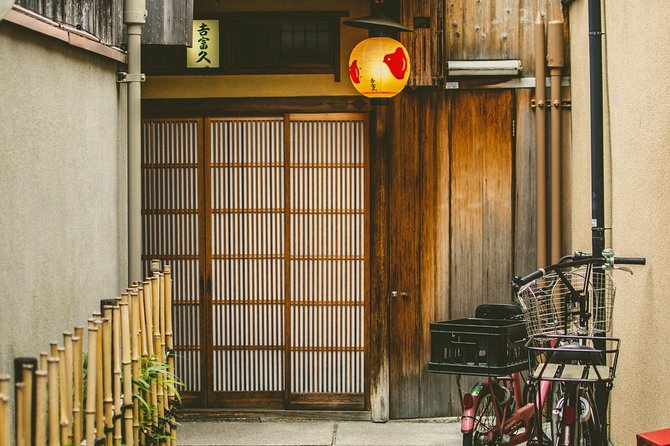
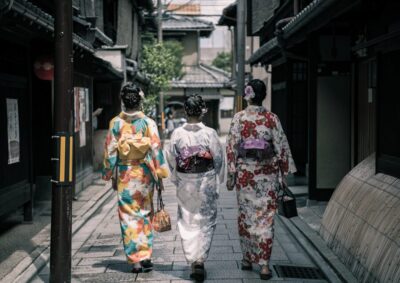
The first part takes about 1.5 hours, though the advertised walking portion can run up to two hours. You move through Gion and nearby areas while the guide explains the district’s past and present.
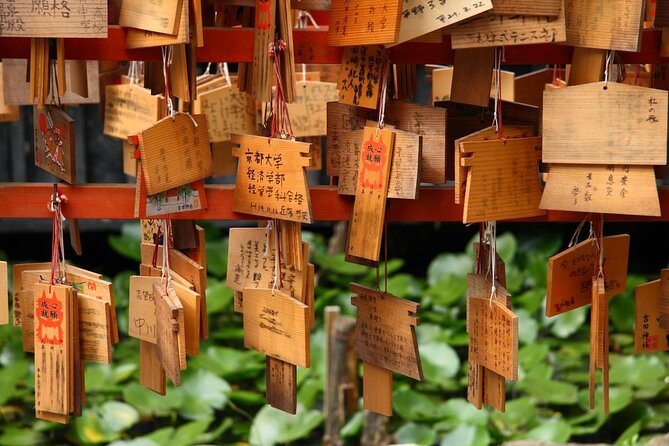
Expect to see traditional streets, temples, shrines, and places connected with the local entertainment world. One especially useful part is learning where maiko and geiko study. This turns an ordinary building or quiet lane into part of a working cultural neighborhood rather than a photo backdrop.
The walking pace is described as moderate. That should suit most people who are comfortable on foot, but this is still a walking tour over city streets. It is not designed for anyone who needs a fully accessible route or frequent mobility assistance.
The walk may also include Miyagawa cho, another historic geiko district. Seeing more than one entertainment area helps you compare the character of Kyoto’s traditional quarters. The exact route can vary, but the purpose remains the same: connect the streets to the people, training systems, and customs that continue to shape them.
I like the daylight option for first time visitors. It makes it easier to see architecture and landmarks, and one guide specifically recommends taking the tour during daylight hours. The evening option has a different mood, with Gion after dark offering a quieter and more atmospheric setting. You should choose based on your interests rather than assuming one time is automatically best.
Your guide may also help with photos of your own group. That does not mean you should photograph working maiko or geiko in the street. During the hosted meeting, ask the guide about photography rules and follow the instructions given.
The history and daily discipline of geiko and maiko
The walking commentary is the heart of the experience. You learn how the geiko tradition developed, what the names mean, and how a maiko’s training leads toward becoming a geiko.
The guide also explains the performance skills involved. Dance is only part of the picture. Conversation, music, manners, appearance, and knowledge of traditional arts all form part of the profession. This broader explanation helps you see the meeting later as a presentation by a trained artist, not simply an opportunity to admire a kimono.
The guides also address common misconceptions. That is important because popular entertainment often presents geisha culture through a Western lens that misses the actual social and artistic setting. Kenta in particular is praised for correcting these misunderstandings and presenting the geiko and maiko communities with care.
I would pay close attention during this section, even if your main goal is the performance. Without the background, the dance can seem mysterious but brief. With it, you understand more of the training, discipline, and cultural meaning packed into those few minutes.
More Traditional and Cultural Shows in Japan:
- Japanese Traditional Music Show in Tokyo
★ 5.0 · 72 reviews - Traditional Japanese Music ZAKURO SHOW in Tokyo
★ 5.0 · 67 reviews - Tokyo: Traditional Geisha Experience Show & Japanese Dinner
★ 4.2 · 59 reviews - Traditional Japanese Comedy, Juggling & Magic Live Show in Tokyo
★ 5.0 · 37 reviews
Meeting the maiko in Miyagawasuji
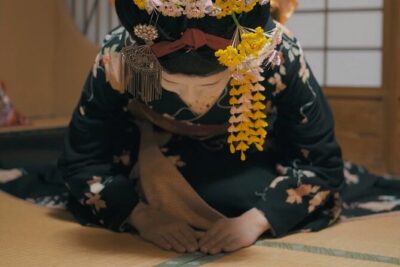
The second half moves to a traditional venue in Miyagawasuji, where you meet a maiko. The meeting and performance last about 50 minutes, with one or two songs or dances included.
The format is personal. You sit down, watch the maiko perform, and then have time to ask questions. Depending on the session, the meeting may also include a simple game or informal exchange. The maiko answers questions about her routine, training, and reasons for choosing this path.
This is the part that many people remember most, but it works because the group is small. With no more than eight participants, you have a reasonable chance to hear the answers and take part in the conversation. A much larger group would change the tone and make the question period less useful.
You may be allowed to take photos during the hosted meeting, but do not assume that every image can be posted online. One participant was specifically asked not to share photographs publicly and chose to respect that request. Treat the maiko as a person at work, not as a public prop.
The performance itself is traditional dance, accompanied by one or two songs. Expect elegance and concentration rather than a long stage production. The presentation is intimate, which is precisely why it can feel special, but anyone seeking a full evening theater show should set expectations accordingly.
Choosing lunch, tea, or the eight dish dinner
The booking options let you choose the food and time that best fit your plans.
The morning option begins at 10:30 and includes a Japanese lunch plate with the maiko. This works well if you want to keep your evening free for a temple visit, another meal, or a stroll through Kyoto. Several accounts describe the lunch as very good, though one person found the portion light. I would treat it as part of the cultural experience rather than a large meal.
The afternoon option begins at 14:30 and includes a cup of tea. This is the simplest choice and may suit you if you already have lunch plans. It also gives the meeting a relaxed tea break feel. One participant singled out the orange tea as especially enjoyable, though the exact drink selection may vary.
The evening option begins at 18:30 and includes dinner served as eight shared dishes. Descriptions of the meal range from beautifully arranged and tasty to a pleasant kaiseki style dinner with good drinks. The shared format gives you a chance to sample several preparations, but eight small dishes do not necessarily equal a large dinner.
I see the dinner as the best choice if you want the most complete evening out. The lunch is useful for scheduling, while tea is the lighter and likely most economical-feeling format, though the stated price is $108 per person for the experience. Check the selected option carefully because the included food changes with the time slot.
Is $108 a fair price?
At $108 per person, this is not a cheap walk and meal. The value comes from access and explanation. You are paying for an English speaking guide, a small group, a substantial walk through Gion, a private cultural meeting, a live performance, and either food or tea.
A normal visit to Gion can show you beautiful lanes, but it will not necessarily explain the difference between geiko and maiko or give you a respectful chance to ask questions. A restaurant meal alone also will not provide the hosted performance and cultural background.
The strongest value is for someone who would otherwise book several separate pieces: a Gion walk, a cultural talk, and a traditional performance. Put together in three and a half hours, the price becomes easier to justify.
The meal itself should not be the only reason you book. Portions may be delicate rather than filling, especially at lunch or dinner. If you want a substantial meal, plan a later snack or another meal, using only the information available about your chosen option to set expectations.
Practical choices that will improve your visit
Wear comfortable shoes. The route involves a moderate city walk, and traditional streets are best enjoyed when you are not thinking about sore feet.
Do not bring large luggage or oversized bags. This is both a comfort issue during the walk and a stated restriction for the activity.
Choose your time with care. Daylight is better for seeing the streets, temples, shrines, and architecture. Evening gives you a more atmospheric look at Gion and works naturally with dinner.
Bring questions. The meeting is much more rewarding when you ask about training, daily routines, performance skills, or the difference between maiko and geiko. The guides are there to explain, and the small group makes discussion possible.
Be prepared to listen as much as photograph. The most worthwhile part is learning how the tradition functions today. The performance is memorable, but the context helps you understand why it matters.
Cancellation is flexible if your plans shift: you can cancel up to 24 hours ahead for a full refund. You can also reserve now and pay later. These policies are useful when you are arranging a Kyoto schedule around weather, train plans, and temple visits.
Who should book this experience?
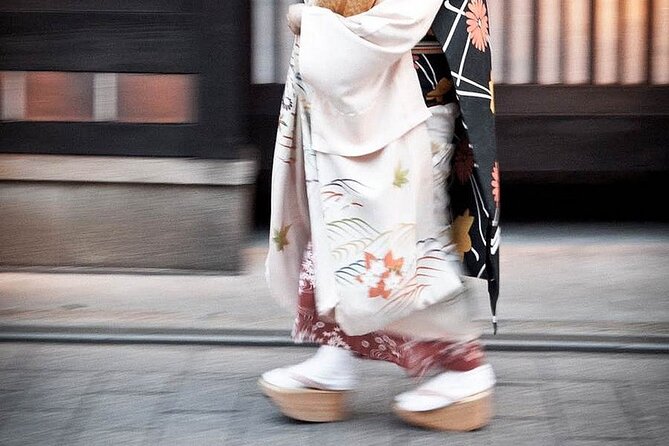
I would recommend it to first time Kyoto visitors who want more than a quick look at Gion. It suits couples, families with older children, and solo visitors who enjoy asking questions in a small group.
It is also a good choice if you care about cultural accuracy. The guides spend real time separating geiko and maiko life from the myths that often surround it. You will come away with a clearer understanding of the profession and the district.
The experience is less suitable if you dislike walking, need step free access, or want a large theatrical production. It may also disappoint anyone expecting a long, filling dinner. The meal is part of a wider cultural program, not the entire event.
Should you book the Gion geiko and maiko experience?
Yes, if you want an intimate introduction to Kyoto’s geiko culture and value explanation as much as spectacle. The combination of Gion streets, a careful English speaking guide, direct questions, and a maiko performance is hard to reproduce independently.
I would choose the daylight lunch or tea option for the clearest views of the district, and the 18:30 dinner for a fuller evening atmosphere. Book this for cultural understanding, respectful access, and a small group setting. If those are your priorities, $108 is a fair price for three focused hours in one of Kyoto’s most distinctive districts.
FAQ
Where does the tour meet?
Meet in front of the statue of Izumo no Okuni near Exit 4 of Keihan Gion Shijo Station.
How long does the experience last?
The activity lasts 3 hours, or 210 minutes.
What language is the tour conducted in?
The live tour guide speaks English.
How large is the group?
The tour is limited to eight participants.
What does the walking portion include?
You walk through Gion for about 1.5 to 2 hours while learning about geiko and maiko history, training, customs, and daily life. The route can include temples, shrines, traditional streets, schools, and geiko districts.
What happens during the maiko meeting?
You watch a traditional dance performance with one or two songs, then have time to ask the maiko questions. The meeting lasts about 50 minutes.
What meal options are available?
The 10:30 option includes a Japanese lunch plate. The 14:30 option includes a cup of tea. The 18:30 option includes dinner served as eight shared dishes.
Can I bring luggage?
Large bags and luggage are not allowed. The experience is also not suitable for people with mobility impairments.
More Dinners Out in Japan
- Tokyo: Samurai Restaurant Show Ticket with 2 Drinks
★ 4.5 · 1,307 reviews - Osaka Umeda: PICCADILLY DINNER SHOW & NIGHTCLUB with Tasting
★ 4.8 · 49 reviews - Tokyo: Japanese Style Variety Show with Dance,Magic & Dinner
★ 4.5 · 13 reviews - Tokyo: Traditional Asakusa Music Show with Dinner
★ 5.0 · 10 reviews
More Dinner Experiences in Japan
- Tokyo: Sumo Show and Dining Experience
★ 4.8 · 2,742 reviews - Tokyo: Yakatabune Dinner Cruise with Japanese Show & Drinks
★ 4.7 · 871 reviews - Tokyo Bay Yakatabune Dinner/Day Cruise with Japan Show and Drinks
★ 4.5 · 473 reviews - Tokyo Dinner Cruise & Tradition Show & Drinks & Tokyo Tower
★ 4.7 · 315 reviews
Just added around Japan
- Authentic Kabuki Transformation & Mini Performance at Aioiza Gifu★ 4.5 · 3 reviews
- Kabuki Talk★ 5.0 · 10 reviews
- Tokyo: English Standup Comedy Night★ 5.0 · 4 reviews
- Experience the Asakusa Kabuki Opera Show!★ 5.0 · 99 reviews
- Tokyo: Taishu Engeki Show with Kimono and Sword Lesson★ 5.0 · 12 reviews
- Tokyo: Traditional Geisha Experience Show & Japanese Dinner★ 4.2 · 59 reviews
- Tokyo: Taiko Drum Experience in Kabukicho with Dinner★ 5.0 · 3 reviews
- Tokyo: Rainbow Bridge Day Cruise Show Unlimited Soft Drinks★ 4.5 · 86 reviews
Kyoto Shows, compared.
Kyoto Gion Cultural Walk & Geisha Show with Dining Options
Read our review →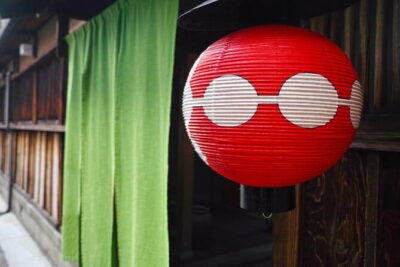
Gion Walking Tour, Geisha Show and Japanese Game in Kyoto
Read our review →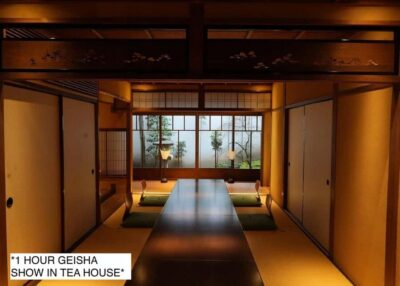
Browse the lists this show appears in