
Review · KYOTO
Kyoto: Non-Verbal Theatre Show Tickets at GEAR
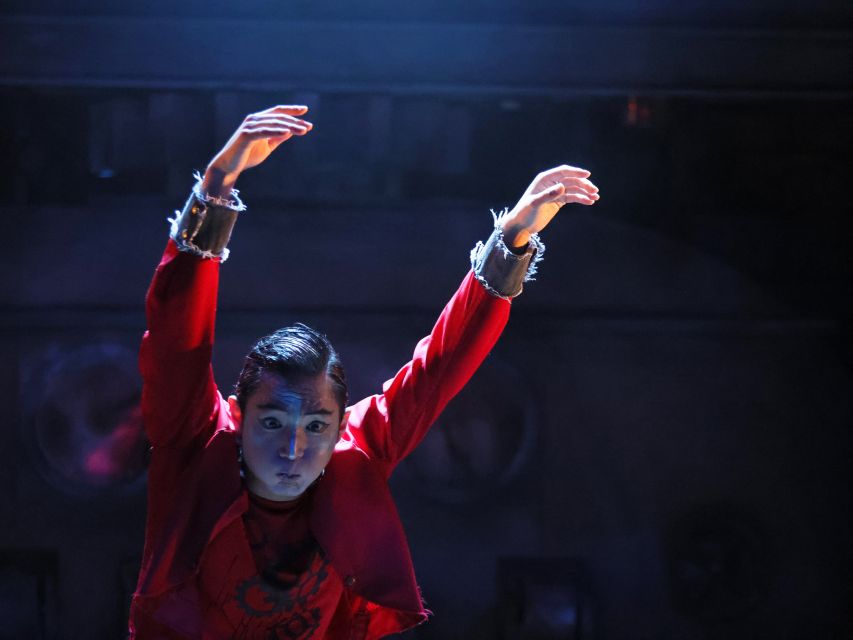
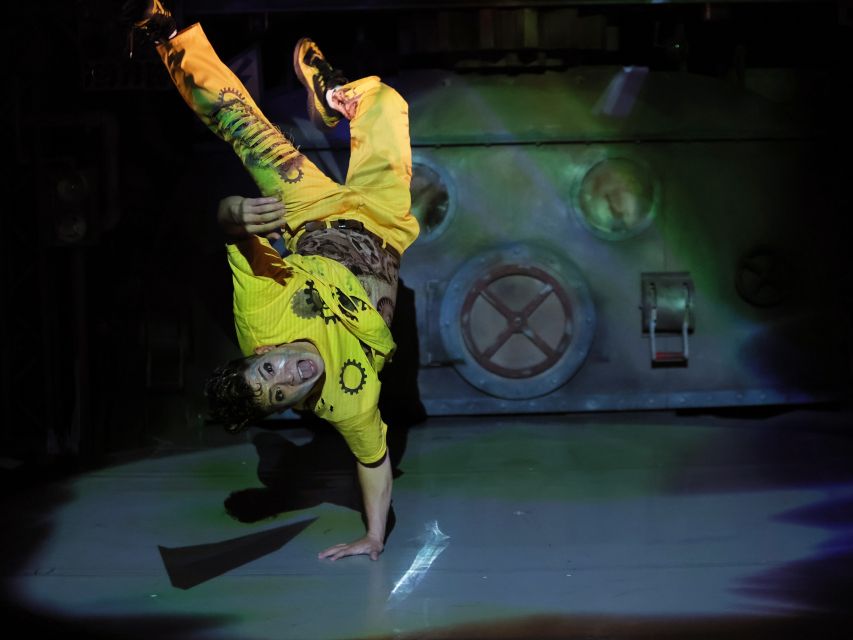
GEAR turns a broken toy factory into a playground of mime, magic, dance, juggling, and visual tricks. The story follows robot workers who meet a doll that comes to life, then begin to discover what it means to be human. You do not need Japanese language skills, or much explanation, to follow the action.
I like the compact 72-seat theatre because the performers feel close, and I like the way the show combines old Japanese stage ideas with modern technology. The main thing to consider is comfort: this is a 1928 building, and each seat is fairly small at about 18 by 18 inches.
Key points about Kyoto’s GEAR theatre show
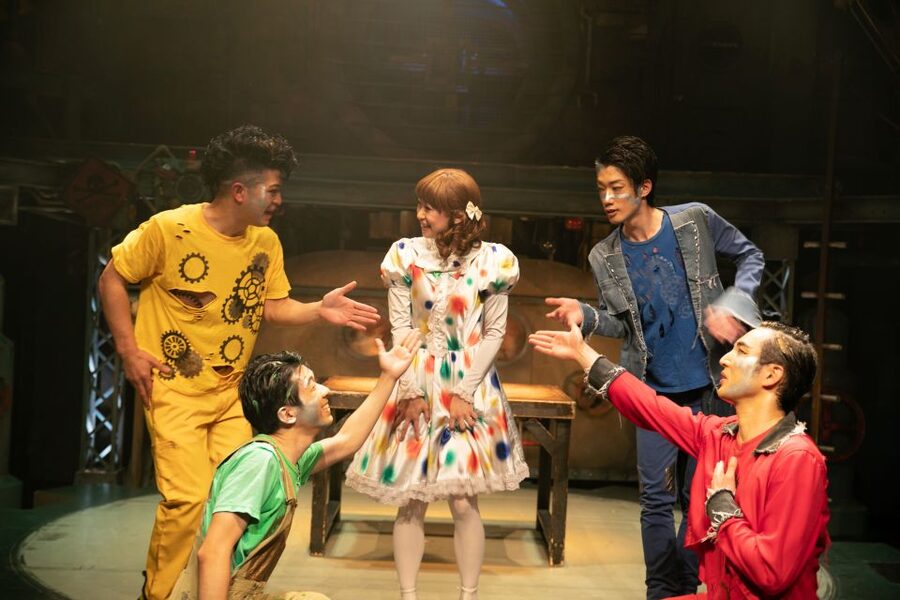
- A dialogue-free story: You follow the characters through movement, music, facial expression, and visual comedy rather than spoken Japanese.
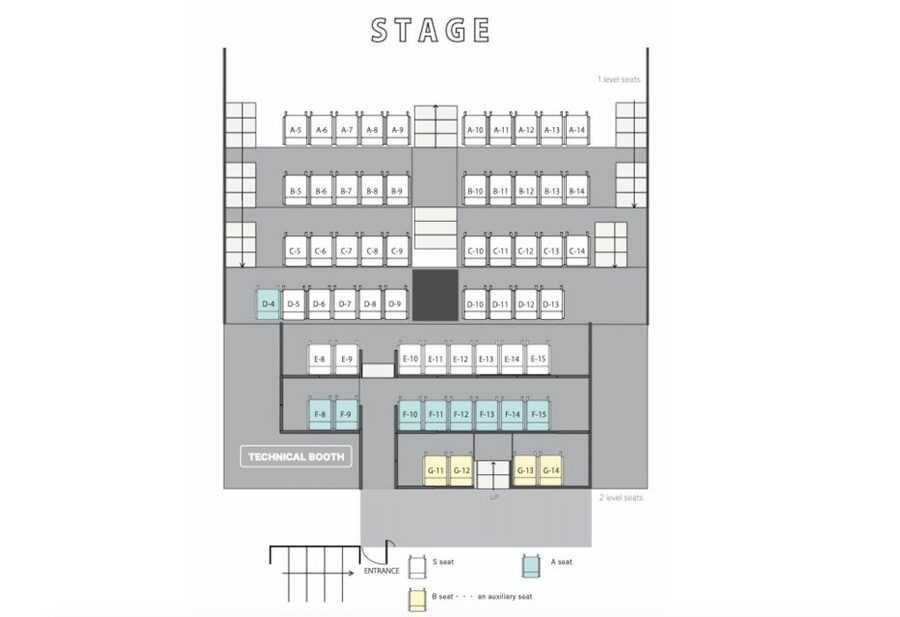
- A small 72-seat venue: The limited capacity puts you close to the action, and the available ticket is an S, or Premium, seat.
- Several performance arts in one show: Expect mime, magic, breakdance, juggling, acting, and carefully controlled robotic movement.
- A clever stage: The broken toy factory uses tricks influenced by Kabuki theatre, along with modern lighting and technology.
- A 90-minute evening option: The show fits neatly into a Kyoto sightseeing day without taking up an entire night.
- A few practical limits: Doors open 30 minutes before showtime, food and drink are not allowed, and children under four cannot enter.
A human story told without spoken words
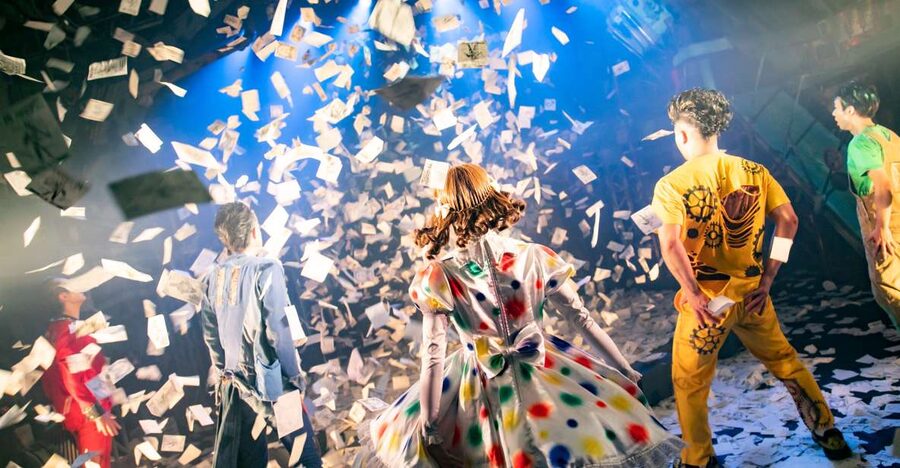
The basic plot is easy to grasp. GEAR takes place in a future broken toy factory, where robot workers go about their strange routines until a doll comes to life. Her arrival pushes the robots toward curiosity, feeling, humor, and a new sense of humanity.
That simple setup gives the performers room to communicate through posture and movement. The robots move with precise, mechanical gestures, while the doll brings a softer and more emotional presence to the stage. You can understand the relationships without translating a speech or reading subtitles.
That makes GEAR especially useful for an international audience. The show is built around expression, timing, music, light, and physical comedy. You can bring children, adults, retirees, and people who speak different languages, and everyone can follow the central story.
The lack of dialogue does not mean the show is quiet or slow. The action includes fast physical routines, visual surprises, comedy, and moments designed to pull an emotional response from the audience. The story stays simple enough to follow, but the performance keeps changing its rhythm.
More Theatre Shows in Japan
- Tokyo: Japanese Dance Cabaret Theater Asakusa-Kaguwa Ticket
★ 4.8 · 2,270 reviews - Tokyo Japanese Dance Cabaret Theater Asakusa-Kaguwa
★ 5.0 · 170 reviews - Tokyo: KABUKI Show at Kabukiza Theatre Admission Ticket
★ 4.8 · 152 reviews
The old Kyoto theatre adds to the experience
GEAR is presented in an old building constructed in 1928. That detail matters. This is not a huge modern auditorium where you watch a distant stage through binoculars. The theatre holds only 72 people, creating a close setting for physical performance and magic.
The small room also helps with the show’s visual effects. You are close enough to notice the actors’ facial expressions, hand movements, and precise robotic gestures. Several people who enjoyed the production particularly liked the fact that every seat has a good view.
The tradeoff is the seating. Each seat measures about 18 by 18 inches, so the space may feel tight for some adults. One audience member specifically found the seats acceptable for larger European bodies, but you should still treat the limited width as a real consideration when deciding.
Doors open 30 minutes before the show starts. I would use that time rather than arriving at the last minute, since the theatre is small and seat numbers cannot be selected in advance. The available ticket is currently an S, or Premium, seat, but you are assigned a seat rather than choosing a particular number.
A 90-minute mix of stage skills
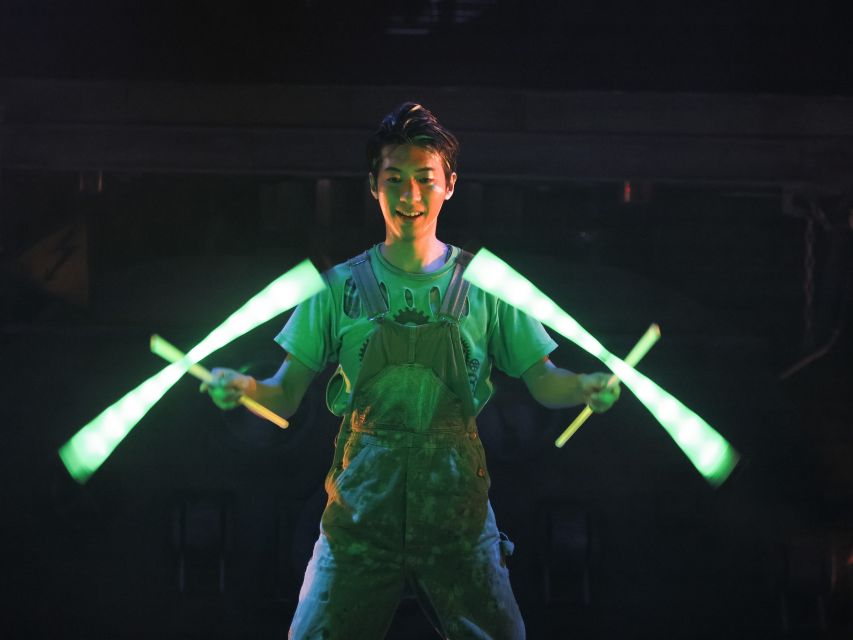
GEAR is not a single-style performance. It moves between several disciplines, which helps keep the pace lively.
Mime carries much of the story. The actors use their bodies to show surprise, fear, affection, confusion, and mechanical routine. The robot characters need to look artificial without becoming lifeless, and their carefully controlled movements are a key part of the show’s appeal.
Magic provides another layer of surprise. It fits the toy-factory setting because objects seem to behave in unexpected ways. One family even had an older daughter included in a magic section, so you might find some interaction with the audience, although you should not book the show expecting to be selected.
Breakdance and juggling add speed and skill. They give the production bursts of physical energy and help prevent the emotional story from becoming too sweet. The mix is unusual: you get character acting, comedy, dance, and circus-style ability in one 90-minute performance.
The cast also uses doll and robot movements as part of the acting. This requires more than simply walking stiffly. Tiny changes in timing and posture help you tell the characters apart and understand what they are feeling, even when nobody speaks.
Stage effects inspired by Kabuki and modern technology
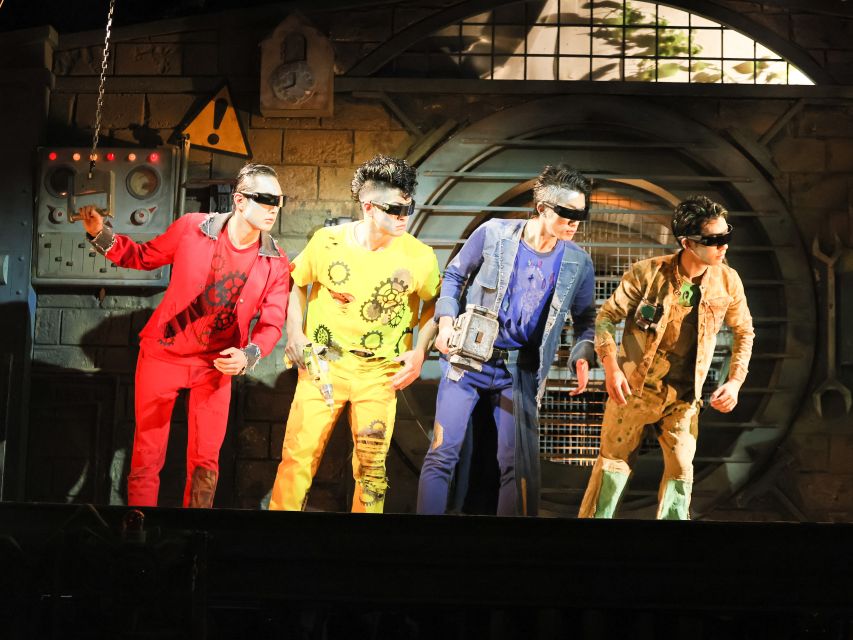
The set represents a damaged toy factory, but it is designed to do more than provide a backdrop. The production uses stage techniques influenced by Kabuki theatre alongside newer technology, lighting, sound, and visual effects.
You can expect the set to change the way you see the space. Objects, lights, music, and performer movement work together to suggest a larger world than the small theatre might seem able to hold. The effect is not based only on expensive equipment. Timing and precise handling matter just as much.
The sound design and lighting are important parts of the show, not decoration added after the fact. Music helps carry the emotional turns because there is no spoken narration. Lighting directs your attention and gives the toy factory different moods.
I like this blend of old and new. Kyoto is often presented through temples, gardens, and traditional arts, but the city also has a long habit of adapting older ideas for new forms. GEAR uses that same contrast in a practical way: Kabuki-related stage thinking meets contemporary physical theatre and technology.
One caution: if you are looking for a specifically historical Japanese performance, this may not be the right choice. The story is set in a future factory and uses international forms such as mime, magic, breakdance, and juggling. Its Kyoto connection comes more from the stagecraft and setting than from a traditional Japanese plot or costume show.
Same place, a different night out:
- Mt Fuji & Hakone Cruise, Drum Show Bullet Train 1 Day from Tokyo
★ 4.0 · 7,413 reviews - Tokyo: Sumo Show Experience with Chicken Hot Pot and a Photo
★ 4.8 · 6,678 reviews - Tokyo: Sumo Show and Dining Experience
★ 4.8 · 2,742 reviews - the SUMO show
★ 5.0 · 1,960 reviews
Why the no-language format works so well
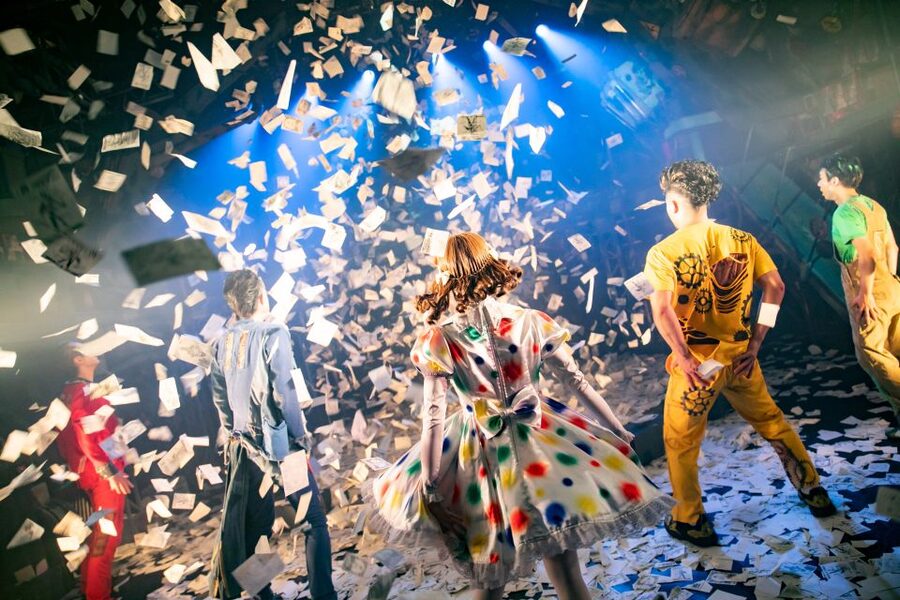
A nonverbal show can sometimes feel thin if it relies only on spectacle. GEAR avoids that problem by giving the action a clear emotional center. The robots and the doll are not just performers showing tricks. Their changing relationships give the tricks a reason to matter.
You will not need to decode every movement to understand the main idea. The production uses broad expressions and recognizable reactions, then supports them with music and visual effects. That makes the show a comfortable choice for a first evening in Kyoto when you are still adjusting to the language and customs.
The format also helps mixed groups. If one person in your party speaks no Japanese, or if children would lose interest during a subtitled play, GEAR removes that barrier. It is still a theatre performance, but you do not have to keep reading a screen or program.
At the same time, the absence of dialogue means you should not expect detailed character backstories or complex spoken humor. The plot is intentionally direct. Its strength is the way it creates feeling through bodies, sound, timing, and stage illusion.
What the audience experience feels like
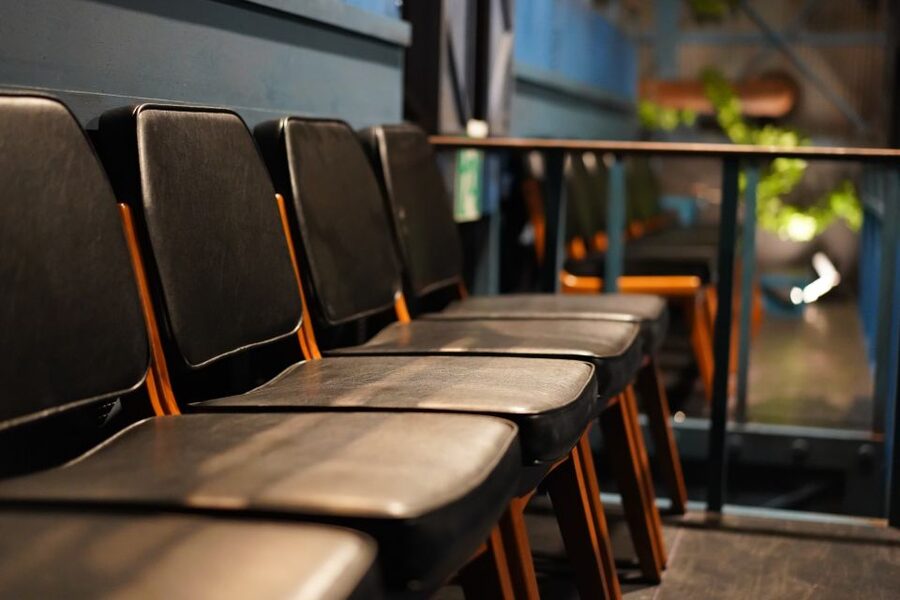
The show is designed for close viewing, and the small venue makes the performers’ precision easier to appreciate. You can see how the actors build a robot’s mechanical behavior, how a magician controls attention, and how a dancer changes the energy in the room.
The production also has an interactive quality, though the supplied details do not promise audience participation at every performance. There may be moments that involve or surprise people in the room. Think of that as a possible extra, not something you should count on.
The mood shifts often. One sequence may be funny, another highly energetic, and another touching. This range explains why the show works for adults as well as children old enough to sit through a 90-minute performance.
Children under four are not admitted for security reasons. Food and drink are also prohibited inside the theatre. Those rules are easy to manage, but they matter if you are planning an evening around young children or hoping to bring snacks into the venue.
Is $46 a fair price?
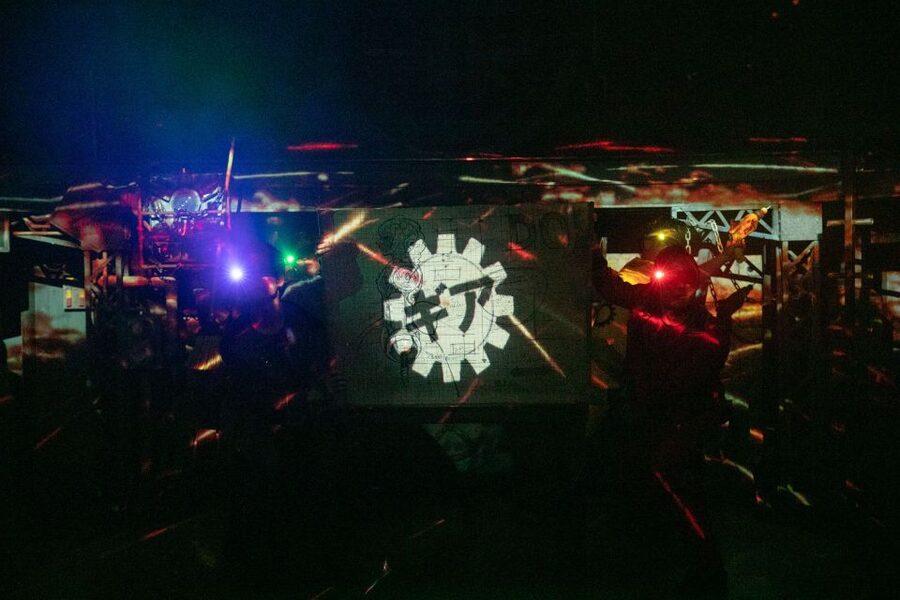
At $46 per person, GEAR is not a cheap filler activity. You are paying for a full 90-minute theatre production with an S-seat ticket, a professional cast, a custom set, lighting, sound, magic, dance, and stage effects.
I think the price makes the most sense if you want something beyond temples and sightseeing walks. Kyoto offers plenty of low-cost cultural experiences, but few combine this many performance styles in one compact production. The close seating and limited 72-seat capacity also give the evening a different feel from a large commercial theatre.
Value depends on your interests. If you enjoy live performance, visual comedy, circus skills, or inventive stage design, the ticket can feel well spent. If you want traditional Japanese theatre in a formal historical style, your money may be better directed elsewhere.
The price is also easier to justify for a special evening, a family outing with children over four, or a couple looking for an activity that does not depend on Japanese language ability. It is less compelling if you are mainly seeking a cheap way to fill an hour.
Who should book GEAR in Kyoto?
I would recommend GEAR to:
- You want an evening performance with no language barrier.
- You enjoy physical theatre, mime, magic, juggling, or dance.
- You are visiting Kyoto with a mixed-age group, including children over four.
- You prefer a small theatre where the stage feels close.
- You want a modern production rather than a strictly traditional Japanese show.
- You have already spent the day visiting temples and want a completely different kind of activity.
I would pause before booking if you dislike small seats, need a large amount of legroom, or want a performance with detailed spoken dialogue. I would also set the right expectation about the Japanese element. GEAR draws on Kabuki-related stage techniques, but it is a contemporary fantasy about robots and a doll, not a classic Kabuki production.
The show has earned a 4.9 rating from 198 ratings, with particular praise for the performers’ precision, expressive acting, inventive set, music, lighting, and emotional story. The most useful takeaway for you is not simply that the show is popular. It is that the experience depends on the complete package working together. The actors, effects, music, and set all carry part of the story.
Booking and timing tips for your Kyoto evening
Check the starting time when you book, since the show schedule can vary. The performance lasts 90 minutes, and doors open 30 minutes before the start.
Go to GEAR Non-Verbal Theatre for the performance. The ticket includes admission and currently provides an S, or Premium, seat. You cannot select a specific seat number because the theatre has limited capacity.
If your plans might change, cancellation is allowed up to 24 hours before the show for a full refund. You can also reserve now and pay later, which helps if you are arranging a Kyoto itinerary before every day is fixed.
For the smoothest evening, arrive early, keep food and drinks outside, and remember that the seating is compact. If the surrounding area interests you, one useful tip is to allow time before the performance to explore the nearby shops and streets. The area around the theatre can add something to the outing rather than leaving you with a rushed arrival.
Should you book GEAR?
Book GEAR if you want a polished, visual theatre experience that works across languages and packs several skills into 90 minutes. The strongest reasons are the close 72-seat setting, the clever factory set, the highly physical cast, and a story simple enough for everyone to follow but emotional enough to stay with you.
Skip it if your main goal is a traditional Japanese performance, or if compact seating would make the evening uncomfortable. For most people who enjoy inventive theatre, though, GEAR offers good variety for the price and a welcome change from Kyoto’s usual sightseeing list.
FAQ
How long does the GEAR show last?
The performance lasts 90 minutes.
Where is the GEAR theatre located?
The meeting point is GEAR Non-Verbal Theatre in Kyoto, on Honshu, Japan.
Does GEAR use spoken dialogue?
No. GEAR is a nonverbal theatre show, so the story is told through movement, acting, music, stage effects, and visual performance.
What is included in the ticket?
Admission to the performance is included, with an S, or Premium, seat.
Can I choose my seat number?
No. Specific seat numbers cannot be selected because the venue has limited seating.
How many seats are in the theatre?
The theatre has 72 seats.
Are the seats large?
Each seat is approximately 18 by 18 inches, so the seating is relatively small.
How early do the doors open?
The doors open 30 minutes before the show begins.
Can children attend the performance?
Children under four years old cannot enter the theatre for security reasons.
Can I eat or drink inside the theatre?
No. Eating and drinking are prohibited inside the theatre.
Can I cancel my booking?
You can cancel up to 24 hours before the show for a full refund.
Can I reserve now and pay later?
Yes. The booking option allows you to reserve your place and pay later.
Just added around Japan
- Authentic Kabuki Transformation & Mini Performance at Aioiza Gifu★ 4.5 · 3 reviews
- Kabuki Talk★ 5.0 · 10 reviews
- Tokyo: English Standup Comedy Night★ 5.0 · 4 reviews
- Experience the Asakusa Kabuki Opera Show!★ 5.0 · 99 reviews
- Tokyo: Taishu Engeki Show with Kimono and Sword Lesson★ 5.0 · 12 reviews
- Tokyo: Traditional Geisha Experience Show & Japanese Dinner★ 4.2 · 59 reviews
- Tokyo: Rainbow Bridge Day Cruise Show Unlimited Soft Drinks★ 4.5 · 86 reviews
- Tokyo: Taiko Drum Experience in Kabukicho with Dinner★ 5.0 · 3 reviews
Kyoto Shows, compared.
Kyoto Gion Cultural Walk & Geisha Show with Dining Options
Read our review →Kyoto Gion Cultural Walk & Geisha Show with Dining Options
Read our review →
Gion Walking Tour, Geisha Show and Japanese Game in Kyoto
Read our review →
Browse the lists this show appears in