
Review · TOKYO
Kabukicho Macabre Tour – the Real Tokyo Vice
Kabukicho looks like neon, restaurants, bars, and giant signs at first glance. This two-hour walk with Vivian takes you past actual crime scenes, notorious alleys, haunted spots, and places linked to yakuza stories, showing how much darker Shinjuku can feel after sunset. I like the careful research and the tiny group, limited to four people. You can ask questions without shouting over a crowd.
I also like that the tour explains red-light district culture, not just murder stories. Vivian’s academic work focused on nightlife and night work in Japan, so the walk includes social context, games such as Yakuza, and filming locations from Tokyo Vice. The main drawback is its subject matter: children under 15 cannot join, and some stories involve murder, suicide, violence, and exploitation.
Key points to know before you book
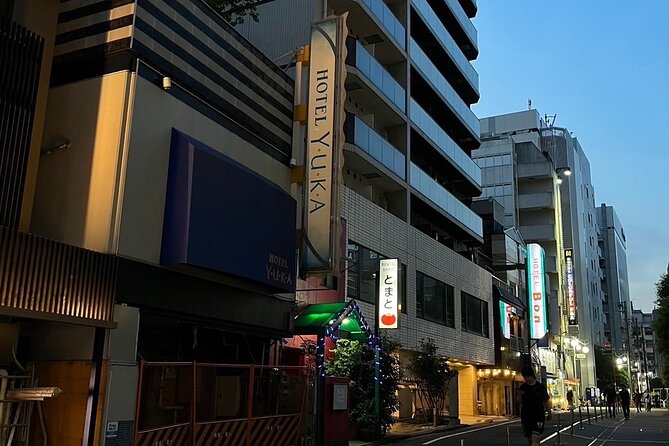
- Actual crime locations: You pass sites connected with murders, mafia violence, attacks, accidents, and unsolved cases.
- Small group format: With no more than four participants, it is easy to hear Vivian and ask detailed questions.
- More than true crime: The walk explains Kabukicho’s nightlife, love hotels, night work, red-light customs, and social issues.
- Yakuza and Tokyo Vice connections: You can pass places associated with the Yakuza game series and HBO’s Tokyo Vice.
- A quiet finish: The route ends at a shrine, giving the evening a calmer and more reflective final stop.
- Best for adults: This suits true-crime fans, dark-tourism enthusiasts, and visitors curious about modern Japanese subcultures.
Kabukicho after dark: a different view of Tokyo
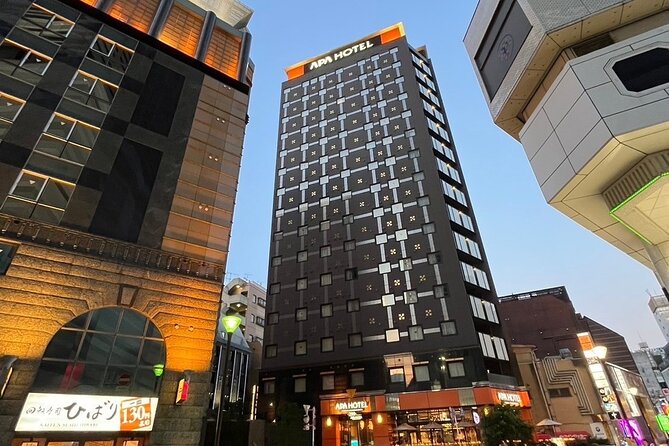
Kabukicho is one of Tokyo’s most famous entertainment districts, but a visitor can walk through it without understanding what happens behind the signs. This tour gives you a framework for reading the streets. Neon is still neon, but you also begin to notice how hotels, clubs, bars, alleys, and gathering places fit into the district’s working life.
The stories cover roughly the past 43 years. That modern focus matters. You are not getting a vague collection of old ghost tales. You hear about recent crimes, mafia vendettas, murder-suicides, terrorist attacks, accidents, and killings that were never solved.
I like this approach because Kabukicho is not treated as a cartoon version of Tokyo’s criminal world. The guide connects individual incidents to the culture around them. You learn about the pressures of nightlife, the role of night workers, the appeal and risks of love hotels, and the way the district has developed its reputation.
The tour is in English, and Vivian’s background is useful here. Her graduating thesis examined nightlife and night work in Japan. That gives you a chance to ask questions about the wider culture, not only the cases on the route.
Other shows people book around Tokyo:
- Mt Fuji & Hakone Cruise, Drum Show Bullet Train 1 Day from Tokyo
★ 4.0 · 7,413 reviews - Tokyo: Sumo Show and Dining Experience
★ 4.8 · 2,742 reviews - Tokyo: Japanese Dance Cabaret Theater Asakusa-Kaguwa Ticket
★ 4.8 · 2,270 reviews
Starting at Kabukicho Tower
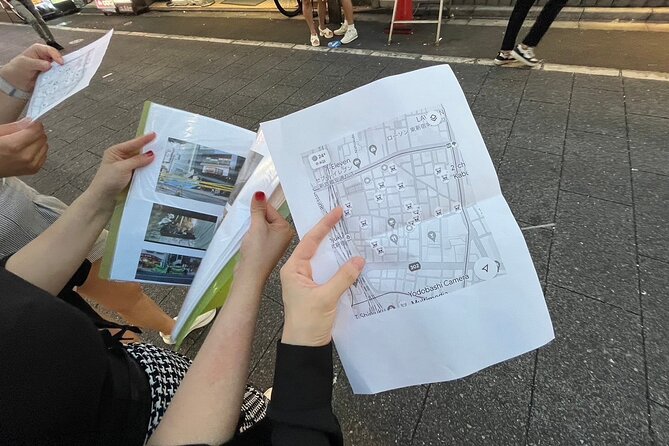
The meeting point is in front of the Starbucks at Kabukicho Tower, on the stairs. A Google Maps pin is provided with the booking information, which is useful in a district full of bright signs and busy lanes.
Starting at Kabukicho Tower places you right in the middle of present-day Shinjuku. You do not begin with a long transfer or a lecture in a distant meeting room. The streets provide the setting from the first minute.
The route is a walking and talking experience. You move between locations while Vivian explains what happened, why the place matters, and how it fits into Kabukicho’s social history. Since the group is capped at four, you should be able to hear clearly and stay close to the guide.
That small size is one of the tour’s strongest practical features. A large group would be awkward in narrow streets, and quiet details would be easy to miss. Here, you can stop to ask about a case, a building, a local custom, or a point that needs more explanation.
Crime scenes, mafia stories, and unsolved cases
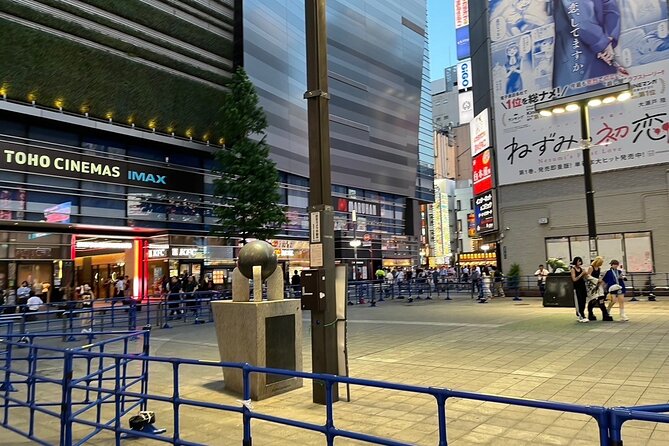
The heart of the tour is its use of real locations. You pass places connected with murder cases, gang fights, shootings, mafia activity, and other violent incidents. The setting adds weight to the stories because you are not hearing them in a generic classroom or from a bus window.
The guide also covers cases involving jilted lovers, murder-suicides, and accidents. That range keeps the walk from becoming a simple list of gang crimes. Kabukicho’s darker side includes organized crime, but it also includes private tragedies and ordinary people caught in dangerous situations.
Some of the cases remain unsolved. Those stories can be especially unsettling because they do not end with a neat explanation. The tour presents the mystery as part of the district’s modern lore, while also placing it within the wider history of Shinjuku.
You should expect a serious subject. The tone may include suspense and the occasional bit of dark humor, but this is not a haunted-house attraction. The incidents involve real harm. I would not book it if you prefer light sightseeing or find true crime upsetting.
The red-light district beyond the headlines
Kabukicho is often reduced to the phrase red-light district. This walk helps you understand what that label leaves out. Vivian explains cultural issues and social patterns connected with night work, nightlife, entertainment businesses, and the people who work in them.
You can ask questions about the parts of the district that are hard to understand from the outside. What do different venues offer? How do love hotels fit into the area? Why has Kabukicho developed such a strong connection with crime stories and nightlife? The tour is designed for this kind of discussion.
That context is a major reason to choose this walk over a simple night stroll. You are not just looking at signs and guessing what happens inside. You receive an explanation of the district’s role in modern Tokyo, along with the uneasy stories that helped shape its image.
The experience also gives you a more human view of the city. Tokyo is often presented as polished, orderly, and safe. Kabukicho shows another side, one shaped by money, loneliness, entertainment, risk, and people working through the night. The contrast can make the rest of your Tokyo visit feel more grounded.
Same place, a different night out:
- the SUMO show
★ 5.0 · 1,960 reviews - Tokyo Shinjuku Sumo Show & Experience with Photo
★ 5.0 · 1,750 reviews - Tokyo: Samurai Restaurant Show Ticket with 2 Drinks
★ 4.5 · 1,307 reviews - Mt Fuji & Hakone Cruise, Drum Show Bus 1 Day from Tokyo
★ 4.0 · 1,287 reviews
Haunted corners and the supernatural side
The route passes areas known to be haunted. These stories sit beside documented crimes and accidents, so the tour moves between fact, local belief, and modern folklore.
That mixture should appeal to you if you enjoy supernatural stories but still want a strong historical base. The haunted stops are not presented as isolated ghost attractions. They form part of Kabukicho’s reputation and the way people remember places where something terrible happened.
The mood can change quickly. One moment you are hearing about a criminal case, and the next you are considering why a certain corner has a reputation for uneasy encounters. The evening setting adds to the atmosphere, though the tour remains a guided walk rather than a staged performance.
A useful detail comes at the end. The visit to a shrine provides a solemn close to the route. One past participant received a protective ward against ghosts, but that gift is not listed as a standard inclusion, so you should not book expecting one. The shrine itself is part of the stated experience.
Yakuza game and Tokyo Vice locations
Fans of the Yakuza game series have a clear reason to choose this tour. You can pass locations used as references or settings for the games, then compare the fictional version with the real streets of Kabukicho.
You can also pass places used to film the HBO series Tokyo Vice. These stops add a pop-culture layer to the walk without replacing the real history. If you know the game or show, the locations can help you see how filmmakers and game designers have shaped Kabukicho for an international audience.
Even if you have not played Yakuza or watched Tokyo Vice, the connection is still useful. It shows how the district has become a symbol of Tokyo’s nightlife and criminal underworld. The guide can help separate entertainment from reality, which is important when fictional stories borrow real places and real reputations.
This part may be less important to you if you are interested only in historical crime. For fans, though, it is a strong bonus included within the same two-hour walk.
Why Vivian makes a difference
The guide is central to this experience. Vivian is described as a passionate storyteller who brings illustrations to explain some of the cases. That can help when a location looks ordinary. A small sign, building entrance, or stretch of pavement may not tell you why it matters without visual support and careful explanation.
Her academic work also gives the tour a wider base. You can ask about nightlife, night work, crime, subcultures, and current culture in Japan. The tour is not limited to a memorized script, and the four-person limit gives you room for questions.
The English-language format is another advantage. If you want to discuss a complicated case or a sensitive social issue, clear communication matters. You are paying for interpretation and context as much as for the walk itself.
The guide also kept going during difficult weather, according to the experience information, including a tour held in heavy snow and strong wind. That suggests a serious commitment to the route, but you should still dress for the conditions. Two hours outdoors can feel long in poor weather.
Two hours on foot: what to expect
The tour lasts two hours. You should plan to remain on your feet and move through urban streets, although the route is described as wheelchair accessible.
Because the route focuses on several locations, the pace needs to balance walking with storytelling. The small group helps. You can hear the guide, stay together, and pause for questions without holding up a large crowd.
There are no food, drink, or transport inclusions listed. This is a walk and talk tour, so eat beforehand if you need a proper meal. One participant noted that a restroom stop took up part of the time after the guide had already asked the group if anyone needed to go. The sensible move is to use a restroom before meeting.
The meeting point is near Kabukicho Tower, and the tour finishes at a shrine. The exact route can vary with street conditions, group needs, or the guide’s presentation, so do not expect a fixed museum-style sequence.
Is $56 a fair price?
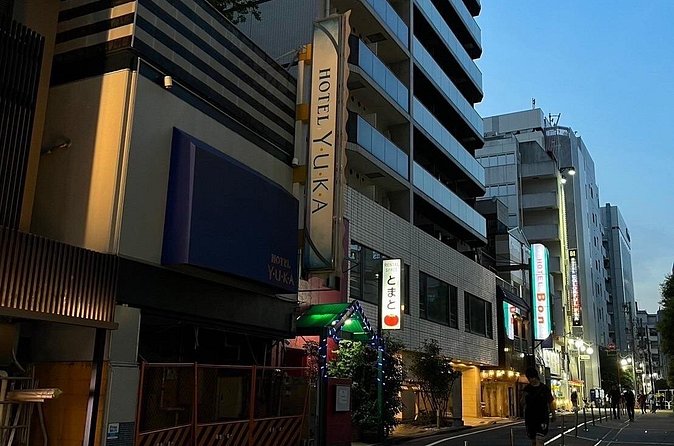
At $56 per person, the tour costs about $28 per hour. That is not cheap for a two-hour walk, but the group limit changes the calculation. You are not paying for a standard large-group stroll with a broad overview. You are paying for a specialist subject, real locations, an English-speaking guide, and the chance to ask questions throughout.
I think the price makes sense if you care about true crime, Japanese nightlife, dark tourism, or the Yakuza game series. The academic background and research into individual cases add value that you would be unlikely to get from simply walking through Kabukicho alone.
The value is weaker if you only want general sightseeing. You can see the neon streets without paying for a tour, and some of the locations may look unremarkable once you arrive. The worth comes from the explanation, not from dramatic buildings or grand monuments.
Free cancellation up to 24 hours before the start gives you some flexibility. You can also reserve now and pay later. Wheelchair access is available, and the tour is conducted in English.
Who should book this Kabukicho walk?
I would choose this tour if you fit one or more of these groups:
- You enjoy true crime and unsolved cases.
- You want to understand Tokyo’s nightlife beyond the tourist surface.
- You are interested in Japanese subcultures and night work.
- You follow the Yakuza games or Tokyo Vice.
- You prefer a small group and plenty of questions.
- You want a spooky evening activity with real historical context.
I would skip it if you are traveling with children under 15, dislike stories about murder or suicide, or want a relaxed food-and-drinks tour. The subject matter is adult, and the route is built around unsettling events.
FAQ
How long is the Kabukicho Macabre Tour?
The tour lasts two hours.
Where does the tour meet?
Meet in front of the Starbucks at Kabukicho Tower, on the stairs. A Google Maps pin is provided for the meeting point.
What language is the tour conducted in?
The tour is conducted in English.
Who guides the tour?
Vivian guides the experience. Her graduating thesis focused on nightlife and night work in Japan.
How many people can join the tour?
The group is limited to four participants.
Is the tour suitable for children?
No. Children under 15 are not permitted to join.
Is the tour wheelchair accessible?
Yes, the activity is listed as wheelchair accessible.
Can I cancel the booking?
Yes. You can cancel up to 24 hours in advance for a full refund. You can also reserve now and pay later.
Should you book the Kabukicho Macabre Tour?
Book it if you want the real Kabukicho behind the neon signs. Vivian’s specialty, the four-person group, the actual crime locations, and the final shrine visit give this walk a clear identity.
I especially recommend it for fans of true crime, Japanese nightlife, Yakuza, and Tokyo Vice. You will get the most from it if you arrive ready to ask questions and listen to difficult stories. If that sounds like your kind of evening, $56 buys far more than a walk through Shinjuku. It buys a way to read the district with sharper eyes.
Just added around Tokyo
- Tokyo: Taishu Engeki Show with Kimono and Sword Lesson★ 5.0 · 12 reviews
- Tokyo: Traditional Geisha Experience Show & Japanese Dinner★ 4.2 · 59 reviews
- Tokyo: Rainbow Bridge Day Cruise Show Unlimited Soft Drinks★ 4.5 · 86 reviews
- Tokyo: Taiko Drum Experience in Kabukicho with Dinner★ 5.0 · 3 reviews
- Tokyo: Know about Kabuki performing – Ginza Walking★ 4.2 · 3 reviews
- Tokyo: Learn about Japanese Traditional art KABUKI in Ginza★ 3.2 · 5 reviews
- Tokyo: KABUKI, BUNRAKU, etc. presented by National Theatre★ 4.6 · 135 reviews
- Tokyo: Family Sumo Workshop & Live Wrestling Show with Lunch★ 4.9 · 99 reviews
Tokyo Shows, compared.
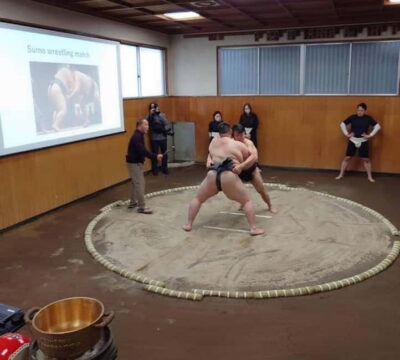
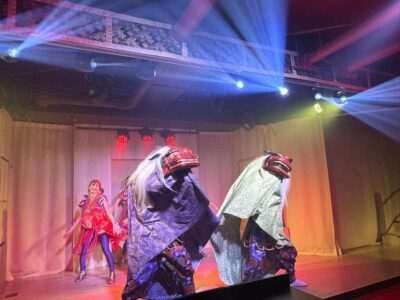
Japanese Dance Cabaret Theater Asakusa-Kaguwa Ticket
Read our review →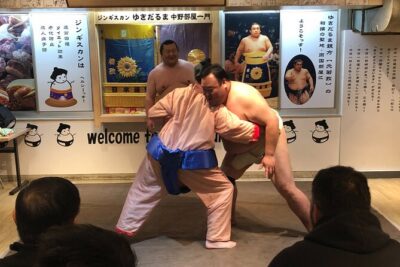
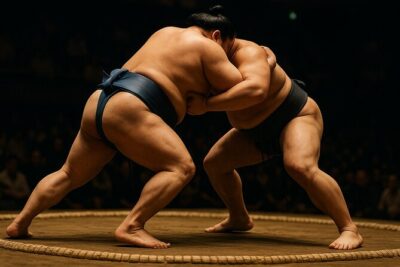
Tokyo Shinjuku Sumo Show & Experience with Photo
Read our review →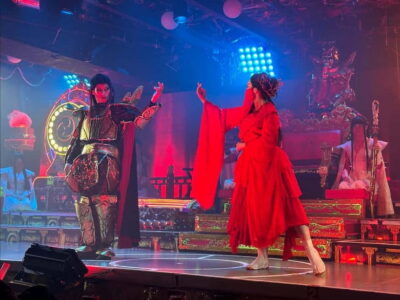
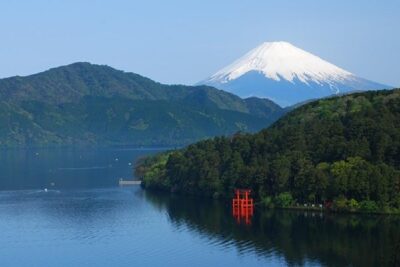
Mt Fuji & Hakone Cruise, Drum Show Bus 1 Day from Tokyo
Read our review →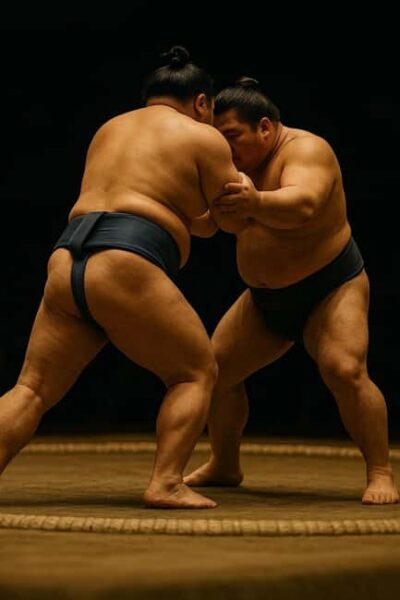
Yakatabune Dinner Cruise with Japanese Show & Drinks
Read our review →Browse the lists this show appears in