
Review · TOKYO
Ninja+Kabuki Tokyo
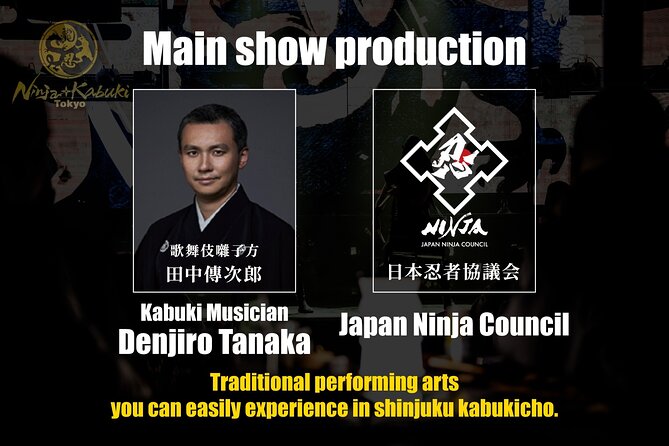
Ninja+Kabuki Tokyo turns a familiar mix of taiko drums, swordplay, acrobatics, and Japanese dance into a compact stage show in Shinjuku. I like that the performance uses no spoken Japanese, and I like the way Denjiro Tanaka, a Kabuki musician who performed at the Tokyo 2020 Olympic opening ceremony, oversees the production. The main caution is simple: this is themed entertainment, not a formal Kabuki performance, and the second half leans heavily into audience participation.
At $43.11 per person, the show can make sense when you want an easy evening activity that works for children and adults alike. I especially like the afternoon and evening choices, plus the chance to learn a few ninja moves onstage. Still, the loud sound, dark nightclub setting, and uneven pacing may not suit everyone.
Key points to know before booking
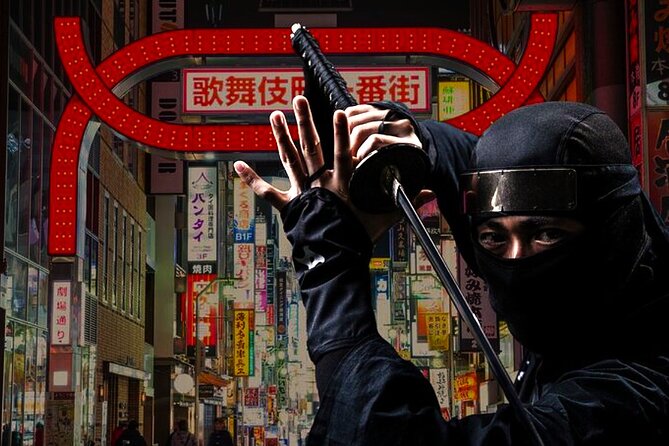
- Three convenient showtimes: Performances run at 2:00, 4:00, and 6:00 PM, each lasting about 1 hour and 20 minutes.
- A wordless format: The story is carried by movement, music, costumes, lighting, and action rather than Japanese dialogue.
- Denjiro Tanaka’s connection: The production is supervised by a Kabuki musician associated with the Tokyo 2020 Olympic opening ceremony.
- Strongest elements: Taiko drumming, energetic fights, dance, and acrobatic movement receive the most praise.
- Interactive second half: You may be invited to learn basic ninja techniques, use a training sword, or try throwing stars.
- A compact Shinjuku night out: Admission is included, and the show fits neatly before dinner or another evening plan.
What happens inside Warp Shinjuku
The show takes place at Warp Shinjuku, with doors opening 15 minutes before each performance. The published times are 2:00 to 3:20 PM, 4:00 to 5:20 PM, and 6:00 to 7:20 PM.
That schedule gives you useful flexibility. The afternoon performance can fill a rainy day or bridge the gap between sightseeing stops. The 6:00 PM show works well as a pre-dinner activity in Shinjuku. Arrive with enough time to find the venue, since the entrance can be slightly tricky to locate in the busy Shinjuku entertainment district.
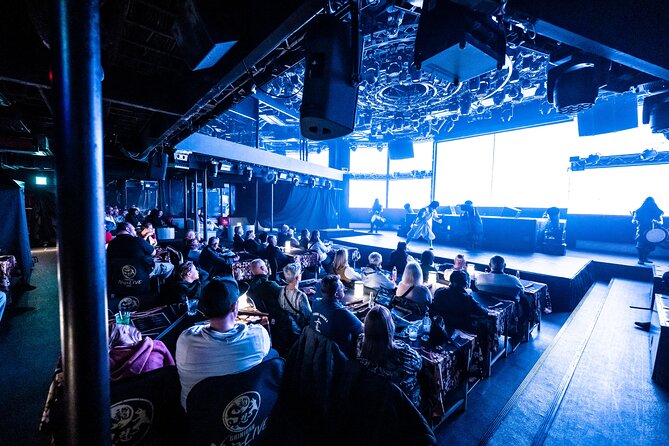
The setting is a basement-level nightclub rather than a traditional theater. That helps create a dark, dramatic mood, but it also means the room can feel close, loud, and somewhat musty. If you are sensitive to strong sound or prefer a calm concert hall, this is worth considering before you buy.
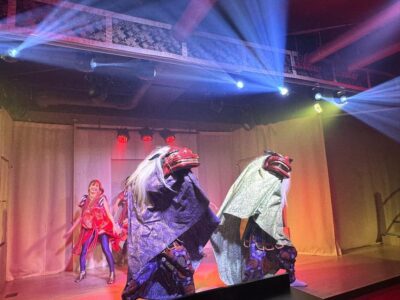
Once seated, you get a production built around Japanese cultural symbols: ninja, oiran-inspired costume, Kabuki performance, taiko drumming, and martial movement. The show does not try to reproduce a full classical Kabuki program. Instead, it borrows recognizable features and reshapes them into a fast, visual stage event for an international audience.
Other shows people book around Tokyo:
- Mt Fuji & Hakone Cruise, Drum Show Bullet Train 1 Day from Tokyo
★ 4.0 · 7,413 reviews - Tokyo: Sumo Show and Dining Experience
★ 4.8 · 2,742 reviews - Tokyo: Japanese Dance Cabaret Theater Asakusa-Kaguwa Ticket
★ 4.8 · 2,270 reviews
The opening: taiko, costumes, and visual storytelling
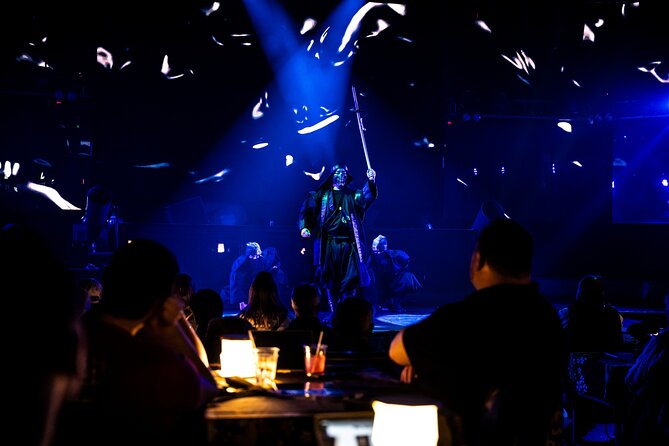
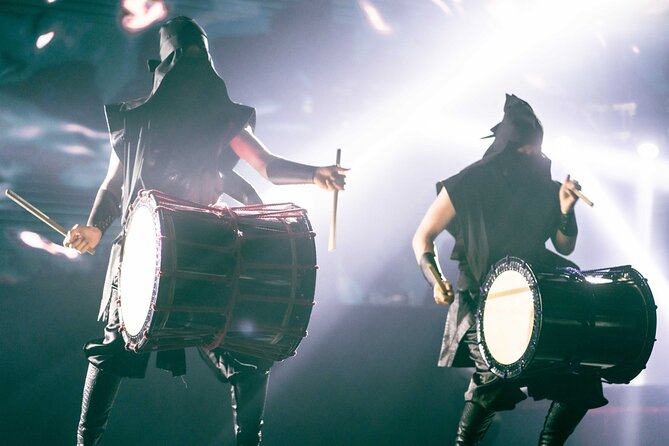
The first section is where the show makes its best case. It begins with traditional drums, and the drummers are one of the major reasons many people enjoy the performance. The live percussion gives the room an immediate pulse, especially when paired with lighting and choreographed movement.
From there, the cast develops a ninja-themed story through dance, swordplay, flips, staged combat, and Kabuki-inspired gestures. You do not need to understand Japanese to follow the broad action. The plot is carried by clear physical expressions, rivalries, entrances, and confrontations.
I would set your expectations correctly. This is not a museum lesson on the history of Kabuki, and it is not a serious martial arts demonstration. The combat is theatrical, and the acrobatics are presented for visual impact. Some scenes may feel simple, but that simplicity also makes the show easy to follow if you are new to Japanese performance traditions.
The costumes are another visual highlight. The oiran-inspired clothing and Kabuki styling help separate the show from an ordinary ninja stunt performance. They are stage versions of historical images, not a precise reconstruction of Edo-period life. That distinction matters if you are seeking a formal cultural presentation.
Why the wordless format works
The absence of spoken dialogue is one of the strongest practical features. You can enjoy the main story even if you speak no Japanese, and children do not need to sit through translated explanations.
Music does much of the storytelling. Taiko rhythms signal action, dance shows relationships, and gestures make the characters readable from a distance. Lighting and visual effects add atmosphere without requiring a guide to explain every scene.
This format also makes the show easy to fit into a first visit to Tokyo. You do not need prior knowledge of Kabuki, ninja folklore, or Japanese theater rules. You receive a short introduction through movement rather than a long lecture.
The tradeoff is that the story remains broad. If you enjoy carefully developed plots or subtle acting, you may find the narrative thin. The performance is better understood as a sampler of stage traditions than as a fully developed drama.
The second half: audience participation and a change of pace
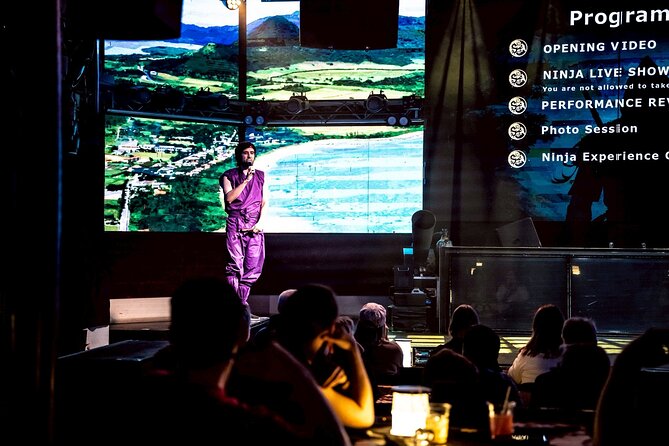
After the main performance and a break, the tone changes. The cast or MC invites members of the audience to take part in simple activities connected with ninja training and stage performance.
Depending on the session, this may include learning basic ninja movements, handling a training sword, trying throwing stars, or joining a short demonstration. Some people love this part because it turns the audience from spectators into participants. Families with children often find it especially memorable, and adults who enjoy playful activities can have just as much fun.
Other people find the second half too long. The shift from polished stage action to audience exercises can feel abrupt, particularly if you booked the show mainly for sword fights and acrobatics. The published duration is about 1 hour and 20 minutes, but the balance between performance and participation is important to understand before booking.
If you prefer to watch rather than take part, participation is described as voluntary. You can enjoy the show without going onstage, though the interactive section remains part of the program.
Some performances also include a chance to take photos with the ninja cast. Complimentary drinks and small gifts have been mentioned as extras, but these details do not appear to be consistent for every person or session. Treat them as possible bonuses, not as the main reason to buy a ticket.
Same place, a different night out:
- the SUMO show
★ 5.0 · 1,960 reviews - Tokyo Shinjuku Sumo Show & Experience with Photo
★ 5.0 · 1,750 reviews - Tokyo: Samurai Restaurant Show Ticket with 2 Drinks
★ 4.5 · 1,307 reviews - Mt Fuji & Hakone Cruise, Drum Show Bus 1 Day from Tokyo
★ 4.0 · 1,287 reviews
The strongest performances
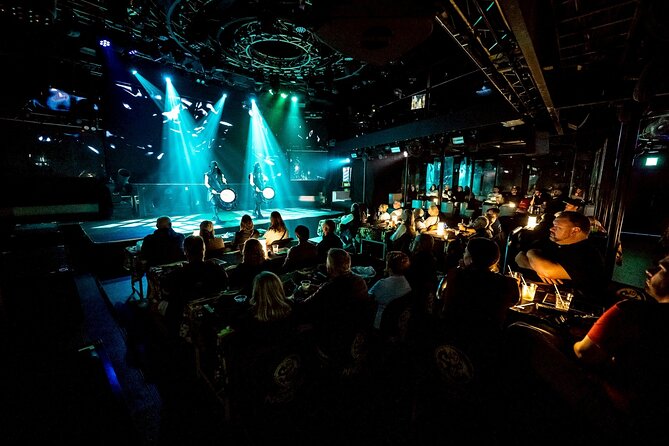
The taiko drummers are often the highlight. Their section provides the most direct connection to a traditional Japanese art form, and the live sound makes a bigger impression than recorded music would.
The acrobatic cast also supplies plenty of energy. Flips, staged fights, sword movements, and quick changes in position keep the action moving. The combat is designed for entertainment rather than technical instruction, but it gives the show its ninja identity.
Dance and costume work help broaden the experience. You are not watching a string of unrelated stunts. The production tries to place the action inside a Kabuki-inspired world, with stylized poses, dramatic entrances, and traditional instruments supporting the performers.
The cast’s energy matters here. The best moments depend on performers projecting clearly in a dark, loud room. When the drumming, movement, and lighting line up, the show feels lively and well produced. When the pace slows, the compact story can feel underdeveloped.
How authentic is the cultural content?
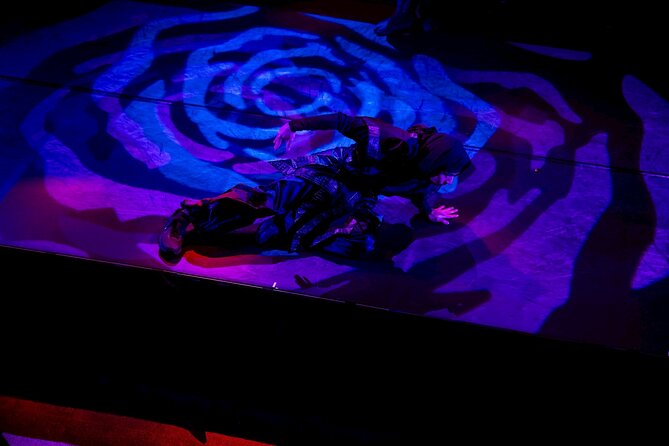
Ninja+Kabuki Tokyo offers a modern entertainment version of Japanese culture. It uses real performance elements, including taiko, dance, traditional instruments, Kabuki techniques, and stylized costume. The connection to Denjiro Tanaka gives the project a genuine link to Kabuki musicianship.
At the same time, the show is made for international visitors. It compresses several different traditions into one package and presents them with flashy lighting, combat, and audience games. That makes it approachable, but it also means you should not treat the performance as a substitute for seeing classical Kabuki at a major theater.
I see its value as an introduction. If you have never watched Japanese stage arts, the show gives you a readable first taste in less than 90 minutes. It can help you decide what interests you enough to explore later.
If your main goal is historical accuracy, quiet observation, or a serious study of Kabuki, this will probably feel too surface-level. If your goal is a fun, visual evening with a Japanese theme, the format is easier to appreciate.
Is $43.11 a fair price?
At $43.11 per person, the ticket is not cheap for a short show, but it includes admission and combines several elements in one sitting. You get live drumming, staged combat, dance, costumes, lighting, and an interactive section without needing to arrange separate activities.
The value is strongest if you would otherwise pay for an evening attraction and want something that works across age groups. It is also useful when you have limited time. The show takes roughly 1 hour and 20 minutes, so it does not consume half a day.
The value is weaker if you are paying mainly for a long, high-level martial arts performance. The second half includes participation rather than continuous action, and several people find the story or staging too simple for the price.
I would compare it with your other Shinjuku options. At this price, you are buying an accessible production and an activity, not a premium theater seat for a major traditional performance. That is a fair deal for the right audience, but not an automatic bargain.
Who will enjoy it most?
I would recommend it most to:
- Families looking for an activity that does not require Japanese language skills
- First-time visitors who want a quick introduction to several Japanese performance styles
- Fans of ninja themes, swordplay, taiko, and theatrical action
- Adults who enjoy taking part in simple stage activities
- Anyone needing an afternoon or early evening plan in Shinjuku
You may want to skip it if you dislike loud venues, nightclub settings, or audience participation. It may also disappoint you if you expect a serious martial arts demonstration or a complete Kabuki performance.
The show is described as suitable for all ages, but the dark room, loud drums, and theatrical combat are still worth keeping in mind for very young children. The interactive portion may be exciting for some children and uncomfortable for others.
Practical details that affect your visit
The activity includes a mobile ticket and admission. Private transportation is not included, but the venue is near public transportation.
The doors open at 1:45 PM for the 2:00 show, 3:45 PM for the 4:00 show, and 5:45 PM for the 6:00 show. I would use that 15-minute window to get seated and settle in before the drums begin.
The show is located at Warp Shinjuku, but finding the entrance may take a little attention. Keep the venue name ready on your phone rather than relying on a quick glance at the surrounding signs.
Free cancellation is available if you cancel at least 24 hours before the local start time. Cancellations or changes made inside that window are not accepted for a refund.
Should you book Ninja+Kabuki Tokyo?
Book it if you want a short, visual, family-friendly introduction to Japanese stage culture, especially if taiko, ninja action, and audience participation sound appealing. The strongest reasons to go are the drumming, energetic cast, wordless storytelling, and convenient showtimes.
Skip it if you want refined Kabuki, a detailed historical lesson, or nonstop martial arts. The production is deliberately tourist-friendly, and its nightclub setting and interactive second half will not suit every taste.
For most people, the decision comes down to expectations. Think of Ninja+Kabuki Tokyo as a lively sampler of Japanese performance traditions with a playful ninja wrapper. At $43.11, that can be worthwhile, especially on a first Tokyo visit when you want something easy, central, and different from a standard sightseeing stop.
FAQ
How long does Ninja+Kabuki Tokyo last?
The experience lasts approximately 1 hour and 20 minutes. The performance itself is listed at about 1 hour and 15 minutes.
What showtimes are available?
Shows are scheduled at 2:00 PM, 4:00 PM, and 6:00 PM. Doors open 15 minutes before each performance.
Do I need to speak Japanese?
No. The performance is non-verbal and uses movement, music, dance, costumes, lighting, and action to communicate the story.
Is audience participation included?
Yes, audience participation forms part of the later section. You may have the opportunity to learn basic ninja movements, handle a training sword, or try throwing stars. Participation is described as voluntary.
Is transportation included?
Private transportation is not included. The venue is near public transportation, and the show takes place at Warp Shinjuku.
Can I cancel for a refund?
You can cancel for a full refund up to 24 hours before the experience start time. Cancellations or changes made less than 24 hours in advance are not accepted.
Just added around Tokyo
- Tokyo: Taishu Engeki Show with Kimono and Sword Lesson★ 5.0 · 12 reviews
- Tokyo: Traditional Geisha Experience Show & Japanese Dinner★ 4.2 · 59 reviews
- Tokyo: Rainbow Bridge Day Cruise Show Unlimited Soft Drinks★ 4.5 · 86 reviews
- Tokyo: Taiko Drum Experience in Kabukicho with Dinner★ 5.0 · 3 reviews
- Tokyo: Know about Kabuki performing – Ginza Walking★ 4.2 · 3 reviews
- Tokyo: Learn about Japanese Traditional art KABUKI in Ginza★ 3.2 · 5 reviews
- Tokyo: KABUKI, BUNRAKU, etc. presented by National Theatre★ 4.6 · 135 reviews
- Tokyo: Family Sumo Workshop & Live Wrestling Show with Lunch★ 4.9 · 99 reviews
Tokyo Shows, compared.
Japanese Dance Cabaret Theater Asakusa-Kaguwa Ticket
Read our review →
Tokyo Shinjuku Sumo Show & Experience with Photo
Read our review →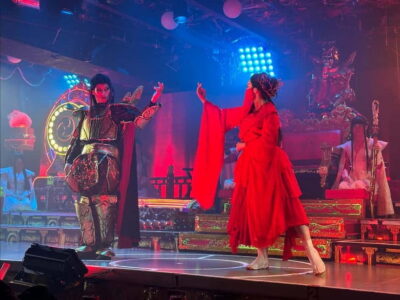
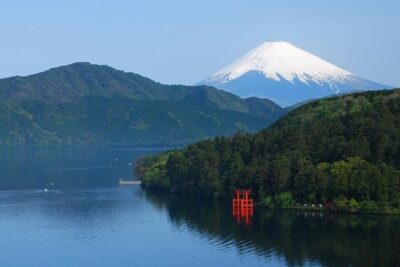
Mt Fuji & Hakone Cruise, Drum Show Bus 1 Day from Tokyo
Read our review →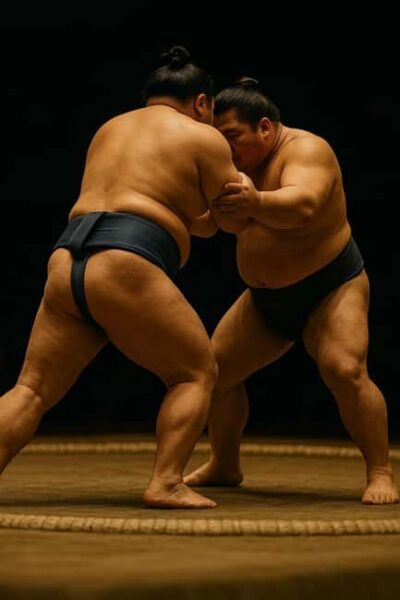
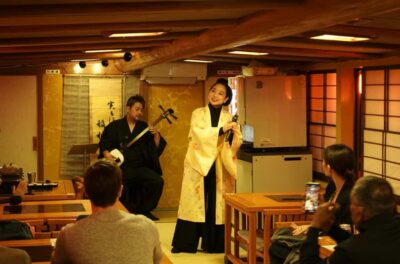
Yakatabune Dinner Cruise with Japanese Show & Drinks
Read our review →Browse the lists this show appears in