
Review · TOKYO
Tokyo:Luxury Sumo Show Experience & Japanese cuisine & Drink
The main attraction here is not simply watching sumo. It is learning how the sport works, then seeing the rituals, training moves, jokes, and bouts at close range. Live bilingual commentary keeps the action clear, while a geisha dance gives the evening a graceful opening.
I like the way the show welcomes families and solo visitors alike, and I like the chance to ask questions directly and possibly step into the ring. The food and drink packages add real value, especially in Business and First Class. The main thing to consider is that this is a polished entertainment show by retired wrestlers, not a visit to an active sumo stable or a formal tournament.
Key points to know before booking
- A real ring sits at the center of the room, so even a short two-hour program feels close to the action.
- The show explains sumo in plain English and Japanese, covering rules, rituals, history, and training techniques.
- A5 wagyu sukiyaki, chanko hot pot, and matcha dessert are included, with tempura in the two higher seating categories.
- The sumo challenge is optional, but places are limited and may be assigned by lottery.
- The Annex is the smaller, more private venue, with table seats, sofa seats, and front-row sofa seating.
- Photos, souvenirs, and a geisha dance make this a good choice for families seeking a complete evening rather than a single performance.
A two-hour introduction to Japan’s national sport
Sumo can look mysterious if you have never followed it. The wrestlers stomp, throw salt, glare across the ring, and then the match may be over in seconds. This show gives you the missing pieces, explaining what those movements mean and why the pre-match ceremony matters.
The program is built for an international audience. Commentary is given in English and Japanese, and demonstrations make the rules easier to follow than a long spoken lecture. You learn about sumo’s traditions, training methods, ring etiquette, and basic strategy before watching the wrestlers put those ideas into practice.
That structure is important. You do not need to know the difference between a legal push and a foul before arriving. You also do not need to understand Japanese. The host keeps the tone light, and the wrestlers use humor to make the lesson feel like part of the show.
The atmosphere is intentionally friendly. Children can follow the demonstrations, adults can ask questions, and solo visitors are not left on the sidelines. The staff also help with photographs, which matters if you arrive alone and want a picture from the sumo challenge or the final photo session.
A few more shows around Tokyo worth a look
- Marrakech: Camels & Quads on Sunset and Luxury Dinner with Show
★ 5.0 · 358 reviews - Dubai Private VIP Desert Dinner and Live Entertainment Show
★ 5.0 · 218 reviews - Dubai: Exclusive VIP Desert Safari Dinner with Live Show
★ 4.9 · 131 reviews
The Annex setting and seating choices
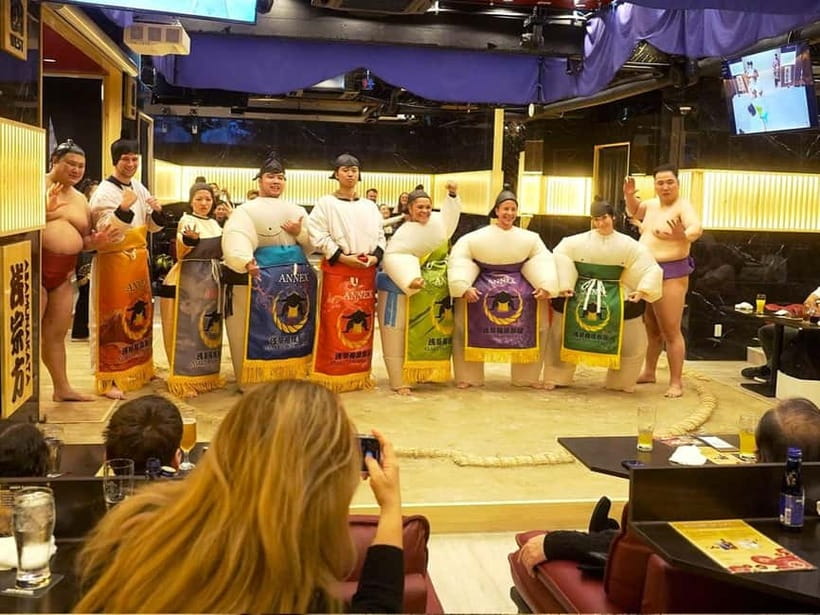
Asakusa Sumo Club Annex is on Asakusa Kokusai Street, next to Matsuya Restaurant. It is the smaller branch of the Asakusa Sumo Club, designed for a more private and polished evening.
A real sumo ring occupies the middle of the restaurant. That central layout keeps the performance visible from the seating area, although your exact view depends on the category you choose and where you are placed within it. You may also be seated with other parties, so this is not a private dining room for every booking.
The three seating levels are worth studying before you pay:
- Standard table seats: You receive the sukiyaki meal, chanko hot pot, matcha dessert, and one complimentary drink. This is the sensible choice if the show matters more to you than extended drinking or extra seating space.
- Business sofa seats: You receive sukiyaki, tempura, chanko hot pot, and unlimited drinks. The sofas provide a more relaxed setting and a clear view of the ring.
- First Class front-row sofa seats: You sit closest to the ring and receive the full food package, unlimited drinks including premium Japanese whisky such as Yamazaki, plus a special souvenir set with a happi coat.
At $103 per person, the listed price is significant for a two-hour activity. The value depends heavily on your seating choice. Standard is easiest to justify if you want a compact cultural show with dinner. Business becomes more attractive if you plan to drink throughout the evening. First Class costs more for proximity, premium whisky, and the extra souvenir set, so it suits someone who wants the event itself to be a major Tokyo night out.
One practical point: the venue has stairs and is not wheelchair accessible. Babies under one year are not suitable for the activity, and meals, seating, and souvenirs are not provided for infants.
Starting with a geisha dance
The program opens with a geisha dance. This gives the evening a change of pace before the physical comedy and hard pushing of the sumo bouts.
The dance focuses on controlled movement and small gestures. It is brief enough not to slow the program, yet it adds an important cultural counterpoint to the wrestling. Afterward, you may have a chance to take a photo with the geisha.
Families should appreciate this early portion because it gives children something visual to watch before the sumo explanations begin. Adults interested in traditional performance will also find it useful, though you should think of it as part of a mixed entertainment program rather than a full geisha arts presentation.
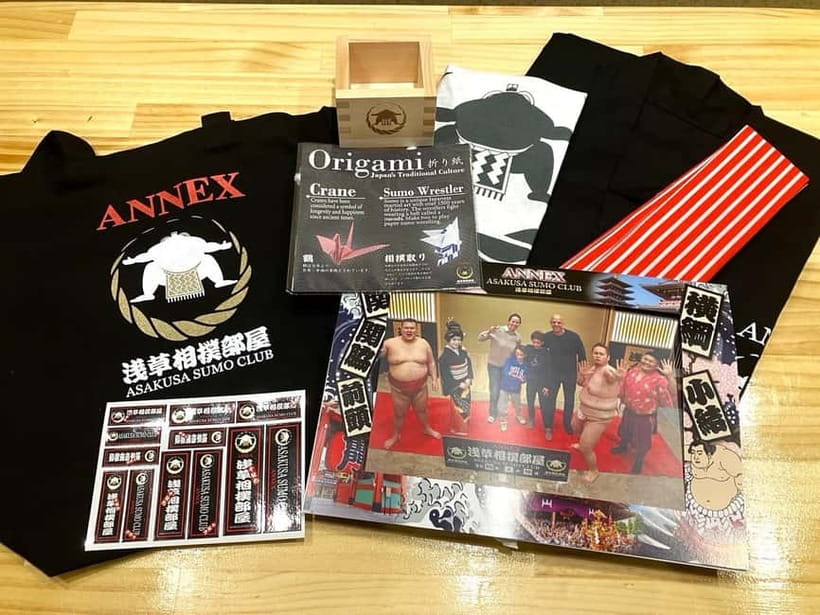
The staff take photographs throughout the evening. At the end, you receive a printed commemorative photo with the wrestlers, and the souvenir varies according to your seating category and the season.
Learning the rules before the bouts
After the dance, the host introduces the background of sumo. This is where the program earns much of its value for first-time viewers.
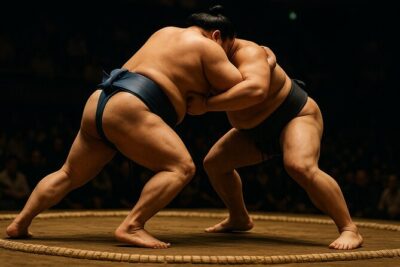
You learn the basic aim: force the opponent out of the ring or make part of the body other than the soles of the feet touch the ground. You also see the movements that make a match feel ceremonial, including the preparation and training techniques.
The format is not academic. The explanations are mixed with demonstrations, audience participation, and jokes. Hosts named Luke and Go have been singled out for clear English and an easy way with a crowd. The exact host may vary, but the program is built around an English-speaking master of ceremonies who keeps the pace moving.
Bring questions. The question-and-answer portion can be one of the best parts of the evening because you can ask about rules, training, ceremonies, and the wrestlers’ demonstrations. If you are curious about why a match stops quickly or why salt is thrown, this is the time to speak up.
Same place, a different night out:
- Mt Fuji & Hakone Cruise, Drum Show Bullet Train 1 Day from Tokyo
★ 4.0 · 7,413 reviews - Tokyo: Sumo Show and Dining Experience
★ 4.8 · 2,742 reviews - Tokyo: Japanese Dance Cabaret Theater Asakusa-Kaguwa Ticket
★ 4.8 · 2,270 reviews - the SUMO show
★ 5.0 · 1,960 reviews
The sumo bouts and training demonstrations
The wrestlers are retired sumo professionals performing for entertainment. That distinction matters. You are not watching an official tournament bout, and you are not observing current wrestlers in a working stable.
You are seeing real training techniques and dynamic staged bouts at close range. The show uses the wrestlers’ strength, timing, and comic skills to make the action easy to follow. The tone is playful, but the physical demonstrations still show why balance, footwork, and pushing technique matter in sumo.
The bouts are short and direct. That works well for a dinner show because you get several changes of pace rather than one long contest. You might see a demonstration, a humorous exchange, a more serious-looking bout, and then interaction with people in the room.
The informal style is a strength for most visitors, but it is also the clearest limitation. If you want the solemn atmosphere of a major tournament or the quiet discipline of morning stable training, this is not the right program. If you want to understand the basics and enjoy a close-up performance without needing prior knowledge, it makes much more sense.
The optional sumo challenge
The chance to enter the ring gives the show its biggest burst of audience participation. You may be invited to test your strength against a wrestler in a friendly sumo challenge.
This is not compulsory, and you can enjoy the evening without taking part. If many people want to try, places are assigned by lottery. Do not book this activity assuming that every person in your group will wrestle.
Children and teenagers can also make the most of this feature, provided they are selected and comfortable taking part. The challenge is designed as light entertainment, not a serious contest. The wrestlers and staff guide the interaction, and the room usually treats it as a shared joke rather than a test of athletic ability.
Solo visitors should not be put off. Staff can help with pictures, and the show is arranged to bring individual visitors into the program rather than leaving them isolated at a table.
A substantial Japanese meal during the show
The food is served while the performance continues, so you are not choosing between dinner and the show. The main meal includes a sukiyaki bento using Japanese A5 rank wagyu beef, chanko nabe hot pot, and matcha dessert.
Sukiyaki gives you the richer, more familiar centerpiece: thinly sliced beef cooked in a sweet and savory sauce. Chanko nabe is closely linked with sumo wrestlers and is traditionally associated with hearty communal meals. Here, it helps explain the food culture around the sport while also making the dinner filling.
The meal is generous enough that you should arrive ready for a substantial dinner, not a small tasting menu. Tempura is included with Business and First Class seating. Standard includes the core meal but not the added tempura course.
Food quality appears to be generally strong, with particular praise for the beef, presentation, and portion size. One useful caution is that the food may not always arrive as hot as you expect. If temperature matters to you, eat promptly when it is served and ask the staff if something needs attention.
Vegetarian and vegan meals are available only with at least two days’ notice. A request made on the day cannot be accommodated because the ingredients need to be prepared in advance. Gluten-free and halal meals are not available, although you may bring your own food if needed.
Drinks and the real value of each ticket
The drink policy changes the calculation considerably.
Standard includes one complimentary drink, with additional drinks available for purchase. Business includes unlimited drinks, and First Class adds unlimited premium Japanese whisky, including Yamazaki, to the wider drink selection.
You should choose based on your habits rather than on the label. If you want a single beer or soft drink with dinner, Standard is probably enough. If you enjoy sake, draft beer, Japanese whisky, or several soft drinks during the program, Business may offer the better deal despite its higher price.
First Class is aimed at the person who wants the full package: front-row seating, premium whisky, and the special souvenir set with a happi coat. It is less sensible if you will not drink alcohol or if a close view is not important to you.
The price can feel high if you judge it as dinner alone. It is easier to justify when you count the bilingual host, live performance, geisha dance, drinks, photographs, and souvenir together. Still, the most economical choice is not automatically the highest category. Standard gives you the main cultural content without requiring you to pay for unlimited beverages.
Photos, souvenirs, and the final moments
The evening ends with more than a quick goodbye. You receive a printed photo with the sumo wrestlers, along with a souvenir determined by your seating category. The exact item can change with the season.
There is also time for commemorative photographs with the wrestlers and, after the opening dance, the geisha. Staff assist with cameras and phones, which is especially helpful if you are traveling alone or if your family wants a picture with everyone included.
The photo element may sound small, but it gives the evening a useful ending. You leave with something physical rather than only a memory on your phone. You can also buy additional souvenirs if you want a larger reminder of the night.
Who will enjoy this most
I would choose this for a first visit to Tokyo, particularly if you want one evening that combines food, performance, and a basic cultural lesson. Families with school-age children and teenagers are a strong match because the show is funny, visual, and interactive.
It also works for couples who want an unusual dinner, and for solo visitors who prefer an organized activity with plenty of staff contact. The bilingual presentation removes much of the worry about missing the point.
You may want another option if your main goal is serious sumo training, an active stable, or an official tournament. The retired wrestlers are there to entertain, and the program is deliberately shaped for an international audience.
For a later time slot, consider arriving in the Asakusa area early. One visitor found the neighborhood quiet at 8:30 p.m. on a weekday and used the waiting time to see the temple and smaller nearby streets. Check your meeting point carefully, since the Annex is separate from the main Asakusa Sumo Club. It is along Asakusa Kokusai Street, next to Matsuya Restaurant.
Should you book the Asakusa Sumo Club Annex?
Book it if you want an accessible introduction to sumo with dinner, drinks, comedy, photographs, and a chance to join the action. The strongest reasons are the clear English commentary, warm staff, close seating, and the way the program explains the sport before asking you to watch it.
Choose Standard for the core experience at the lowest listed tier. Choose Business if unlimited drinks, tempura, and sofa seating matter to you. First Class makes sense for a special occasion or for anyone who wants front-row access and premium whisky.
Skip it if you expect an authentic working stable, a formal tournament, or a quiet traditional performance. For everyone else, this is a cheerful and well-organized two-hour introduction that turns a difficult sport to understand into a fun Tokyo evening.
FAQ
How long does the sumo show last?
The activity lasts two hours.
Where is the meeting point?
The meeting point is along Asakusa Kokusai Street, next to Matsuya Restaurant.
Is the commentary available in English?
Yes. Live commentary is provided in English and Japanese throughout the show.
What food is included?
The meal includes a Japanese A5 wagyu beef sukiyaki bento, chanko nabe hot pot, and matcha dessert. Tempura is also included with Business and First Class seating.
Can I request a vegetarian or vegan meal?
Yes, but you must request it at least two days before the reservation date. Requests made on the day cannot be prepared. Gluten-free and halal meals are not available.
Can every participant join the sumo challenge?
No. Participation is limited for each show. If many people want to join, the participants are selected by lottery.
Just added around Tokyo
- Tokyo: Taishu Engeki Show with Kimono and Sword Lesson★ 5.0 · 12 reviews
- Tokyo: Traditional Geisha Experience Show & Japanese Dinner★ 4.2 · 59 reviews
- Tokyo: Taiko Drum Experience in Kabukicho with Dinner★ 5.0 · 3 reviews
- Tokyo: Rainbow Bridge Day Cruise Show Unlimited Soft Drinks★ 4.5 · 86 reviews
- Tokyo: KABUKI, BUNRAKU, etc. presented by National Theatre★ 4.6 · 135 reviews
- Tokyo: Know about Kabuki performing – Ginza Walking★ 4.2 · 3 reviews
- Tokyo: Learn about Japanese Traditional art KABUKI in Ginza★ 3.2 · 5 reviews
- Tokyo: Family Sumo Workshop & Live Wrestling Show with Lunch★ 4.9 · 99 reviews
Tokyo Shows, compared.
Japanese Dance Cabaret Theater Asakusa-Kaguwa Ticket
Read our review →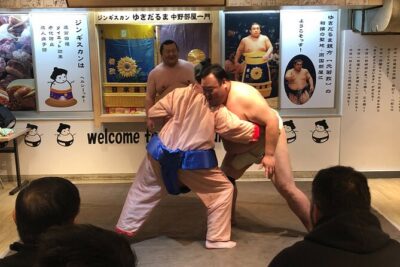
Tokyo Shinjuku Sumo Show & Experience with Photo
Read our review →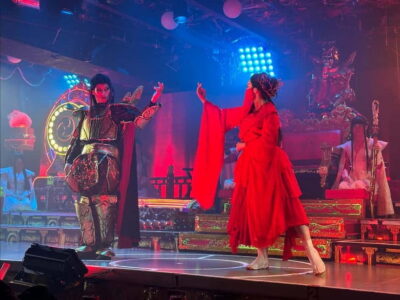
Mt Fuji & Hakone Cruise, Drum Show Bus 1 Day from Tokyo
Read our review →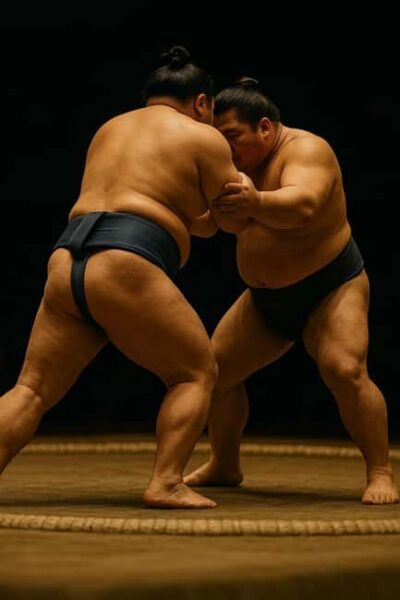
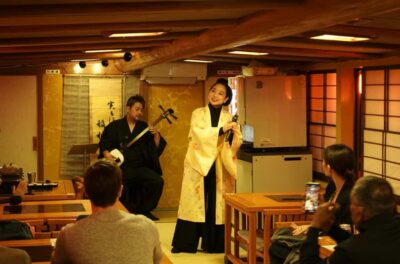
Yakatabune Dinner Cruise with Japanese Show & Drinks
Read our review →Browse the lists this show appears in