Review · TOKYO
Traditional Japanese Comedy, Juggling & Magic Live Show in Tokyo
The best part of this Tokyo show is its mix of three very different Japanese arts. You get seated rakugo comedy, umbrella and juggling skills in daikagura, and close-up wazuma magic, all in a small theater at Kanda Myoujin Shrine. The English interpretation keeps the jokes and demonstrations clear, even if you know no Japanese.
I like the hands-on format, since you may step up to try a simple rakugo expression, balance a prop, or learn a magic trick. I also like the small cultural gifts, including a tenugui hand towel, folding fan, or paper balloon, which give you something more meaningful than a standard souvenir. The main consideration is timing: the performance is held on Thursday afternoon, so it may not fit a packed sightseeing day.
Key points to know before booking
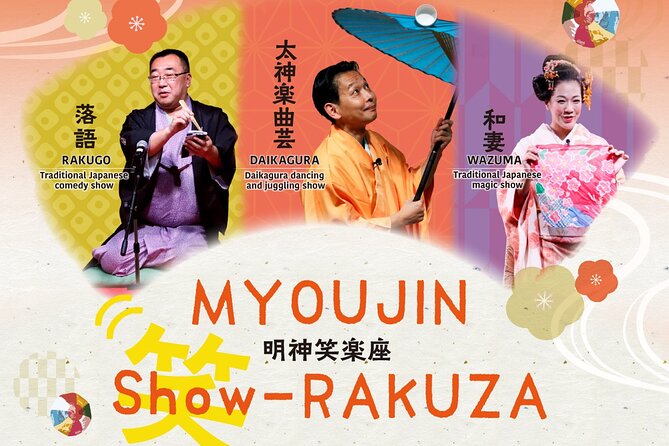
- Three traditional arts in 90 minutes: Rakugo comedy, daikagura acrobatics, and wazuma magic share one program.
- English-friendly presentation: An interpreter explains the acts and helps make the humor understandable.
- Audience participation: You may learn basic rakugo expressions and try simple daikagura or magic techniques.
- Historic setting: EDOCCO STUDIO is inside Kanda Myoujin Shrine, a short distance from Akihabara.
- Small take-home gifts: Traditional props such as fans, tenugui towels, and paper balloons may be included.
- Useful rainy-day plan: The show takes place indoors, although the booking terms still allow cancellation for poor weather.
Three Japanese stage arts in one compact show
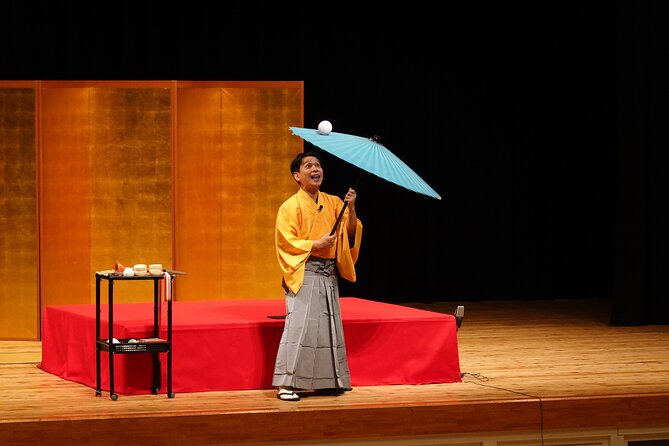
Many cultural performances ask you to choose one style and settle in. This one gives you three. That variety matters in Tokyo, where a short activity can fit between major sights without feeling like a lecture.
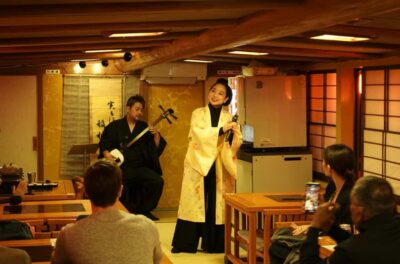
Rakugo gives you the spoken comedy. A performer sits on stage with only a fan and a tenugui towel, then uses voice, posture, and small movements to play several characters. The humor depends on timing and wordplay, so the interpreter has an important job. Here, the English support is part of the experience rather than an afterthought.
Daikagura changes the pace. This traditional performance style uses juggling, balance, and controlled movement. The umbrella-spinning act is one of the memorable elements, and it gives you a clear visual sense of the skill involved. You do not need to understand Japanese to appreciate a performer keeping objects moving with such precision.
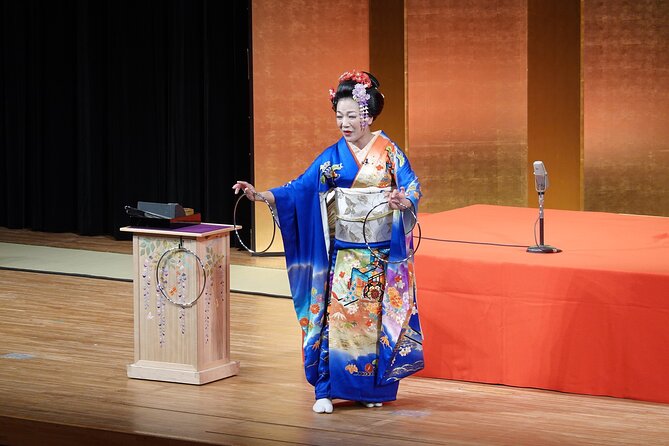
Wazuma, the Japanese magic segment, adds audience interaction. The magician demonstrates tricks, then explains simple techniques you can try yourself. That makes the show feel less like a performance you watch from a distance and more like a cultural lesson you can carry back to your hotel.
More Comedy Shows in Japan
- English Stand up Comedy Show
★ 5.0 · 232 reviews - Yoshimoto Comedy Night OWARAI
★ 5.0 · 229 reviews - ”Why Why Japan!?” English Standup Comedy Show In Tokyo
★ 5.0 · 130 reviews
Entering EDOCCO STUDIO at Kanda Myoujin Shrine
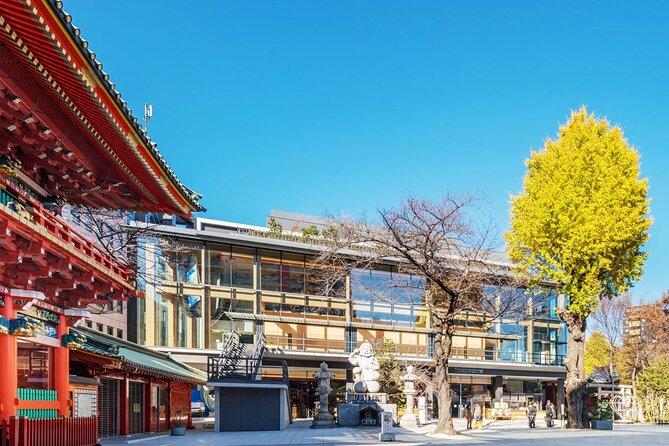
The meeting point is EDOCCO STUDIO, at 2-chome 16-2 Sotokanda in Chiyoda City. The studio is located within the grounds of Kanda Myoujin Shrine, a historic shrine area only a few minutes from Akihabara.
This setting adds useful context before the curtain rises. You are not visiting a theater in an isolated entertainment district. You are entering a modern performance space connected to one of central Tokyo’s well-known religious sites. The contrast between the shrine setting and the clean indoor studio helps explain how Japanese culture can be both old and current without being frozen in the past.
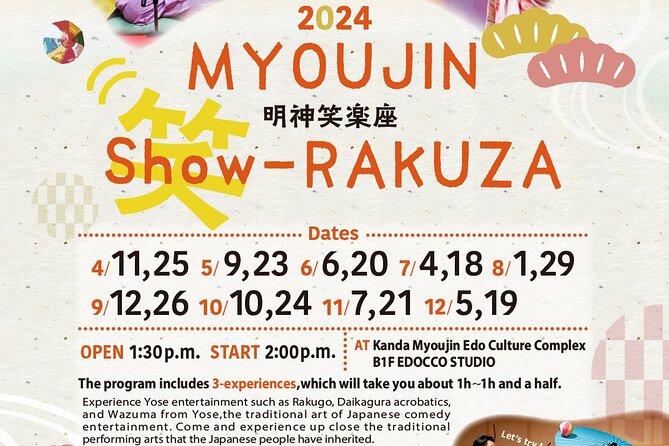
The doors open at 1:30 p.m., with the show scheduled to begin at 2 p.m. I would arrive early enough to find EDOCCO STUDIO without rushing. The event ends back at the same meeting point, so there is no second location to find after the performance.
Because the venue is near public transportation, this works well as an afternoon stop from Akihabara. You can also pair it with other central Tokyo plans, but leave enough time for the fixed start. A late arrival could mean missing the opening comedy segment or the explanation that makes the later acts easier to follow.
How rakugo works when you do not speak Japanese
Rakugo can look simple at first. The performer sits, uses a few small props, and tells a story while switching between characters. Yet the form depends on verbal timing, tone, and physical detail.
That is where the interpreter matters. The English presentation lets you follow the basic story and understand the comic setup. The interpreter also helps explain rakugo expressions, and part of the program gives you a chance to try some of them yourself.
Do not expect a full evening of Japanese theater with every line translated word for word. A 90-minute mixed program has to keep moving, and comedy does not always transfer perfectly between languages. Still, the format is well suited to first-time visitors because you can appreciate the gestures and character changes even when a pun loses some force.
I especially like rakugo as an introduction to Japanese performance because it uses so little. The performer’s fan and towel can become different objects through suggestion. You begin to notice how much meaning can come from posture, voice, and a carefully timed turn of the head.
For families, this is easier to follow than a long historical talk. For solo visitors, the audience participation gives the afternoon a social edge without requiring you to arrive with a group.
Daikagura brings the visual wow factor
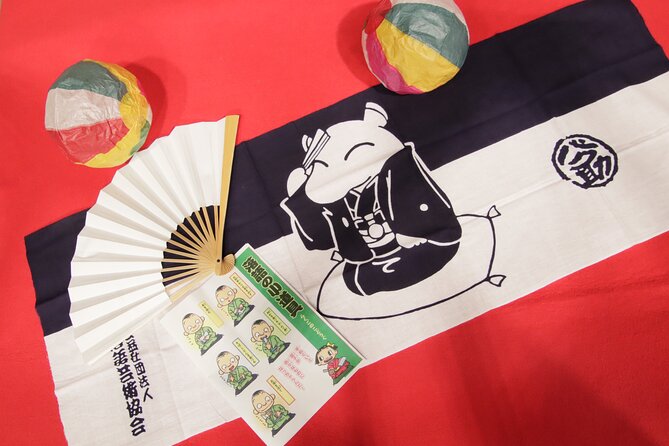
The daikagura portion is likely to be the easiest section to enjoy across language barriers. Juggling, balancing, and umbrella spinning communicate through movement.
The umbrella act receives particular attention in the program and is a good example of why live performance works better than a short video clip. You can watch the performer control an object that appears simple, then appreciate the concentration and practice behind each movement.
The show does not only ask you to sit quietly. You may be invited to try a basic daikagura skill. The exact exercise can vary, but the point is not to become an expert in a few minutes. It is to understand, with your own hands, how awkward a traditional prop can feel before the technique begins to make sense.
That hands-on moment has practical value. After you try it, the performance looks different. You see the corrections, balance, and timing more clearly. You also get a harmless laugh at your own first attempt, which is often more memorable than a polished demonstration.
The group can include up to 100 people, so participation will not necessarily mean every person takes a turn. The theater is described as intimate, but the maximum size is worth keeping in mind if you prefer very small classes or one-to-one attention.
More Comedy Shows in Tokyo
- Stand-Up Comedy in Shibuya (English)
★ 4.2 · 27 reviews - Tokyo: English Standup Comedy Night
★ 5.0 · 8 reviews - Tokyo: Asakusa Walking Tour & Comedy Night
★ 5.0 · 5 reviews
Wazuma turns magic into a souvenir
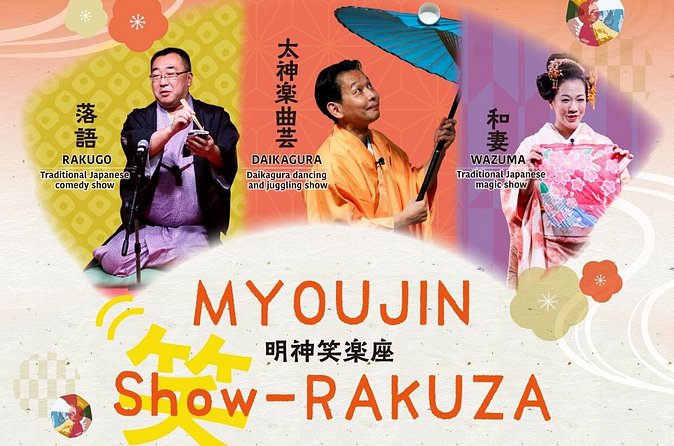
The Japanese magic section is especially useful for visitors who enjoy learning a trick they can show friends. The magician demonstrates basic techniques and gives the audience a chance to understand how the effect works.
This is not a full magic workshop. You should think of it as a short stage segment with a lesson built in. The performer remains in control of the show, while the audience gets enough instruction to recreate a simple effect.
That balance keeps the participation light. You are not forced into a long performance in front of everyone, and the interaction is meant to be fun rather than stressful. If you are traveling alone, the format still works, since you can watch and join in without needing a partner.
A small magic-related souvenir is included with the experience. The listed gifts may include a tenugui towel, folding fan, or paper balloon, and the program presents these as props connected with the performance. They are modest objects, but they give you a physical reminder of the afternoon and something you can use to repeat a simple trick at home.
What the English support really adds
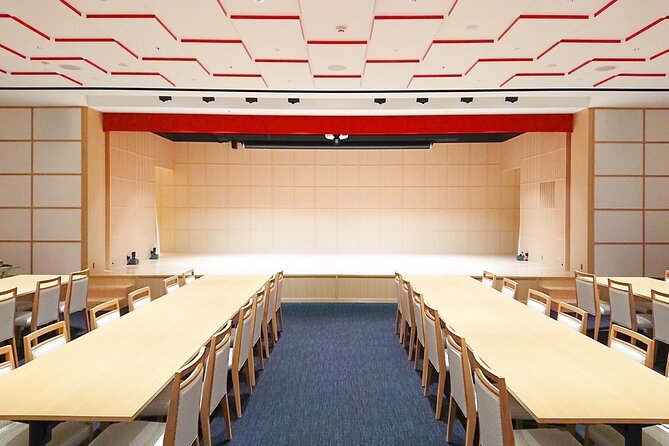
The show is designed for international visitors, and the interpreter helps explain both the comedy and the instructions. This is important for rakugo, where a silent demonstration would not tell you enough about the story.
The English support also helps with audience participation. When you are asked to copy an expression, handle a prop, or follow a magic instruction, clear directions keep the activity enjoyable instead of confusing.
Still, translation cannot reproduce every Japanese pun or cultural reference exactly. If you already speak Japanese, you may catch extra layers that an English-speaking audience misses. If you do not speak Japanese, you are still given the tools to follow the structure, enjoy the performers, and understand why each art form matters.
I would choose this format over a performance conducted only in Japanese if your goal is a friendly first introduction. It gives you context without turning the program into a classroom.
Price, duration, and practical value
The price is $36.24 per person for about 1.5 hours. That is not the cheapest way to fill an afternoon in Tokyo, but the comparison should include more than the seat itself.
You are paying for three distinct performance styles, English interpretation, audience instruction, admission to the studio, and a small cultural gift. The shrine setting also adds a location you might not otherwise enter for a performance. For someone curious about Japanese theater but unsure about committing to a long formal show, the price is reasonable.
The value is strongest if you take part. If you sit in the back and treat it as a standard stage show, you still receive a varied program. If you volunteer, learn a few expressions, try a prop, and practice a magic trick, the experience gives you more than 90 minutes of passive entertainment.
This is also a good choice for a short Tokyo visit. You do not need to spend an entire evening at a theater, and the fixed Thursday afternoon schedule makes it easy to plan around. The drawback is that you have less flexibility than with a daily attraction. If your itinerary includes a full-day excursion or a Thursday afternoon museum plan, you may need to rearrange your schedule.
The activity is booked by mobile ticket, and confirmation is normally provided at booking. If you book within two hours of the start time, confirmation may take longer and depends on availability. I would not leave this one until the last minute, especially since the program is limited and often booked well ahead.
Who will enjoy this show most
I would recommend this experience to first-time visitors who want a clear introduction to Japanese performing arts without needing Japanese language skills. It suits couples, families, solo visitors, and culture-minded people who prefer participation over a purely observational show.
It is also a good choice if you have already seen Tokyo’s major sights and want a different kind of afternoon. The shrine location gives you a sense of place, while the performance provides cultural context that a quick shrine visit alone may not offer.
Families should find the changing pace helpful. Rakugo provides storytelling, daikagura supplies movement, and wazuma adds tricks and audience involvement. The format is described as family-friendly, though very young children may not follow all the spoken comedy.
I would be more cautious about recommending it to someone who wants a serious, full-length rakugo performance. This is a sampler that combines three forms in one sitting. Its strength is variety and accessibility, not an extended study of one art.
Likewise, if you dislike audience participation, you can still watch, but you may miss part of the program’s appeal. The interaction is designed to be gentle, yet the experience works best when you are open to trying something small.
Booking details and a few limits
The show begins at 2 p.m. on Thursday, with doors opening at 1:30 p.m. It lasts about 90 minutes and returns you to the original meeting point.
The venue is indoors and near public transportation. Service animals are allowed, and most people can take part. The maximum group size is 100, so the room may feel busier on a full date than on a lightly booked one.
Free cancellation is available up to 24 hours before the start time for a full refund. Changes or cancellations made less than 24 hours before the start are not accepted for a refund. The provider may also cancel if the minimum number is not reached or if poor weather affects the event, in which case you are offered another date or a full refund.
The weather rule is worth noting because the show itself is indoors. The booking terms still say the activity requires good weather, so check your confirmation and keep the cancellation deadline in mind.
Should you book the Kanda Myoujin comedy and magic show?
Book it if you want a compact, English-friendly introduction to Japanese performance, especially if you like learning by doing. The combination of rakugo, umbrella acrobatics, magic, and small gifts gives you a fuller sense of traditional entertainment than a single short demonstration would.
Skip it if Thursday at 2 p.m. does not fit your schedule or if you want an advanced, language-heavy theater performance. For most first-time visitors, though, the $36.24 price is fair for a varied 90-minute program in a memorable shrine setting. Bring your curiosity, arrive before the doors close, and be ready to try a small trick yourself.
FAQ
Where does the performance take place?
The show takes place at EDOCCO STUDIO, located within Kanda Myoujin Shrine at 2-chome 16-2 Sotokanda, Chiyoda City, Tokyo 101-0021, Japan.
What time does the show begin?
Doors open at 1:30 p.m., and the performance begins at 2 p.m. on Thursday.
How long does the experience last?
The program lasts approximately 1 hour and 30 minutes.
Do I need to speak Japanese?
No. The experience is designed for international visitors, and an interpreter helps explain the comedy, demonstrations, and participation.
What types of entertainment are included?
The program combines rakugo comedy, daikagura acrobatics such as umbrella spinning, and wazuma, a Japanese magic performance.
Can I cancel for a refund?
Yes. You can cancel up to 24 hours before the start time for a full refund. Cancellations or changes made less than 24 hours before the start time are not accepted for a refund.
More Cultural Shows in Tokyo
- Tokyo: Traditional Asakusa Music Show with Dinner
★ 5.0 · 10 reviews - Tokyo: Learn about Japanese Traditional art KABUKI in Ginza
★ 3.2 · 5 reviews
More Cultural Shows in Japan
- Tokyo: Traditional Japanese Performing Arts Show and Dinner
★ 4.5 · 99 reviews - Japanese Traditional Music Show in Tokyo
★ 5.0 · 72 reviews - Traditional Japanese Music ZAKURO SHOW in Tokyo
★ 5.0 · 67 reviews - Tokyo: Traditional Geisha Experience Show & Japanese Dinner
★ 4.2 · 59 reviews
Just added around Tokyo
- Tokyo: Taishu Engeki Show with Kimono and Sword Lesson★ 5.0 · 12 reviews
- Tokyo: Traditional Geisha Experience Show & Japanese Dinner★ 4.2 · 59 reviews
- Tokyo: Rainbow Bridge Day Cruise Show Unlimited Soft Drinks★ 4.5 · 86 reviews
- Tokyo: Taiko Drum Experience in Kabukicho with Dinner★ 5.0 · 3 reviews
- Tokyo: KABUKI, BUNRAKU, etc. presented by National Theatre★ 4.6 · 135 reviews
- Tokyo: Know about Kabuki performing – Ginza Walking★ 4.2 · 3 reviews
- Tokyo: Learn about Japanese Traditional art KABUKI in Ginza★ 3.2 · 5 reviews
- Tokyo: Japanese Style Variety Show with Dance,Magic & Dinner★ 4.5 · 13 reviews
Tokyo Shows, compared.
Japanese Dance Cabaret Theater Asakusa-Kaguwa Ticket
Read our review →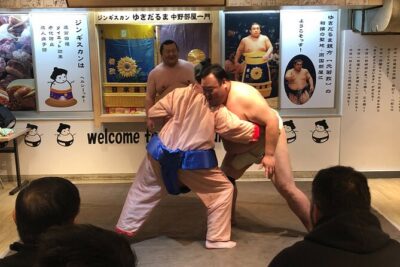
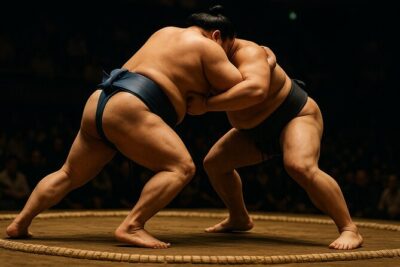
Tokyo Shinjuku Sumo Show & Experience with Photo
Read our review →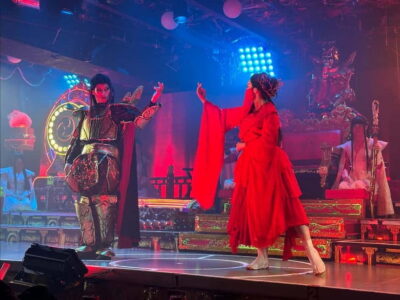
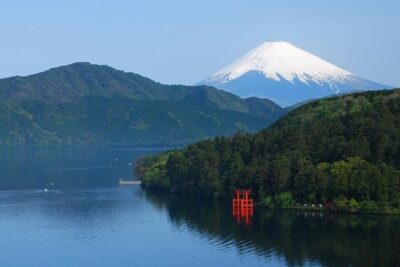
Mt Fuji & Hakone Cruise, Drum Show Bus 1 Day from Tokyo
Read our review →