
Review · TOKYO
Japanese Traditional Music Show in Tokyo
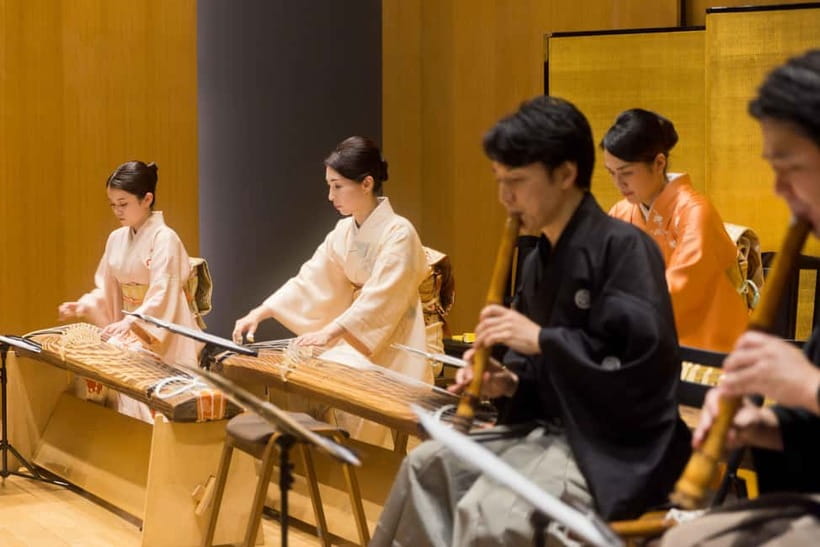
Japanese traditional music can be hard to find in a form that works for a short Tokyo visit. ZAKURO SHOW solves that problem with a one-hour concert in which koto, shamisen, shakuhachi, and taiko musicians perform close to a small seated audience. The host explains the instruments and the background of each piece in English and Japanese.
I like two things especially: the program gives you useful context instead of asking you to sit quietly through unfamiliar music, and you can take photos and videos during the show. The chance to pose with the musicians afterward adds a friendly personal touch. The main consideration is the limited one-hour format, which offers a lively introduction rather than a full evening of traditional music.
Key points
- Four classic Japanese instruments: Hear the koto, shamisen, shakuhachi flute, and taiko drums in one compact program.
- Small numbered audience: Musicians perform right in front of you, making the sound and playing technique easy to follow.
- English explanations: The host translates and explains the instruments, pieces, and cultural background in English and Japanese.
- Old, new, and unexpected music: The program combines traditional works, modern Japanese music, and a Western pop cover.
- Photos are welcome: Record the performance and take pictures with the musicians after the concert.
- Easy Harajuku location: Hall 60 is one minute from Meiji-Jingumae Station Exit 7 and five minutes from JR Harajuku Station.
A close-up introduction to Japanese wagakki
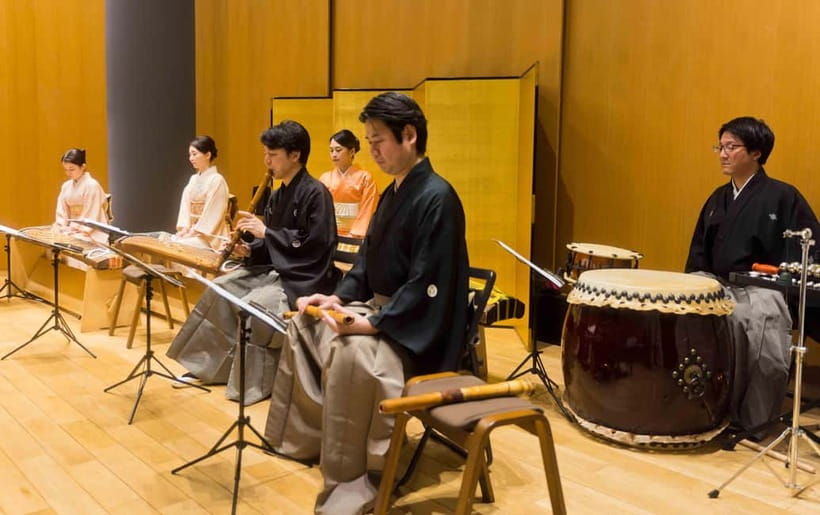
ZAKURO SHOW focuses on wagakki, the traditional instruments of Japan. You do not simply hear a concert and leave wondering what you just heard. The musicians and host explain what each instrument is, how it works, and why it belongs in the program.
That makes this a good first encounter with Japanese traditional music. The sounds can be unfamiliar, especially when several instruments are played together. Clear explanations give your ears something to listen for, so you can notice the contrast between a plucked string, a breathy flute tone, and the strong pulse of a drum.
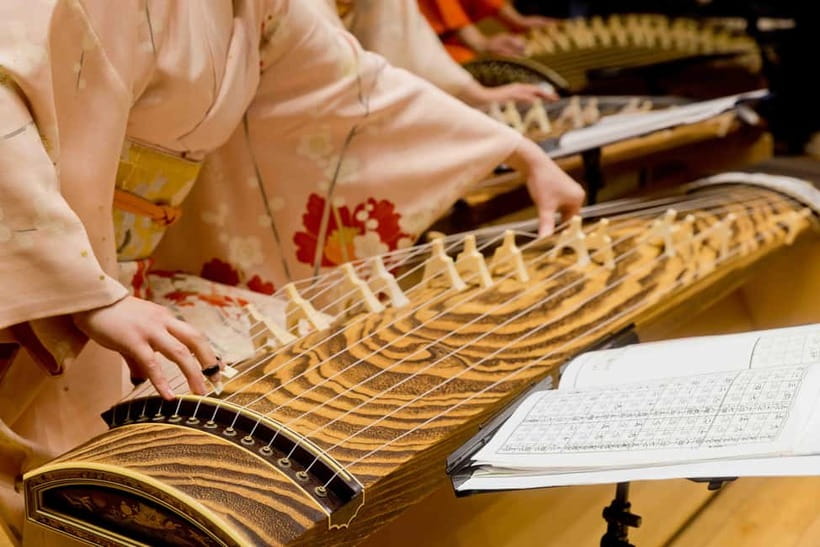
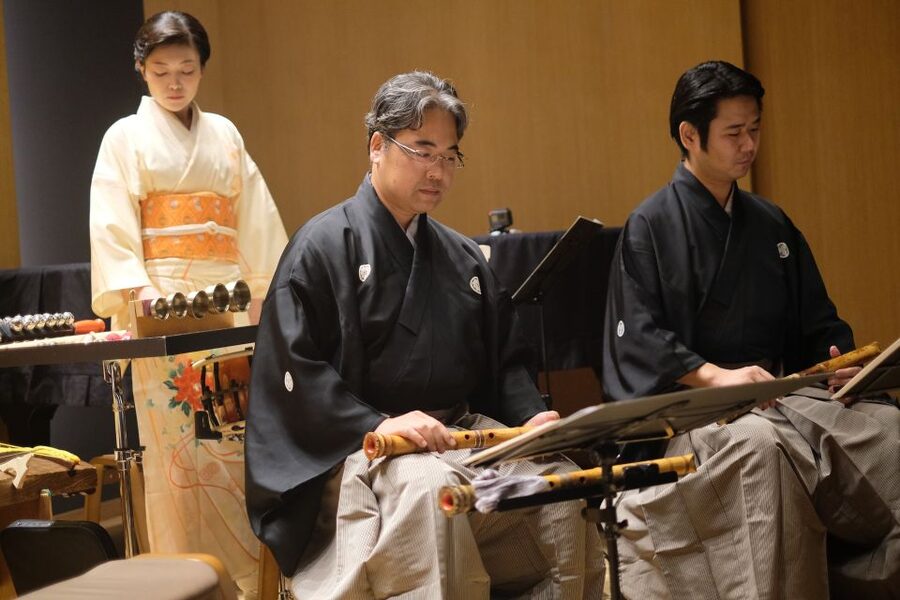
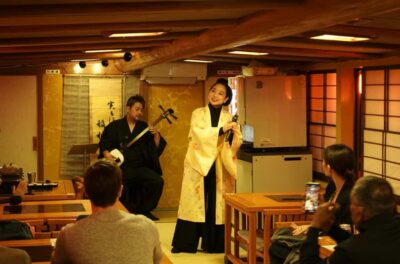
The musicians perform in kimono, with their instruments placed directly in front of the audience. Because the room uses a small numbered seating arrangement, you get a more personal view than you would at a large theater show. You can watch the hands of the koto player, the movement of the shamisen pick, the shakuhachi technique, and the physical force behind the taiko.
The small setting is part of the appeal, but it also means space is limited. If you want this particular time slot, booking ahead is sensible.
More Cultural Shows in Japan
- Tokyo: Traditional Japanese Performing Arts Show and Dinner
★ 4.5 · 99 reviews - Traditional Japanese Music ZAKURO SHOW in Tokyo
★ 5.0 · 67 reviews - Tokyo: Traditional Geisha Experience Show & Japanese Dinner
★ 4.2 · 59 reviews
What you will hear: koto, shamisen, shakuhachi, and taiko
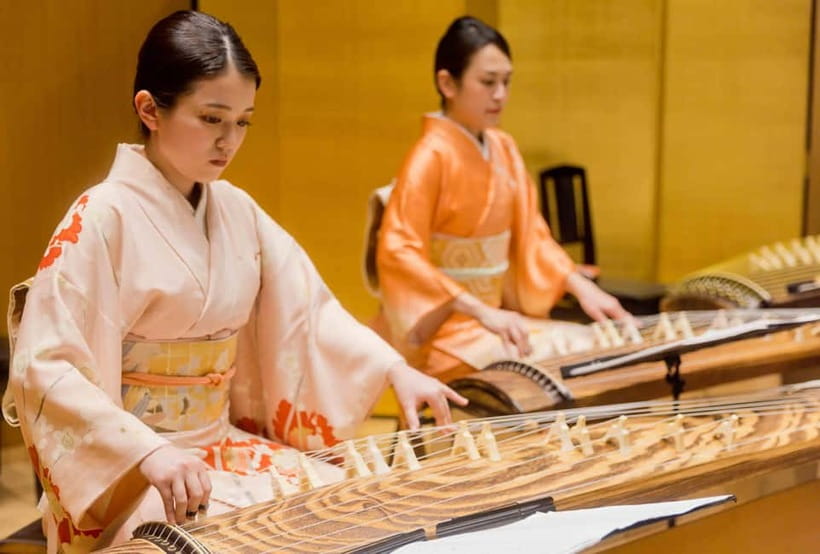
The program brings together instruments with very different voices.
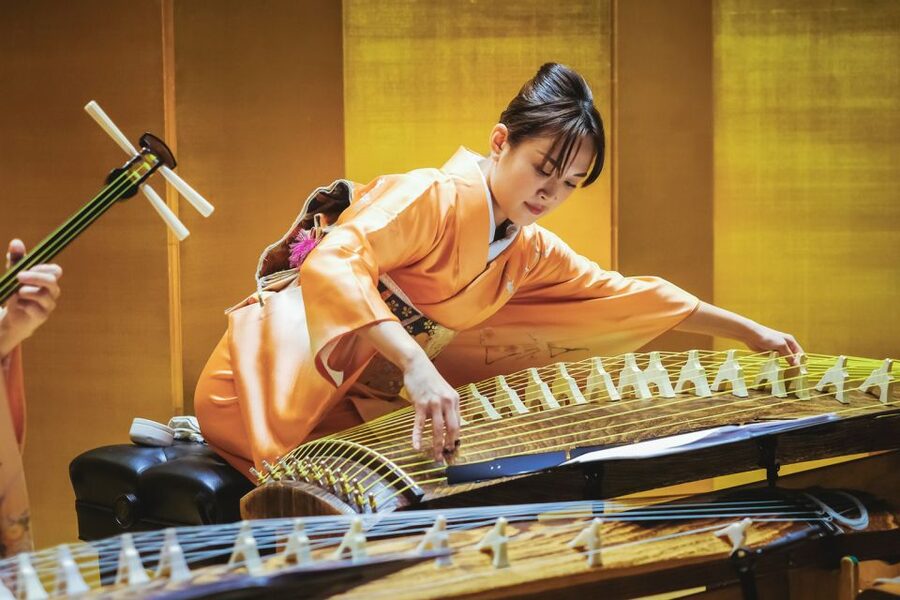
The koto, often described as a Japanese harp or zither, produces clear plucked notes. Its sound can feel delicate and spacious, but it can also carry a firm rhythmic pattern. The concert gives you a chance to see how the player shapes the music directly on the strings.
The shamisen is a three-stringed instrument with a distinctive tone. Its sound has more bite than the koto, and it gives the music a strong character. Hearing it live helps you understand why it has remained important across several kinds of Japanese performance.
The shakuhachi is a bamboo flute. Its breathy sound brings a different mood to the group, with tones that can seem airy, spare, or intense. The host’s explanation is useful here because the instrument’s sound is closely tied to the player’s breath and control.
The taiko drums provide the physical power. Their deep beats change the feel of the room and give the concert a dramatic finish or contrast, depending on how they are used in the program. For younger audience members, the taiko section may be the easiest part of the show to connect with immediately.
Hearing these instruments in one performance is more useful than seeing them listed separately. You can compare their sounds as the program moves along, and you begin to understand how traditional arrangements create contrast.
How the one-hour program is arranged
The show is not presented as a long, uninterrupted concert. Musical pieces are thoughtfully spaced with explanations about the instruments and the selected works. That structure keeps the program moving and helps you follow along even if you know little about Japanese music.
You can expect a mixture of ancient and modern traditional music. The older pieces provide a sense of the sounds and forms associated with Japan’s musical past, while the newer selections show that these instruments are not locked in a museum display.
One of the cleverest choices is the inclusion of a Western hit. The exact song is treated as a surprise, so I would not expect a particular title. The point is to let you hear a familiar melody through Japanese instruments. That contrast makes the koto, shamisen, shakuhachi, and taiko feel surprisingly flexible.
The host also translates between Japanese and English. This matters because the show is intended for both international visitors and people living in Japan. You are not left with a short English introduction followed by a performance that assumes specialist knowledge. The explanations are part of the concert itself.
The full program lasts one hour. I see that as a strength if you have a packed Tokyo schedule, especially if you are spending the day around Harajuku and Meiji-Jingumae. If you want a long formal concert with several extended works, this will feel brief. If you want a focused cultural stop that fits neatly into an afternoon or evening, the timing works well.
Why the small audience changes the experience
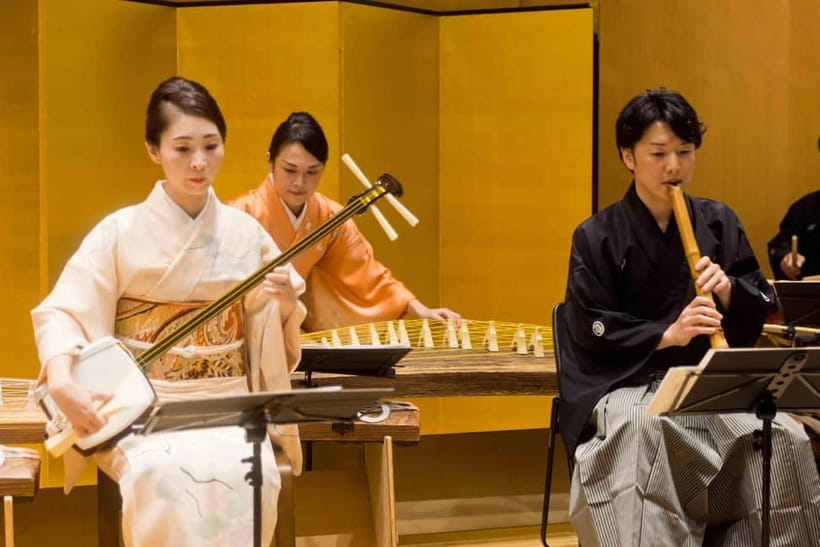
Large performances can give traditional music grandeur, but they often place you at a distance. Here, the musicians are right in front of you, and the limited seating makes it easier to pay attention to details.
You can see how the performers handle their instruments rather than viewing them as small figures on a distant stage. That is particularly helpful for the koto and shamisen, where the hand movements are part of the interest. The host can also respond to the room more naturally in a small setting.
A small audience has one practical drawback: seats are not unlimited. The experience uses reserved numbered seating, so you should not treat it like a casual street performance you can decide to join at the last minute.
The setting also affects the mood. This is not a noisy dinner show or a large tourist production. It is a short concert built around listening, explanation, and close observation. I would choose it for an evening when you want something calm and focused rather than another crowded attraction.
More Cultural Shows in Tokyo
- Traditional Japanese Comedy, Juggling & Magic Live Show in Tokyo
★ 5.0 · 37 reviews - Tokyo: Traditional Asakusa Music Show with Dinner
★ 5.0 · 10 reviews - Tokyo: Learn about Japanese Traditional art KABUKI in Ginza
★ 3.2 · 5 reviews
Photos, videos, and meeting the musicians
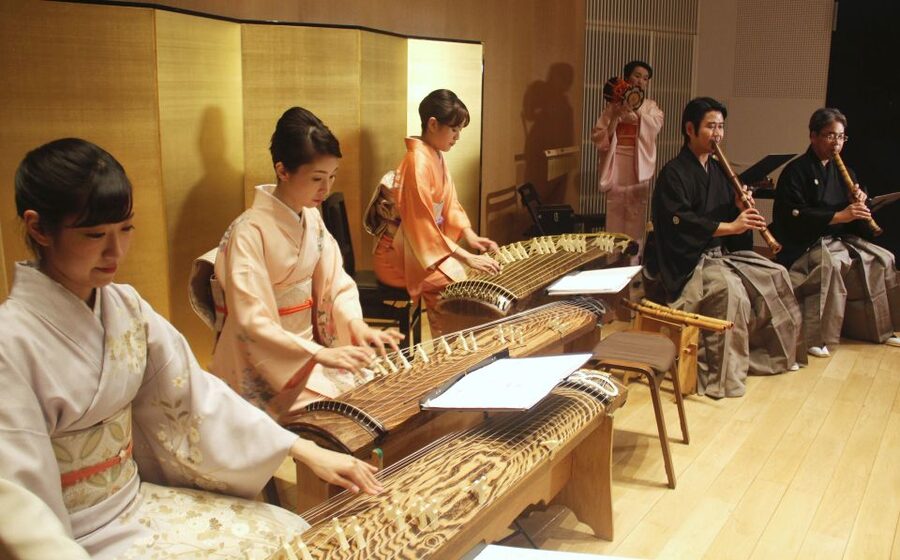
You are allowed to take photos and videos during the performance. That is unusual enough to be worth noting, since many formal concerts limit phone use. Keep your screen and sound considerate of the musicians and people seated around you, but you can record parts of the show for your own memories.
Afterward, you can take photos with the musicians. This gives the program a natural ending and lets you see the performers outside the concentration of the concert. The opportunity is especially useful for families, couples, and anyone who enjoys bringing home a visual reminder of a cultural activity.
The photo session should not be mistaken for a separate long meet-and-greet. The main value remains the music and explanations. Still, having the performers in kimono available for a picture makes the experience feel more personal than a standard ticketed stage show.
If you are visiting with teenagers, the ability to record the performance may help keep them engaged. The combination of strong taiko sounds, unusual instruments, and a surprise modern song gives the hour more variety than a program made only of old pieces.
Getting to Hall 60 in Harajuku
The meeting point is Hall 60, close to two convenient stations.
From Meiji-Jingumae Station, Exit 7, the walk takes about one minute. From JR Harajuku Station, Omotesando Exit, allow about five minutes. That makes the show easy to pair with time in Harajuku, though the activity information does not include hotel pickup or drop-off.
I like the location because you do not need to commit half a day to reach the venue. You can plan the concert around shopping, sightseeing, or a meal in the Harajuku area. Still, give yourself enough time to find Hall 60 and settle into your reserved seat. A short walk does not always mean a stress-free arrival in Tokyo.
There is no food or drink included, and merchandise is also not part of the ticket. Plan any meal or refreshment separately. The show itself is the complete product: admission, your reserved seat, and the one-hour concert.
The venue is wheelchair accessible. If that is important for your planning, confirm any personal seating needs when booking, since the available information confirms access but does not describe the exact seating layout.
Is $38 a fair price?
At $38 per person, this is not the cheapest cultural activity in Tokyo, but the price is reasonable for a reserved, hosted live performance. You are paying for more than background music. The ticket includes entry, a numbered seat, a full one-hour program, bilingual explanations, and access to a small venue where you can see the performers clearly.
The English guidance adds real value. Without it, an introduction to instruments such as the koto, shamisen, and shakuhachi could remain mostly visual. The host explains what you are hearing and places the pieces in context, which makes the ticket more useful for someone with no previous knowledge.
I would compare the price with a short theater or music performance, not with a free shrine visit. You get a scheduled cultural experience with professional musicians rather than a quick glimpse of an instrument in a shop or museum.
The value is strongest for three groups:
- First-time visitors to Japan who want traditional culture without spending an entire evening at a formal concert.
- Families and teenagers who need variety, a manageable one-hour length, and permission to take photos or videos.
- Music lovers who want to hear several Japanese instruments together and understand how they are made and played.
The value is weaker if you are looking mainly for a long concert, food, or a large theatrical production. None of those are included.
Who will enjoy ZAKURO SHOW most?
I would recommend this to anyone curious about Japanese culture but unsure how to approach traditional music. You do not need to read Japanese or know the names of the instruments. The English and Japanese format makes the program accessible, and the host fills in the background as the music unfolds.
It also suits visitors with limited time. One hour is enough to give you a real introduction without taking over your day. You can place it before or after other plans in Harajuku, provided you allow time to reach Hall 60.
Families should find the format manageable. The taiko drums provide energy, while the explanations and modern selections help break up the quieter pieces. The ability to record portions of the show can also make it more appealing to older children and teenagers.
I would be more cautious about recommending it to someone who wants only solemn, traditional repertoire. The Western cover and modern selections are enjoyable parts of the program, but they mean the show is designed as an introduction for a broad audience, not a specialist recital.
Likewise, anyone who dislikes audience participation or post-show photos should know that the experience encourages a friendly connection with the musicians. You can simply enjoy the concert, but the format leaves room for interaction afterward.
Booking and practical details
You can cancel for a full refund up to 24 hours before the activity. A reserve-now, pay-later option is also available, which helps if your Tokyo plans are still shifting.
The show operates in English and Japanese, with an English-speaking host or greeter. Check the available starting times when you book, since the exact schedule is not fixed in the activity details.
The activity includes a reserved seat and skips the ticket line. Hotel transportation, food, drinks, and merchandise are not included. The meeting point is easy to reach by train, so arranging your own transport is straightforward.
The published score is 5 out of 5 from 72 reviews, and the most consistent praise focuses on the same qualities I would use to judge the experience: talented musicians, clear translation, a thoughtful mix of old and new music, and the chance to learn about the instruments. The strongest practical sign is that the program works for both people who already like music and people simply looking for a memorable cultural activity.
Should you book this Tokyo music show?
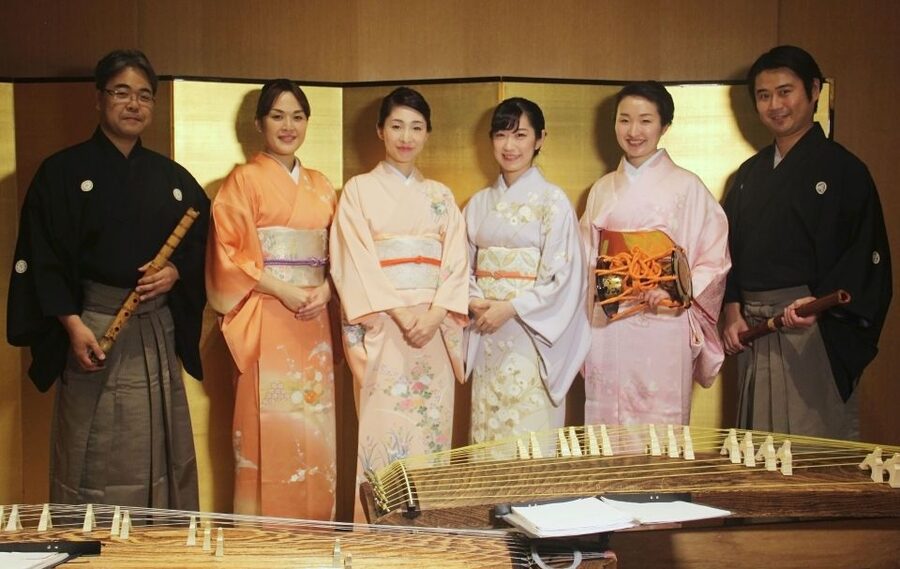
Book it if you want a short, clearly explained introduction to Japanese traditional music in a close setting. The combination of koto, shamisen, shakuhachi, and taiko gives you plenty of variety, while the English host keeps the program understandable.
I especially like it for a first trip to Japan, a family itinerary, or a Harajuku day that needs a quieter change of pace. The $38 price is fair for a reserved seat, professional musicians, bilingual instruction, and a complete one-hour performance.
Skip it if you want a lengthy formal concert, included refreshments, or a large stage production. For everyone else, ZAKURO SHOW offers a practical way to hear Japan’s traditional instruments up close, learn what makes them distinct, and leave with photos that capture the evening.
FAQ
How long does the Japanese Traditional Music Show last?
The concert program lasts one hour.
Where does the show take place?
The show takes place at Hall 60 in Tokyo. Meiji-Jingumae Station Exit 7 is about a one-minute walk away, and JR Harajuku Station’s Omotesando Exit is about a five-minute walk.
Which instruments are performed?
The program features the koto, also described as a Japanese harp, shamisen, shakuhachi flute, and taiko drums.
Is the show available in English?
Yes. The activity operates in English and Japanese, and an English-speaking host or greeter explains the instruments and music.
Can I take photos or videos?
Yes. You can take photos and videos during the show, and you can take photos with the musicians afterward.
Is a seat included with the ticket?
Yes. The ticket includes entry to the venue, a reserved seat, and the one-hour concert program.
Is the venue wheelchair accessible?
Yes. The activity is listed as wheelchair accessible.
Can I cancel my booking?
Yes. You can cancel up to 24 hours in advance for a full refund. A reserve-now, pay-later option is also available.
More Traditional and Cultural Shows in Tokyo
- Xcaret Park Entry Tickets with Cultural Night Show Included
★ 4.5 · 2,382 reviews - Xcaret Park Day Trip, transportation and Cultural Night Show
★ 4.5 · 1,899 reviews - Dubai: Tour with BBQ Dinner, Camel Ride, & Traditional Show
★ 4.8 · 1,687 reviews - Madrid: 1-Hour Traditional Flamenco Show at Centro Cultural
★ 4.8 · 1,593 reviews
Just added around Tokyo
- Tokyo: Taishu Engeki Show with Kimono and Sword Lesson★ 5.0 · 12 reviews
- Tokyo: Traditional Geisha Experience Show & Japanese Dinner★ 4.2 · 59 reviews
- Tokyo: Rainbow Bridge Day Cruise Show Unlimited Soft Drinks★ 4.5 · 86 reviews
- Tokyo: Taiko Drum Experience in Kabukicho with Dinner★ 5.0 · 3 reviews
- Tokyo: KABUKI, BUNRAKU, etc. presented by National Theatre★ 4.6 · 135 reviews
- Tokyo: Know about Kabuki performing – Ginza Walking★ 4.2 · 3 reviews
- Tokyo: Learn about Japanese Traditional art KABUKI in Ginza★ 3.2 · 5 reviews
- Tokyo: Japanese Style Variety Show with Dance,Magic & Dinner★ 4.5 · 13 reviews
Tokyo Shows, compared.
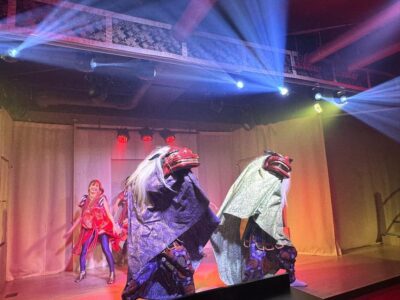
Japanese Dance Cabaret Theater Asakusa-Kaguwa Ticket
Read our review →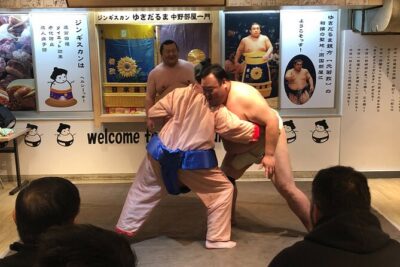
Tokyo Shinjuku Sumo Show & Experience with Photo
Read our review →
Mt Fuji & Hakone Cruise, Drum Show Bus 1 Day from Tokyo
Read our review →
Yakatabune Dinner Cruise with Japanese Show & Drinks
Read our review →Browse the lists this show appears in