
Review · KYOTO
Kyoto: Samurai Kenbu Traditional Sword Dancing Show
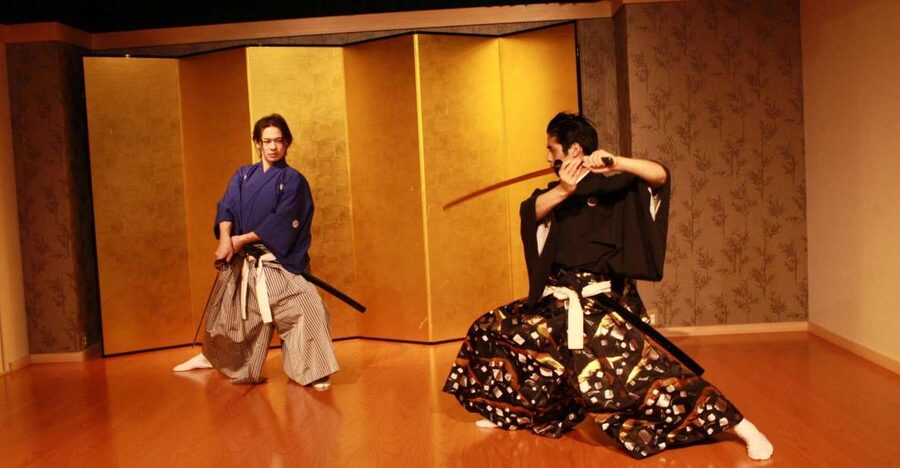
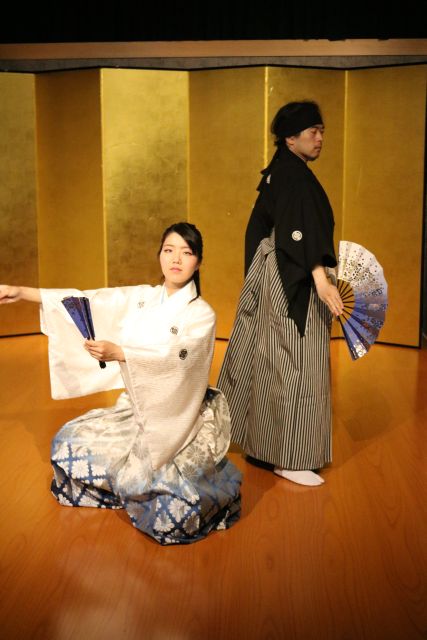
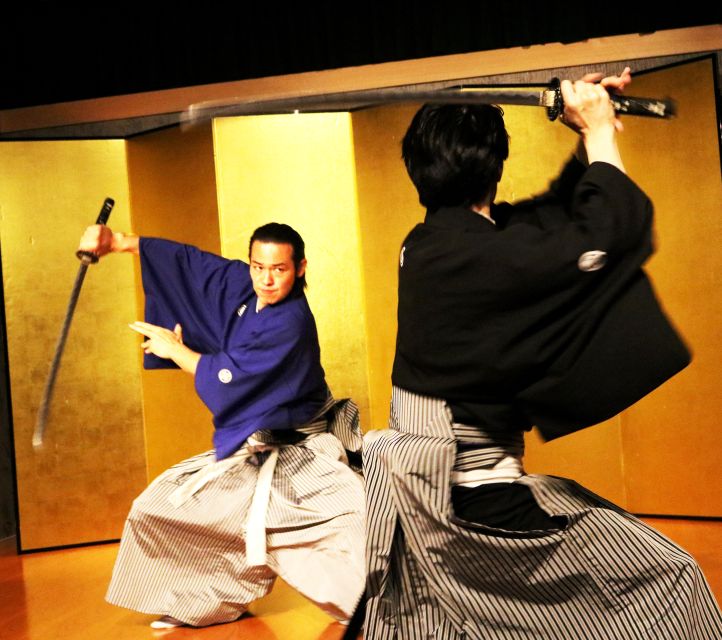
Samurai Kenbu is not a staged sword fight in the usual sense. It is a precise Japanese sword dance, built from controlled steps, sweeping blade movements, fan work, and poems once recited before battle. The short show connects those movements with samurai customs from the 12th through 19th centuries.
I like the English narration, which gives each dance a clear story, and the hands-on lesson at the end, when you can draw and hold a sword under instruction. The performers also make time for photographs after the show. The main drawback is that the stage is intimate, and the presentation is graceful and ceremonial rather than a fast-paced fight display.
Key points
- Kenbu is sword dance, not ordinary stage combat: The performance focuses on control, posture, poetry, and meaning.
- English explanations come before the dances: You learn how Kenbu relates to samurai life and Japanese culture.
- The short sword lesson is included: You can practice drawing, holding, and making basic movements with a katana.
- Photos wait until the show ends: Cameras and video are not permitted during the performance, but there is a dedicated photo period afterward.
- A folding fan also matters: If time allows, you can learn how samurai used fan movements as part of the performance.
- The central Kyoto location is easy to reach: The theater is about four minutes from Sanjo Keihan Station and five minutes from Sanjo Station.
What Samurai Kenbu actually is
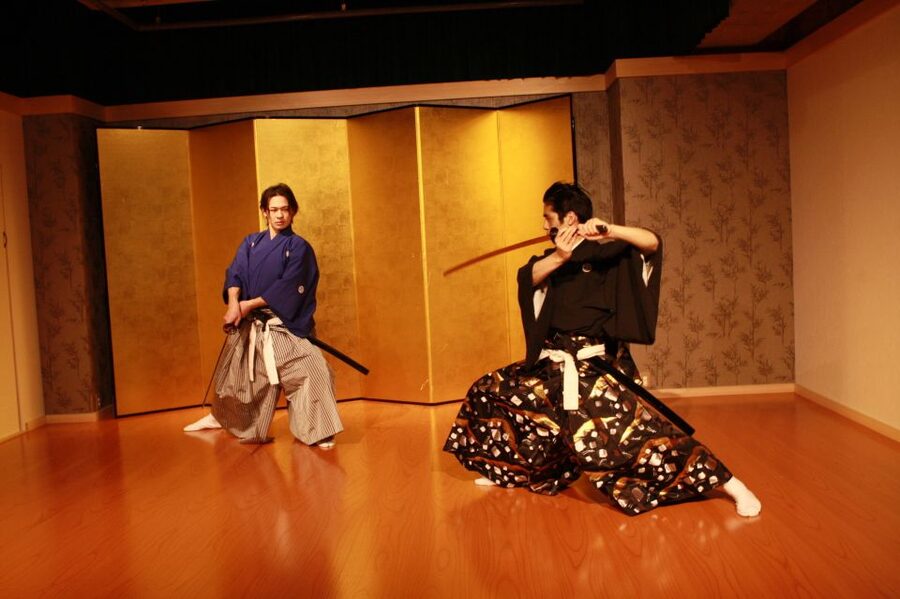
Kenbu is a traditional sword dance linked with samurai culture. It uses the sword as a tool of expression rather than simply as a weapon. Performers move through formal stances, turns, cuts, pauses, and gestures while following poems associated with samurai preparing for battle.
That difference matters. If you book this expecting choreographed sword duels from a film, you may find the pace slower and the mood more formal than expected. The appeal is in the care of each movement. A sword is drawn gradually, held with purpose, and swung as part of a larger story.
The performance reaches back more than 700 years to Japan’s feudal period. Short explanations introduce the customs and values behind each piece, with stories linked to the period from the 12th to the 19th centuries. You are not simply watching people wave swords. You are being shown how a cultural practice uses movement to recall people, battles, beliefs, and moral duties.
More Cultural Shows in Japan
- Kyoto Gion Cultural Walk & Geisha Show with Dining Options
★ 5.0 · 518 reviews - Kyoto Gion Cultural Walk & Geisha Show with Dining Options
★ 5.0 · 483 reviews - Tokyo: Traditional Japanese Performing Arts Show and Dinner
★ 4.5 · 99 reviews
Arriving at the Kyoto theater
The Samurai Kenbu Theater is in central Kyoto, close to the Sanjo area. It is about a four-minute walk from Sanjo Keihan Station on the Kyoto City Subway and about five minutes from Sanjo Station on the Keihan Main Line.
Give yourself enough time to find the entrance and arrive 5 to 15 minutes before the start. One early booking described the theater as a little hard to find, so do not cut the timing too close. You should go directly to the venue rather than plan to wait there for a long time.
At the entrance, you take off your shoes, following local custom. This is a small detail, but it helps set the tone. You are leaving the busy city street and entering a performance room where the floor, seating, and atmosphere follow Japanese practice.
There is no room for large luggage or travel bags. The theater also has no waiting room, and people without appointments cannot wait inside. If you are carrying a suitcase, arrange storage before arriving.
The opening lesson on samurai customs
The experience begins with an introduction to Kenbu. An instructor explains the history and techniques in English and Japanese, giving you the basic ideas needed to follow the performance.
This introduction is especially useful because Kenbu movements can look abstract at first. A formal turn or a carefully held sword may seem simple until you understand that it represents a particular feeling, duty, or moment in a story. The narration helps you watch for those details.
The show also discusses the responsibility of carrying a samurai sword. That subject gives the sword a place in social and moral life, not just a practical role in combat. The presentation touches on Bushido and the lasting effect of samurai ideals on Japanese culture.
The English is intended to make the material accessible, but the amount of information can vary in clarity for different listeners. One booking found the story explanations a little difficult to follow even while praising the performance itself. If your English listening skills are still developing, focus on the movement and use the visual examples to fill in the gaps.
Watching traditional and newer Kenbu pieces
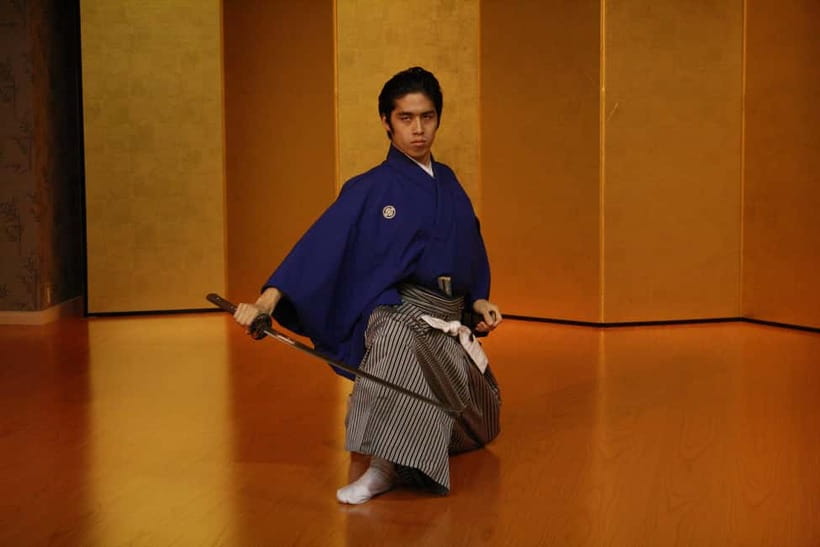
After the introduction, you see a series of Kenbu demonstrations. Each piece comes with a short explanation, so the show feels like several connected cultural stories rather than one long dance.
The performers use the sword in complex patterns. They may turn, step, draw, pause, and direct the blade through the air while following a poem. The result can be graceful and quiet, then suddenly forceful. The contrast is part of the art. A controlled movement can carry more weight than a rapid exchange of blows.
The program includes traditional-style Kenbu and newer-style Kenbu. That mix helps show that the practice is not frozen in the past. The performers are preserving an old form while also presenting it to a modern audience.
The show can include several performers, and the compact theater may create an intimate setting. A past booking described a very small audience, around eight people, which made the presentation feel close and personal. Group size can vary, but the format is clearly more focused than a large commercial stage production.
The stories may include serious moments, but the performers also use humor at times. One piece involved a character who was supposed to die adding comic touches to the scene. That lighter tone keeps the hour from becoming overly solemn, especially for families and younger viewers.
More Dance Shows in Japan:
- OSAKA NIGHT FUSION Japanese Taiko Kabuki Samurai Dance Show
★ 4.8 · 155 reviews - Tokyo: Authentic Japanese Dance Show ticket by professionals
★ 4.7 · 17 reviews - Seville: Live Flamenco Dancing Show Ticket at the Theater
★ 4.7 · 16,396 reviews - Bali: Uluwatu Kecak and Fire Dance Show Entry Ticket
★ 4.2 · 5,189 reviews
The folding fan and the meaning of gesture
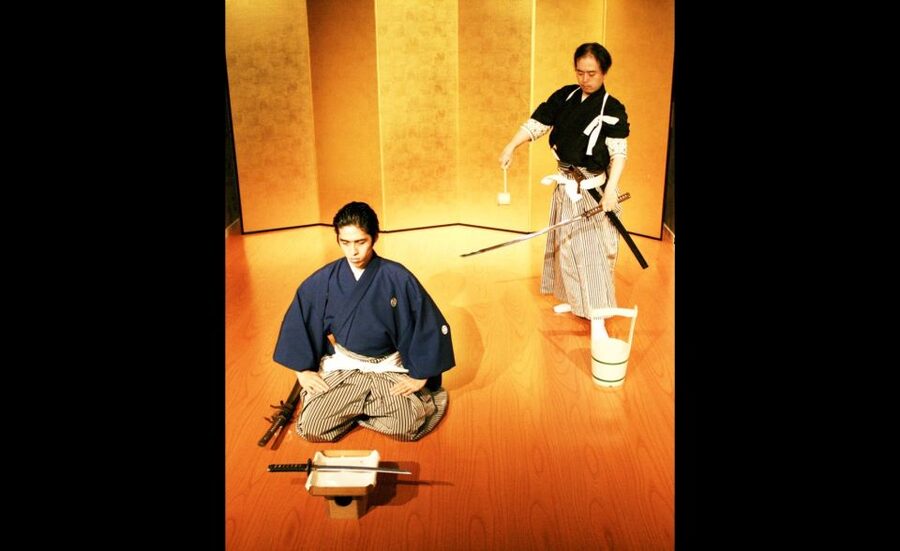
The sword gets most of the attention, but the folding fan is an important part of the performance. You may see fan techniques during the demonstration, and if the schedule allows, you may also learn how to use one.
The fan can suggest rank, mood, direction, or action through a small gesture. In Kenbu, the object is not just a prop. It adds another layer to the storytelling and gives the performer a different way to shape the space.
This is one reason the show works well for people who want more than a simple sword demonstration. You see how samurai-themed performance combines music or poetry, costume, movement, and symbolism. The fan lesson is not guaranteed if time runs short, so treat it as an added possibility rather than the main reason to book.
The short sword lesson after the show
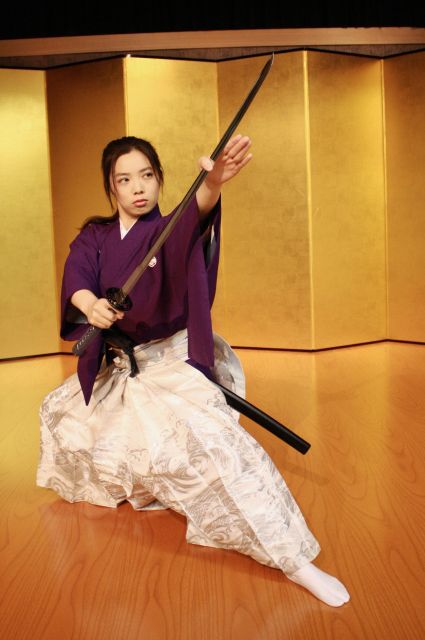
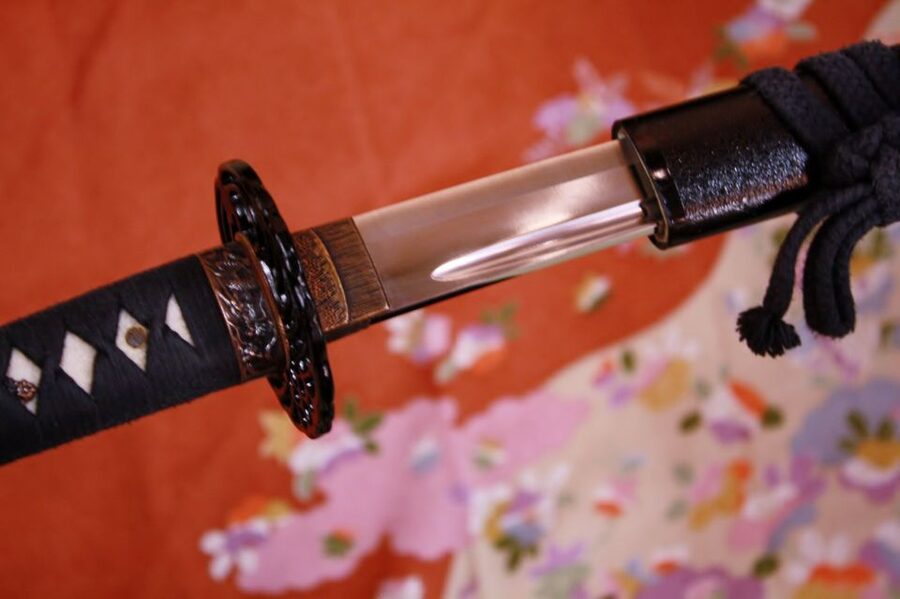
The most interactive part begins after the formal performance. You can hold a sword, slowly draw it from its scabbard, grip it as instructed, and make gentle movements under the teacher’s direction.
The lesson begins carefully, then may become more forceful as you gain confidence. This is not a combat class, and you are not being trained to fight. It is a brief introduction to posture, control, and the physical care needed to handle a sword properly.
That short practice changes how you view the performers. From the audience, their swings appear effortless. Once you hold a katana and try to keep your stance, grip, and movement under control, you get a quick sense of the discipline involved.
The instructors keep this part friendly and light. Several bookings praised the humor and kindness used to put people at ease. You may also practice a basic thrusting movement, called tsuki, and learn a few simple stances or shouted words. The exact sequence can vary, and one booking found the lesson a little less organized than the dance itself.
If there is time, you may also handle a folding fan. Children can take part, but the adults in the group are likely to enjoy this portion just as much. A family with a three-year-old found the experience suitable, though very young children may need close supervision around the props and instructions.
Photos, cameras, and the best moment to pose
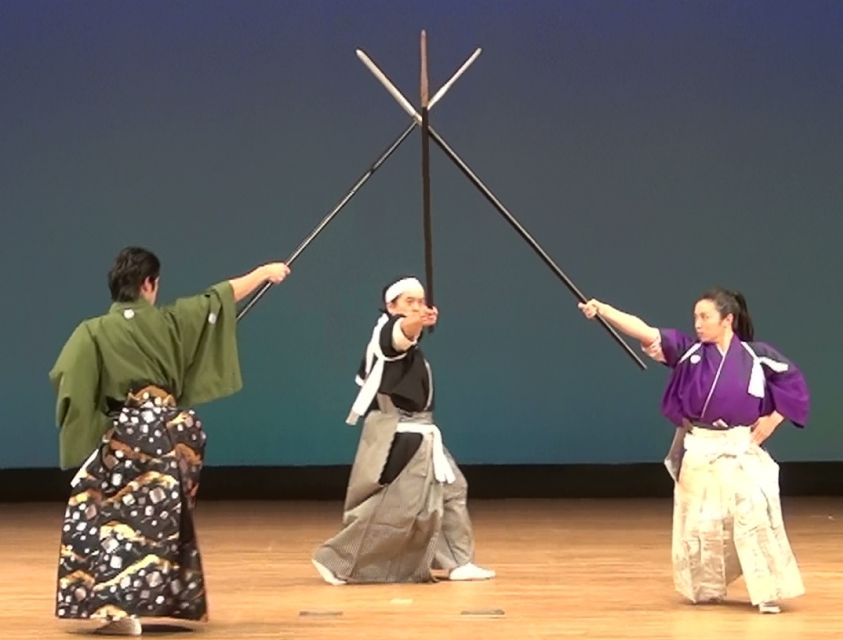
You cannot take photos or record video during the performance. This rule protects the atmosphere and keeps screens from distracting you or the performers.
After the show, the performers return for photographs. You can pose with the sword and, depending on the arrangements, take pictures with the performers in costume. Staff can help take photos for you, which is useful if you are attending alone or want a picture of the whole group.
Plan your camera use for this final part. Do not expect to capture the sword dances as they happen. The dedicated photo time is a fair trade, since it lets you watch the performance without holding a phone up throughout the show.
Is one hour enough for the experience?
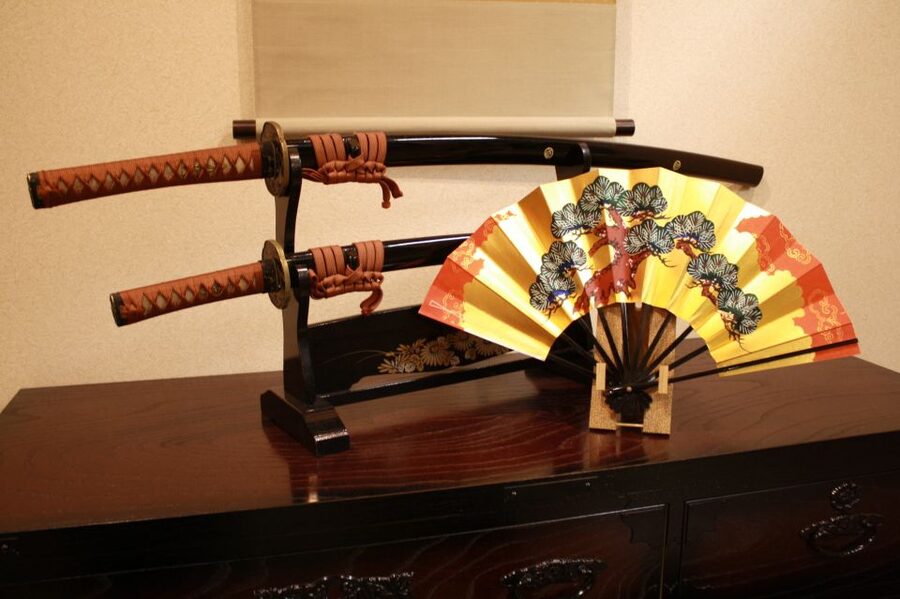
The activity lasts one hour, including the introduction, demonstrations, and short lesson. That length works well in a Kyoto sightseeing day. You can fit it between visits to nearby areas without giving up half a day.
Some people may find the hour passes quickly, especially once the sword lesson begins. Another booking felt the presentation could have been five to ten minutes shorter. That difference comes down to preference. If you mainly want to try a katana, the historical explanations may feel long. If you care about Japanese culture and performance, the context makes the sword work more meaningful.
The format also avoids a common problem with short cultural shows: a quick photo opportunity with little explanation. Here, the demonstration and the lesson are tied together. You first hear why the movements matter, watch experts perform them, then try a small part yourself.
What the $32 price includes
At $32 per person, the price covers theater entry, the Kenbu show, and the short sword lesson. Food, drinks, and hotel transportation are not included.
I consider the price reasonable if you value cultural explanation and participation, not just stage entertainment. You are paying for a one-hour performance led by trained practitioners, plus a controlled introduction to drawing and moving with a sword. The included photo period adds value, particularly for families and visitors who want a lasting souvenir of the activity.
The value is weaker if your main goal is an extended martial arts class or a large-scale action show. The lesson is brief, and the performance emphasizes ceremony, grace, and storytelling. Before booking, decide if that sounds more appealing than a louder, faster sword show.
Who will enjoy this most
I would recommend Samurai Kenbu to first-time visitors who want an accessible introduction to samurai culture. The English narration, short format, and visual storytelling make it easier to follow than a performance presented without explanation.
It is also a good choice for:
- Families looking for an activity that includes children and adults
- History fans interested in the cultural role of the samurai
- Visitors who want a hands-on experience without committing to a longer class
- Couples and small groups who enjoy traditional performance
- Anyone curious about Japanese arts beyond temples, gardens, and food
You may want to choose another activity if you need nonstop action, a large theater, or a full martial arts workshop. The stage is intimate, and the sword movements are deliberate. The strength of the experience is its focus and meaning.
Practical details before you reserve
The theater is wheelchair accessible. Instructors work in English and Japanese, and confirmation is provided when you book.
Arrive 5 to 15 minutes early. Wear something comfortable enough for sitting and making a few controlled movements during the lesson. You will remove your shoes, so shoes that are easy to take off and put back on can make the process simpler.
Do not arrive with large luggage, and do not plan to wait inside before your scheduled time. You should also avoid attending under the influence of alcohol, since the activity includes handling a sword.
Cancellation is flexible up to 24 hours before the start for a full refund. You can also reserve now and pay later, which helps if your Kyoto schedule is still changing. If you need to cancel, you must complete that process yourself through GetYourGuide.
Should you book Samurai Kenbu?
Book it if you want a compact, well-explained look at samurai culture with a real chance to hold a sword. The best parts are the careful performances, the English introductions, and the friendly lesson at the end. You leave with a better sense of how much control lies behind each graceful movement.
Skip it if you are expecting a full sword-fighting show or a long training session. For everyone else, $32 buys a distinctive Kyoto activity that is educational, interactive, and easy to fit into a busy day.
FAQ
Where does the Samurai Kenbu show take place?
It takes place at the Samurai Kenbu Theater in Kyoto, on Honshu, Japan.
How long does the experience last?
The activity lasts one hour.
How much does it cost?
The listed price is $32 per person.
What does the ticket include?
The ticket includes entry to the Samurai Kenbu Theater, the Kenbu show, and a short sword lesson.
Is the narration available in English?
Yes. The activity is conducted in English and Japanese, and the traditional stories are narrated in English.
Can I hold a samurai sword?
Yes. After the show, you can hold a sword, draw it from its scabbard, and practice gentle movements under instruction.
Can I take photos during the performance?
No. Photos and videos are not permitted during the show. You can take photos after the performance during the designated photo time.
Can I learn to use a folding fan?
You may have the opportunity to learn fan techniques if there is enough time after the main activities.
How early should I arrive?
Arrive 5 to 15 minutes before the activity begins.
Is the theater wheelchair accessible?
Yes, the activity is wheelchair accessible.
More Traditional and Cultural Shows in Japan
- Japanese Traditional Music Show in Tokyo
★ 5.0 · 72 reviews - Traditional Japanese Music ZAKURO SHOW in Tokyo
★ 5.0 · 67 reviews - Tokyo: Traditional Geisha Experience Show & Japanese Dinner
★ 4.2 · 59 reviews - Traditional Japanese Comedy, Juggling & Magic Live Show in Tokyo
★ 5.0 · 37 reviews
Just added around Japan
- Authentic Kabuki Transformation & Mini Performance at Aioiza Gifu★ 4.5 · 3 reviews
- Kabuki Talk★ 5.0 · 10 reviews
- Tokyo: English Standup Comedy Night★ 5.0 · 4 reviews
- Experience the Asakusa Kabuki Opera Show!★ 5.0 · 99 reviews
- Tokyo: Taishu Engeki Show with Kimono and Sword Lesson★ 5.0 · 12 reviews
- Tokyo: Traditional Geisha Experience Show & Japanese Dinner★ 4.2 · 59 reviews
- Tokyo: Rainbow Bridge Day Cruise Show Unlimited Soft Drinks★ 4.5 · 86 reviews
- Tokyo: Taiko Drum Experience in Kabukicho with Dinner★ 5.0 · 3 reviews
Kyoto Shows, compared.
Kyoto Gion Cultural Walk & Geisha Show with Dining Options
Read our review →Kyoto Gion Cultural Walk & Geisha Show with Dining Options
Read our review →
Gion Walking Tour, Geisha Show and Japanese Game in Kyoto
Read our review →
Browse the lists this show appears in