
Review · KYOTO
Imagine Noh: Kyoto’s Legendary Noh & Kyogen Performances
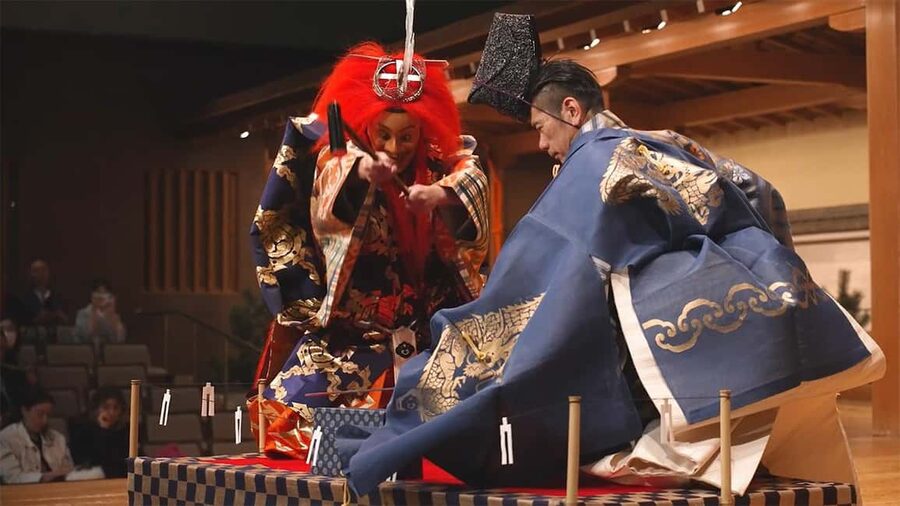
Kyoto’s noh theater can seem remote at first: masked figures, slow movement, old Japanese stories, and music that asks you to listen closely. Imagine Noh makes this traditional art far easier to approach, with English introductions before the performances and a chance to speak with the actors afterward.
I like two things in particular. First, the program pairs solemn noh with the broad comedy of kyogen, so the 90 minutes has both weight and laughter. Second, the certified Kyoto City Visitors Hosts give you the cultural key before each scene. The main consideration is pace. Noh is deliberately slow and formal, so this is not a fast-moving stage show.
Key points
- English guidance before the curtain: Certified Kyoto City Visitors Hosts explain the stories, characters, masks, and style in accessible terms.
- Two sides of Japanese theater: Kyogen brings comic scenes from everyday life, while noh presents deities, spirits, legends, and noble figures.
- Professional actors in traditional dress: Expect skilled performers, carved masks, chant, music, and precise choreography.
- A short, focused program: The experience lasts 1.5 hours, a manageable introduction for first-time viewers.
- A rare after-talk: You can hear directly from the performers after the show, adding useful context to what you have just seen.
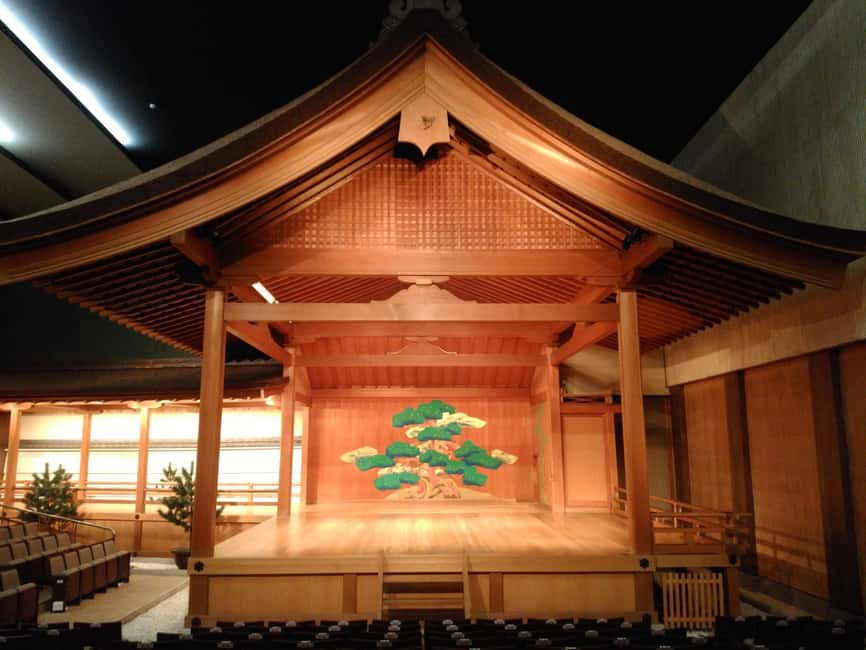
- Two possible Kyoto venues: Dates are held at Kyoto Kanze Noh Theater or Kongo Noh Theater, depending on the program.
Why Imagine Noh works for first-time viewers
Noh is one of Japan’s oldest theatrical forms, and it was not designed to explain itself quickly. A performer may take several measured steps, pause, turn a mask slightly, and communicate a change in mood without a large gesture. If you walk in expecting a modern play, the restraint may feel puzzling.
That is why the English introduction matters. Before the performance, a certified Kyoto City Visitors Host sets out the basic story and gives you a way to watch. You are not left guessing who is a spirit, why a mask changes meaning, or what the chant and movement are doing.
The program also includes kyogen, a comic form traditionally performed between noh plays. Its humor comes through spoken dialogue, lively behavior, and familiar situations rather than elaborate scenery. That contrast helps you notice the special character of both forms. Noh asks you to watch silence, posture, and ritual. Kyogen gives you an immediate laugh.
The result is a compact introduction rather than a full evening of theater. At 90 minutes, it suits a Kyoto schedule filled with temples and shrines. You get enough time to grasp the style without committing to a long, demanding performance.
A few more shows around Japan worth a look
- Mt Fuji & Hakone Cruise, Drum Show Bullet Train 1 Day from Tokyo
★ 4.0 · 7,413 reviews - Tokyo: Sumo Show Experience with Chicken Hot Pot and a Photo
★ 4.8 · 6,678 reviews - Tokyo: Sumo Show and Dining Experience
★ 4.8 · 2,742 reviews
The 90-minute program, from introduction to after-talk
The program begins with an English explanation from a certified guide. This is not just a basic welcome. The hosts have training in Kyoto’s heritage and traditional theater, so the introduction can help you understand the place of noh and kyogen within Japanese culture.
You will likely receive context about the play, the characters, and the difference between the two forms. That preparation is useful because noh often draws on legends, spiritual encounters, and famous figures. The scenes are excerpts from established plays, not newly written tourist sketches.
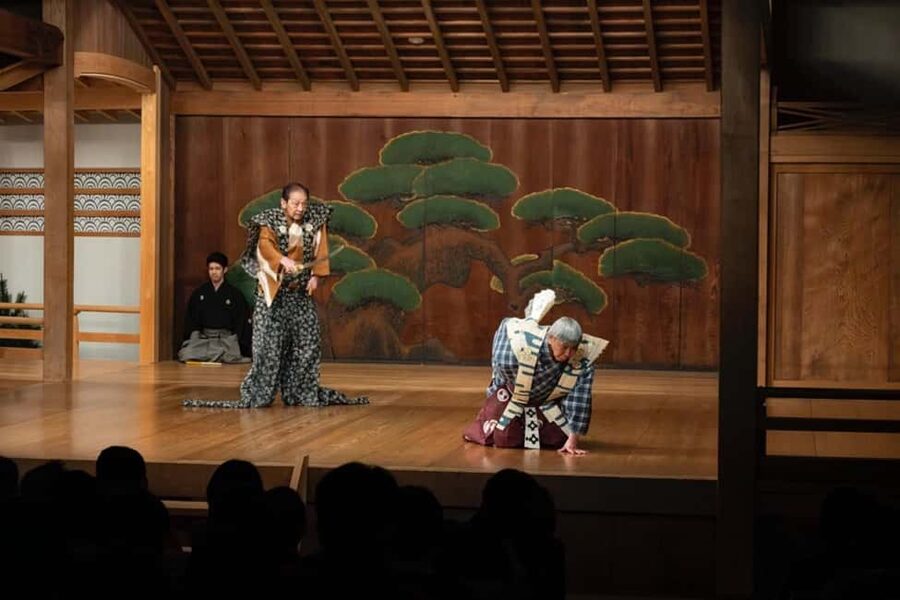
The performance then moves between comedy and noh. A kyogen scene such as Bonsan offers a lighter start or pause, with humor built around people and everyday behavior. The exact order can depend on the date, but the goal is clear: let you feel the comic timing of kyogen, then shift your attention toward the spare beauty of noh.
Featured noh works include Kokaji, a legendary story, Shari, with mythological themes, and Kamo, known for its poetic character. You should check the date and venue before booking, since the program is not identical every time.
After the performances, the after-talk gives you a chance to connect the art onstage with the people who practice it. This is one of the strongest parts of the format. Noh can seem distant when seen only from the audience, but hearing from the performers can make the work feel like a living practice rather than a museum display.
The after-talk is also where your questions matter most. If you wondered about a mask, a gesture, the chant, or the role of the musicians, this is the natural moment to learn more. The provided information does not specify the length or exact format of the discussion, so treat it as an included opportunity rather than a guaranteed extended question session.
Watching masks, costumes, chant, and movement
Noh depends on control. The actors do not rush to show emotion. A mask can appear to change mood as the performer tilts the head, even though the carved face itself remains fixed. Small changes in angle and light do much of the work.
The costumes add formal beauty, but they are not mere decoration. They help identify status, character, and mood. The combination of costume, chant, music, and dance creates a stage language that is quite different from Western drama.
You will also see why an introduction is important. Without one, a scene featuring a deity or spirit might look like an abstract ritual. With a little preparation, you can follow the broad story and notice how the performer turns movement into meaning.
The program is designed for English speakers and requires no prior knowledge of noh or kyogen. That does not mean every detail will be instantly clear. Noh uses old stories and a traditional style, so you may still need to watch patiently. The reward is learning to notice things that a louder, faster show might hide.
The comic relief of kyogen
Kyogen gives this experience its practical balance. Noh can be solemn and poetic, while kyogen is direct, physical, and funny. Its characters often deal with ordinary problems, misunderstandings, foolish plans, or exaggerated behavior.
That everyday quality makes kyogen easier to enter. Even if you do not catch every word, the comic situations and movement can carry the scene. The laughter also resets your attention before the more serious noh performance.
I like this pairing because it prevents the program from becoming too austere. A visitor who is unsure about traditional theater gets a clear contrast. You can enjoy the humor first, then appreciate how much more controlled and symbolic noh can be.
Still, do not expect a stand-up routine or a modern comedy show. Kyogen belongs to the same old theater tradition and may use conventions that need explanation. The English introduction helps, but the humor may not always land in exactly the same way for every audience.
Same place, a different night out:
- Tokyo: Japanese Dance Cabaret Theater Asakusa-Kaguwa Ticket
★ 4.8 · 2,270 reviews - the SUMO show
★ 5.0 · 1,960 reviews - Tokyo Shinjuku Sumo Show & Experience with Photo
★ 5.0 · 1,750 reviews - Tokyo: Samurai Restaurant Show Ticket with 2 Drinks
★ 4.5 · 1,307 reviews
Choosing between the two Kyoto theaters
The venue changes by date, so you should check the schedule before paying. Performances are listed at Kyoto Kanze Noh Theater on November 12, November 27, and December 4. The November 20 program is at Kongo Noh Theater.
Both names matter to anyone planning a Kyoto day. You do not want to assume one theater and arrive at another. The meeting point is about a five-minute walk from Higashiyama Station on the Tozai Line, at approximately 35.011295318603516, 135.78152465820312.
The venue information also affects how you plan the rest of your day. Higashiyama is convenient for sightseeing, but you should allow time to reach the theater and find your seat without rushing. Comfortable clothing is recommended for theater seating.
The experience is wheelchair accessible, which is useful for visitors who need step-free access. Baby strollers and baby carriages are not allowed, and children under five cannot enter. Children aged 6 to 18 attend free but still need a reserved seat, so book them into the program rather than assuming they can simply walk in.
Is $114 a fair price?
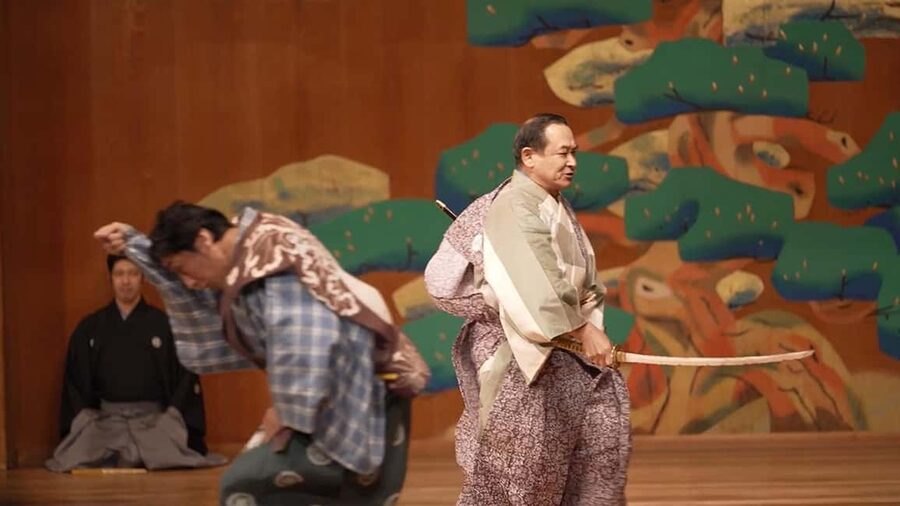
At $114 per person, this is not a low-cost ticket for a 90-minute performance. You are paying for more than a seat, however. The price includes English guidance from certified cultural hosts, professional noh and kyogen performances, access to a traditional theater setting, and an after-talk with performers.
The value depends on what you want from Kyoto. If you only want a quick show with familiar entertainment, the price may feel high. You could find other cultural performances that are easier to understand without an introduction.
If you want a serious first look at one of Japan’s oldest performing arts, the calculation is better. Noh is difficult to approach on your own, especially when the program uses traditional stories and little spoken explanation during the performance. The guide helps you make sense of what you see, and the after-talk adds something a standard ticket may not provide.
The rating available for this experience is 5 out of 5, based on two reviews. One verified booking from the United States described it as an excellent introduction to traditional Japanese theater and highly recommended it. That fits the program’s main strength: it is built for newcomers, not only for people who already know noh.
Because the sample of ratings is small, I would not use it as the only reason to book. Instead, judge the price against your interest in Japanese culture, the date of the show, and the quality of having English context built into the visit.
Who should book this performance?
I would recommend Imagine Noh to adults and older children who want a calm, cultural evening rather than a large-scale stage spectacle. It is especially useful if you have visited temples and shrines in Kyoto and want to understand another part of the city’s traditional life.
It suits you if you enjoy history, myth, costume, music, and performance styles that reward close attention. It also works well for someone who has tried Japanese theater before but wants a better explanation of noh and kyogen.
The program is less suitable for very young children. Under-fives are not admitted, and even older children may find the slow pacing demanding. Children aged 6 to 18 can attend free, but you must reserve their seats.
You should also think about your own attention span. If you need constant action, elaborate scenery, or a clear plot delivered through everyday speech, this may test your patience. If you can watch quietly and let the guide give you the framework, you have a better chance of enjoying it.
Practical details that affect your visit
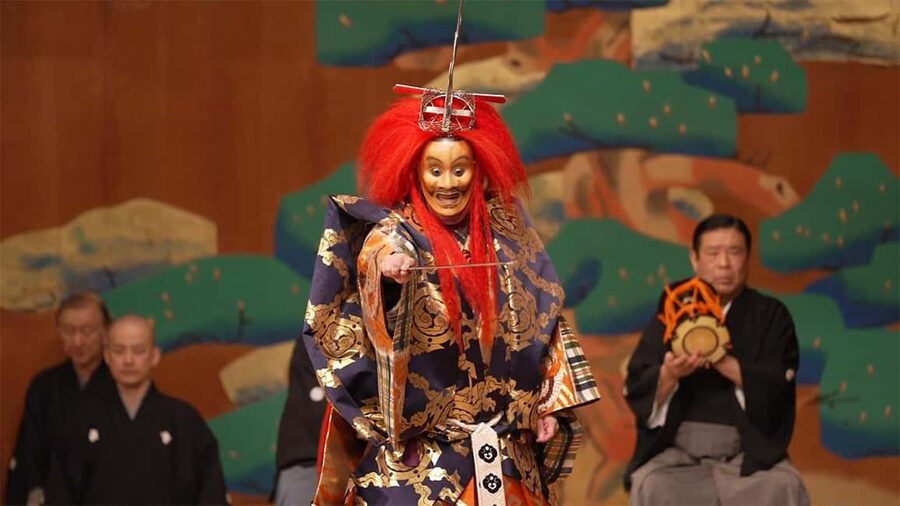
The activity lasts 1.5 hours, and starting times vary. Check the available date and time before you organize dinner, a temple visit, or another ticketed activity.
You skip the ticket line, and the live guidance is in English. The program is made for English speakers, so you do not need to study noh before arriving. A little reading about the featured play may help, but it is not required.
Indoor smoking is not allowed. Alcohol and drugs are prohibited, and audio recording is not permitted. These rules fit the quiet, formal setting and help protect the performance for everyone in the room.
The activity is non-refundable, so check the date, theater, age rules, and schedule carefully before booking. Since the venue varies, confirm the location rather than relying only on the general meeting point near Higashiyama Station.
My verdict on Imagine Noh
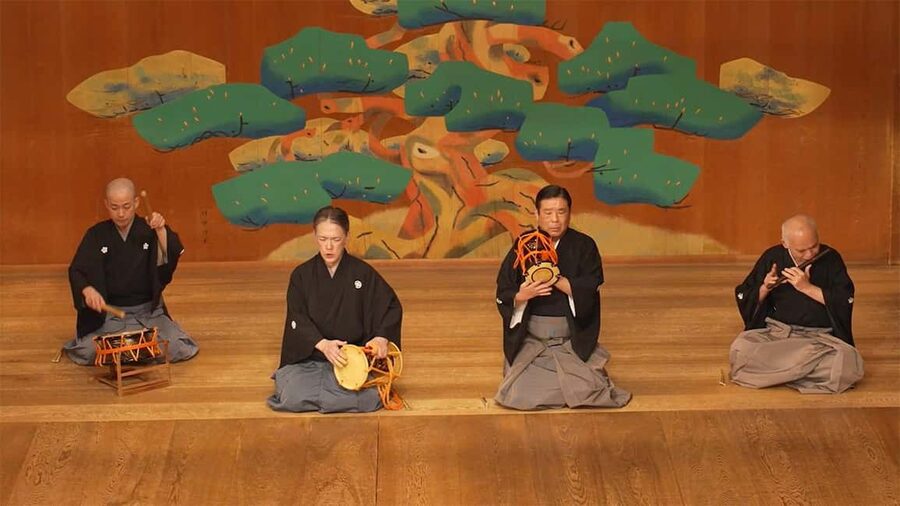
Imagine Noh gives you a useful bridge into a demanding art form. The English introductions make the stories easier to follow, the kyogen adds welcome humor, and the professional noh scenes show the quiet skill of masks, costume, chant, and controlled movement.
I would book it if you want more than a photo stop in Kyoto and are willing to give traditional theater your full attention. The $114 cost makes most sense when you value the explanation and after-talk as much as the performance itself.
I would skip it if you want a casual, high-energy show or if your schedule leaves no room for checking the exact venue and program. For the right audience, though, this is a focused way to meet Kyoto’s performing traditions without needing prior knowledge.
FAQ
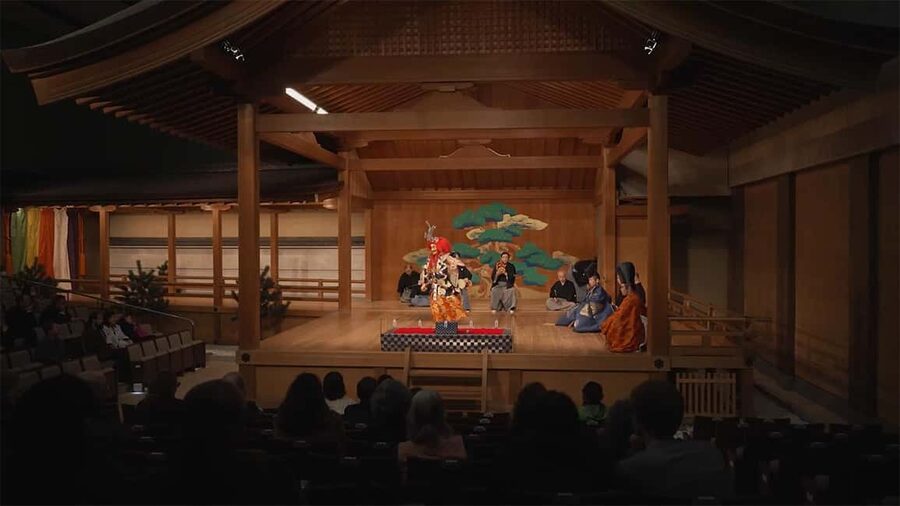
How long does Imagine Noh last?
The experience lasts 1.5 hours.
Where is the meeting point?
The meeting point is about a five-minute walk from Higashiyama Station on the Tozai Line. The listed coordinates are 35.011295318603516, 135.78152465820312.
Which languages are available?
The live guide and program support are in English.
Do I need prior knowledge of noh or kyogen?
No. The program is designed for English speakers and includes introductions by certified Kyoto City Visitors Hosts.
Which plays may be included?
Featured works include the kyogen piece Bonsan and the noh plays Kokaji, Shari, and Kamo. The program can vary by date.
Where is the performance held?
The venue varies by date. Kyoto Kanze Noh Theater hosts programs on November 12, November 27, and December 4. Kongo Noh Theater hosts the November 20 program.
Can children attend?
Children under five are not allowed to enter. Admission is free for ages 6 through 18, but they still need a booked seat.
Is the theater wheelchair accessible?
Yes, the activity is listed as wheelchair accessible.
Can I record the performance?
Audio recording is not allowed. Smoking indoors, alcohol, and drugs are also prohibited, and baby strollers or carriages cannot be brought in.
Just added around Japan
- Authentic Kabuki Transformation & Mini Performance at Aioiza Gifu★ 4.5 · 3 reviews
- Kabuki Talk★ 5.0 · 10 reviews
- Tokyo: English Standup Comedy Night★ 5.0 · 4 reviews
- Experience the Asakusa Kabuki Opera Show!★ 5.0 · 99 reviews
- Tokyo: Taishu Engeki Show with Kimono and Sword Lesson★ 5.0 · 12 reviews
- Tokyo: Traditional Geisha Experience Show & Japanese Dinner★ 4.2 · 59 reviews
- Tokyo: Rainbow Bridge Day Cruise Show Unlimited Soft Drinks★ 4.5 · 86 reviews
- Tokyo: Taiko Drum Experience in Kabukicho with Dinner★ 5.0 · 3 reviews
Kyoto Shows, compared.
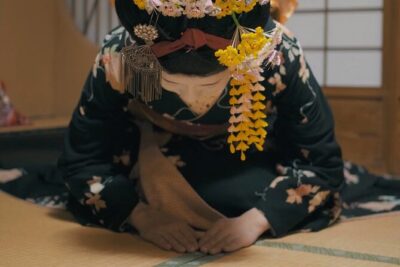
Kyoto Gion Cultural Walk & Geisha Show with Dining Options
Read our review →Kyoto Gion Cultural Walk & Geisha Show with Dining Options
Read our review →
Gion Walking Tour, Geisha Show and Japanese Game in Kyoto
Read our review →
Browse the lists this show appears in