
Review · KYOTO
Maiko Dance and Tea Ceremony on a Noh Stage in Kyoto
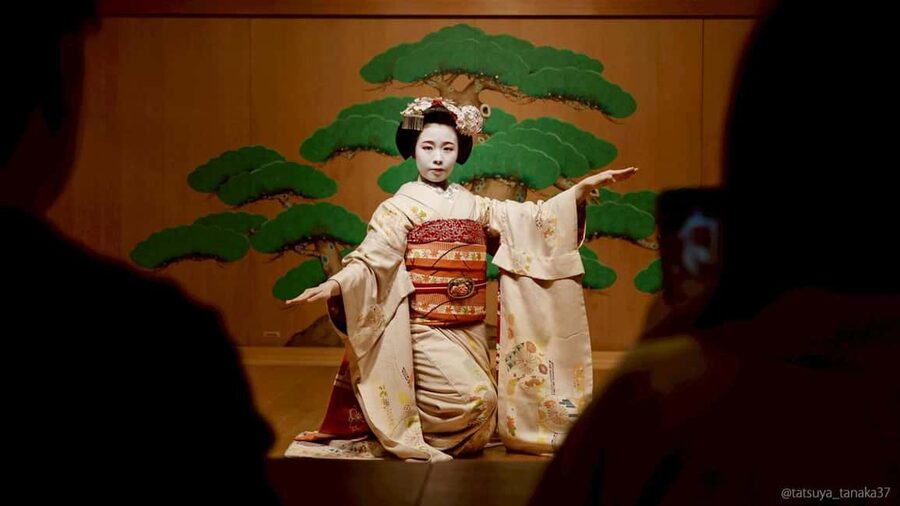
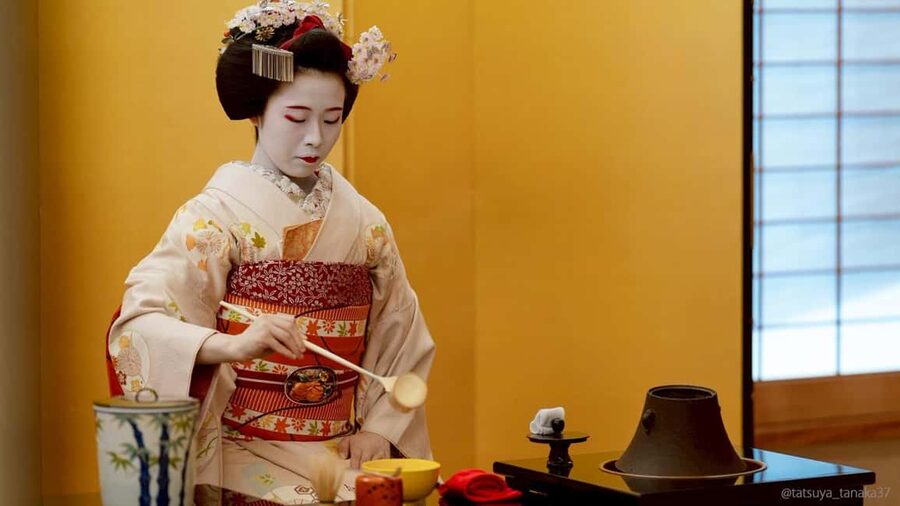
The striking part of this Kyoto experience is the setting: a maiko dance on an authentic Noh stage, followed by a tea ceremony in the same dignified space. This is not a quick photo stop. You sit indoors, remove your shoes, watch a traditional performance, and see matcha prepared with careful, formal movements.
I like the close scale of the event and the chance to pair the dance with seasonal Japanese sweets and freshly prepared matcha. I also like that English-speaking staff help you follow what is happening, which matters when the gestures and customs are unfamiliar. The main consideration is the price, $141 per person, for a program lasting about one to one and a half hours.
Key points at a glance
- A maiko performs on a real Noh stage: The stage gives the dance a formal setting that feels very different from a standard theater show.
- Tea ceremony follows the dance: You receive matcha and seasonal sweets prepared as part of the presentation.
- English support is available: A professional English interpreter guide helps explain the experience.
- Photos and conversation are included: You have time to take photos and chat with the maiko in the intimate setting.
- Shoes come off indoors: Wear socks and arrive at the first-floor reception 15 minutes early.
- The experience is short and focused: Plan on 60 to 90 minutes, with no private transportation included.
A maiko performance on Kyoto’s Noh stage
The event begins in the quiet atmosphere of Kurochiku Tensho-kan, a Kyoto venue with an authentic Noh stage. Noh theater is known for its restraint, formal movement, and careful use of space. Even without knowing the full tradition, you will notice that the stage changes the mood of the performance. It gives the maiko’s dance a serious, ceremonial frame.
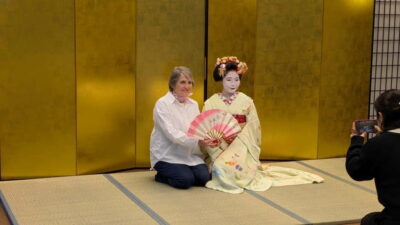
A maiko is an apprentice geisha. Her appearance, movements, dance, and hospitality all belong to a highly formal Kyoto tradition. Here, the setting lets you observe that tradition at close range rather than from the back of a large auditorium.
I would not expect a long stage production with several acts. The program is compact, lasting from one hour to 90 minutes, and centers on the dance and tea ceremony. That is a good fit if you want one polished cultural experience between sightseeing stops. It may feel too brief if you are hoping for a full evening of entertainment.
The graceful pace is part of the point. The dance is not designed as a fast spectacle. You are being asked to notice controlled gestures, posture, costume, and the relationship between performer and stage. A quiet room helps those details register.
Other shows people book around Japan:
- Mt Fuji & Hakone Cruise, Drum Show Bullet Train 1 Day from Tokyo
★ 4.0 · 7,413 reviews - Tokyo: Sumo Show Experience with Chicken Hot Pot and a Photo
★ 4.8 · 6,678 reviews - Tokyo: Sumo Show and Dining Experience
★ 4.8 · 2,742 reviews
Watching the dance with English interpretation
English-speaking staff are available, and the experience includes a professional English interpreter guide. That support is important because a maiko performance can be beautiful without being immediately clear. The interpreter gives you a way to understand the customs and presentation instead of simply watching without context.
The listed tour languages are English and Japanese. You should still expect some of the atmosphere to come from silence and observation rather than constant explanation. That suits the subject. A tea ceremony and traditional dance lose some of their character if every moment is filled with commentary.
The compact format also makes this a practical option for people who want cultural context without committing to a full guided day. You can fit it into a Kyoto itinerary, though you should leave enough time to reach the meeting point since the exact location may vary by booking option.
There is no named guide provided for this experience, so you should not expect to request a particular interpreter. The useful detail is that English assistance is part of the arrangement, not something you need to organize separately.
Matcha, seasonal sweets, and careful ceremony
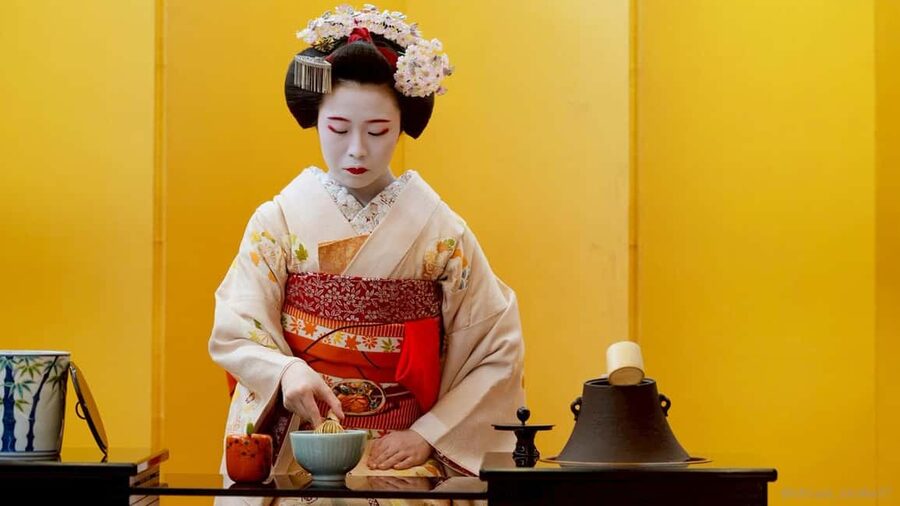
After or alongside the dance, the maiko prepares matcha with refined precision. You receive freshly prepared tea and seasonal Japanese sweets. The sweet is not just a snack. In a tea ceremony, it balances the bitterness of matcha and gives you a small taste of how seasonality shapes Japanese hospitality.
The preparation is worth watching closely. The appeal comes from the measured movements and the calm attention given to each step. You may find that the ceremony feels less like a demonstration and more like a lesson in manners, timing, and presentation.
The information provided does not say that you personally prepare the tea. Plan instead to watch the maiko make the matcha and then enjoy it yourself. If you are new to matcha, expect a strong, distinctive flavor rather than the sweet taste of a café drink.
This is also one of the best reasons to choose the event over a dance-only performance. The tea service gives you a sensory link to what you have just seen. You hear the room settle, watch the preparation, taste the matcha and sweet, and take in the visual details of the venue and costume.
Time for photos and conversation
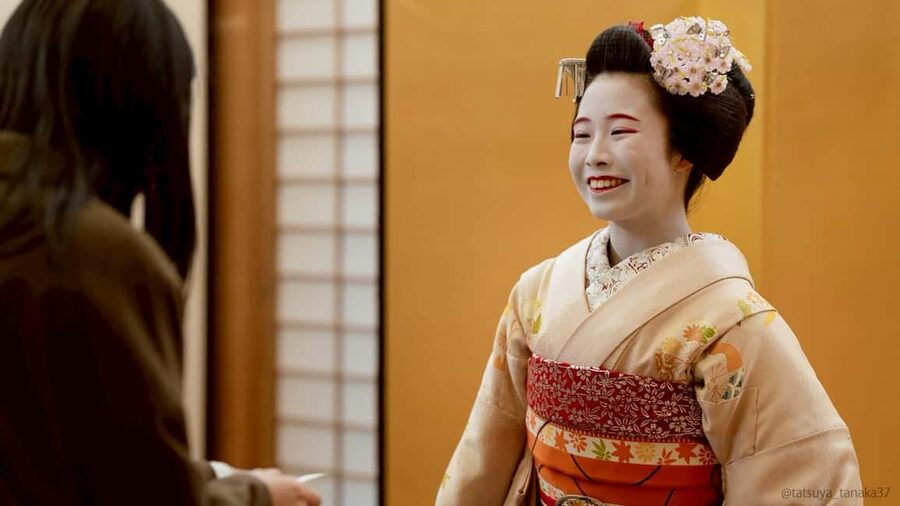
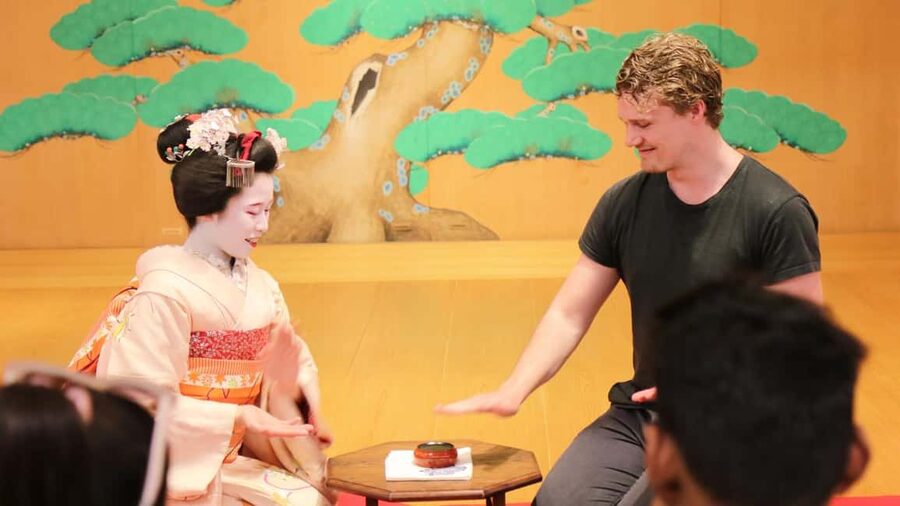
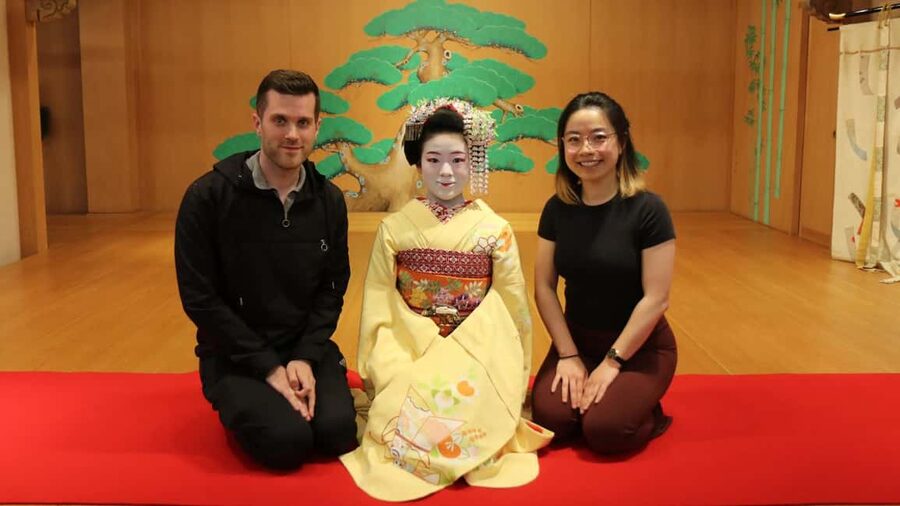
The experience includes the chance to take photos and chat with the maiko. That personal time changes the character of the event. You are not only watching from a distance, but also receiving a brief opportunity to connect with the performer and ask questions.
I would keep your questions polite and focused on the performance or tea ceremony. The setting is intimate and formal, so the best approach is to treat the photo and conversation period as part of the cultural exchange, not as a rushed photo opportunity.
The available information does not specify how many photos you may take, nor does it promise a private session for each person. If getting a particular portrait is important to you, listen carefully to the staff’s instructions and be ready when the photo opportunity begins.
For many people, this will be the most memorable part of the program. You get the visual impact of a maiko in full presentation, then a more direct moment that helps the experience feel personal.
Same place, a different night out:
- Tokyo: Japanese Dance Cabaret Theater Asakusa-Kaguwa Ticket
★ 4.8 · 2,270 reviews - the SUMO show
★ 5.0 · 1,960 reviews - Tokyo Shinjuku Sumo Show & Experience with Photo
★ 5.0 · 1,750 reviews - Tokyo: Samurai Restaurant Show Ticket with 2 Drinks
★ 4.5 · 1,307 reviews
Removing your shoes and settling in
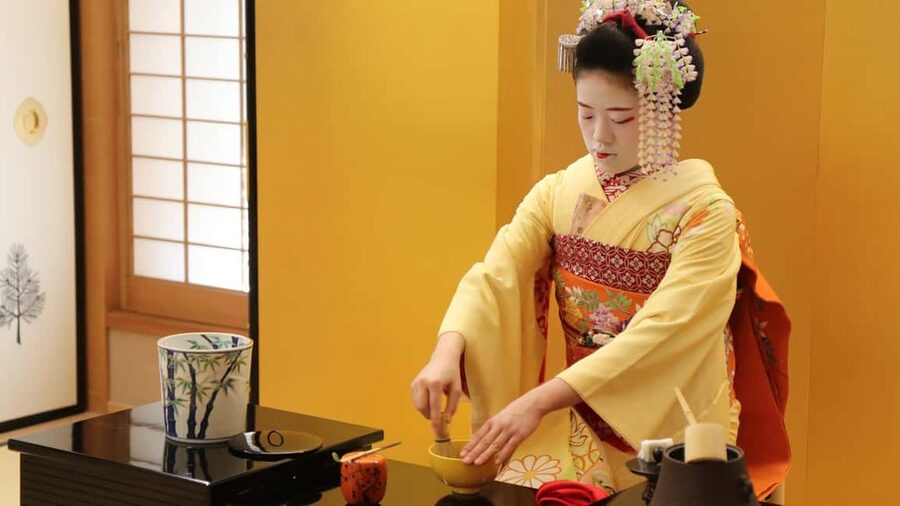
You participate indoors after removing your shoes, so bring socks. This is a small detail, but it matters. You will be sitting in a traditional-style cultural venue, and appropriate socks help you feel comfortable and prepared.
Comfortable seating is arranged so you can relax during the dance and tea service. The exact seating style is not specified, so you should not assume a particular chair, floor cushion, or reserved position. The important point is that the event is arranged for seated viewing rather than standing.
Arrive at the first-floor reception of Kurochiku Tensho-kan at least 15 minutes before the starting time. Meeting arrangements can vary by the option you book, so check your confirmation carefully instead of relying only on a general map pin.
The indoor format is useful in Kyoto, especially if you want a break from walking or changing weather. It also creates a focused atmosphere. You are not moving between several sights, and there is no transport segment to interrupt the program.
What the $141 price covers
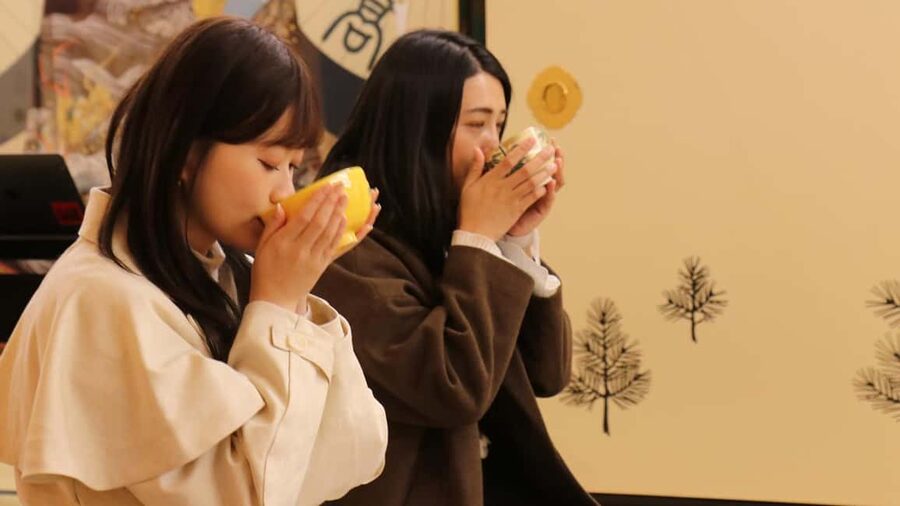
At $141 per person, this is a premium short cultural experience. You are paying for more than a cup of tea. The price includes the maiko’s performance, the tea ceremony, matcha, seasonal sweets, professional English interpretation, use of the Noh stage, the maiko dispatch fee, and a Japanese-patterned handkerchief for each participant.
The value depends on what you want from Kyoto. If you mainly want an inexpensive cultural activity, the price will seem high for 60 to 90 minutes. If you want a polished encounter with a maiko in a formal venue, the combination is harder to arrange on your own.
The Noh stage is especially important to the value. A regular demonstration room would offer the dance, but this historic theater setting gives the experience a stronger sense of place. The English interpreter also saves you from trying to piece together the meaning of the ceremony afterward.
The handkerchief is a small inclusion, not a reason to book by itself. Think of it as a useful keepsake rather than a major part of the package. Private transportation is not included, so you must make your own way to the venue.
Two verified bookings dated October 17 and November 4, 2025, gave the experience five out of five. David from Australia described it as very interesting and entertaining, while Linda from the United States said she thoroughly enjoyed every aspect. Those comments point to the program’s strongest qualities: it is easy to follow, engaging without being loud, and well suited to people who want a cultural activity with both performance and explanation.
The current rating is based on only four reviews, so I would treat the perfect score as encouraging rather than final proof for every type of visitor. Still, the feedback matches the structure of the experience. It has a clear program, English support, and several different elements packed into a short visit.
Who will enjoy this Kyoto experience
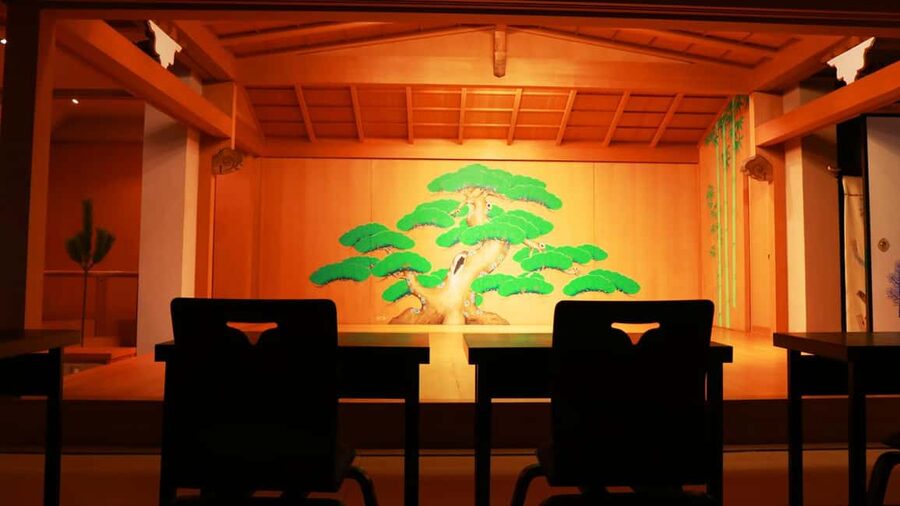
I would recommend this event to you if you want a refined introduction to maiko culture without booking a full evening show. It also suits first-time visitors who want help understanding Japanese customs and couples or small groups looking for a calm cultural outing.
Families with older children may appreciate the short length and visual appeal, though the formal pace may not suit young children who need constant action. The supplied information does not give an age requirement, so check the booking conditions if you are traveling with children.
This is a good choice for anyone interested in photography, traditional performance, tea, or Japanese design. The Noh stage and maiko provide strong visual subjects, while the tea service adds a more hands-on sensory element through tasting and observation.
I would think twice if you dislike quiet performances, indoor cultural programs, or removing your shoes. You may also prefer a longer activity if your main goal is detailed instruction in tea preparation. Here, the maiko prepares the matcha, while you watch, taste, and take part in the surrounding hospitality.
Booking and timing advice
Advance reservations are required. Starting times vary, so check availability before building the rest of your day around the event.
The meeting point may change depending on the option booked. For the stated arrangement, you should arrive at the first-floor reception of Kurochiku Tensho-kan 15 minutes before the start. I would avoid scheduling a distant attraction immediately afterward, since the program can run for the full 90 minutes and Kyoto travel time is easy to underestimate.
You can cancel up to 24 hours in advance for a full refund, and the reserve-now, pay-later option allows you to hold a place without paying immediately. If the event is canceled because too few people book or because of operational reasons, an alternative date or refund will be offered.
These policies make the booking less risky, but they do not remove the need to check your selected option carefully. The meeting point and starting time are the details most likely to affect your day.
Should you book the maiko and tea ceremony?
Book it if you want a short, polished Kyoto experience with a strong sense of place. The combination of a maiko dance, Noh stage, matcha, seasonal sweets, English interpretation, photos, and conversation gives you several ways to connect with Japanese culture in one sitting.
At $141, it is not a bargain activity. The value comes from the setting and access, not from duration. I would choose it over a generic cultural show if you care about the Noh stage and the chance to see the tea ceremony close up.
Skip it if you want a long performance, private transport, or a fully hands-on tea lesson. For the right audience, though, this is a memorable and manageable way to add traditional Kyoto culture to a busy sightseeing schedule.
FAQ
How long does the maiko dance and tea ceremony last?
The experience lasts between one hour and 90 minutes, depending on the scheduled program.
Where does the experience take place?
It takes place indoors on a Noh stage in Kyoto. You should arrive at the first-floor reception of Kurochiku Tensho-kan at least 15 minutes before the start, though the meeting point may vary by booking option.
Is English available during the experience?
Yes. The tour languages are English and Japanese, and a professional English interpreter guide is included.
What is included in the tea ceremony?
Matcha and seasonal Japanese sweets are served. The maiko prepares the matcha as part of the ceremony.
Can I take photos and speak with the maiko?
Yes. The experience includes time to take photos and chat with the maiko in the indoor setting.
What should I bring?
Bring socks because you will remove your shoes indoors. Comfortable clothing is also sensible for the seated program.
Just added around Japan
- Authentic Kabuki Transformation & Mini Performance at Aioiza Gifu★ 4.5 · 3 reviews
- Kabuki Talk★ 5.0 · 10 reviews
- Tokyo: English Standup Comedy Night★ 5.0 · 4 reviews
- Experience the Asakusa Kabuki Opera Show!★ 5.0 · 99 reviews
- Tokyo: Taishu Engeki Show with Kimono and Sword Lesson★ 5.0 · 12 reviews
- Tokyo: Traditional Geisha Experience Show & Japanese Dinner★ 4.2 · 59 reviews
- Tokyo: Taiko Drum Experience in Kabukicho with Dinner★ 5.0 · 3 reviews
- Tokyo: Rainbow Bridge Day Cruise Show Unlimited Soft Drinks★ 4.5 · 86 reviews
Kyoto Shows, compared.
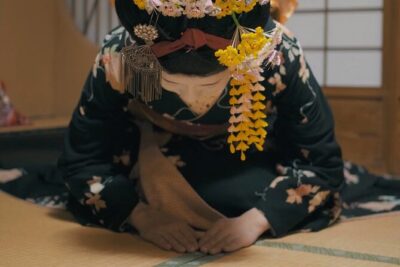
Kyoto Gion Cultural Walk & Geisha Show with Dining Options
Read our review →Kyoto Gion Cultural Walk & Geisha Show with Dining Options
Read our review →
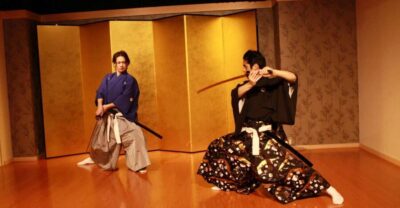
Gion Walking Tour, Geisha Show and Japanese Game in Kyoto
Read our review →
Browse the lists this show appears in